Friedman School of Nutrition Science and Policy, Tufts University, Boston, MA, USA.
Department of Medicine, McMaster University, Hamilton, Ontario, Canada.
Nat Food. 2022 Sep;3(9):694-702. doi: 10.1038/s43016-022-00594-9. Epub 2022 Sep 19.
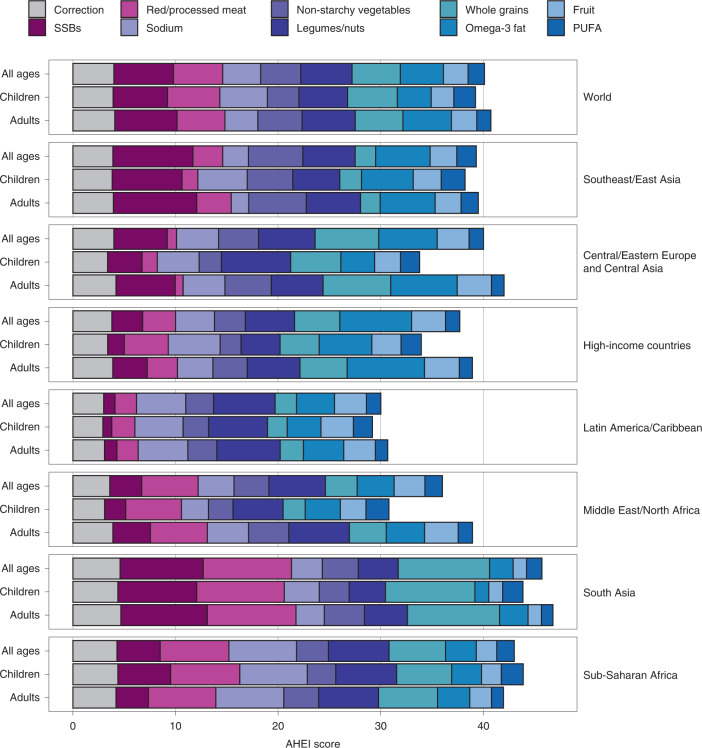
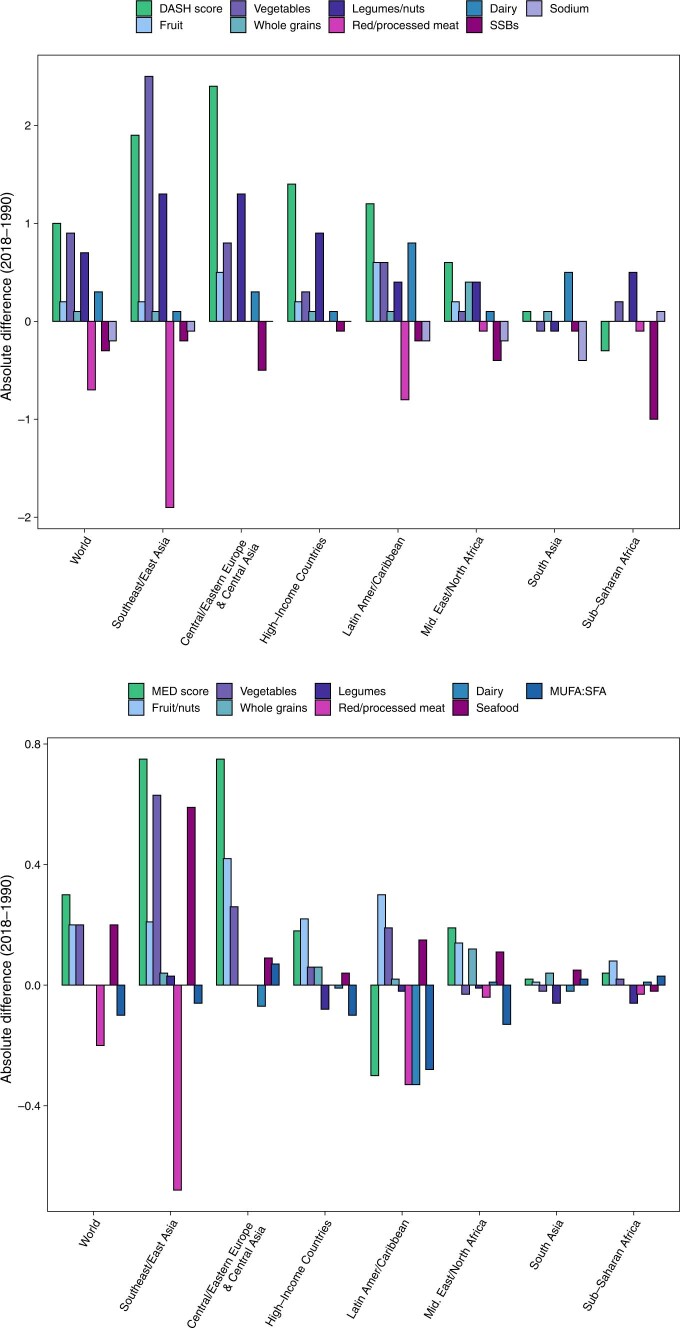
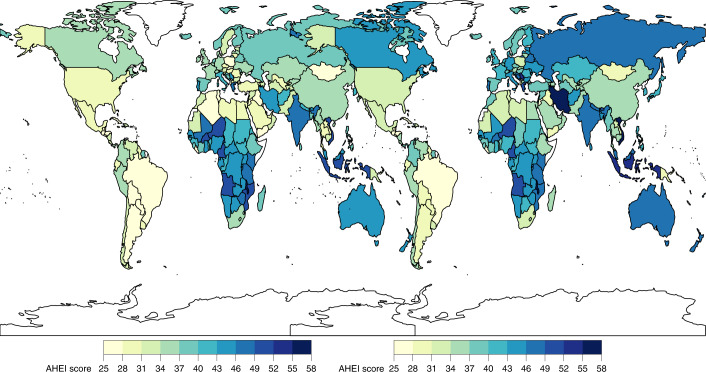
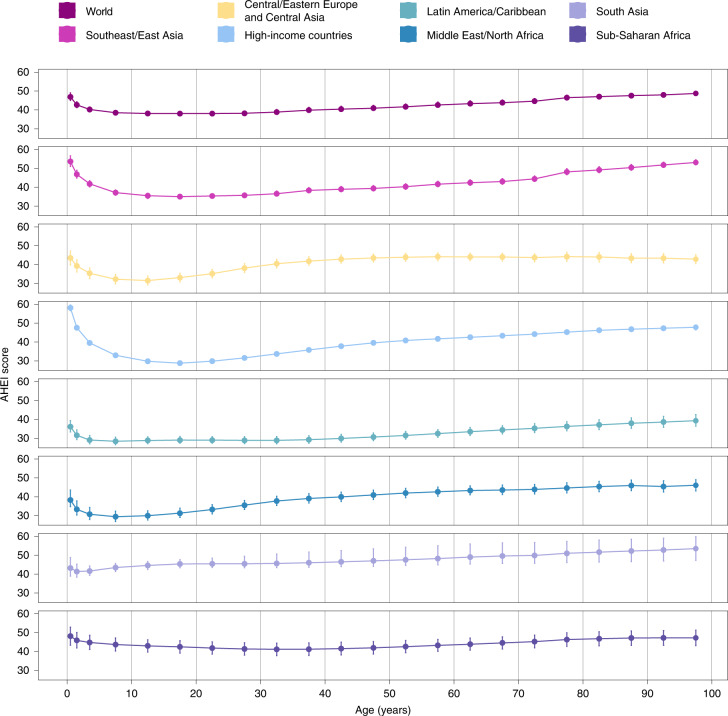
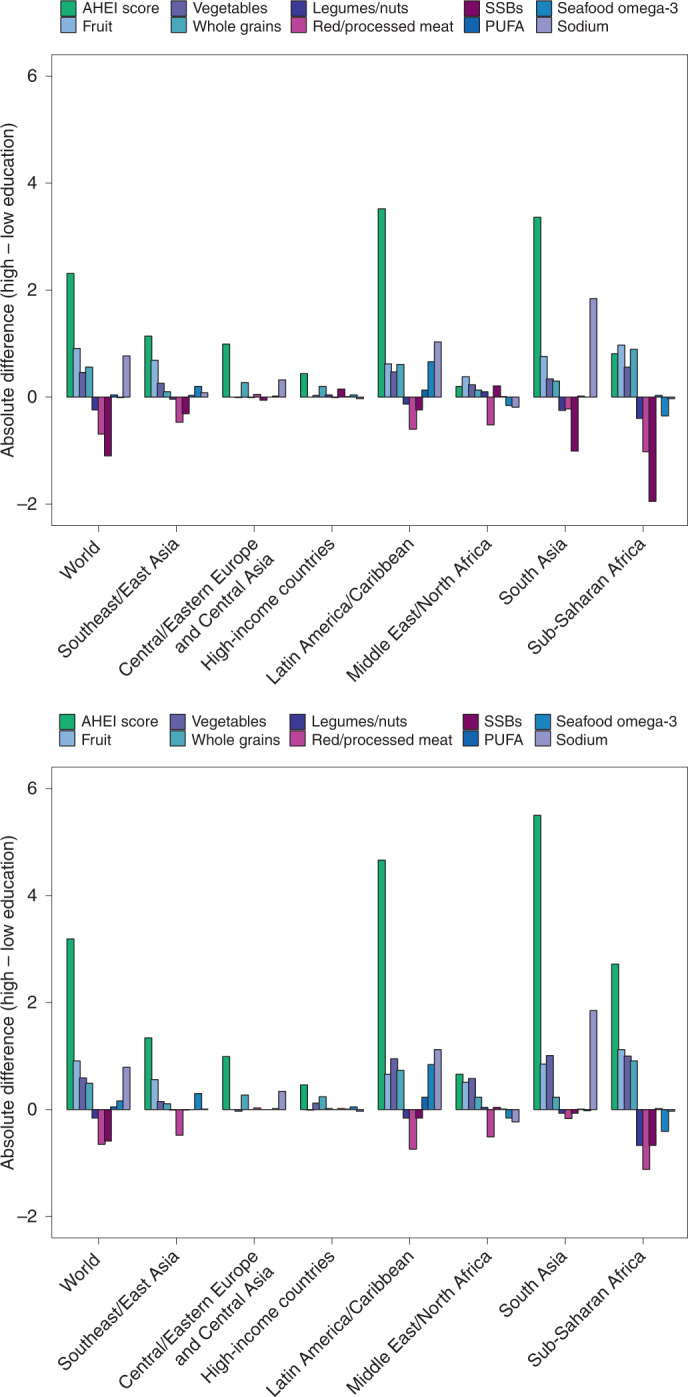
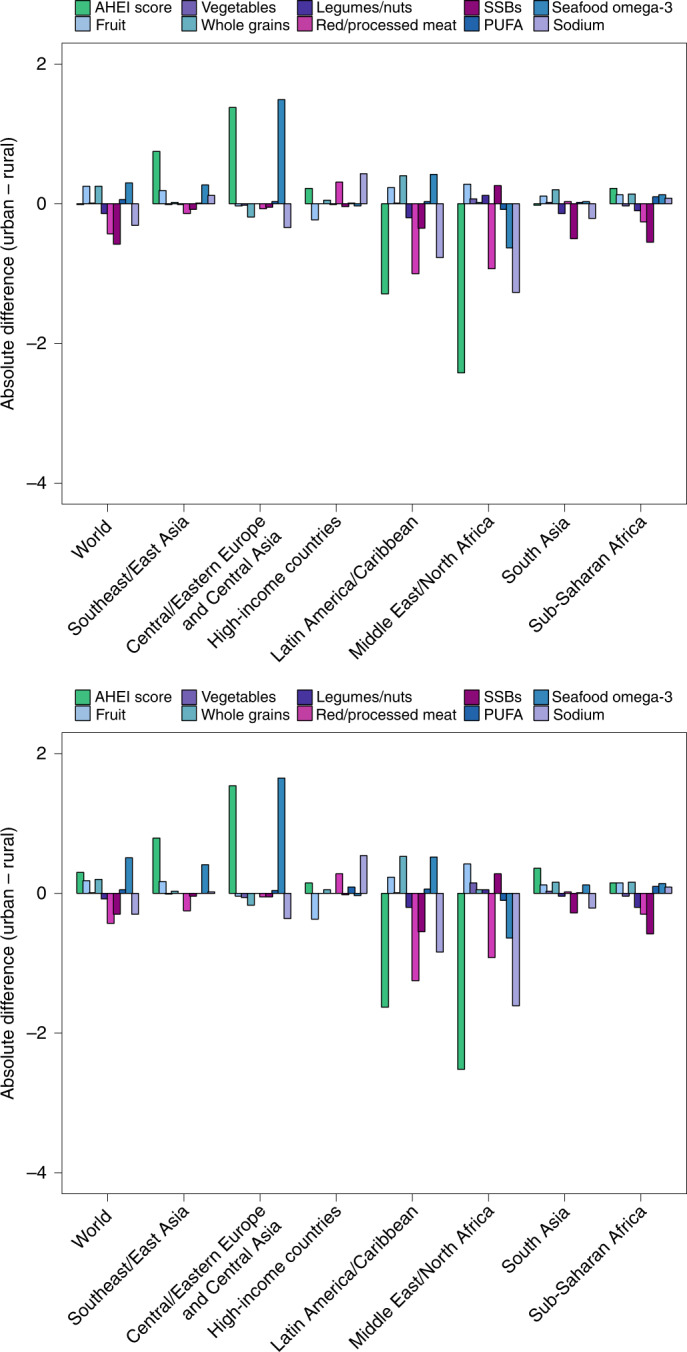
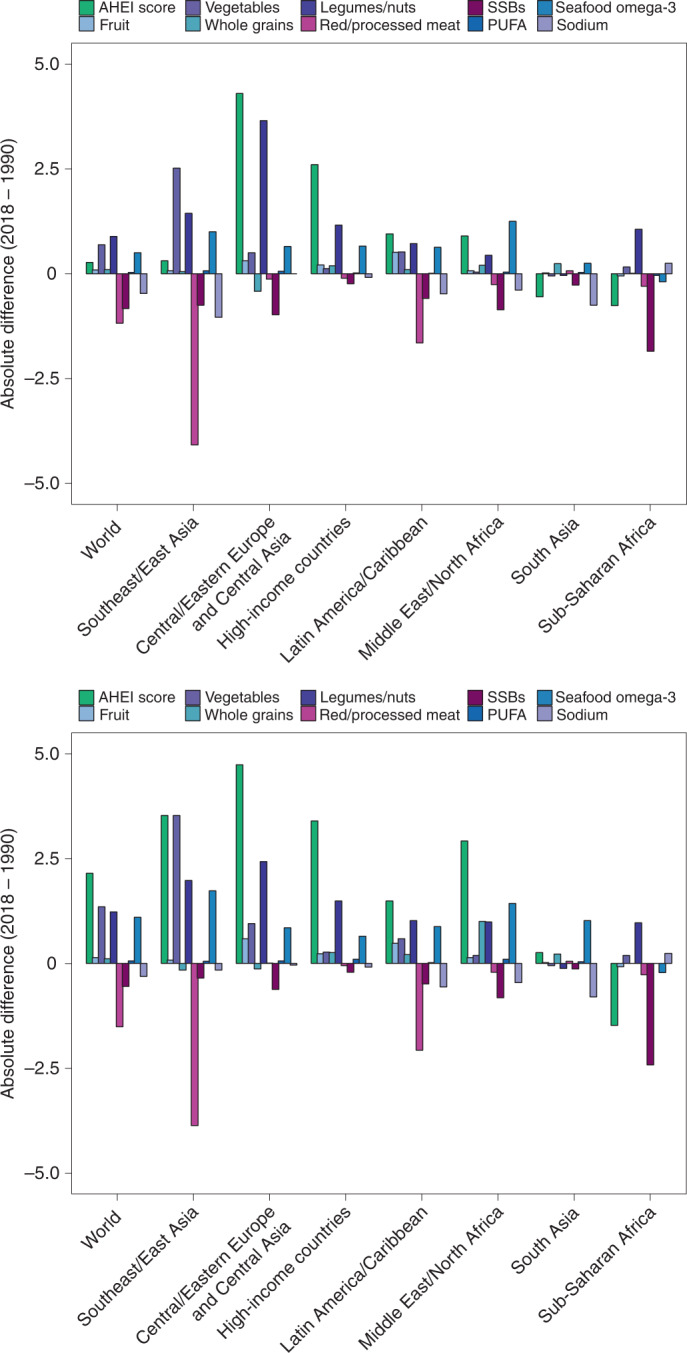
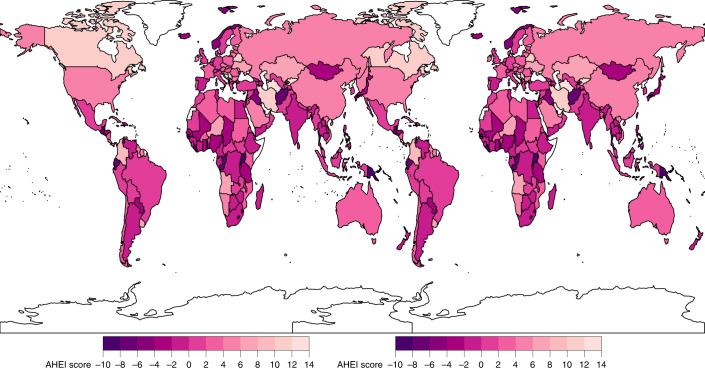
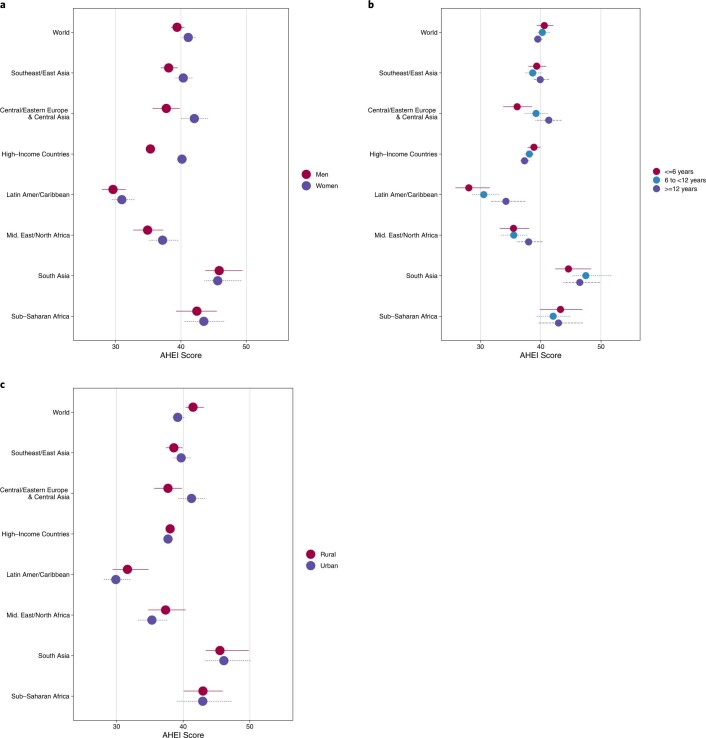
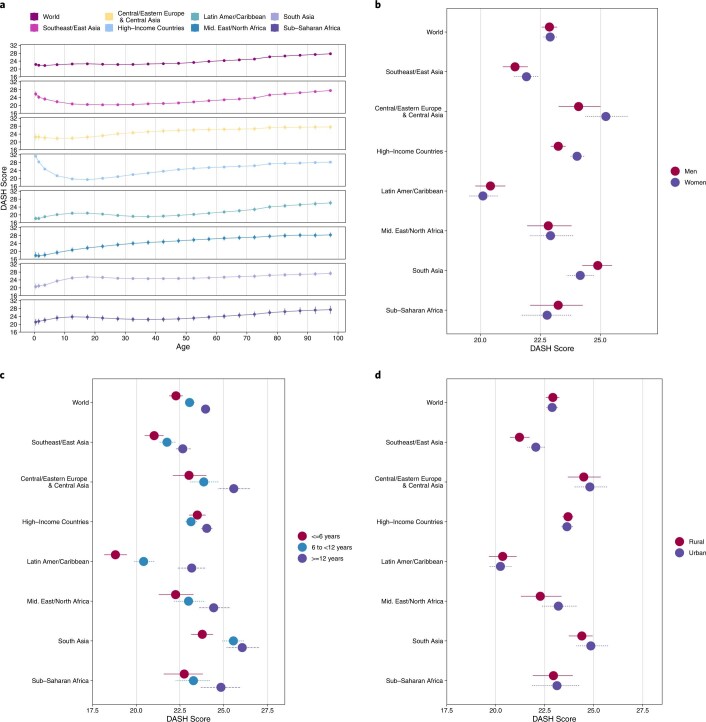
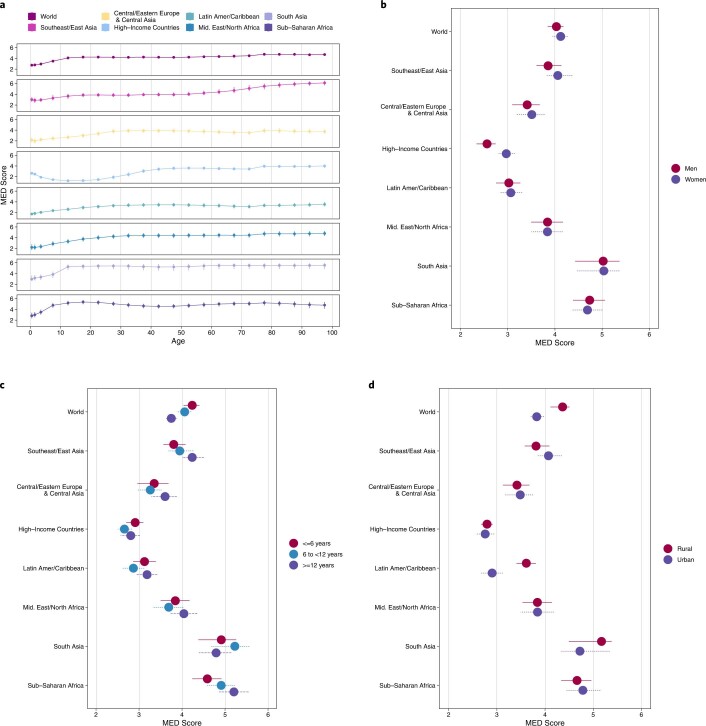
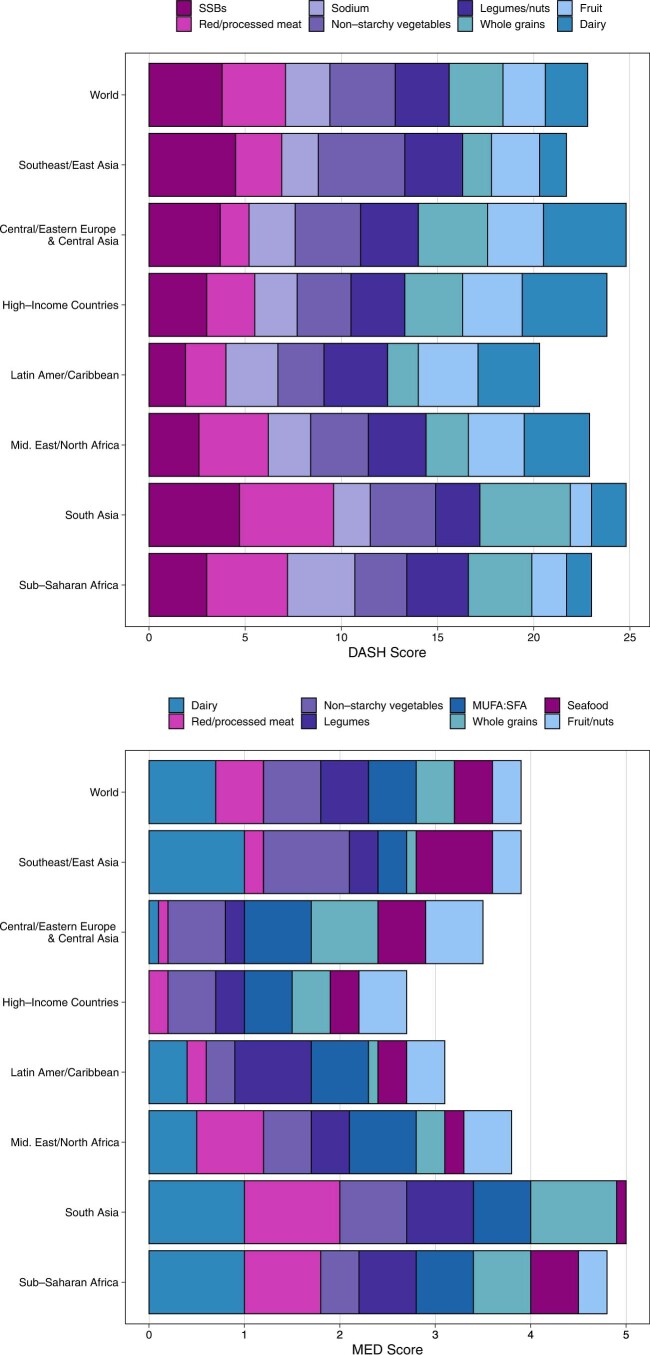
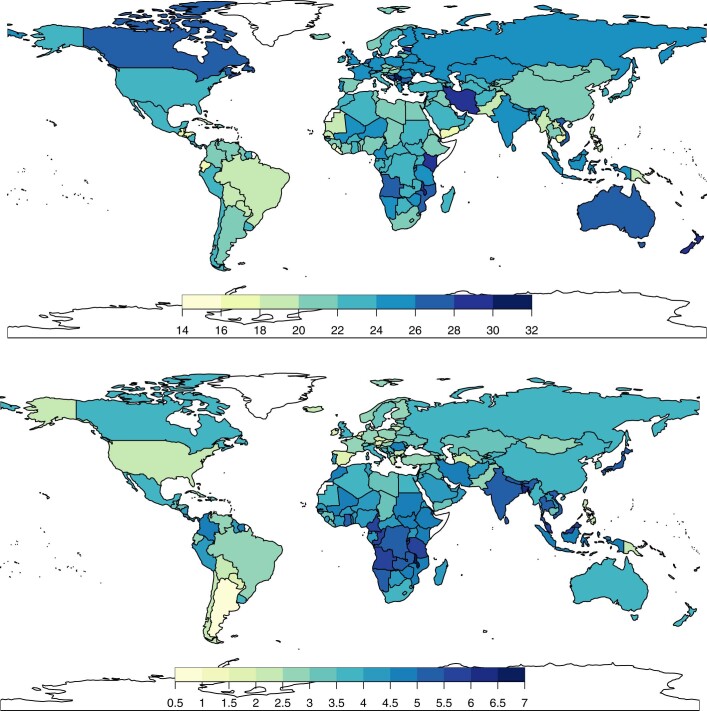
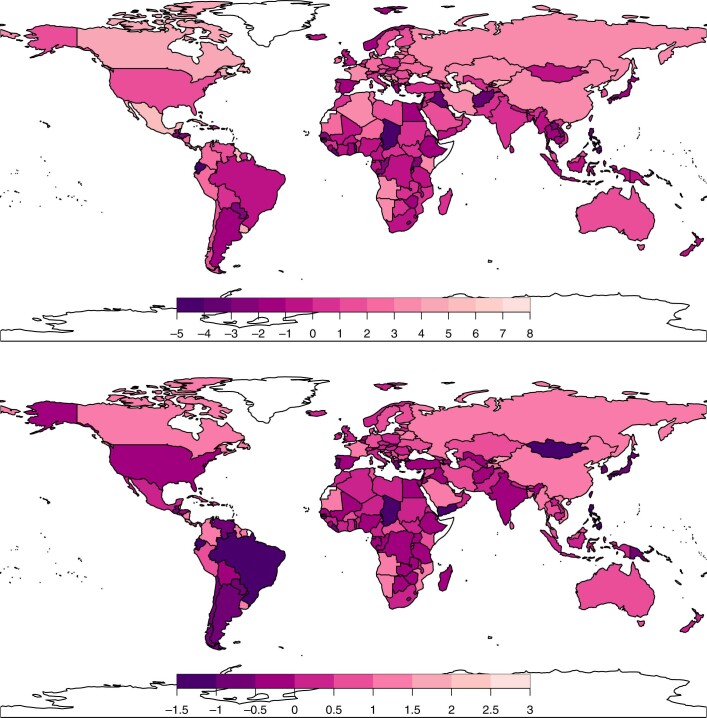
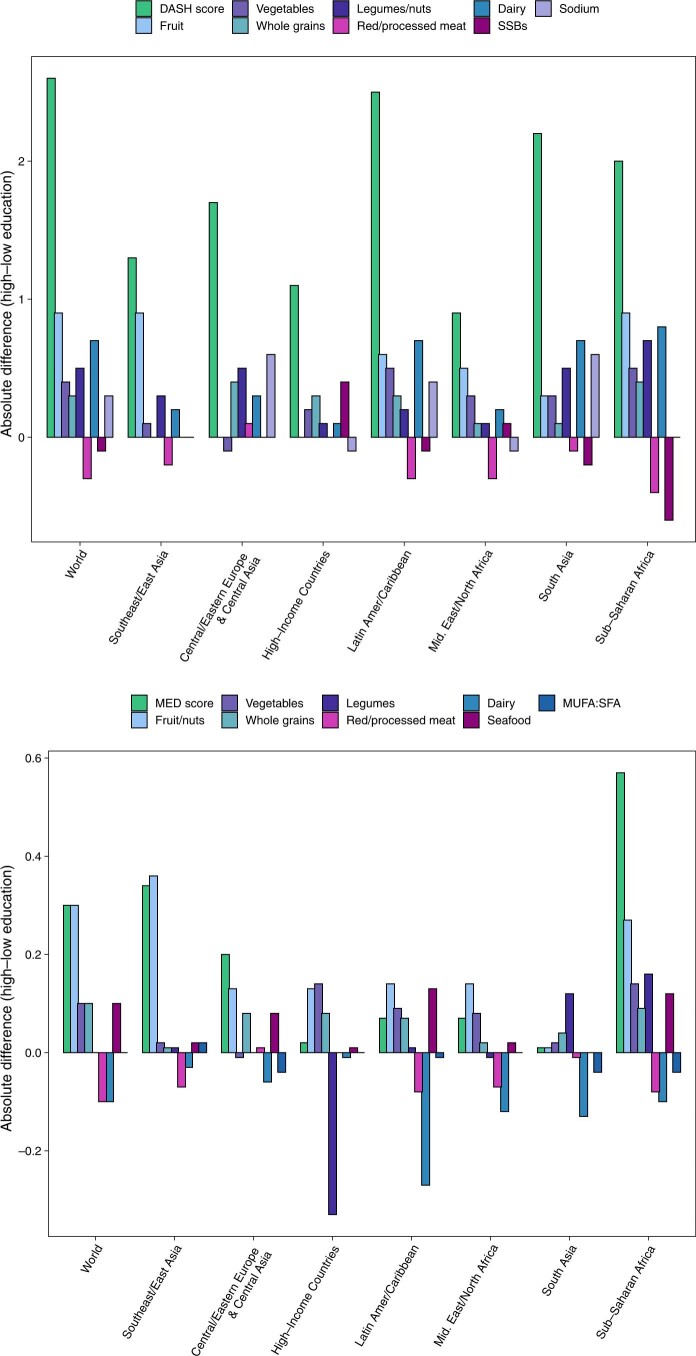
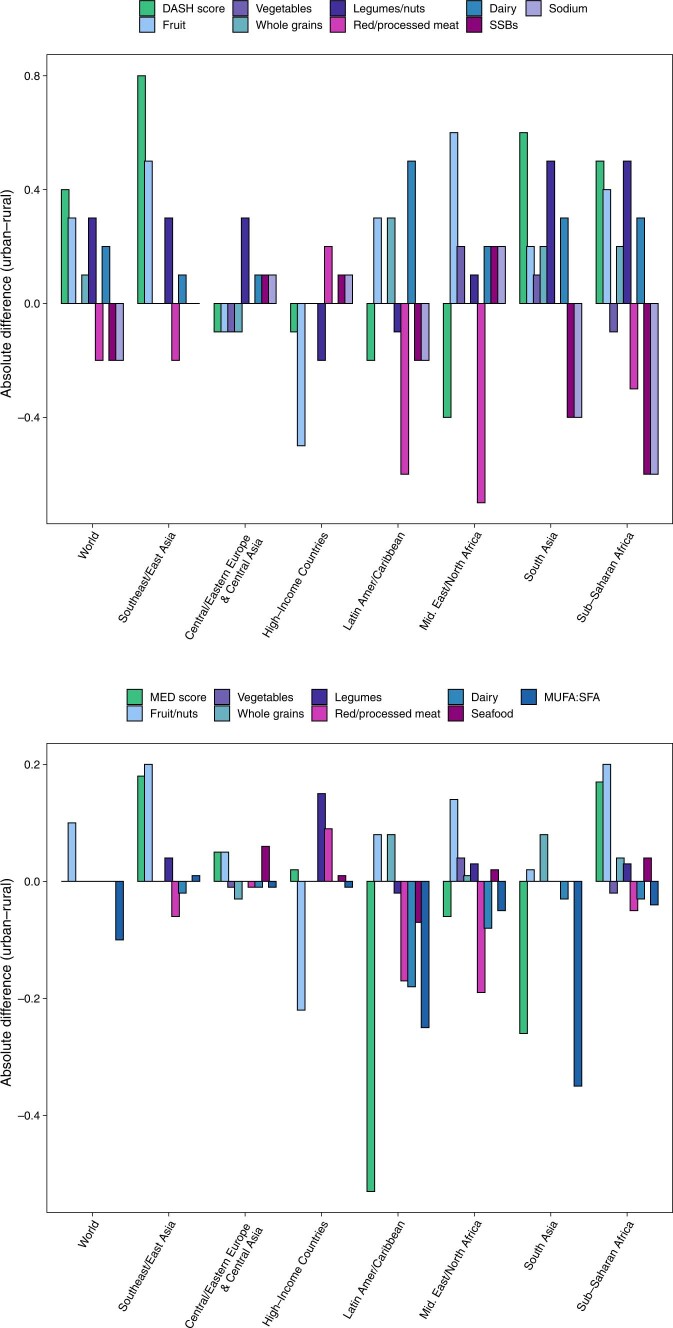
Evidence on what people eat globally is limited in scope and rigour, especially as it relates to children and adolescents. This impairs target setting and investment in evidence-based actions to support healthy sustainable diets. Here we quantified global, regional and national dietary patterns among children and adults, by age group, sex, education and urbanicity, across 185 countries between 1990 and 2018, on the basis of data from the Global Dietary Database project. Our primary measure was the Alternative Healthy Eating Index, a validated score of diet quality; Dietary Approaches to Stop Hypertension and Mediterranean Diet Score patterns were secondarily assessed. Dietary quality is generally modest worldwide. In 2018, the mean global Alternative Healthy Eating Index score was 40.3, ranging from 0 (least healthy) to 100 (most healthy), with regional means ranging from 30.3 in Latin America and the Caribbean to 45.7 in South Asia. Scores among children versus adults were generally similar across regions, except in Central/Eastern Europe and Central Asia, high-income countries, and the Middle East and Northern Africa, where children had lower diet quality. Globally, diet quality scores were higher among women versus men, and more versus less educated individuals. Diet quality increased modestly between 1990 and 2018 globally and in all world regions except in South Asia and Sub-Saharan Africa, where it did not improve.
关于全球人们饮食的证据在范围和严谨性方面都存在局限,特别是在涉及儿童和青少年方面。这会影响到目标设定和对基于证据的行动的投资,而这些行动是为了支持健康可持续的饮食。在这里,我们根据全球饮食数据库项目的数据,在 185 个国家/地区,按年龄组、性别、教育程度和城市程度,量化了 1990 年至 2018 年期间儿童和成年人的全球、区域和国家饮食模式。我们的主要衡量标准是替代健康饮食指数,这是一个经过验证的饮食质量评分;其次评估了停止高血压的饮食方法和地中海饮食评分模式。全球范围内的饮食质量普遍较差。2018 年,全球替代健康饮食指数平均得分为 40.3,范围从 0(最不健康)到 100(最健康),区域平均值从拉丁美洲和加勒比地区的 30.3 到南亚的 45.7。除了中欧和东欧以及中亚、高收入国家以及中东和北非地区,在这些地区,儿童的饮食质量较低,各个地区儿童和成年人之间的评分差异普遍相似。全球范围内,女性的饮食质量评分普遍高于男性,而受教育程度更高的人群的饮食质量评分也更高。全球和所有世界地区的饮食质量评分在 1990 年至 2018 年间都有所提高,除了南亚和撒哈拉以南非洲,这两个地区的饮食质量评分没有提高。