Friedman School of Nutrition Science and Policy, Tufts University, Boston, Massachusetts, USA
Friedman School of Nutrition Science and Policy, Tufts University, Boston, Massachusetts, USA.
BMJ Glob Health. 2021 Feb;6(2). doi: 10.1136/bmjgh-2020-003585.
We aimed to systematically identify, standardise and disseminate individual-level dietary intake surveys from up to 207 countries for 54 foods, beverages and nutrients, including subnational intakes by age, sex, education and urban/rural residence, from 1980 to 2015.
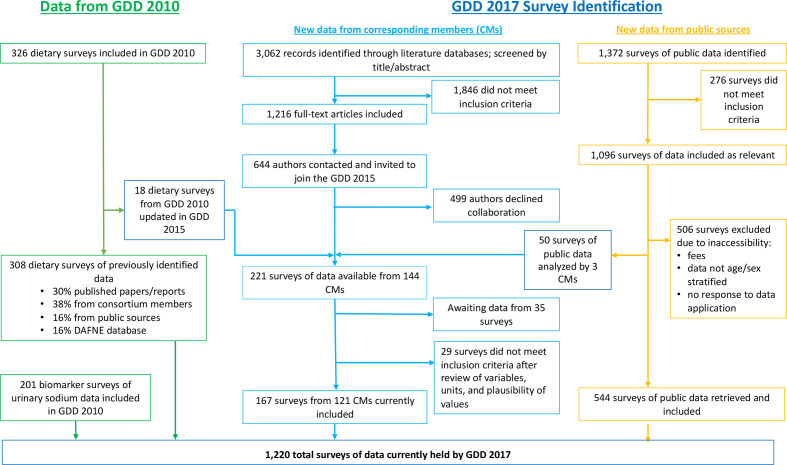
Between 2008-2011 and 2014-2020, the Global Dietary Database (GDD) project systematically searched for surveys assessing individual-level intake worldwide. We prioritised nationally or subnationally representative surveys using 24-hour recalls, Food-Frequency Questionnaires or short standardised questionnaires. Data were retrieved from websites or corresponding members as individual-level food group microdata or aggregate stratum-level data. Standardisation included quality assessment; data cleaning; categorising of foods and nutrients and their units; aggregation by demographic strata and energy adjustment.
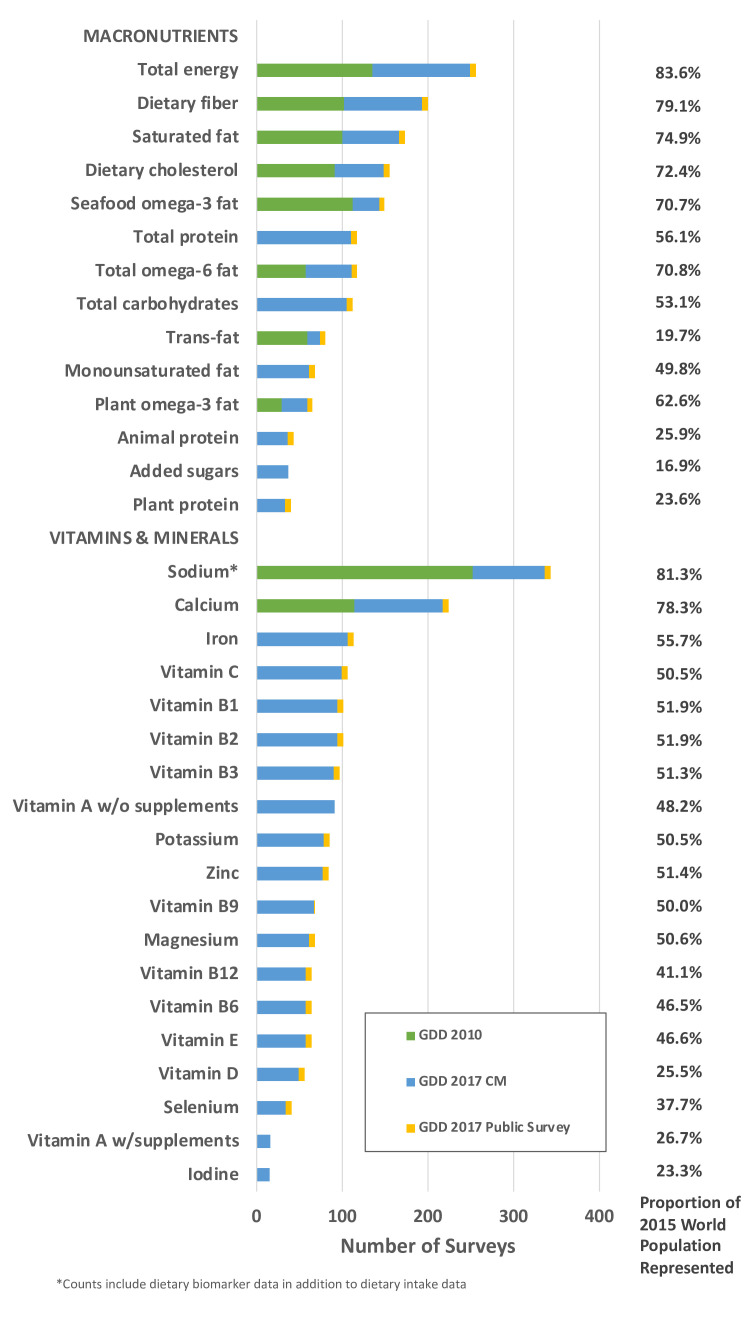
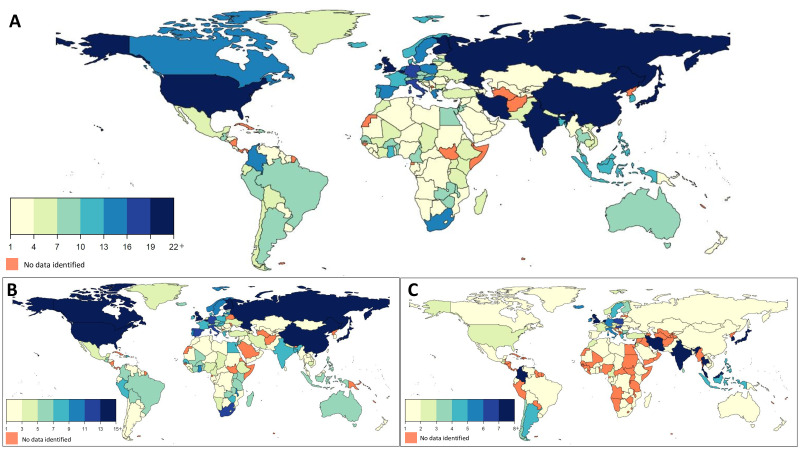
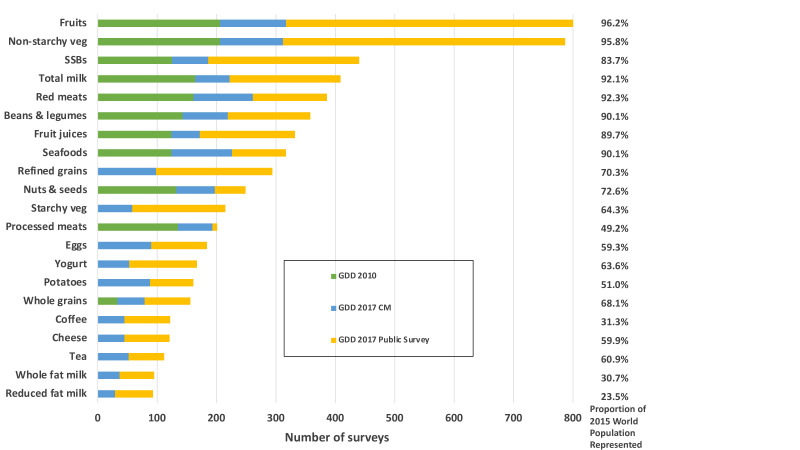
We standardised and incorporated 1220 surveys into the final GDD 2017 database, together represented 188 countries and 99.0% of the world's population in 2015. 72.1% were nationally, 17.0% subnationally, and 10.9% community-level representative. 41.2% used Food-Frequency Questionnaires; 23.4%, 24-hour recalls; 15.8%, Demographic Health Survey questionnaires; 13.1%, biomarkers and 6.4%, household surveys. 73.9% of surveys included data on children; 52.2%, by urban and rural residence; and 30.2%, by education. Most surveys were in high-income countries, followed by sub-Saharan Africa and Asia. Most commonly ascertained foods were fruits (N=803 surveys), non-starchy vegetables (N=787) and sugar-sweetened beverages (N=440); and nutrients, sodium (N=343), energy (N=256), calcium (N=224) and fibre (N=200). Least available data were on iodine, vitamin A, plant protein, selenium, added sugar and animal protein.
This systematic search, retrieval and standardised effort provides the most comprehensive empirical evidence on dietary intakes across and within countries worldwide.
本研究旨在系统性地识别、规范并传播 1980 年至 2015 年间来自 207 个国家/地区的个体饮食摄入调查,涵盖 54 种食物、饮料和营养素,包括按年龄、性别、教育程度和城乡居住划分的亚国家/地区摄入量。
2008 年至 2011 年和 2014 年至 2020 年期间,全球饮食数据库(GDD)项目系统地搜索了全球范围内评估个体摄入的调查。我们通过 24 小时回忆、食物频率问卷或简短标准化问卷优先考虑具有国家或次国家代表性的调查。从网站或相应成员处检索到个体层面食物组微观数据或汇总层数据。标准化包括质量评估、数据清理、食物和营养素的分类及其单位、按人口统计学分层和能量调整进行汇总。
我们将 1220 项调查标准化并纳入最终的 GDD 2017 数据库中,这些调查共代表了 2015 年 188 个国家和全球 99.0%的人口。72.1%为国家级,17.0%为次国家级,10.9%为社区级。41.2%使用食物频率问卷;23.4%使用 24 小时回忆;15.8%使用人口健康调查问卷;13.1%使用生物标志物,6.4%使用家庭调查。73.9%的调查包括儿童数据;52.2%按城乡居住划分,30.2%按教育程度划分。大多数调查来自高收入国家,其次是撒哈拉以南非洲和亚洲。最常确定的食物是水果(803 项调查)、非淀粉蔬菜(787 项)和含糖饮料(440 项);最常确定的营养素是钠(343 项)、能量(256 项)、钙(224 项)和纤维(200 项)。碘、维生素 A、植物蛋白、硒、添加糖和动物蛋白的数据最少。
这项系统性搜索、检索和标准化工作提供了全球范围内最全面的关于饮食摄入的跨国和国内实证证据。