Badawy Abdulla A-B, Dawood Shazia, Bano Samina
Formerly School of Health Sciences, Cardiff Metropolitan University, Cardiff CF5 2YB, United Kingdom.
Pharmacy and Allied Health Sciences, Iqra University, Karachi 7580, Pakistan.
World J Psychiatry. 2023 Apr 19;13(4):141-148. doi: 10.5498/wjp.v13.i4.141.
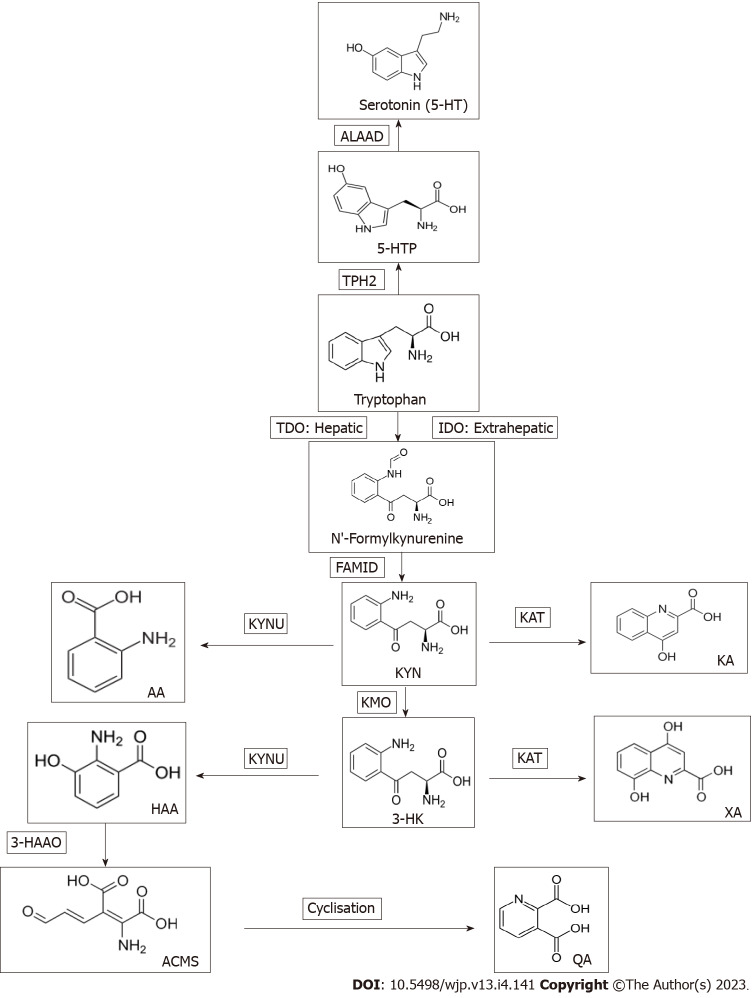
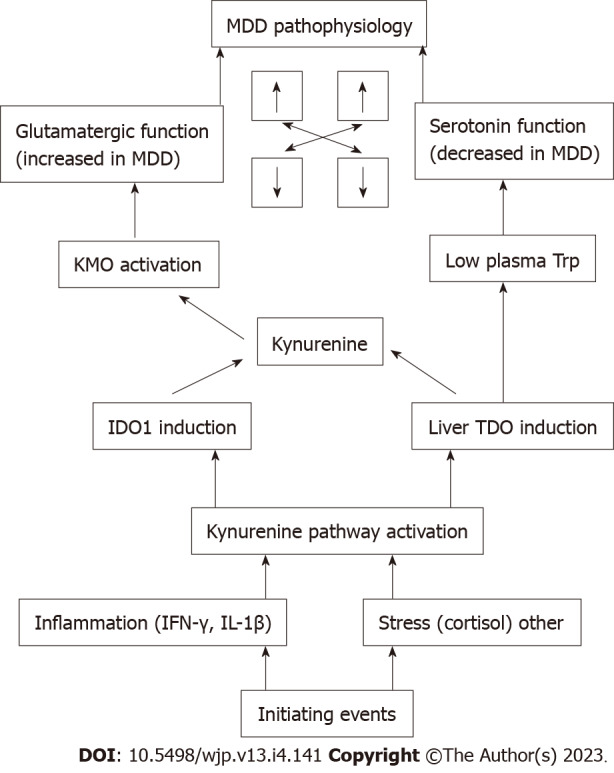
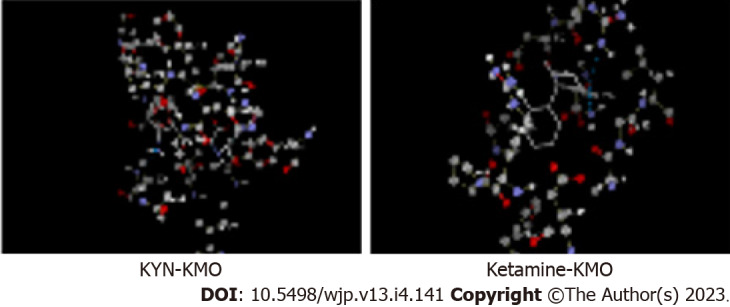
Serotonin deficiency in major depressive disorder (MDD) has formed the basis of antidepressant drug development and was originally attributed to induction of the major tryptophan (Trp)-degrading enzyme, liver Trp 2,3-dioxygenase (TDO), by cortisol, leading to decreased Trp availability to the brain for serotonin synthesis. Subsequently, the serotonin deficiency was proposed to involve induction of the extrahepatic Trp-degrading enzyme indoleamine 2,3-dioxygenase (IDO) by proinflammatory cytokines, with inflammation being the underlying cause. Recent evidence, however, challenges this latter concept, as not all MDD patients are immune-activated and, when present, inflammation is mild and/or transient. A wide range of antidepressant drugs inhibit the activity of liver TDO and bind specifically to the enzyme, but not to IDO. IDO induction is not a major event in MDD, but, when it occurs, its metabolic consequences may be masked and overridden by upregulation of kynurenine monooxygenase (KMO), the gateway to production of modulators of immune and neuronal functions. KMO appears to be activated in MDD by certain proinflammatory cytokines and antidepressants with anti-inflammatory properties may block this activation. We demonstrate the ability of the antidepressant ketamine to dock (bind) to KMO. The pathophysiology of MDD may be underpinned by both the serotonin deficiency and glutamatergic activation mediated respectively by TDO induction and N-methyl-D-aspartate receptor activation. Inhibition of TDO and KMO should be the focus of MDD pharmacotherapy.
重度抑郁症(MDD)中的血清素缺乏构成了抗抑郁药物研发的基础,最初被认为是由于皮质醇诱导主要的色氨酸(Trp)降解酶——肝脏Trp 2,3-双加氧酶(TDO),导致大脑用于血清素合成的Trp可用性降低。随后,有人提出血清素缺乏涉及促炎细胞因子诱导肝外Trp降解酶吲哚胺2,3-双加氧酶(IDO),炎症是其潜在原因。然而,最近的证据对后一种观点提出了挑战,因为并非所有MDD患者都有免疫激活,而且即使存在炎症,也是轻微和/或短暂的。多种抗抑郁药物可抑制肝脏TDO的活性并特异性结合该酶,但不结合IDO。IDO诱导在MDD中并非主要事件,但当它发生时,其代谢后果可能会被犬尿氨酸单加氧酶(KMO)的上调所掩盖和超越,KMO是免疫和神经功能调节剂产生的途径。KMO在MDD中似乎被某些促炎细胞因子激活,具有抗炎特性的抗抑郁药物可能会阻断这种激活。我们证明了抗抑郁药物氯胺酮与KMO对接(结合)的能力。MDD的病理生理学可能分别由TDO诱导介导的血清素缺乏和N-甲基-D-天冬氨酸受体激活介导的谷氨酸能激活所支撑。抑制TDO和KMO应成为MDD药物治疗的重点。