Li Jing-Xing, Wang Yu-Hsun, Bair Henry, Hsu Shu-Bai, Chen Connie, Wei James Cheng-Chung, Lin Chun-Ju
Department of General Medicine, China Medical University Hospital, Taichung, Taiwan.
School of Medicine, College of Medicine, China Medical University, Taichung, Taiwan.
NPJ Vaccines. 2023 May 2;8(1):64. doi: 10.1038/s41541-023-00661-7.
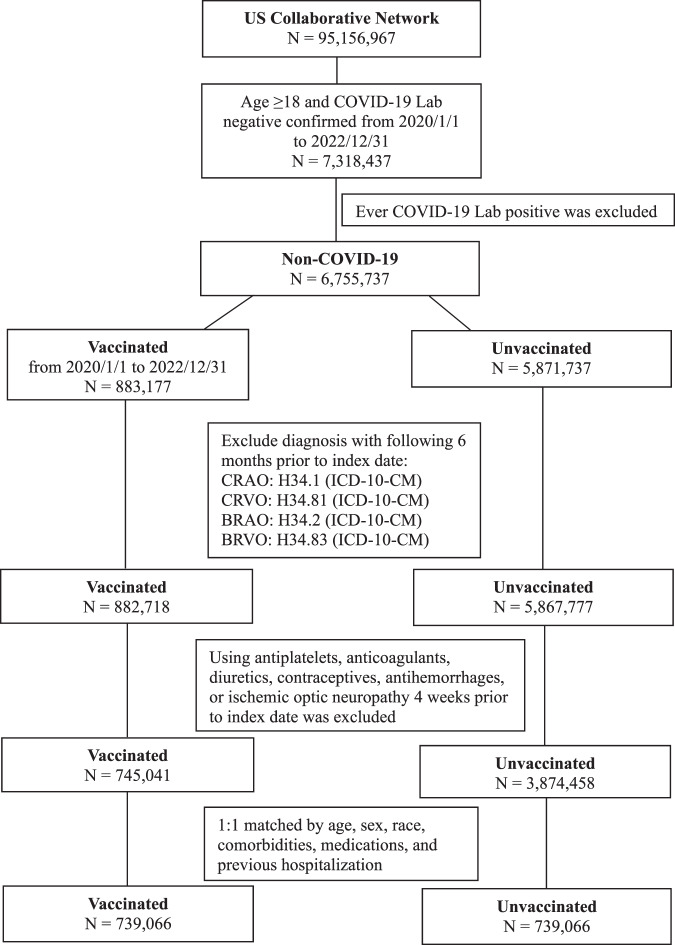
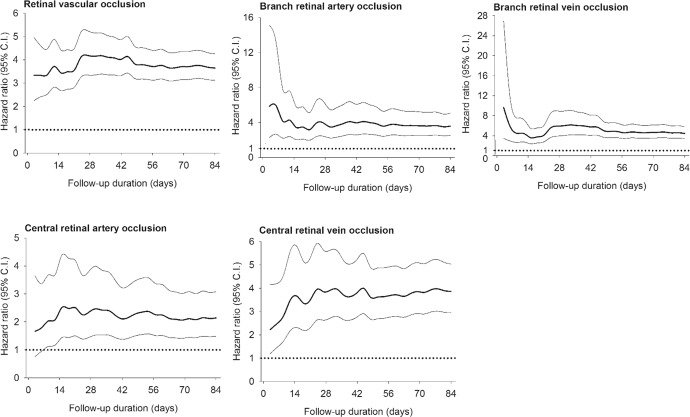
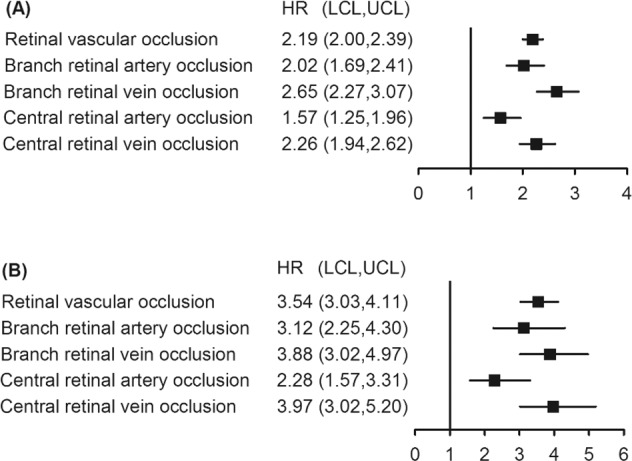
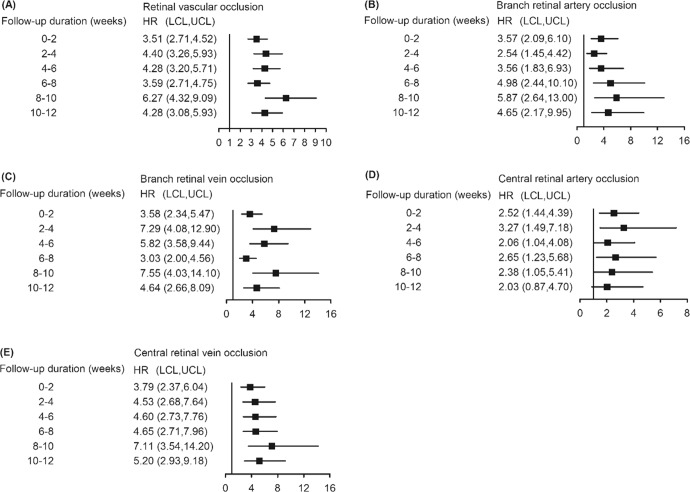
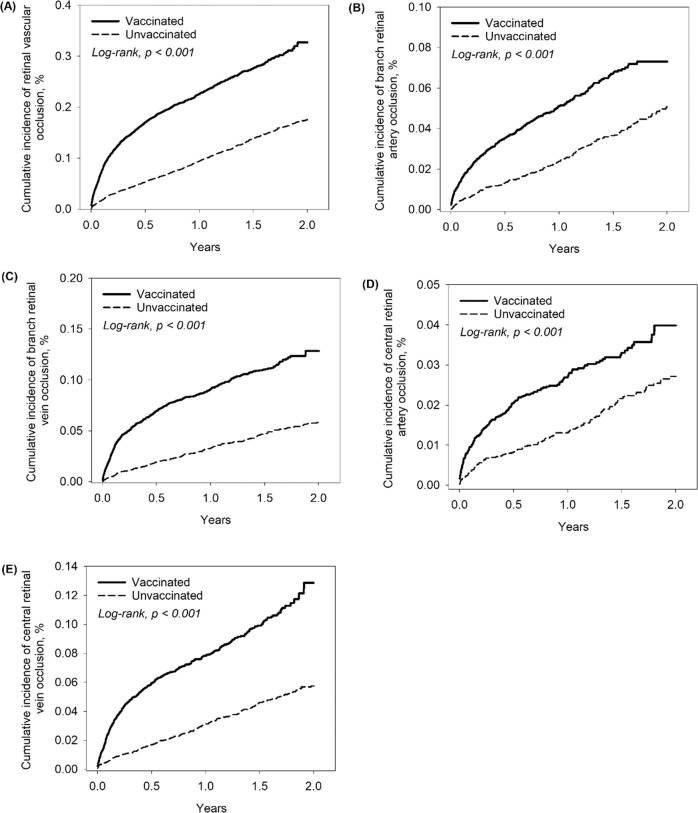
Coronavirus disease 2019 (COVID-19) vaccines are associated with several ocular manifestations. Emerging evidence has been reported; however, the causality between the two is debatable. We aimed to investigate the risk of retinal vascular occlusion after COVID-19 vaccination. This retrospective cohort study used the TriNetX global network and included individuals vaccinated with COVID-19 vaccines between January 2020 and December 2022. We excluded individuals with a history of retinal vascular occlusion or those who used any systemic medication that could potentially affect blood coagulation prior to vaccination. To compare the risk of retinal vascular occlusion, we employed multivariable-adjusted Cox proportional hazards models after performing a 1:1 propensity score matching between the vaccinated and unvaccinated cohorts. Individuals with COVID-19 vaccination had a higher risk of all forms of retinal vascular occlusion in 2 years after vaccination, with an overall hazard ratio of 2.19 (95% confidence interval 2.00-2.39). The cumulative incidence of retinal vascular occlusion was significantly higher in the vaccinated cohort compared to the unvaccinated cohort, 2 years and 12 weeks after vaccination. The risk of retinal vascular occlusion significantly increased during the first 2 weeks after vaccination and persisted for 12 weeks. Additionally, individuals with first and second dose of BNT162b2 and mRNA-1273 had significantly increased risk of retinal vascular occlusion 2 years following vaccination, while no disparity was detected between brand and dose of vaccines. This large multicenter study strengthens the findings of previous cases. Retinal vascular occlusion may not be a coincidental finding after COVID-19 vaccination.
2019冠状病毒病(COVID-19)疫苗与多种眼部表现有关。已有新出现的证据报道;然而,两者之间的因果关系仍有争议。我们旨在调查COVID-19疫苗接种后视网膜血管阻塞的风险。这项回顾性队列研究使用了TriNetX全球网络,纳入了2020年1月至2022年12月期间接种COVID-19疫苗的个体。我们排除了有视网膜血管阻塞病史的个体或在接种疫苗前使用过任何可能影响凝血的全身性药物的个体。为了比较视网膜血管阻塞的风险,我们在接种疫苗组和未接种疫苗组之间进行1:1倾向评分匹配后,采用多变量调整的Cox比例风险模型。接种COVID-19疫苗的个体在接种后2年内发生各种形式视网膜血管阻塞的风险更高,总体风险比为2.19(95%置信区间2.00-2.39)。接种疫苗组视网膜血管阻塞的累积发病率在接种后2年和12周时显著高于未接种疫苗组。视网膜血管阻塞的风险在接种后的前2周显著增加,并持续12周。此外,接种第一剂和第二剂BNT162b2和mRNA-1273的个体在接种后2年发生视网膜血管阻塞的风险显著增加,而不同品牌和剂量的疫苗之间未发现差异。这项大型多中心研究强化了先前病例的研究结果。视网膜血管阻塞可能不是COVID-19疫苗接种后的偶发发现。