Zhou Cheng, Yang Zhang-Fu, Sun Bao-Ye, Yi Yong, Wang Zheng, Zhou Jian, Fan Jia, Gan Wei, Ren Ning, Qiu Shuang-Jian
Department of Liver Surgery and Transplantation & Key Laboratory of Carcinogenesis and Cancer Invasion (Ministry of Education), Liver Cancer Institute, Zhongshan Hospital, Fudan University, Shanghai, People's Republic of China.
Institute of Fudan Minhang Academic Health System & Key Laboratory of Whole-Period Monitoring and Precise Intervention of Digestive Cancer, Minhang Hospital, Fudan University, Shanghai, People's Republic of China.
J Hepatocell Carcinoma. 2023 Apr 24;10:697-712. doi: 10.2147/JHC.S401639. eCollection 2023.
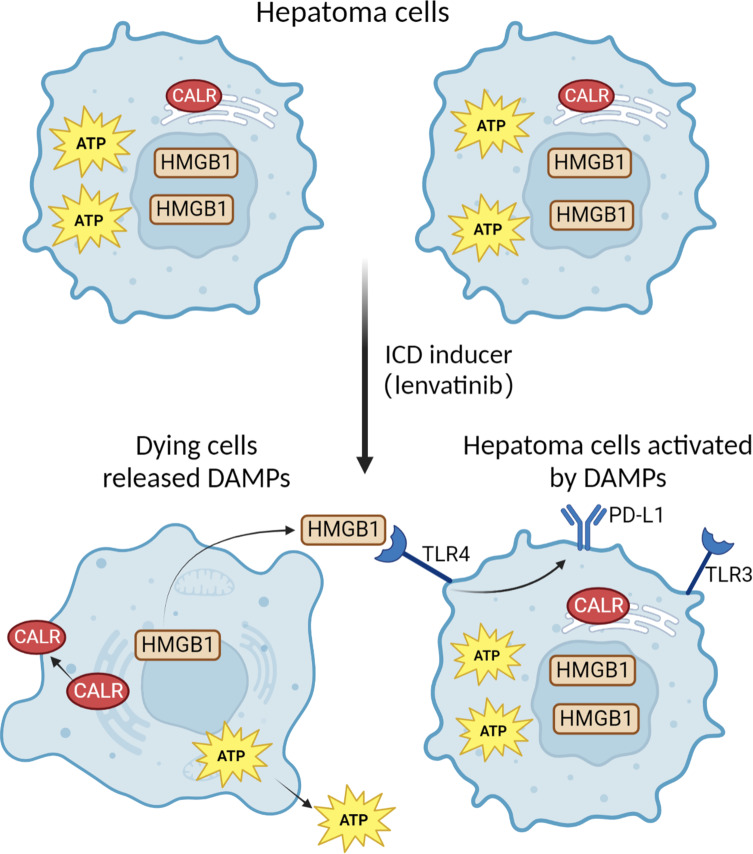
Immunogenic cell death (ICD) is a cell death modality that plays a vital role in anticancer therapy. In this study, we investigated whether lenvatinib induces ICD in hepatocellular carcinoma and how it affects cancer cell behavior.
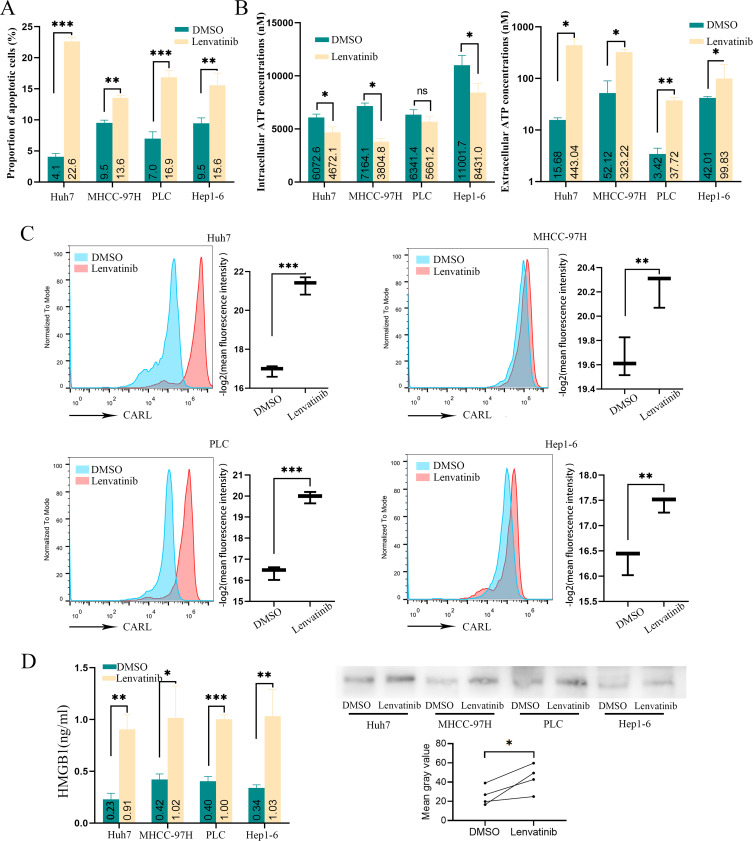
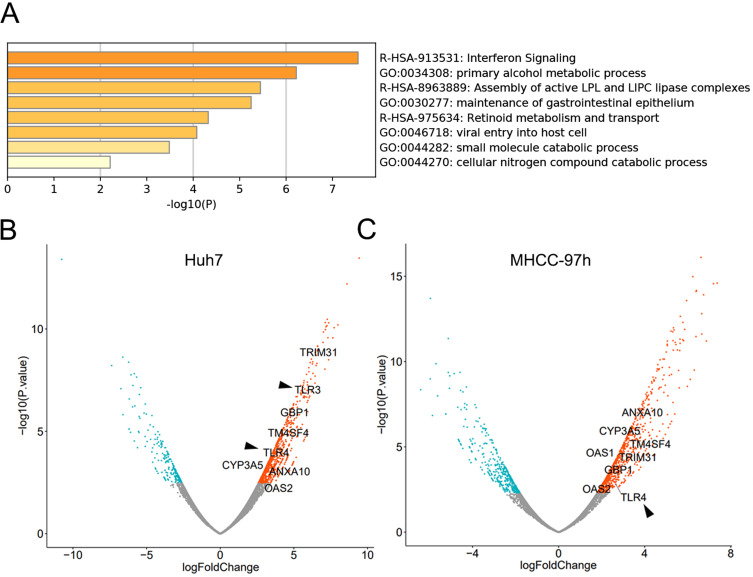
Hepatoma cells were treated with 0.5 μM lenvatinib for two weeks, and damage-associated molecular patterns were assessed using the expression of calreticulin, high mobility group box 1, and ATP secretion. Transcriptome sequencing was performed to investigate the effects of lenvatinib on hepatocellular carcinoma. Additionally, CU CPT 4A and TAK-242 were used to inhibit and expressions, respectively. Flow cytometry was used to assess PD-L1 expression. Kaplan-Meier and Cox regression models were applied for prognosis assessment.
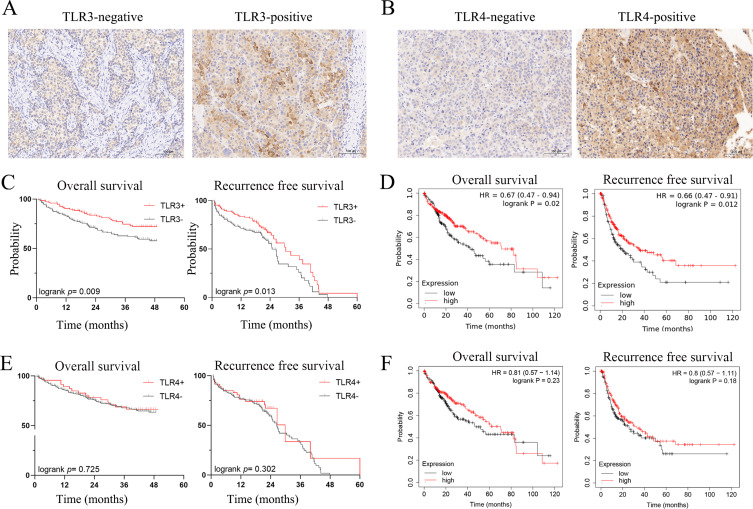
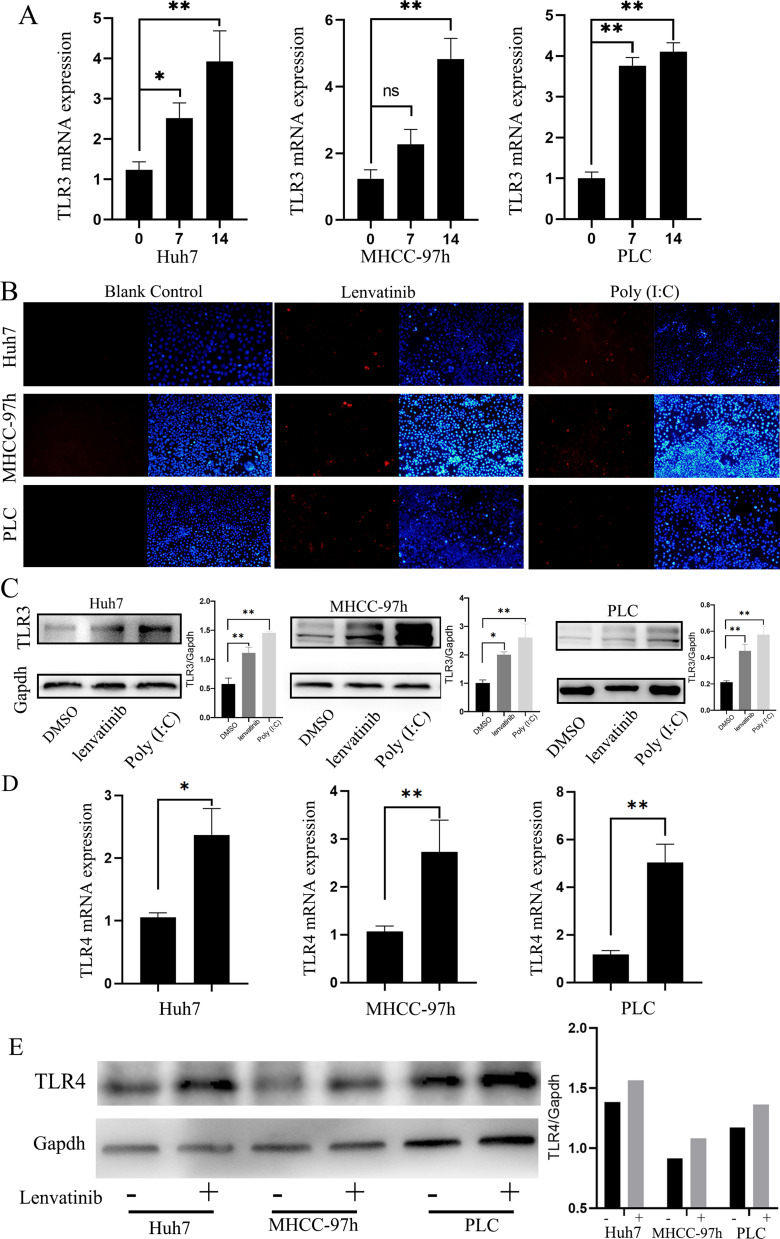
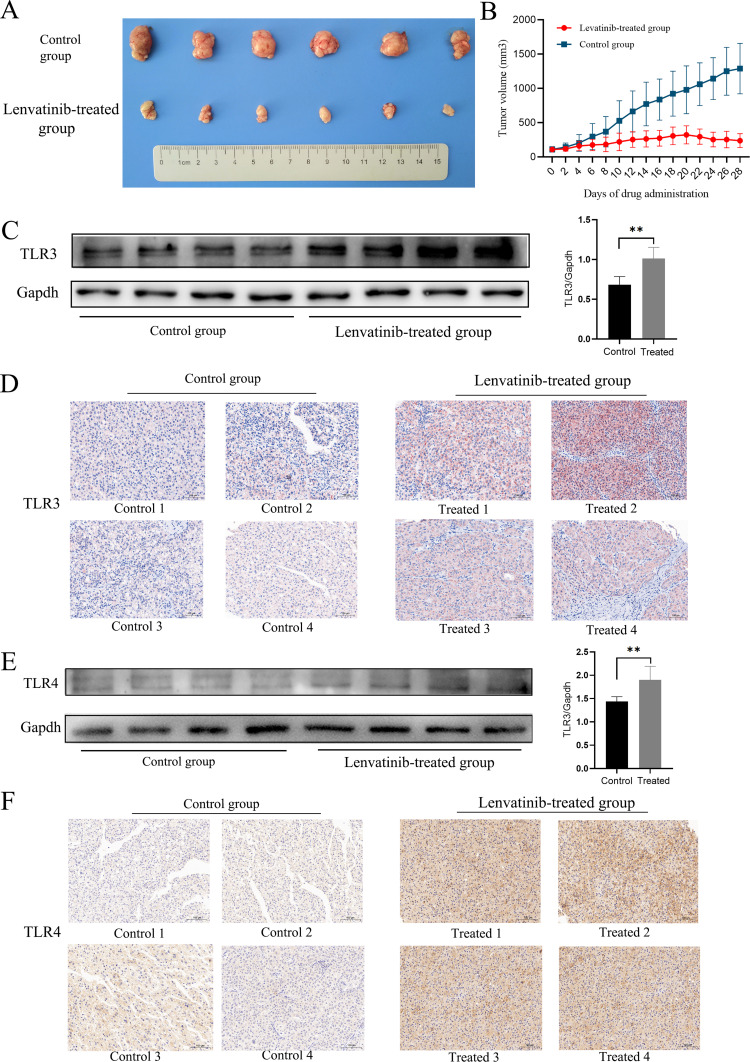
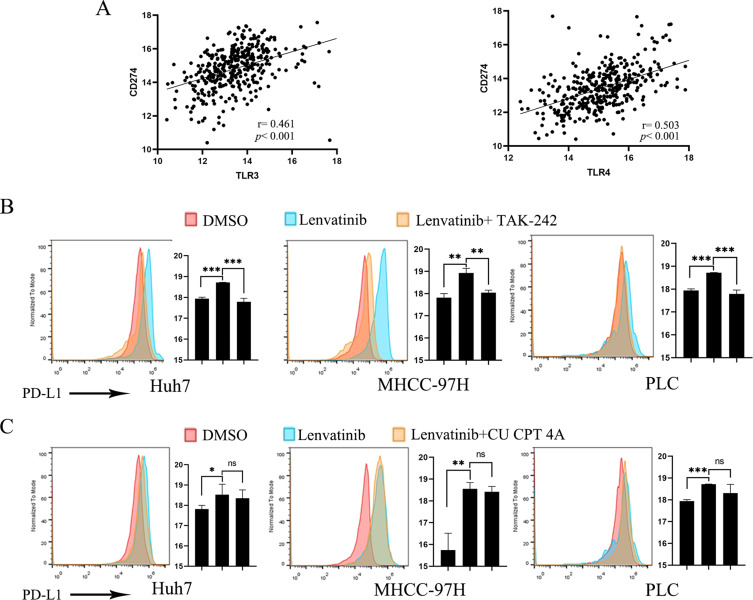
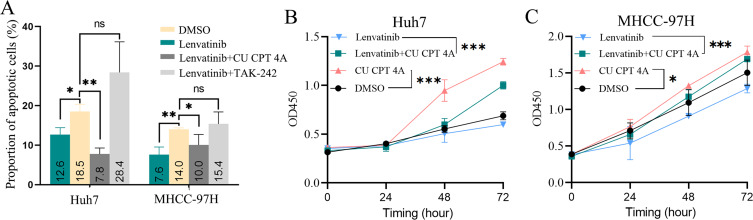
After treatment with lenvatinib, there was a significant increase in ICD-associated damage-associated molecular patterns, such as calreticulin on the cell membrane, extracellular ATP, and high mobility group box 1, in hepatoma cells. Following treatment with lenvatinib, there was a significant increase in the downstream immunogenic cell death receptors, including TLR3 and TLR4. Furthermore, lenvatinib increased the expression of PD-L1, which was later inhibited by TLR4. Interestingly, inhibiting in MHCC-97H and Huh7 cells strengthened their proliferative capacity. Moreover, TLR3 inhibition was identified as an independent risk factor for overall survival and recurrence-free survival in patients with hepatocellular carcinoma.
Our study revealed that lenvatinib induced ICD in hepatocellular carcinoma and upregulated expression through while promoting cell apoptosis through . Antibodies against PD-1/PD-L1 can enhance the efficacy of lenvatinib in the management of hepatocellular carcinoma.
免疫原性细胞死亡(ICD)是一种细胞死亡方式,在抗癌治疗中起着至关重要的作用。在本研究中,我们调查了乐伐替尼是否能诱导肝癌细胞发生ICD以及它如何影响癌细胞行为。
用0.5μM乐伐替尼处理肝癌细胞两周,通过钙网蛋白、高迁移率族蛋白B1的表达及ATP分泌来评估损伤相关分子模式。进行转录组测序以研究乐伐替尼对肝癌的影响。此外,分别使用CU CPT 4A和TAK - 242抑制 和 的表达。采用流式细胞术评估PD - L1表达。应用Kaplan - Meier和Cox回归模型进行预后评估。
乐伐替尼处理后,肝癌细胞中与ICD相关的损伤相关分子模式显著增加,如细胞膜上的钙网蛋白、细胞外ATP和高迁移率族蛋白B1。乐伐替尼处理后,包括TLR3和TLR4在内的下游免疫原性细胞死亡受体显著增加。此外,乐伐替尼增加了PD - L1的表达,随后被TLR4抑制。有趣的是,在MHCC - 97H和Huh7细胞中抑制 增强了它们的增殖能力。此外,TLR3抑制被确定为肝癌患者总生存和无复发生存的独立危险因素。
我们的研究表明,乐伐替尼在肝癌中诱导ICD,并通过 上调 表达,同时通过 促进细胞凋亡。抗PD - 1/PD - L1抗体可增强乐伐替尼治疗肝癌的疗效。