Division of Digestive Diseases, Department of Metabolism, Digestion and Reproduction, Imperial College London, 10th Floor, QEQM Building, St. Mary's Hospital, Praed Street, London, W2 1NY, UK.
Department of Gastroenterology, Imperial College Healthcare NHS Trust, London, UK.
Microbiome. 2023 May 8;11(1):100. doi: 10.1186/s40168-023-01518-w.
The gut microbiota is implicated in the pathogenesis of colorectal cancer (CRC). We aimed to map the CRC mucosal microbiota and metabolome and define the influence of the tumoral microbiota on oncological outcomes.
A multicentre, prospective observational study was conducted of CRC patients undergoing primary surgical resection in the UK (n = 74) and Czech Republic (n = 61). Analysis was performed using metataxonomics, ultra-performance liquid chromatography-mass spectrometry (UPLC-MS), targeted bacterial qPCR and tumour exome sequencing. Hierarchical clustering accounting for clinical and oncological covariates was performed to identify clusters of bacteria and metabolites linked to CRC. Cox proportional hazards regression was used to ascertain clusters associated with disease-free survival over median follow-up of 50 months.
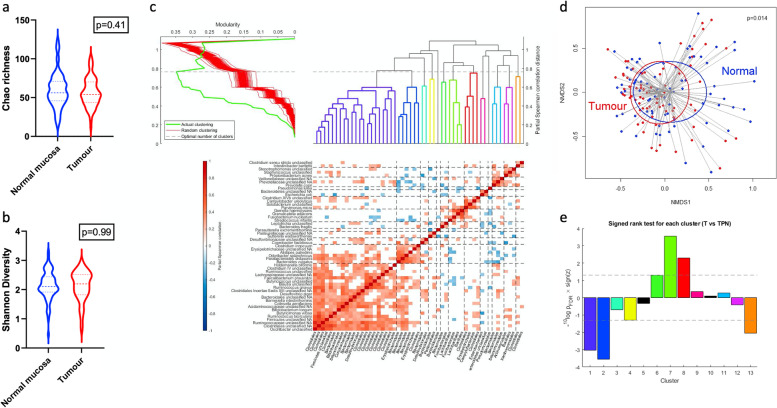
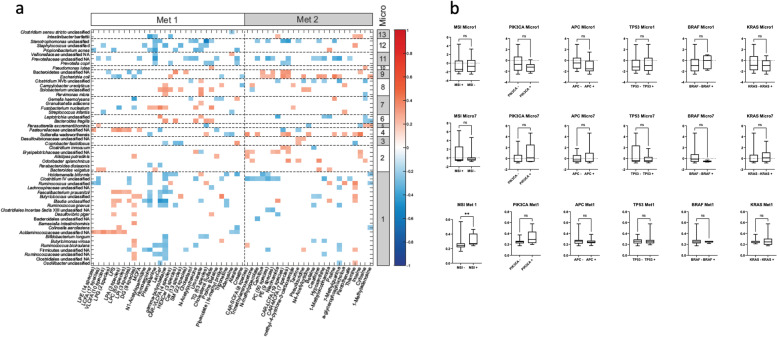
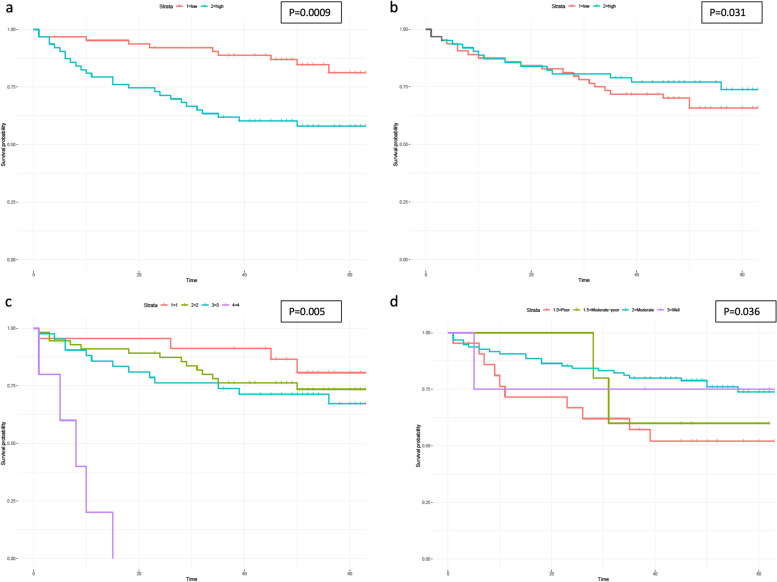
Thirteen mucosal microbiota clusters were identified, of which five were significantly different between tumour and paired normal mucosa. Cluster 7, containing the pathobionts Fusobacterium nucleatum and Granulicatella adiacens, was strongly associated with CRC (P = 0.0002). Additionally, tumoral dominance of cluster 7 independently predicted favourable disease-free survival (adjusted p = 0.031). Cluster 1, containing Faecalibacterium prausnitzii and Ruminococcus gnavus, was negatively associated with cancer (P = 0.0009), and abundance was independently predictive of worse disease-free survival (adjusted p = 0.0009). UPLC-MS analysis revealed two major metabolic (Met) clusters. Met 1, composed of medium chain (MCFA), long-chain (LCFA) and very long-chain (VLCFA) fatty acid species, ceramides and lysophospholipids, was negatively associated with CRC (P = 2.61 × 10); Met 2, composed of phosphatidylcholine species, nucleosides and amino acids, was strongly associated with CRC (P = 1.30 × 10), but metabolite clusters were not associated with disease-free survival (p = 0.358). An association was identified between Met 1 and DNA mismatch-repair deficiency (p = 0.005). FBXW7 mutations were only found in cancers predominant in microbiota cluster 7.
Networks of pathobionts in the tumour mucosal niche are associated with tumour mutation and metabolic subtypes and predict favourable outcome following CRC resection. Video Abstract.
肠道微生物群与结直肠癌(CRC)的发病机制有关。我们旨在绘制 CRC 黏膜微生物群和代谢组图谱,并定义肿瘤微生物群对肿瘤学结果的影响。
在英国(n=74)和捷克共和国(n=61)进行了一项多中心、前瞻性观察性研究,对接受初次手术切除的 CRC 患者进行研究。使用 metataxonomics、超高效液相色谱-质谱联用(UPLC-MS)、靶向细菌 qPCR 和肿瘤外显子组测序进行分析。进行分层聚类,考虑临床和肿瘤学协变量,以确定与 CRC 相关的细菌和代谢物簇。使用 Cox 比例风险回归确定与中位随访 50 个月时无病生存相关的簇。
确定了 13 个黏膜微生物群簇,其中 5 个在肿瘤和配对正常黏膜之间存在显著差异。簇 7 含有条件致病菌 Fusobacterium nucleatum 和 Granulicatella adiacens,与 CRC 密切相关(P=0.0002)。此外,簇 7 在肿瘤中的优势独立预测无病生存良好(调整后 p=0.031)。簇 1 含有 Faecalibacterium prausnitzii 和 Ruminococcus gnavus,与癌症呈负相关(P=0.0009),丰度独立预测无病生存不良(调整后 p=0.0009)。UPLC-MS 分析显示存在两个主要的代谢(Met)簇。Met 1 由中链(MCFA)、长链(LCFA)和超长链(VLCFA)脂肪酸、神经酰胺和溶血磷脂组成,与 CRC 呈负相关(P=2.61×10);Met 2 由磷脂酰胆碱物种、核苷和氨基酸组成,与 CRC 呈强正相关(P=1.30×10),但代谢物簇与无病生存无关(p=0.358)。Met 1 与 DNA 错配修复缺陷之间存在关联(p=0.005)。仅在主要由微生物群簇 7 组成的癌症中发现 FBXW7 突变。
肿瘤黏膜龛中的病原体网络与肿瘤突变和代谢亚型相关,并预测 CRC 切除后的良好预后。