Department of Molecular and Cellular Physiology, Stanford University School of Medicine, 279 Campus Drive, Stanford, CA, 94305, USA.
Department of Structural Biology, Stanford University School of Medicine, 279 Campus Drive, Stanford, CA, 94305, USA.
Nat Commun. 2023 May 9;14(1):2672. doi: 10.1038/s41467-023-37864-4.
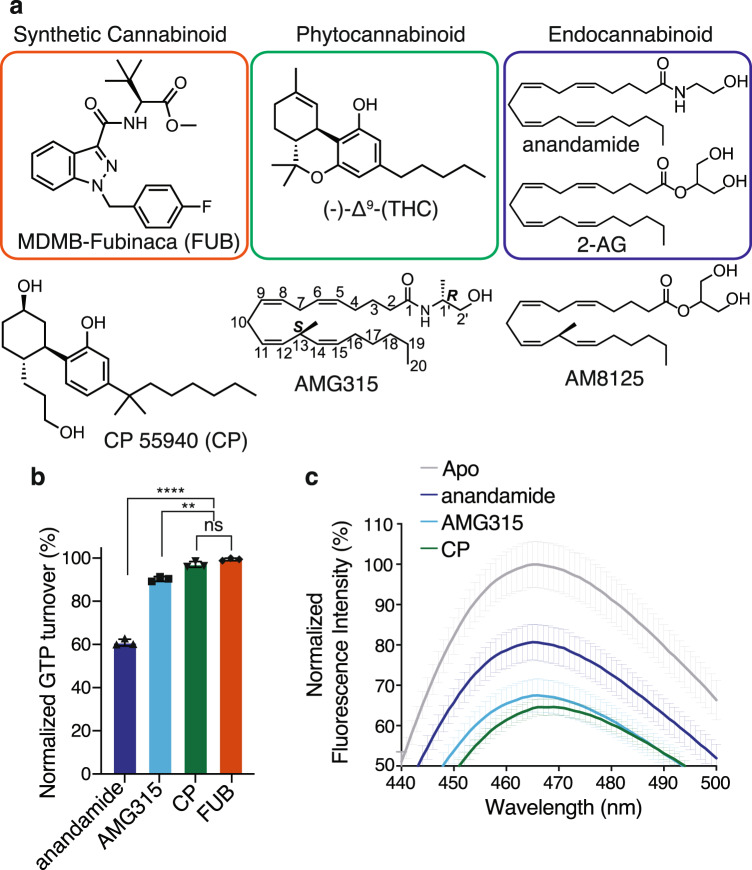
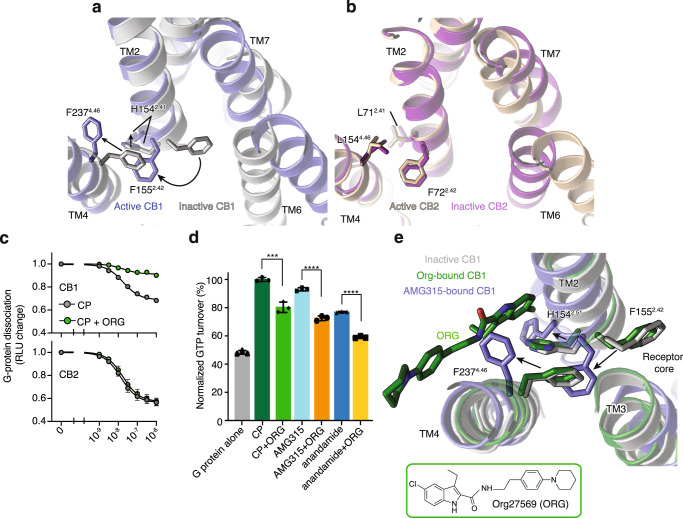
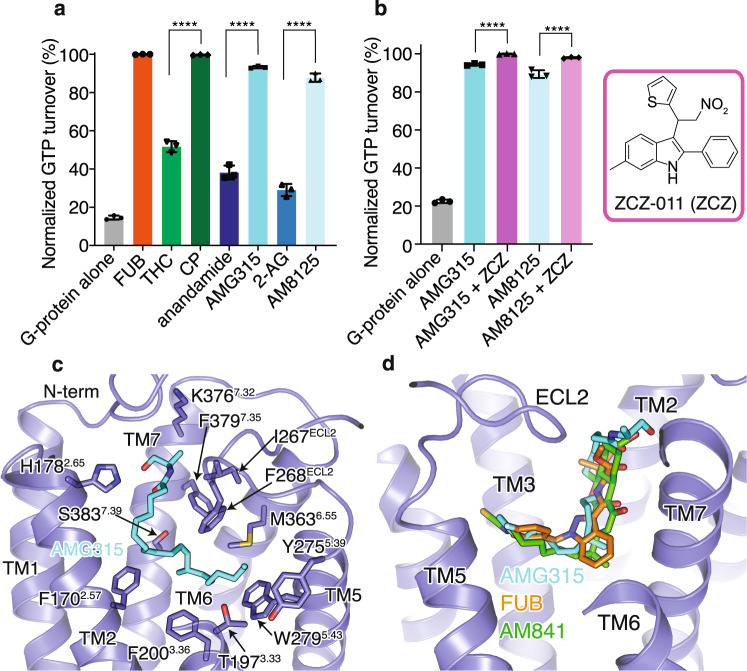
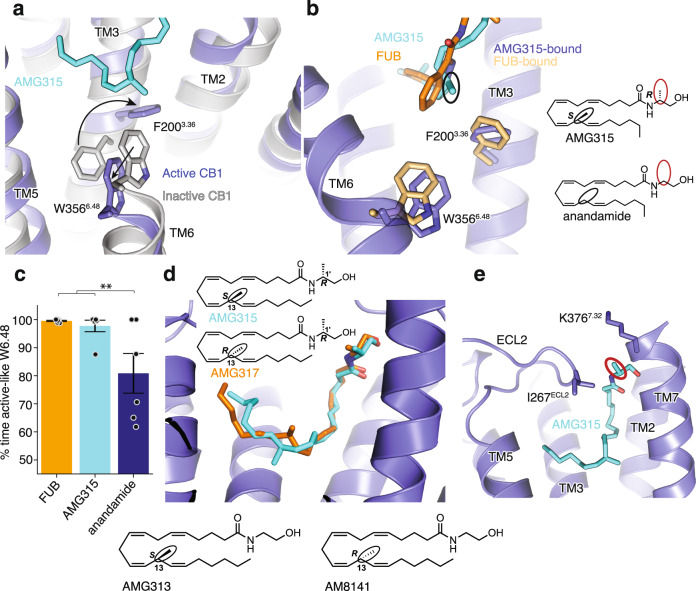
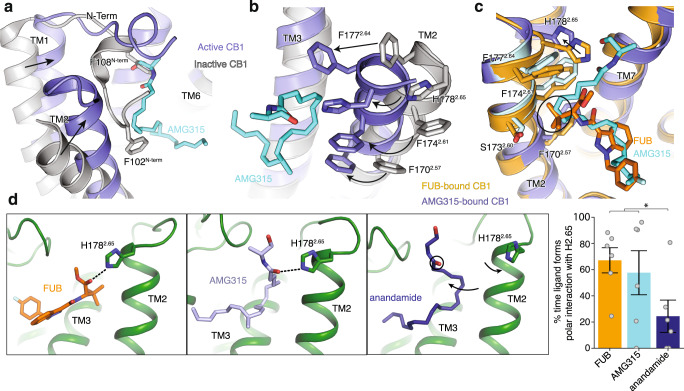
Endocannabinoids (eCBs) are endogenous ligands of the cannabinoid receptor 1 (CB1), a G protein-coupled receptor that regulates a number of therapeutically relevant physiological responses. Hence, understanding the structural and functional consequences of eCB-CB1 interactions has important implications for designing effective drugs targeting this receptor. To characterize the molecular details of eCB interaction with CB1, we utilized AMG315, an analog of the eCB anandamide to determine the structure of the AMG315-bound CB1 signaling complex. Compared to previous structures, the ligand binding pocket shows some differences. Using docking, molecular dynamics simulations, and signaling assays we investigated the functional consequences of ligand interactions with the "toggle switch" residues F200 and W356. Further, we show that ligand-TM2 interactions drive changes to residues on the intracellular side of TM2 and are a determinant of efficacy in activating G protein. These intracellular TM2 rearrangements are unique to CB1 and are exploited by a CB1-specific allosteric modulator.
内源性大麻素(eCBs)是大麻素受体 1(CB1)的内源性配体,CB1 是一种 G 蛋白偶联受体,调节许多治疗相关的生理反应。因此,了解 eCB-CB1 相互作用的结构和功能后果对于设计针对该受体的有效药物具有重要意义。为了表征 eCB 与 CB1 相互作用的分子细节,我们利用 AMG315(内源性大麻素类似物)来确定 AMG315 结合的 CB1 信号复合物的结构。与以前的结构相比,配体结合口袋显示出一些差异。通过对接、分子动力学模拟和信号转导测定,我们研究了与“翻转开关”残基 F200 和 W356 相互作用的配体的功能后果。此外,我们表明配体-TM2 相互作用驱动 TM2 细胞内侧残基的变化,是激活 G 蛋白效力的决定因素。这些细胞内 TM2 重排是 CB1 特有的,被一种 CB1 特异性别构调节剂所利用。