UPMC Hillman Cancer Center, University of Pittsburgh, Pittsburgh, PA, USA.
Division of Surgical Oncology, Department of Surgery, University of Pittsburgh, Pittsburgh, PA, USA.
Nat Commun. 2023 May 9;14(1):2463. doi: 10.1038/s41467-023-37863-5.
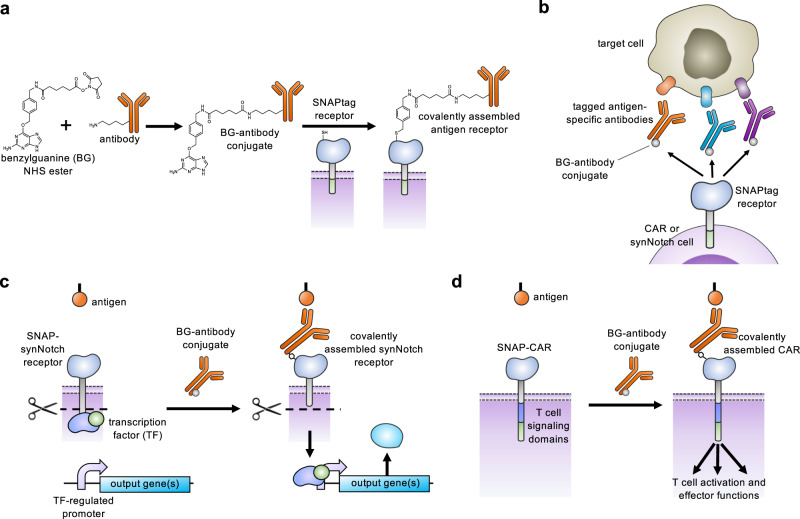
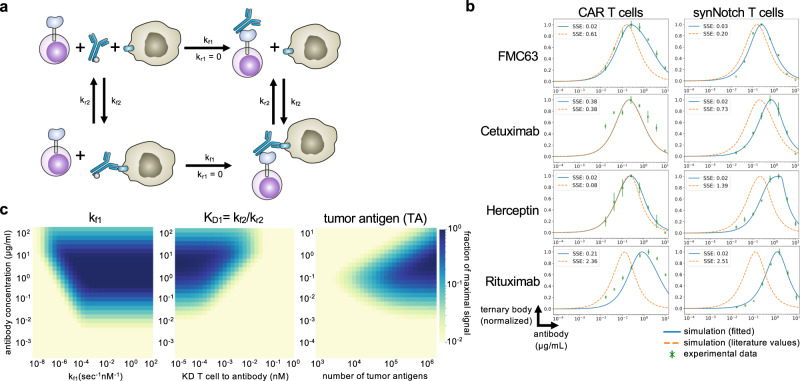
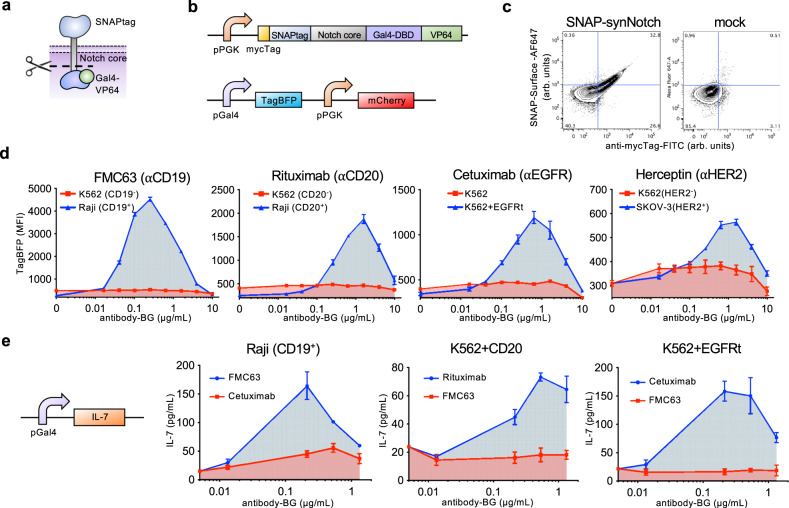
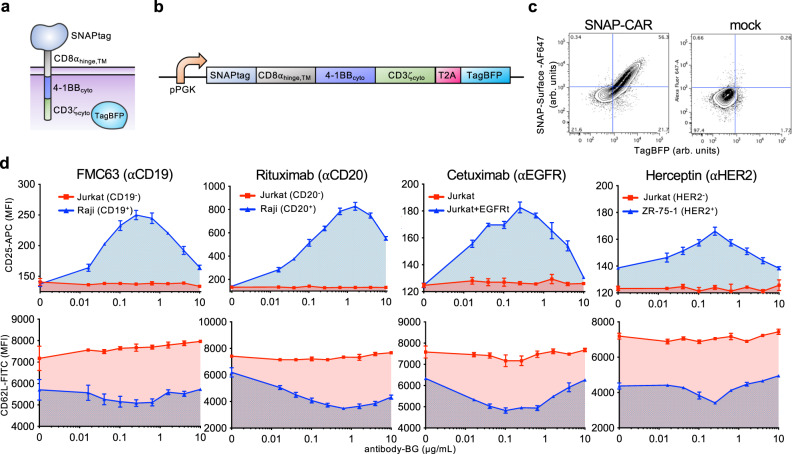
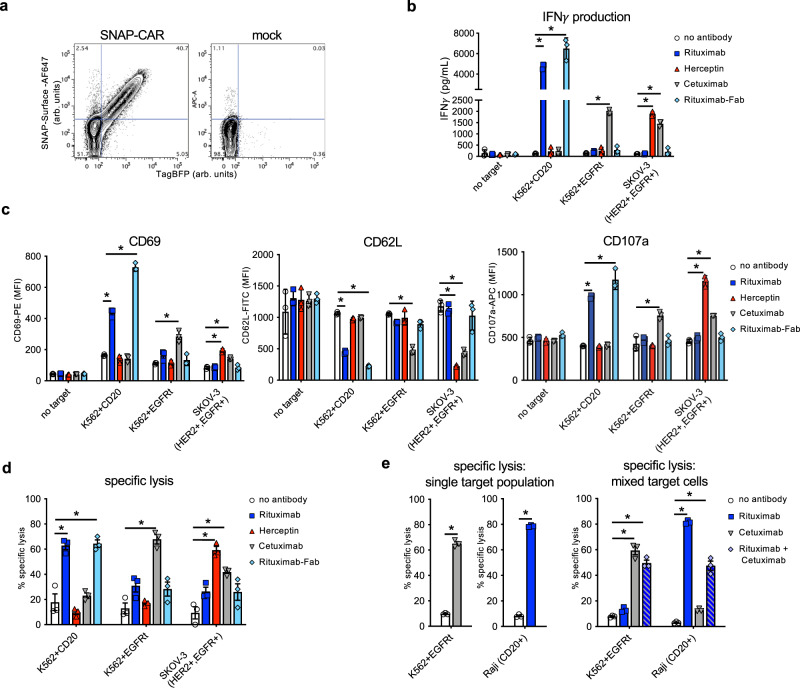
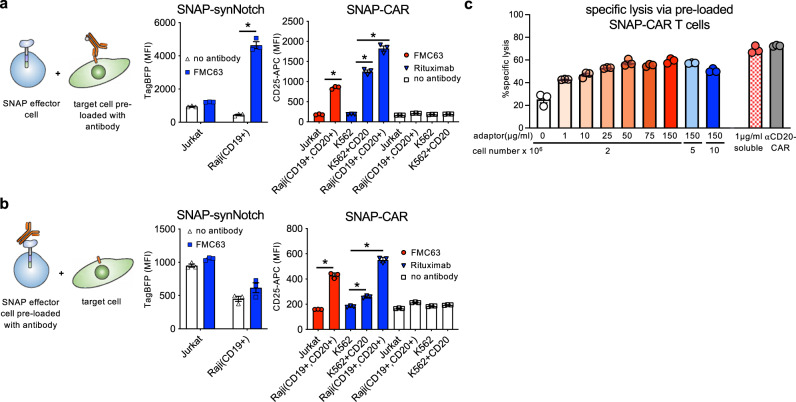
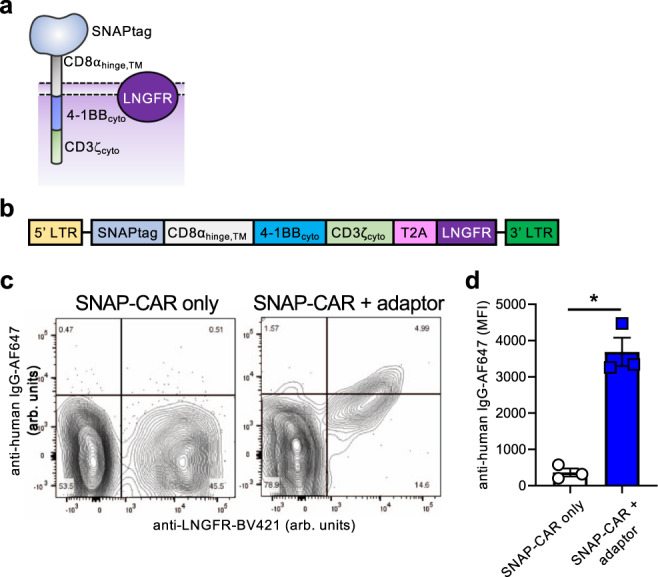
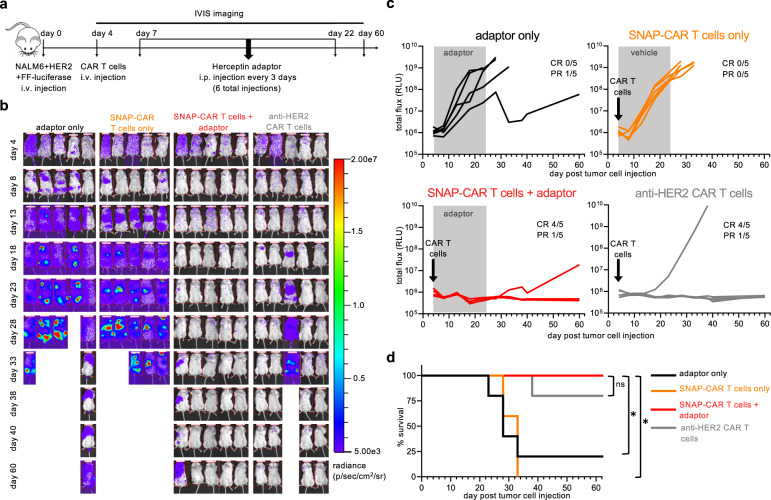
Chimeric antigen receptors (CARs) and synthetic Notch (synNotch) receptors are engineered cell-surface receptors that sense a target antigen and respond by activating T cell receptor signaling or a customized gene program, respectively. Here, to expand the targeting capabilities of these receptors, we develop "universal" receptor systems for which receptor specificity can be directed post-translationally via covalent attachment of a co-administered antibody bearing a benzylguanine (BG) motif. A SNAPtag self-labeling enzyme is genetically fused to the receptor and reacts with BG-conjugated antibodies for covalent assembly, programming antigen recognition. We demonstrate that activation of SNAP-CAR and SNAP-synNotch receptors can be successfully targeted by clinically relevant BG-conjugated antibodies, including anti-tumor activity of SNAP-CAR T cells in vivo in a human tumor xenograft mouse model. Finally, we develop a mathematical model to better define the parameters affecting universal receptor signaling. SNAP receptors provide a powerful strategy to post-translationally reprogram the targeting specificity of engineered cells.
嵌合抗原受体 (CARs) 和合成 Notch (synNotch) 受体是经过工程改造的细胞表面受体,分别通过激活 T 细胞受体信号或定制的基因程序来感知目标抗原并做出响应。在这里,为了扩大这些受体的靶向能力,我们开发了“通用”受体系统,通过共价连接带有苯甲基鸟嘌呤 (BG) 基序的共给药抗体,可以在翻译后指导受体特异性。将 SNAPtag 自我标记酶基因融合到受体上,并与 BG 缀合的抗体反应进行共价组装,编程抗原识别。我们证明,SNAP-CAR 和 SNAP-synNotch 受体的激活可以通过临床相关的 BG 缀合抗体成功靶向,包括在人肿瘤异种移植小鼠模型中体内 SNAP-CAR T 细胞的抗肿瘤活性。最后,我们开发了一个数学模型来更好地定义影响通用受体信号的参数。SNAP 受体为通过翻译后重编程工程细胞的靶向特异性提供了一种强大的策略。