Yang Xiaoman, Ma Zhuoran, Lian Piaopiao, Xu Yan, Cao Xuebing
Department of Neurology, Union Hospital, Tongji Medical College, Huazhong University of Science and Technology, Wuhan, China.
Front Mol Neurosci. 2023 Apr 24;16:1172197. doi: 10.3389/fnmol.2023.1172197. eCollection 2023.
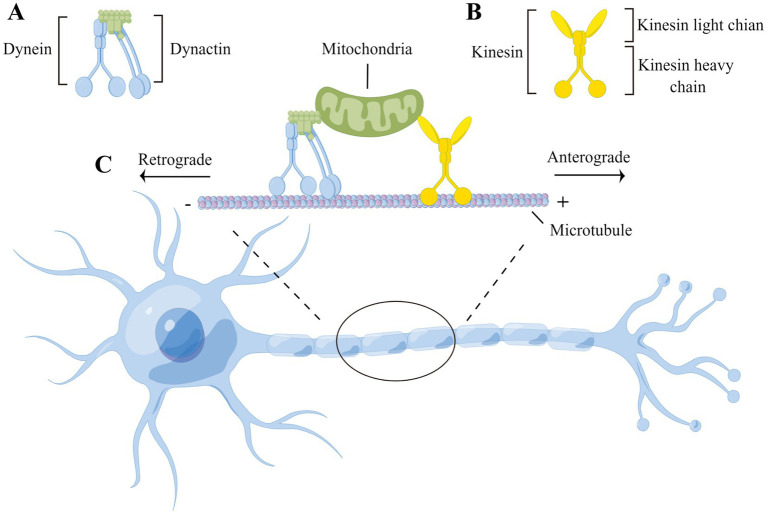
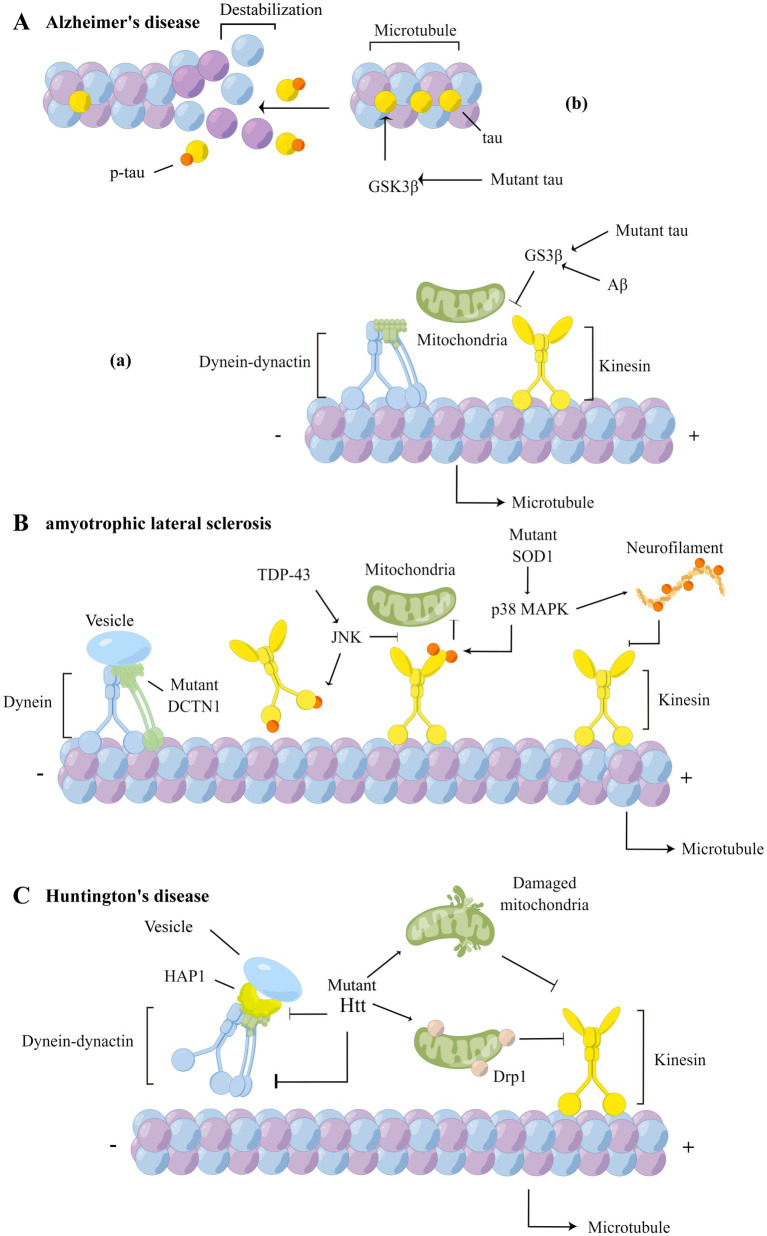
Many neurodegenerative diseases including Alzheimer's disease, Parkinson's disease, and amyotrophic lateral sclerosis are characterized by the accumulation of pathogenic proteins and abnormal localization of organelles. These pathological features may be related to axonal transport deficits in neurons, which lead to failures in pathological protein targeting to specific sites for degradation and organelle transportation to designated areas needed for normal physiological functioning. Axonal transport deficits are most likely early pathological events in such diseases and gradually lead to the loss of axonal integrity and other degenerative changes. In this review, we investigated reports of mechanisms underlying the development of axonal transport deficits in a variety of common neurodegenerative diseases, such as Alzheimer's disease, amyotrophic lateral sclerosis, Parkinson's disease and Huntington's disease to provide new ideas for therapeutic targets that may be used early in the disease process. The mechanisms can be summarized as follows: (1) motor protein changes including expression levels and post-translational modification alteration; (2) changes in microtubules including reducing stability and disrupting tracks; (3) changes in cargoes including diminished binding to motor proteins. Future studies should determine which axonal transport defects are disease-specific and whether they are suitable therapeutic targets in neurodegenerative diseases.
许多神经退行性疾病,包括阿尔茨海默病、帕金森病和肌萎缩侧索硬化症,其特征是致病蛋白的积累和细胞器的异常定位。这些病理特征可能与神经元中的轴突运输缺陷有关,这会导致病理性蛋白无法靶向特定位点进行降解,以及细胞器无法运输到正常生理功能所需的指定区域。轴突运输缺陷很可能是此类疾病早期的病理事件,并逐渐导致轴突完整性丧失和其他退行性变化。在本综述中,我们研究了多种常见神经退行性疾病(如阿尔茨海默病、肌萎缩侧索硬化症、帕金森病和亨廷顿病)中轴突运输缺陷发生机制的相关报道,以便为可能在疾病进程早期使用的治疗靶点提供新思路。这些机制可总结如下:(1)驱动蛋白变化,包括表达水平和翻译后修饰改变;(2)微管变化,包括稳定性降低和轨道破坏;(3)货物变化,包括与驱动蛋白的结合减少。未来的研究应确定哪些轴突运输缺陷是疾病特异性的,以及它们是否是神经退行性疾病合适的治疗靶点。