Institut für Biochemie, Albert-Ludwigs-Universität Freiburg, Albertstr. 21, 79104, Freiburg, Germany.
Institut für Organische Chemie, Albert-Ludwigs-Universität Freiburg, Albertstr. 21, 79104, Freiburg, Germany.
Sci Rep. 2023 May 11;13(1):7652. doi: 10.1038/s41598-023-34821-5.
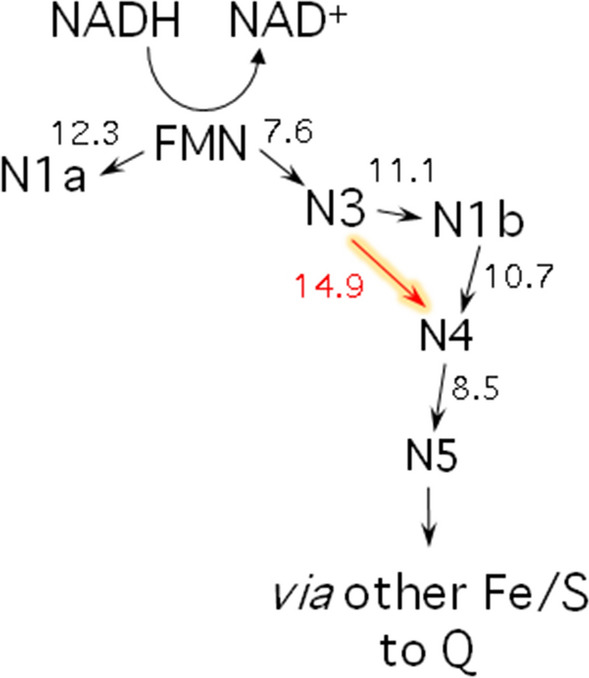
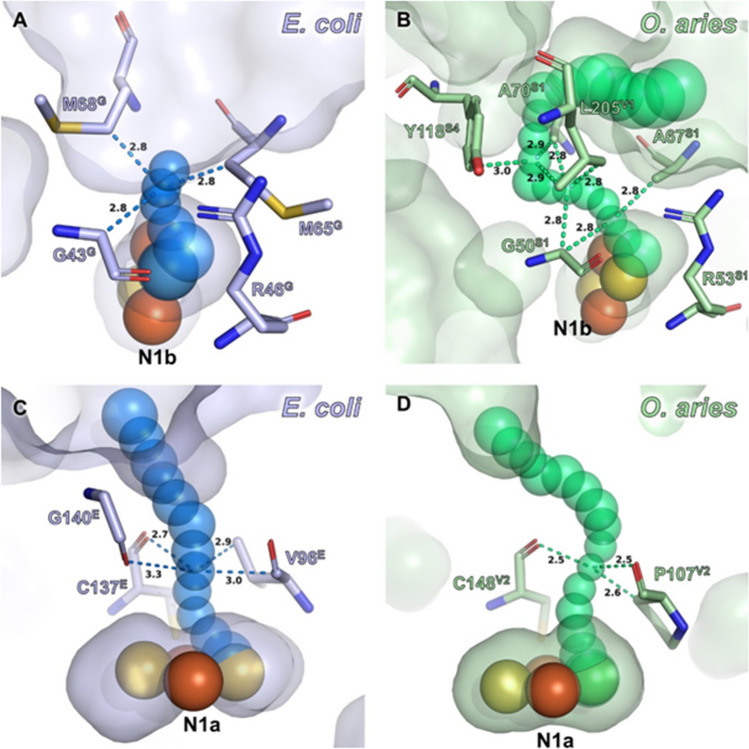
ubiquinone oxidoreductase, respiratory complex I, plays a major role in cellular energy metabolism by coupling electron transfer with proton translocation. Electron transfer is catalyzed by a flavin mononucleotide and a series of iron-sulfur (Fe/S) clusters. As a by-product of the reaction, the reduced flavin generates reactive oxygen species (ROS). It was suggested that the ROS generated by the respiratory chain in general could damage the Fe/S clusters of the complex. Here, we show that the binuclear Fe/S cluster N1b is specifically damaged by HO, however, only at high concentrations. But under the same conditions, the activity of the complex is hardly affected, since N1b can be easily bypassed during electron transfer.
烟酰胺腺嘌呤二核苷酸(NADH):泛醌氧化还原酶,即呼吸复合物 I,通过将电子转移与质子转运偶联在细胞能量代谢中起着主要作用。电子转移由黄素单核苷酸和一系列铁硫(Fe/S)簇催化。作为反应的副产物,还原型黄素会产生活性氧(ROS)。有人提出,一般来说,呼吸链产生的 ROS 可以破坏复合物的 Fe/S 簇。在这里,我们表明双核 Fe/S 簇 N1b 特别容易受到 HO 的破坏,但仅在高浓度下才会如此。但是,在相同条件下,复合物的活性几乎不受影响,因为在电子转移过程中 N1b 可以很容易地被绕过。