• 文献检索
  • 文档翻译
  • 深度研究
  • 学术资讯
  • Suppr Zotero 插件Zotero 插件
  • 邀请有礼
  • 套餐&价格
  • 历史记录
应用&插件
Suppr Zotero 插件Zotero 插件浏览器插件Mac 客户端Windows 客户端微信小程序
定价
高级版会员购买积分包购买API积分包
服务
文献检索文档翻译深度研究API 文档MCP 服务
关于我们
关于 Suppr公司介绍联系我们用户协议隐私条款
关注我们

Suppr 超能文献

核心技术专利:CN118964589B侵权必究
粤ICP备2023148730 号-1Suppr @ 2026

文献检索

告别复杂PubMed语法,用中文像聊天一样搜索,搜遍4000万医学文献。AI智能推荐,让科研检索更轻松。

立即免费搜索

文件翻译

保留排版,准确专业,支持PDF/Word/PPT等文件格式,支持 12+语言互译。

免费翻译文档

深度研究

AI帮你快速写综述,25分钟生成高质量综述,智能提取关键信息,辅助科研写作。

立即免费体验

人多能干细胞(hPSCs)在微图案中的对称性破缺产生具有背腹组织的极化脊髓样类器官(pSCO)。

Symmetry Breaking of Human Pluripotent Stem Cells (hPSCs) in Micropattern Generates a Polarized Spinal Cord-Like Organoid (pSCO) with Dorsoventral Organization.

机构信息

Department of Anatomy, Korea University College of Medicine, Seoul, 02841, Republic of Korea.

Department of Bio-Information Science, Ewha Womans University, Seoul, 03760, Republic of Korea.

出版信息

Adv Sci (Weinh). 2023 Jul;10(20):e2301787. doi: 10.1002/advs.202301787. Epub 2023 May 12.

DOI:10.1002/advs.202301787
PMID:37170679
原文链接:https://pmc.ncbi.nlm.nih.gov/articles/PMC10369253/
Abstract

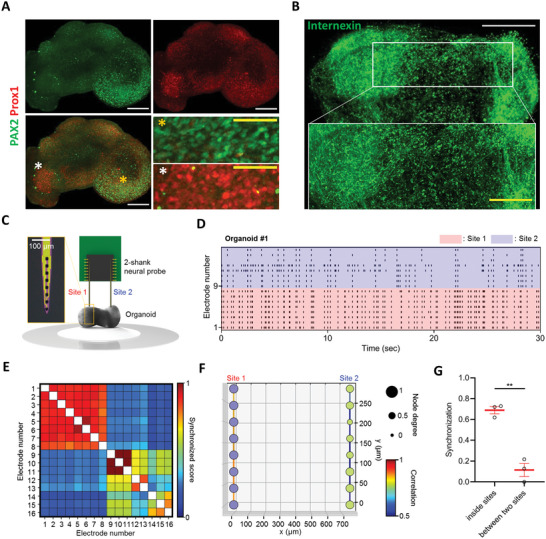
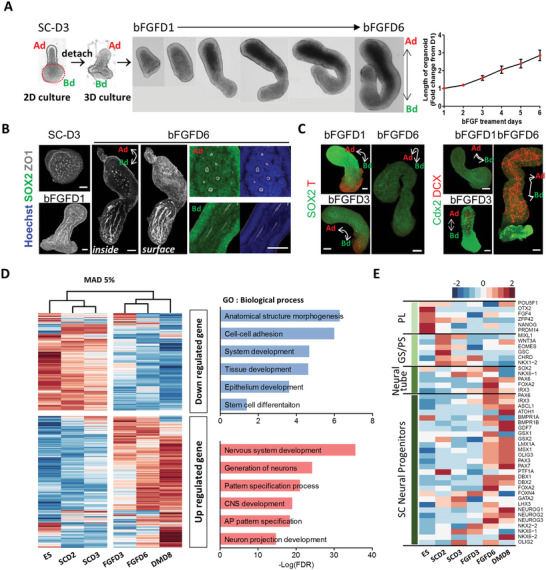
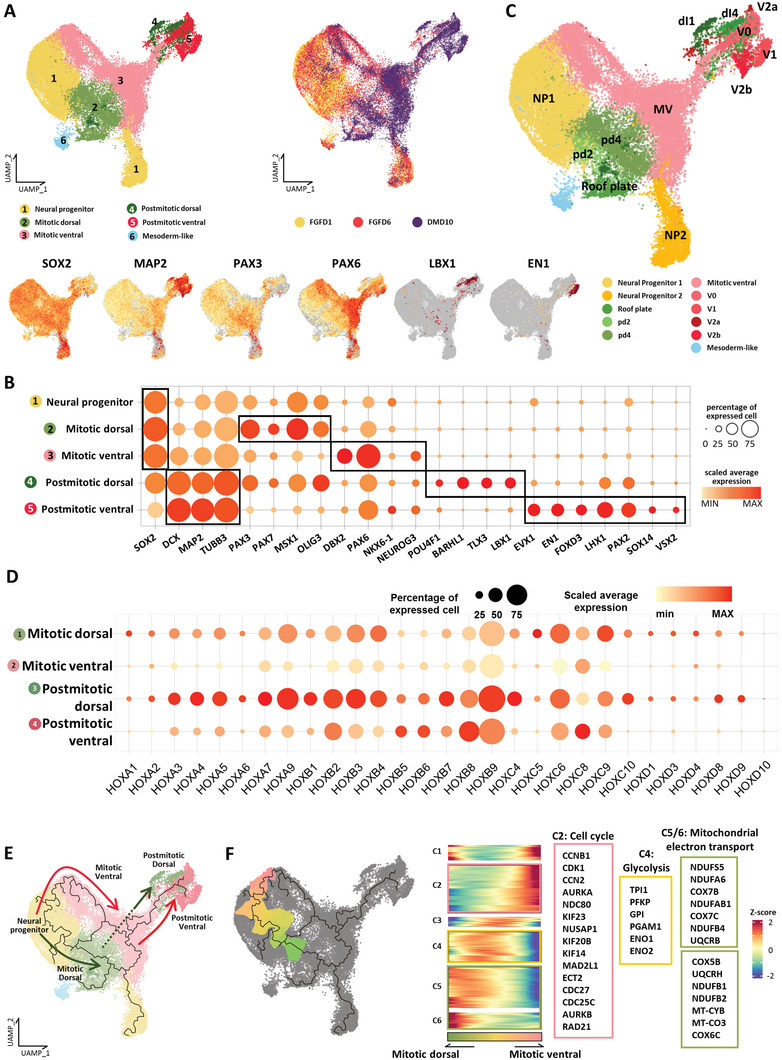
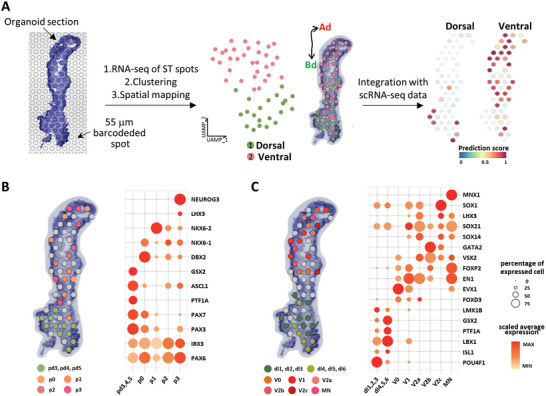
Axis formation and related spatial patterning are initiated by symmetry breaking during development. A geometrically confined culture of human pluripotent stem cells (hPSCs) mimics symmetry breaking and cell patterning. Using this, polarized spinal cord organoids (pSCOs) with a self-organized dorsoventral (DV) organization are generated. The application of caudalization signals promoted regionalized cell differentiation along the radial axis and protrusion morphogenesis in confined hPSC colonies. These detached colonies grew into extended spinal cord-like organoids, which established self-ordered DV patterning along the long axis through the spontaneous expression of polarized DV patterning morphogens. The proportions of dorsal/ventral domains in the pSCOs can be controlled by the changes in the initial size of micropatterns, which altered the ratio of center-edge cells in 2D. In mature pSCOs, highly synchronized neural activity is separately detected in the dorsal and ventral side, indicating functional as well as structural patterning established in the organoids. This study provides a simple and precisely controllable method to generate spatially ordered organoids for the understanding of the biological principles of cell patterning and axis formation during neural development.

摘要

轴形成和相关的空间模式是通过发育过程中的对称性破缺启动的。人类多能干细胞(hPSC)的几何限制培养模拟了对称性破缺和细胞模式形成。利用这种方法,可以生成具有自组织背腹(DV)组织的极化脊髓类器官(pSCO)。尾侧化信号的应用促进了沿着辐射轴的区域化细胞分化,并在受限的 hPSC 集落中促进了突起形态发生。这些分离的集落生长成延伸的脊髓样类器官,通过极化的 DV 模式形成形态发生因子的自发表达,沿着长轴建立了自组织的 DV 模式。通过改变初始微图案的大小,可以控制 pSCO 中背/腹区域的比例,从而改变 2D 中的中心-边缘细胞的比例。在成熟的 pSCO 中,在背部和腹部可以分别检测到高度同步的神经活动,表明在类器官中建立了功能和结构模式。这项研究提供了一种简单且可精确控制的方法来生成空间有序的类器官,以了解神经发育过程中细胞模式形成和轴形成的生物学原理。
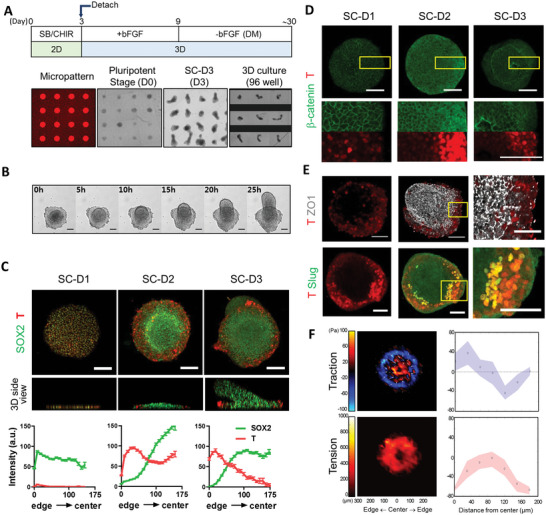
https://cdn.ncbi.nlm.nih.gov/pmc/blobs/7d39/10369253/c464b99fa0b9/ADVS-10-2301787-g003.jpg
https://cdn.ncbi.nlm.nih.gov/pmc/blobs/7d39/10369253/fb18b4c23b99/ADVS-10-2301787-g007.jpg
https://cdn.ncbi.nlm.nih.gov/pmc/blobs/7d39/10369253/c9e4f9e1697a/ADVS-10-2301787-g005.jpg
https://cdn.ncbi.nlm.nih.gov/pmc/blobs/7d39/10369253/8bcea62d975e/ADVS-10-2301787-g006.jpg
https://cdn.ncbi.nlm.nih.gov/pmc/blobs/7d39/10369253/f73587bf53e0/ADVS-10-2301787-g001.jpg
https://cdn.ncbi.nlm.nih.gov/pmc/blobs/7d39/10369253/f1179c1fcd4b/ADVS-10-2301787-g008.jpg
https://cdn.ncbi.nlm.nih.gov/pmc/blobs/7d39/10369253/109b75774912/ADVS-10-2301787-g002.jpg
https://cdn.ncbi.nlm.nih.gov/pmc/blobs/7d39/10369253/c464b99fa0b9/ADVS-10-2301787-g003.jpg
https://cdn.ncbi.nlm.nih.gov/pmc/blobs/7d39/10369253/fb18b4c23b99/ADVS-10-2301787-g007.jpg
https://cdn.ncbi.nlm.nih.gov/pmc/blobs/7d39/10369253/c9e4f9e1697a/ADVS-10-2301787-g005.jpg
https://cdn.ncbi.nlm.nih.gov/pmc/blobs/7d39/10369253/8bcea62d975e/ADVS-10-2301787-g006.jpg
https://cdn.ncbi.nlm.nih.gov/pmc/blobs/7d39/10369253/f73587bf53e0/ADVS-10-2301787-g001.jpg
https://cdn.ncbi.nlm.nih.gov/pmc/blobs/7d39/10369253/f1179c1fcd4b/ADVS-10-2301787-g008.jpg
https://cdn.ncbi.nlm.nih.gov/pmc/blobs/7d39/10369253/109b75774912/ADVS-10-2301787-g002.jpg
https://cdn.ncbi.nlm.nih.gov/pmc/blobs/7d39/10369253/c464b99fa0b9/ADVS-10-2301787-g003.jpg

相似文献

1
Symmetry Breaking of Human Pluripotent Stem Cells (hPSCs) in Micropattern Generates a Polarized Spinal Cord-Like Organoid (pSCO) with Dorsoventral Organization.人多能干细胞(hPSCs)在微图案中的对称性破缺产生具有背腹组织的极化脊髓样类器官(pSCO)。
Adv Sci (Weinh). 2023 Jul;10(20):e2301787. doi: 10.1002/advs.202301787. Epub 2023 May 12.
2
Polarization of organoids by bioengineered symmetry breaking.通过生物工程对称性破缺使类器官极化。
IBRO Neurosci Rep. 2024 May 21;17:22-31. doi: 10.1016/j.ibneur.2024.05.002. eCollection 2024 Dec.
3
Self-organizing models of human trunk organogenesis recapitulate spinal cord and spine co-morphogenesis.人体躯干器官发生的自组织模型再现了脊髓和脊柱的共形态发生。
Nat Biotechnol. 2024 Aug;42(8):1243-1253. doi: 10.1038/s41587-023-01956-9. Epub 2023 Sep 14.
4
Bioengineering tissue morphogenesis and function in human neural organoids.在人类神经类器官中生物工程组织形态发生和功能。
Semin Cell Dev Biol. 2021 Mar;111:52-59. doi: 10.1016/j.semcdb.2020.05.025. Epub 2020 Jun 12.
5
Bioengineering the human spinal cord.人类脊髓的生物工程
Front Cell Dev Biol. 2022 Aug 26;10:942742. doi: 10.3389/fcell.2022.942742. eCollection 2022.
6
Axial elongation of caudalized human organoids mimics aspects of neural tube development.尾部化的人类类器官的轴向伸长模拟了神经管发育的某些方面。
Development. 2021 Jun 15;148(12). doi: 10.1242/dev.198275. Epub 2021 Jun 18.
7
A patterned human neural tube model using microfluidic gradients.使用微流控梯度的模式化人类神经管模型。
Nature. 2024 Apr;628(8007):391-399. doi: 10.1038/s41586-024-07204-7. Epub 2024 Feb 26.
8
Human Placenta Decellularized Extracellular Matrix Hydrogel Promotes the Generation of Human Spinal Cord Organoids with Dorsoventral Organization from Human Induced Pluripotent Stem Cells.人胎盘去细胞细胞外基质水凝胶促进人诱导多能干细胞生成具有背腹组织的人脊髓类器官。
ACS Biomater Sci Eng. 2024 May 13;10(5):3218-3231. doi: 10.1021/acsbiomaterials.4c00067. Epub 2024 Apr 9.
9
Retinoic acid and the control of dorsoventral patterning in the avian spinal cord.视黄酸与鸟类脊髓背腹模式的调控
Dev Biol. 2004 May 15;269(2):433-46. doi: 10.1016/j.ydbio.2004.01.034.
10
Engineering Stem Cell Self-organization to Build Better Organoids.工程化干细胞自组织构建更好的类器官
Cell Stem Cell. 2019 Jun 6;24(6):860-876. doi: 10.1016/j.stem.2019.05.005.

引用本文的文献

1
Beyond Structure: Next-Generation Electrophysiological Platforms for Functional Brain Organoids.超越结构:用于功能性脑类器官的下一代电生理平台。
Int J Stem Cells. 2025 Aug 30;18(3):215-236. doi: 10.15283/ijsc25056. Epub 2025 Jul 31.
2
Bioprinted Organoids: An Innovative Engine in Biomedicine.生物打印类器官:生物医学中的创新引擎。
Adv Sci (Weinh). 2025 Sep;12(33):e07317. doi: 10.1002/advs.202507317. Epub 2025 Jul 25.
3
Generation of Neural Organoids and Their Application in Disease Modeling and Regenerative Medicine.神经类器官的生成及其在疾病建模和再生医学中的应用。

本文引用的文献

1
A cellular taxonomy of the adult human spinal cord.成人脊髓的细胞分类。
Neuron. 2023 Feb 1;111(3):328-344.e7. doi: 10.1016/j.neuron.2023.01.007.
2
Self-organizing in vitro mouse neural tube organoids mimic embryonic development.自组织的体外小鼠神经管类器官模拟胚胎发育。
Development. 2022 Oct 15;149(20). doi: 10.1242/dev.201052. Epub 2022 Oct 18.
3
3D Interfacial and Spatiotemporal Regulation of Human Neuroepithelial Organoids.人类神经上皮类器官的 3D 界面和时空调控
Adv Sci (Weinh). 2025 Aug;12(29):e01198. doi: 10.1002/advs.202501198. Epub 2025 May 24.
4
Effects of heterozygous SMG1 mutations on nonsense-mediated mRNA decay in human pluripotent stem cell model.杂合SMG1突变对人多能干细胞模型中无义介导的mRNA降解的影响。
Mol Cells. 2025 Jul;48(7):100225. doi: 10.1016/j.mocell.2025.100225. Epub 2025 May 20.
5
Toxicity assessment using neural organoids: innovative approaches and challenges.使用神经类器官进行毒性评估:创新方法与挑战
Toxicol Res. 2025 Feb 12;41(2):91-103. doi: 10.1007/s43188-025-00279-y. eCollection 2025 Mar.
6
Progress in spinal cord organoid research: advancing understanding of neural development, disease modelling, and regenerative medicine.脊髓类器官研究进展:加深对神经发育、疾病建模和再生医学的理解
Biomater Transl. 2024 Nov 15;5(4):355-371. doi: 10.12336/biomatertransl.2024.04.003. eCollection 2024.
7
The Differential Developmental Neurotoxicity of Valproic Acid on Anterior and Posterior Neural Induction of Human Pluripotent Stem Cells.丙戊酸对人多能干细胞前后神经诱导的差异发育神经毒性
Int J Stem Cells. 2025 Feb 28;18(1):49-58. doi: 10.15283/ijsc24066. Epub 2024 Jul 8.
8
Polarization of organoids by bioengineered symmetry breaking.通过生物工程对称性破缺使类器官极化。
IBRO Neurosci Rep. 2024 May 21;17:22-31. doi: 10.1016/j.ibneur.2024.05.002. eCollection 2024 Dec.
9
In vivo selection in non-human primates identifies AAV capsids for on-target CSF delivery to spinal cord.在非人类灵长类动物中的体内筛选鉴定出用于将脑脊液靶向递送至脊髓的腺相关病毒衣壳。
Mol Ther. 2024 Aug 7;32(8):2584-2603. doi: 10.1016/j.ymthe.2024.05.040. Epub 2024 Jun 5.
10
Chronic Opioid Treatment Arrests Neurodevelopment and Alters Synaptic Activity in Human Midbrain Organoids.慢性阿片类药物治疗会阻止人类中脑组织类器官的神经发育并改变其突触活动。
Adv Sci (Weinh). 2024 Jun;11(21):e2400847. doi: 10.1002/advs.202400847. Epub 2024 Mar 28.
Adv Sci (Weinh). 2022 Aug;9(22):e2201106. doi: 10.1002/advs.202201106. Epub 2022 Jun 6.
4
Production of human spinal-cord organoids recapitulating neural-tube morphogenesis.生成重现神经管形态发生的人类脊髓类器官。
Nat Biomed Eng. 2022 Apr;6(4):435-448. doi: 10.1038/s41551-022-00868-4. Epub 2022 Mar 28.
5
Neural Organoids, a Versatile Model for Neuroscience.神经类器官,神经科学的多功能模型。
Mol Cells. 2022 Feb 28;45(2):53-64. doi: 10.14348/molcells.2022.2019.
6
Cell position within human pluripotent stem cell colonies determines apical specialization via an actin cytoskeleton-based mechanism.人类多能干细胞集落中的细胞位置通过基于肌动蛋白细胞骨架的机制决定顶端特化。
Stem Cell Reports. 2022 Jan 11;17(1):68-81. doi: 10.1016/j.stemcr.2021.11.005. Epub 2021 Dec 16.
7
Human neural tube morphogenesis in vitro by geometric constraints.体外通过几何约束进行人体神经管形态发生。
Nature. 2021 Nov;599(7884):268-272. doi: 10.1038/s41586-021-04026-9. Epub 2021 Oct 27.
8
Axial elongation of caudalized human organoids mimics aspects of neural tube development.尾部化的人类类器官的轴向伸长模拟了神经管发育的某些方面。
Development. 2021 Jun 15;148(12). doi: 10.1242/dev.198275. Epub 2021 Jun 18.
9
Integrated analysis of multimodal single-cell data.多模态单细胞数据的综合分析。
Cell. 2021 Jun 24;184(13):3573-3587.e29. doi: 10.1016/j.cell.2021.04.048. Epub 2021 May 31.
10
Actuation enhances patterning in human neural tube organoids.激活增强了人类神经管类器官的模式形成。
Nat Commun. 2021 May 27;12(1):3192. doi: 10.1038/s41467-021-22952-0.