Department of Plant and Environmental Sciences, The Weizmann Institute of Science, Rehovot, Israel.
Depertment of Chemical Research Support, The Weizmann Institute of Science, Rehovot, Israel.
ISME J. 2023 Aug;17(8):1167-1183. doi: 10.1038/s41396-023-01427-8. Epub 2023 May 12.
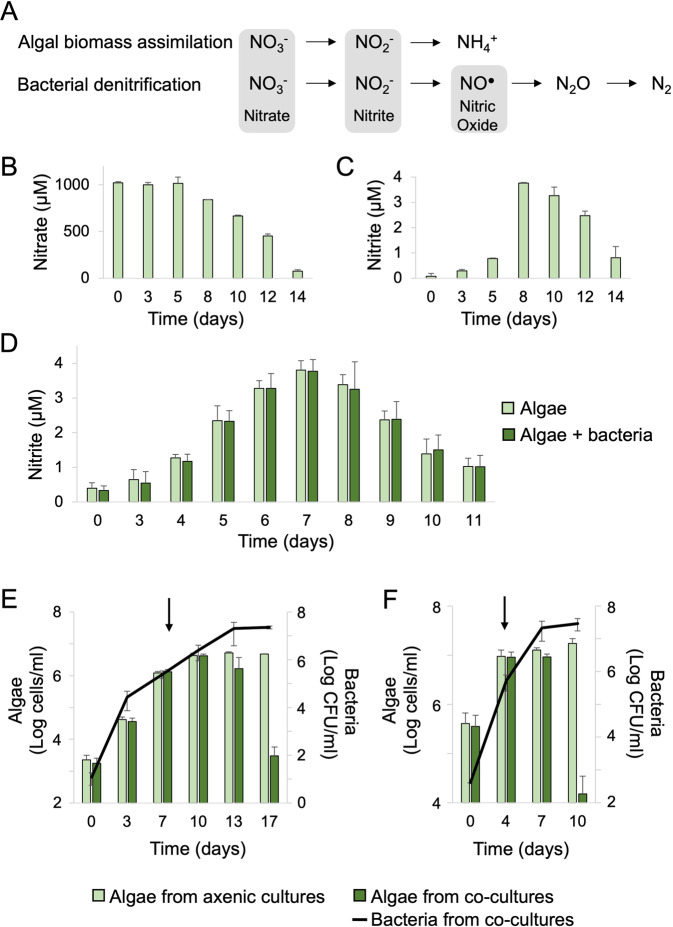
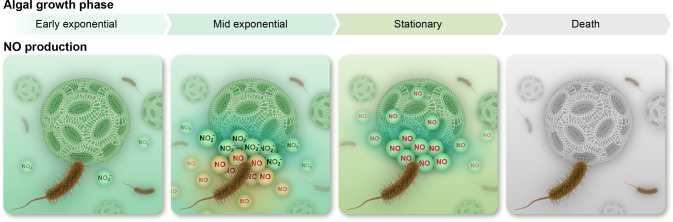
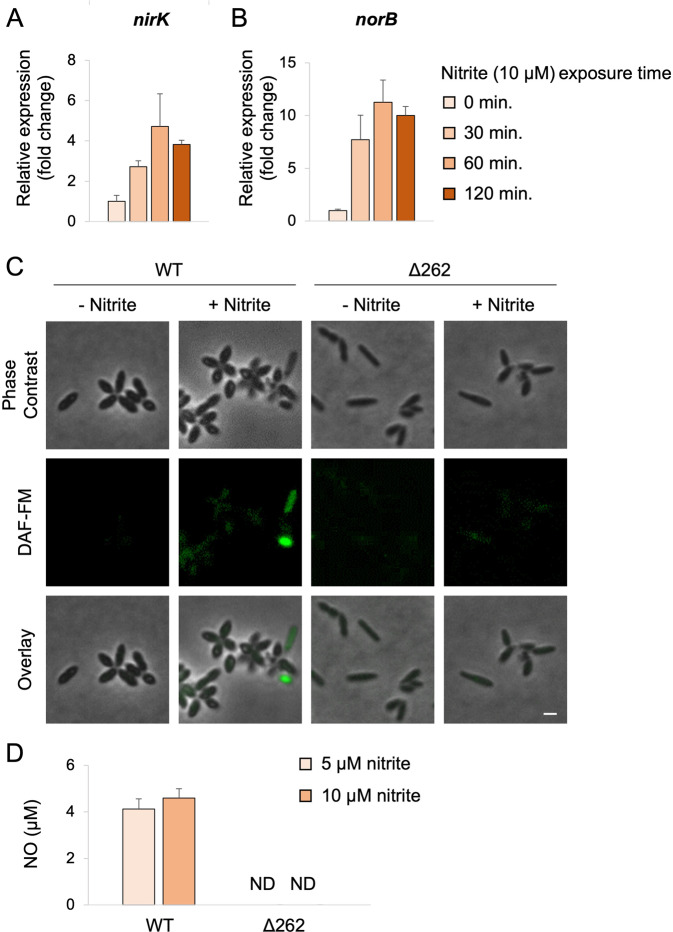
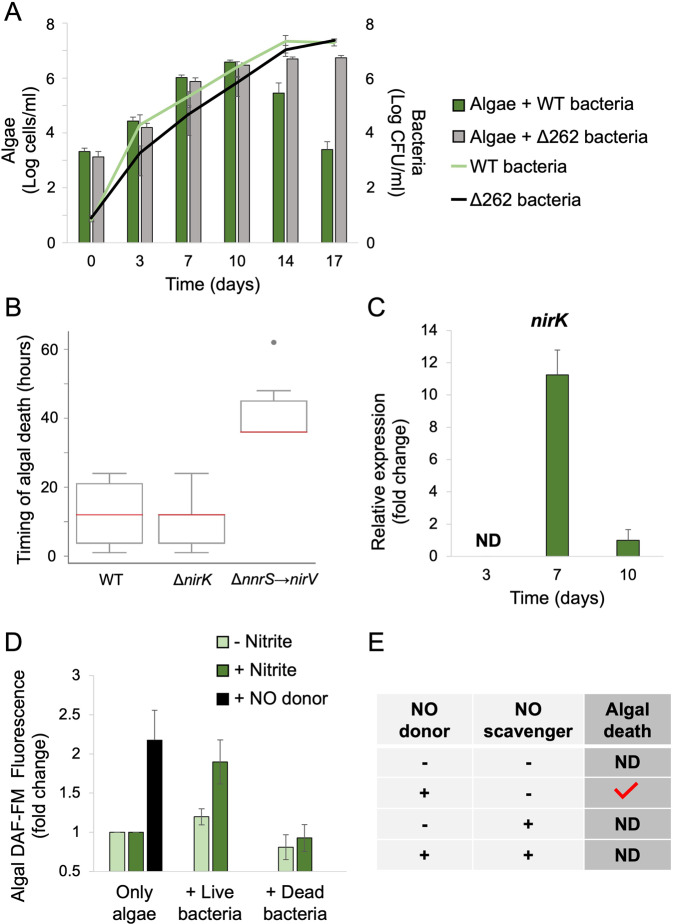
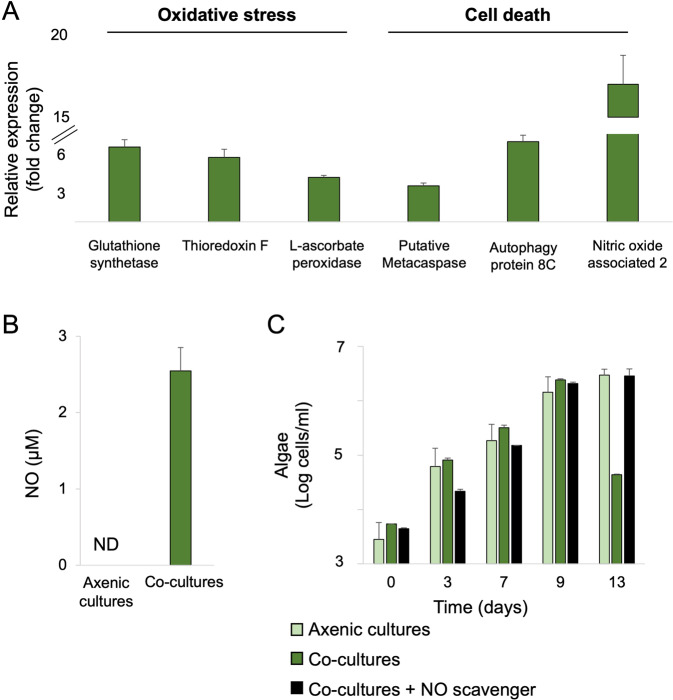
Microbial interactions govern marine biogeochemistry. These interactions are generally considered to rely on exchange of organic molecules. Here we report on a novel inorganic route of microbial communication, showing that algal-bacterial interactions between Phaeobacter inhibens bacteria and Gephyrocapsa huxleyi algae are mediated through inorganic nitrogen exchange. Under oxygen-rich conditions, aerobic bacteria reduce algal-secreted nitrite to nitric oxide (NO) through denitrification, a well-studied anaerobic respiratory mechanism. The bacterial NO is involved in triggering a cascade in algae akin to programmed cell death. During death, algae further generate NO, thereby propagating the signal in the algal population. Eventually, the algal population collapses, similar to the sudden demise of oceanic algal blooms. Our study suggests that the exchange of inorganic nitrogen species in oxygenated environments is a potentially significant route of microbial communication within and across kingdoms.
微生物相互作用控制着海洋生物地球化学。这些相互作用通常被认为依赖于有机分子的交换。在这里,我们报告了一种新的微生物无机通讯途径,表明在 Phaeobacter inhibens 细菌和 Gephyrocapsa huxleyi 藻类之间的藻类-细菌相互作用是通过无机氮交换介导的。在富氧条件下,好氧细菌通过反硝化作用将藻类分泌的亚硝酸盐还原为一氧化氮(NO),这是一种研究充分的厌氧呼吸机制。细菌产生的 NO 参与触发类似于程序性细胞死亡的藻类级联反应。在死亡过程中,藻类进一步产生 NO,从而在藻类种群中传播信号。最终,藻类种群崩溃,类似于海洋藻类大量繁殖的突然消亡。我们的研究表明,在含氧环境中,无机氮物种的交换是微生物在王国内部和之间进行通讯的一个潜在重要途径。