Department of Pharmaceutics, Xiangya School of Pharmaceutical Sciences, Central South University, Changsha 410013, China.
Department of Pharmaceutical Engineering, College of Chemistry and Chemical Engineering, Central South University, Changsha 410083, China.
Molecules. 2023 May 6;28(9):3922. doi: 10.3390/molecules28093922.
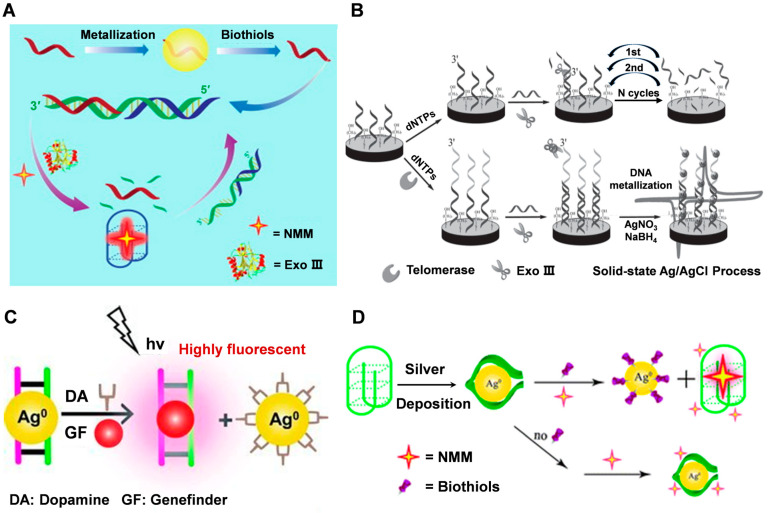
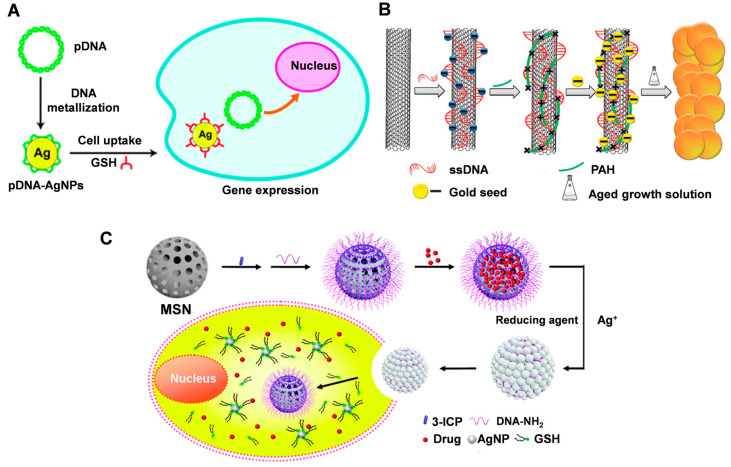
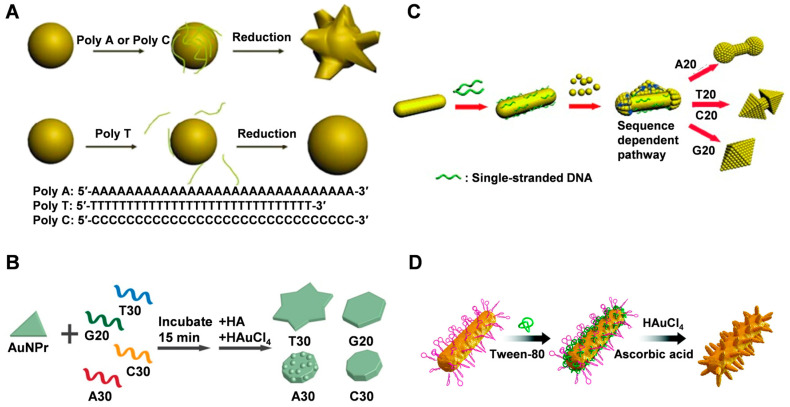
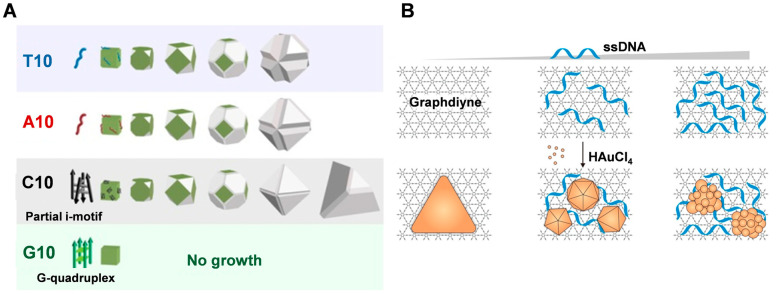
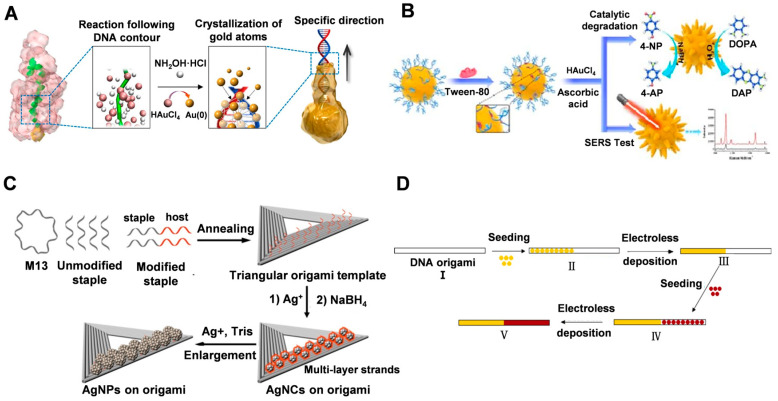
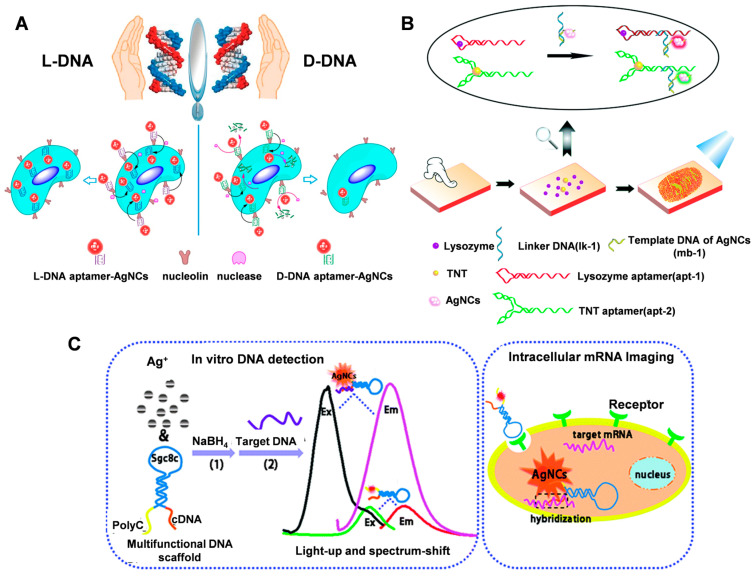
Precise control of the structure of metallic nanomaterials is critical for the advancement of nanobiotechnology. As DNA (deoxyribonucleic acid) can readily modify various moieties, such as sulfhydryl, carboxyl, and amino groups, using DNA as a directing ligand to modulate the morphology of nanomaterials is a promising strategy. In this review, we focus on the use of DNA as a template to control the morphology of metallic nanoparticles and their biomedical applications, discuss the use of DNA for the metallization of gold and silver, explore the factors that influence the process, and outline its biomedical applications. This review aims to provide valuable insights into the DNA-guided growth of nanomaterials. The challenges and future directions are also discussed.
精确控制金属纳米材料的结构对于纳米生物技术的发展至关重要。由于 DNA(脱氧核糖核酸)可以很容易地修饰各种基团,如巯基、羧基和氨基,因此使用 DNA 作为导向配体来调节纳米材料的形态是一种很有前途的策略。在这篇综述中,我们专注于使用 DNA 作为模板来控制金属纳米粒子的形态及其在生物医学中的应用,讨论使用 DNA 进行金和银的金属化,探索影响该过程的因素,并概述其在生物医学中的应用。本文旨在为 DNA 引导的纳米材料生长提供有价值的见解。还讨论了挑战和未来的方向。