Department of Dermatology, Venereology and Allergology, Wrocław Medical University, 50-368 Wrocław, Poland.
Int J Mol Sci. 2023 Apr 24;24(9):7784. doi: 10.3390/ijms24097784.
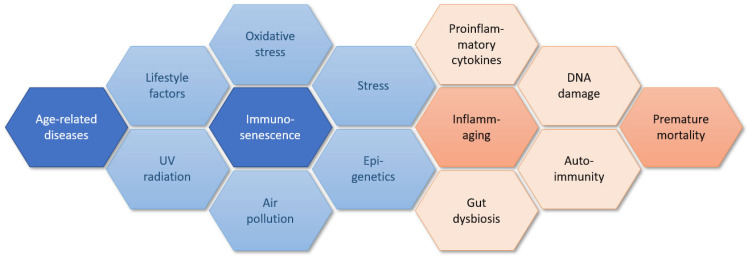
Inflammaging and immunosenescence are associated with aging of the human body, but there are key differences between them. Immunosenescence aims to adapt the body systems to aging, while inflammaging is considered a consequence of immunosenescence. There has been much research in the area of immunosenescence and inflammaging recently, yet our understanding of aging and the ability to develop interventions to decrease the harmful effect of aging on the human body is insufficient. This review is focused on immunosenescence and inflammaging processes in the skin. We aimed to identify factors that influence inflammaging, skin aging, and their mechanisms. We discussed the role of triggering factors (e.g., UV radiations, changes in bioavailability of nitric oxide, senescence-associated secretory phenotype factors, and reactive oxygen species) and inhibiting factors that can potentially be used as anti-aging treatments, as well as the idea of geroprotectors and senotherapeutics. We concluded that while knowledge on external factors can help people to improve their health conditions, knowledge on biochemical factors can help researchers to understand inflammaging process and develop interventions to minimize the impact of aging on the human body. Further research is needed to better understand the role of factors that can slow down or accelerate inflammaging.
炎症和免疫衰老与人体衰老有关,但它们之间存在关键差异。免疫衰老旨在使身体系统适应衰老,而炎症是免疫衰老的结果。最近在免疫衰老和炎症领域进行了大量研究,但我们对衰老的理解和开发干预措施以减少衰老对人体的有害影响的能力仍然不足。这篇综述重点关注皮肤的免疫衰老和炎症过程。我们旨在确定影响炎症、皮肤衰老及其机制的因素。我们讨论了触发因素(例如,紫外线辐射、一氧化氮生物利用度的变化、衰老相关分泌表型因子和活性氧)和抑制因素的作用,这些因素可能被用作抗衰老治疗,以及抗衰老和衰老治疗的概念。我们的结论是,虽然关于外部因素的知识可以帮助人们改善健康状况,但关于生化因素的知识可以帮助研究人员了解炎症衰老过程并开发干预措施,以最大限度地减少衰老对人体的影响。需要进一步研究以更好地了解可以减缓或加速炎症衰老的因素的作用。