• 文献检索
  • 文档翻译
  • 深度研究
  • 学术资讯
  • Suppr Zotero 插件Zotero 插件
  • 邀请有礼
  • 套餐&价格
  • 历史记录
应用&插件
Suppr Zotero 插件Zotero 插件浏览器插件Mac 客户端Windows 客户端微信小程序
定价
高级版会员购买积分包购买API积分包
服务
文献检索文档翻译深度研究API 文档MCP 服务
关于我们
关于 Suppr公司介绍联系我们用户协议隐私条款
关注我们

Suppr 超能文献

核心技术专利:CN118964589B侵权必究
粤ICP备2023148730 号-1Suppr @ 2026

文献检索

告别复杂PubMed语法,用中文像聊天一样搜索,搜遍4000万医学文献。AI智能推荐,让科研检索更轻松。

立即免费搜索

文件翻译

保留排版,准确专业,支持PDF/Word/PPT等文件格式,支持 12+语言互译。

免费翻译文档

深度研究

AI帮你快速写综述,25分钟生成高质量综述,智能提取关键信息,辅助科研写作。

立即免费体验

在人类活动识别任务中解释和可视化一维卷积模型的嵌入。

Explaining and Visualizing Embeddings of One-Dimensional Convolutional Models in Human Activity Recognition Tasks.

机构信息

R&D Center in Electronic and Information Technology, Federal University of Amazonas, Manaus 69077-000, Brazil.

出版信息

Sensors (Basel). 2023 Apr 30;23(9):4409. doi: 10.3390/s23094409.

DOI:10.3390/s23094409
PMID:37177616
原文链接:https://pmc.ncbi.nlm.nih.gov/articles/PMC10181687/
Abstract

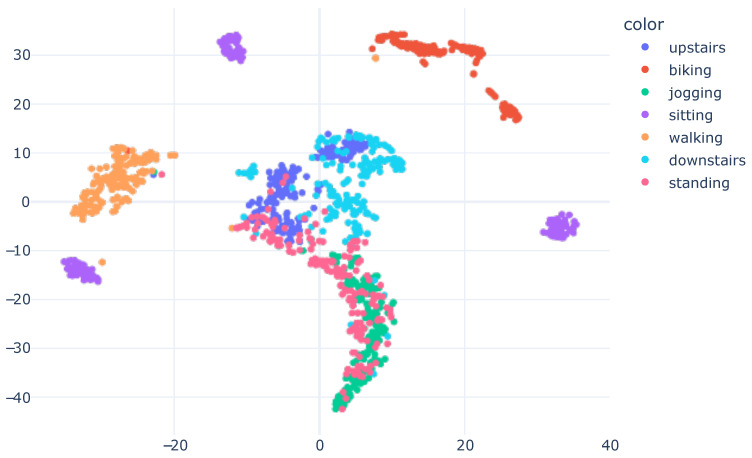
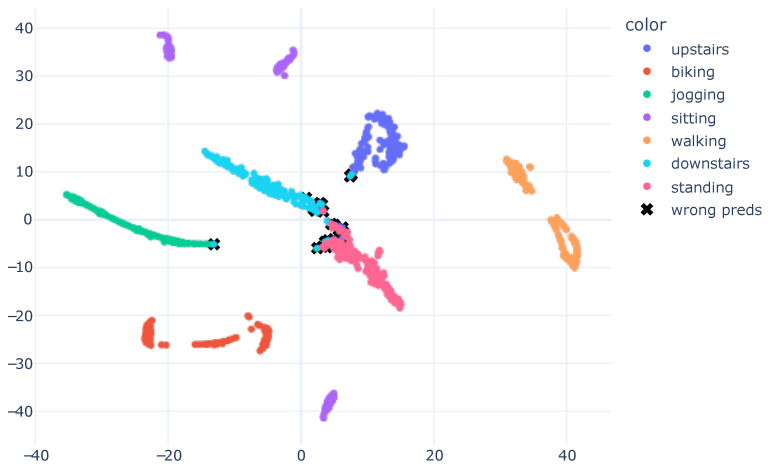
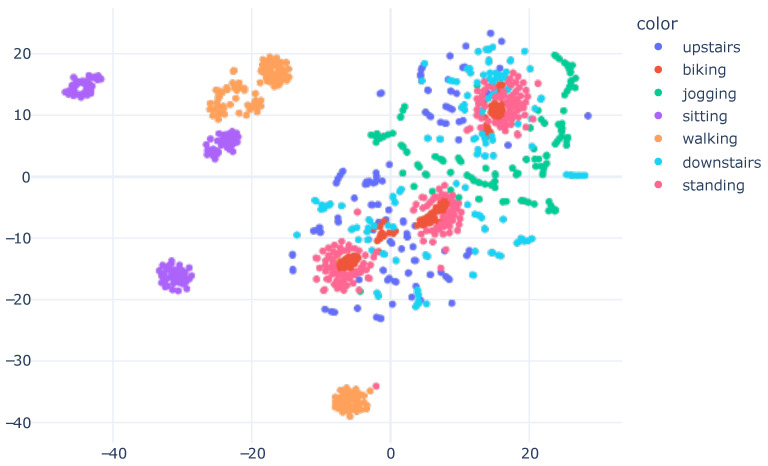
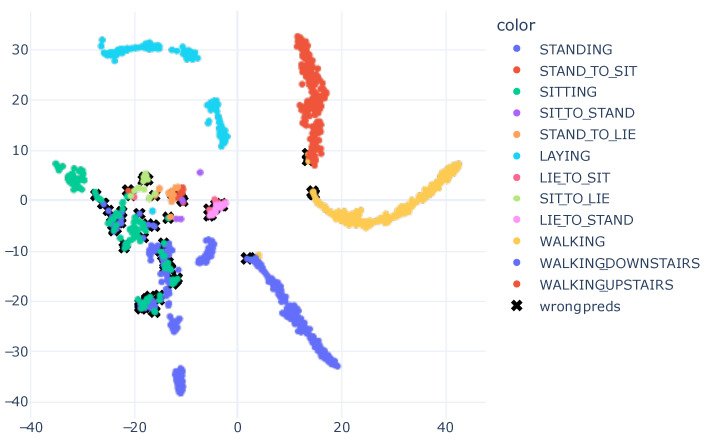
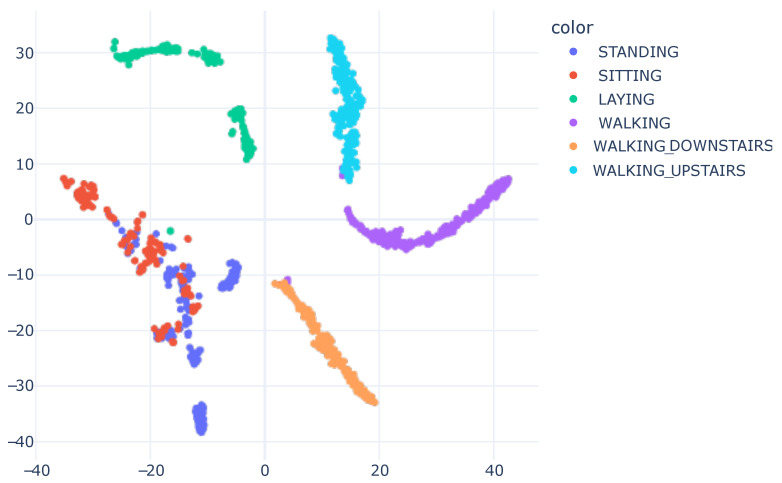
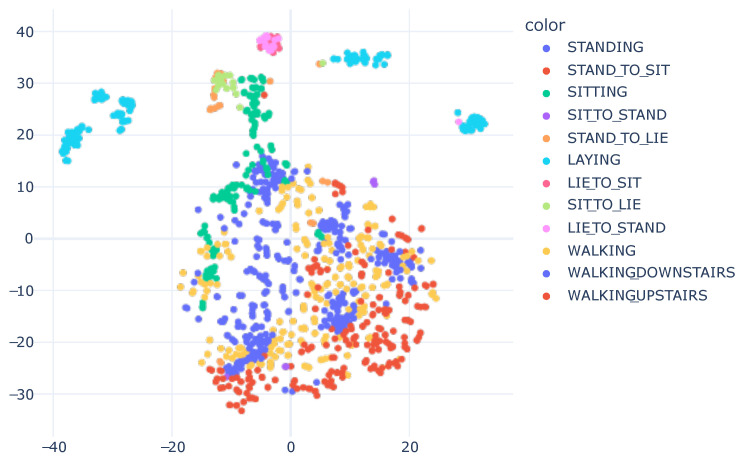
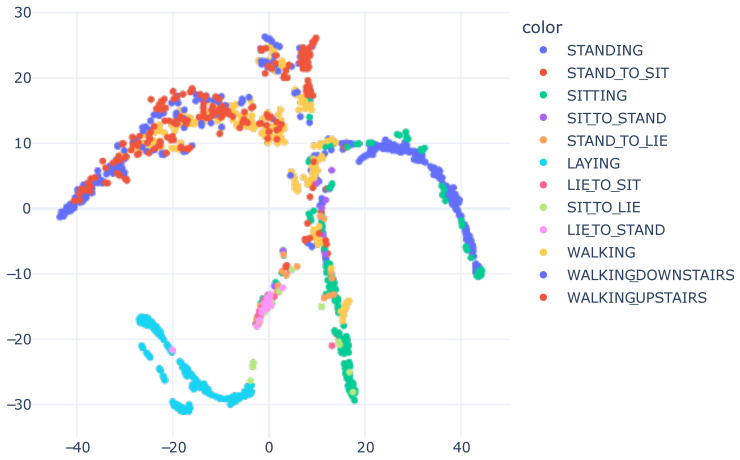
Human Activity Recognition (HAR) is a complex problem in deep learning, and One-Dimensional Convolutional Neural Networks (1D CNNs) have emerged as a popular approach for addressing it. These networks efficiently learn features from data that can be utilized to classify human activities with high performance. However, understanding and explaining the features learned by these networks remains a challenge. This paper presents a novel eXplainable Artificial Intelligence (XAI) method for generating visual explanations of features learned by one-dimensional CNNs in its training process, utilizing t-Distributed Stochastic Neighbor Embedding (t-SNE). By applying this method, we provide insights into the decision-making process through visualizing the information obtained from the model's deepest layer before classification. Our results demonstrate that the learned features from one dataset can be applied to differentiate human activities in other datasets. Our trained networks achieved high performance on two public databases, with 0.98 accuracy on the SHO dataset and 0.93 accuracy on the HAPT dataset. The visualization method proposed in this work offers a powerful means to detect bias issues or explain incorrect predictions. This work introduces a new type of XAI application, enhancing the reliability and practicality of CNN models in real-world scenarios.

摘要

人类活动识别(HAR)是深度学习中的一个复杂问题,一维卷积神经网络(1D CNN)已成为解决该问题的一种流行方法。这些网络能够高效地从数据中学习特征,可用于高性能地对人类活动进行分类。然而,理解和解释这些网络学习到的特征仍然是一个挑战。本文提出了一种新颖的可解释人工智能(XAI)方法,用于在一维 CNN 的训练过程中生成特征的可视化解释,利用 t-分布随机邻域嵌入(t-SNE)。通过应用这种方法,我们通过可视化模型在分类之前从最深层获得的信息,深入了解决策过程。我们的结果表明,从一个数据集学习到的特征可以应用于区分其他数据集的人类活动。我们的训练网络在两个公共数据库上实现了高准确率,在 SHO 数据集上的准确率为 0.98,在 HAPT 数据集上的准确率为 0.93。本文提出的可视化方法提供了一种强大的手段来检测偏差问题或解释错误预测。这项工作引入了一种新的 XAI 应用,增强了 CNN 模型在实际场景中的可靠性和实用性。
https://cdn.ncbi.nlm.nih.gov/pmc/blobs/a97b/10181687/d42274f874d7/sensors-23-04409-g013.jpg
https://cdn.ncbi.nlm.nih.gov/pmc/blobs/a97b/10181687/3f3a19cad456/sensors-23-04409-g001.jpg
https://cdn.ncbi.nlm.nih.gov/pmc/blobs/a97b/10181687/f3da80dd5ac7/sensors-23-04409-g002.jpg
https://cdn.ncbi.nlm.nih.gov/pmc/blobs/a97b/10181687/a59b1dd18497/sensors-23-04409-g003.jpg
https://cdn.ncbi.nlm.nih.gov/pmc/blobs/a97b/10181687/f4ad5c2e098a/sensors-23-04409-g004.jpg
https://cdn.ncbi.nlm.nih.gov/pmc/blobs/a97b/10181687/421b16abd4f1/sensors-23-04409-g005.jpg
https://cdn.ncbi.nlm.nih.gov/pmc/blobs/a97b/10181687/1081c2dd322b/sensors-23-04409-g006.jpg
https://cdn.ncbi.nlm.nih.gov/pmc/blobs/a97b/10181687/4e6382a29c45/sensors-23-04409-g007.jpg
https://cdn.ncbi.nlm.nih.gov/pmc/blobs/a97b/10181687/1194078c332a/sensors-23-04409-g008.jpg
https://cdn.ncbi.nlm.nih.gov/pmc/blobs/a97b/10181687/649dbdaf74fa/sensors-23-04409-g009.jpg
https://cdn.ncbi.nlm.nih.gov/pmc/blobs/a97b/10181687/7a7f1b81ed0a/sensors-23-04409-g010.jpg
https://cdn.ncbi.nlm.nih.gov/pmc/blobs/a97b/10181687/b2fad7b1a387/sensors-23-04409-g011.jpg
https://cdn.ncbi.nlm.nih.gov/pmc/blobs/a97b/10181687/d54bf09d1262/sensors-23-04409-g012.jpg
https://cdn.ncbi.nlm.nih.gov/pmc/blobs/a97b/10181687/d42274f874d7/sensors-23-04409-g013.jpg
https://cdn.ncbi.nlm.nih.gov/pmc/blobs/a97b/10181687/3f3a19cad456/sensors-23-04409-g001.jpg
https://cdn.ncbi.nlm.nih.gov/pmc/blobs/a97b/10181687/f3da80dd5ac7/sensors-23-04409-g002.jpg
https://cdn.ncbi.nlm.nih.gov/pmc/blobs/a97b/10181687/a59b1dd18497/sensors-23-04409-g003.jpg
https://cdn.ncbi.nlm.nih.gov/pmc/blobs/a97b/10181687/f4ad5c2e098a/sensors-23-04409-g004.jpg
https://cdn.ncbi.nlm.nih.gov/pmc/blobs/a97b/10181687/421b16abd4f1/sensors-23-04409-g005.jpg
https://cdn.ncbi.nlm.nih.gov/pmc/blobs/a97b/10181687/1081c2dd322b/sensors-23-04409-g006.jpg
https://cdn.ncbi.nlm.nih.gov/pmc/blobs/a97b/10181687/4e6382a29c45/sensors-23-04409-g007.jpg
https://cdn.ncbi.nlm.nih.gov/pmc/blobs/a97b/10181687/1194078c332a/sensors-23-04409-g008.jpg
https://cdn.ncbi.nlm.nih.gov/pmc/blobs/a97b/10181687/649dbdaf74fa/sensors-23-04409-g009.jpg
https://cdn.ncbi.nlm.nih.gov/pmc/blobs/a97b/10181687/7a7f1b81ed0a/sensors-23-04409-g010.jpg
https://cdn.ncbi.nlm.nih.gov/pmc/blobs/a97b/10181687/b2fad7b1a387/sensors-23-04409-g011.jpg
https://cdn.ncbi.nlm.nih.gov/pmc/blobs/a97b/10181687/d54bf09d1262/sensors-23-04409-g012.jpg
https://cdn.ncbi.nlm.nih.gov/pmc/blobs/a97b/10181687/d42274f874d7/sensors-23-04409-g013.jpg

相似文献

1
Explaining and Visualizing Embeddings of One-Dimensional Convolutional Models in Human Activity Recognition Tasks.在人类活动识别任务中解释和可视化一维卷积模型的嵌入。
Sensors (Basel). 2023 Apr 30;23(9):4409. doi: 10.3390/s23094409.
2
Explaining One-Dimensional Convolutional Models in Human Activity Recognition and Biometric Identification Tasks.在人类活动识别和生物识别任务中解释一维卷积模型。
Sensors (Basel). 2022 Jul 28;22(15):5644. doi: 10.3390/s22155644.
3
Toward explainable AI-empowered cognitive health assessment.迈向可解释人工智能赋能的认知健康评估。
Front Public Health. 2023 Mar 9;11:1024195. doi: 10.3389/fpubh.2023.1024195. eCollection 2023.
4
DeepXplainer: An interpretable deep learning based approach for lung cancer detection using explainable artificial intelligence.深演析:一种基于可解释人工智能的用于肺癌检测的可解释深度学习方法。
Comput Methods Programs Biomed. 2024 Jan;243:107879. doi: 10.1016/j.cmpb.2023.107879. Epub 2023 Oct 24.
5
CEFEs: A CNN Explainable Framework for ECG Signals.CEFEs:用于心电图信号的 CNN 可解释框架。
Artif Intell Med. 2021 May;115:102059. doi: 10.1016/j.artmed.2021.102059. Epub 2021 Mar 26.
6
Visualizing histopathologic deep learning classification and anomaly detection using nonlinear feature space dimensionality reduction.使用非线性特征空间降维技术可视化组织病理学深度学习分类和异常检测。
BMC Bioinformatics. 2018 May 16;19(1):173. doi: 10.1186/s12859-018-2184-4.
7
A novel approach of brain-computer interfacing (BCI) and Grad-CAM based explainable artificial intelligence: Use case scenario for smart healthcare.一种新的脑机接口 (BCI) 和基于 Grad-CAM 的可解释人工智能方法:智能医疗保健用例场景。
J Neurosci Methods. 2024 Aug;408:110159. doi: 10.1016/j.jneumeth.2024.110159. Epub 2024 May 7.
8
Parkinson's Disease Recognition Using Decorrelated Convolutional Neural Networks: Addressing Imbalance and Scanner Bias in rs-fMRI Data.使用去相关卷积神经网络识别帕金森病:解决 rs-fMRI 数据中的不平衡和扫描仪偏差。
Biosensors (Basel). 2024 May 19;14(5):259. doi: 10.3390/bios14050259.
9
Understanding How CNNs Recognize Facial Expressions: A Case Study with LIME and CEM.理解 CNN 如何识别面部表情:LIME 和 CEM 的案例研究。
Sensors (Basel). 2022 Dec 23;23(1):131. doi: 10.3390/s23010131.
10
The Convolutional Neural Networks Training With Channel-Selectivity for Human Activity Recognition Based on Sensors.基于传感器的人体活动识别的带通道选择性的卷积神经网络训练。
IEEE J Biomed Health Inform. 2021 Oct;25(10):3834-3843. doi: 10.1109/JBHI.2021.3092396. Epub 2021 Oct 5.

引用本文的文献

1
Efficient human activity recognition on edge devices using DeepConv LSTM architectures.使用深度卷积长短期记忆网络(DeepConv LSTM)架构在边缘设备上进行高效的人类活动识别。
Sci Rep. 2025 Apr 22;15(1):13830. doi: 10.1038/s41598-025-98571-2.

本文引用的文献

1
Explaining One-Dimensional Convolutional Models in Human Activity Recognition and Biometric Identification Tasks.在人类活动识别和生物识别任务中解释一维卷积模型。
Sensors (Basel). 2022 Jul 28;22(15):5644. doi: 10.3390/s22155644.
2
How Validation Methodology Influences Human Activity Recognition Mobile Systems.验证方法学如何影响人体活动识别移动系统。
Sensors (Basel). 2022 Mar 18;22(6):2360. doi: 10.3390/s22062360.
3
Deep Learning in Human Activity Recognition with Wearable Sensors: A Review on Advances.深度学习在可穿戴传感器人体活动识别中的应用:进展综述。
Sensors (Basel). 2022 Feb 14;22(4):1476. doi: 10.3390/s22041476.
4
Human activity recognition in artificial intelligence framework: a narrative review.人工智能框架中的人类活动识别:一篇叙述性综述。
Artif Intell Rev. 2022;55(6):4755-4808. doi: 10.1007/s10462-021-10116-x. Epub 2022 Jan 18.
5
Activity Recognition for Diabetic Patients Using a Smartphone.使用智能手机对糖尿病患者进行活动识别。
J Med Syst. 2016 Dec;40(12):256. doi: 10.1007/s10916-016-0598-y. Epub 2016 Oct 8.
6
SmartFABER: Recognizing fine-grained abnormal behaviors for early detection of mild cognitive impairment.智能FABER:识别细粒度异常行为以早期检测轻度认知障碍。
Artif Intell Med. 2016 Feb;67:57-74. doi: 10.1016/j.artmed.2015.12.001. Epub 2016 Jan 7.
7
A survey of online activity recognition using mobile phones.一项关于使用手机进行在线活动识别的调查。
Sensors (Basel). 2015 Jan 19;15(1):2059-85. doi: 10.3390/s150102059.
8
Fusion of smartphone motion sensors for physical activity recognition.用于身体活动识别的智能手机运动传感器融合
Sensors (Basel). 2014 Jun 10;14(6):10146-76. doi: 10.3390/s140610146.