R&D Center in Electronic and Information Technology, Federal University of Amazonas, Manaus 69077-000, Brazil.
Sensors (Basel). 2022 Jul 28;22(15):5644. doi: 10.3390/s22155644.
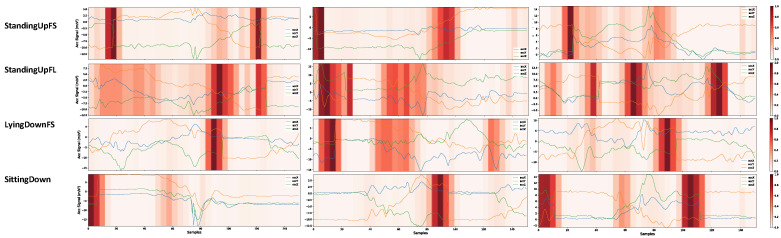
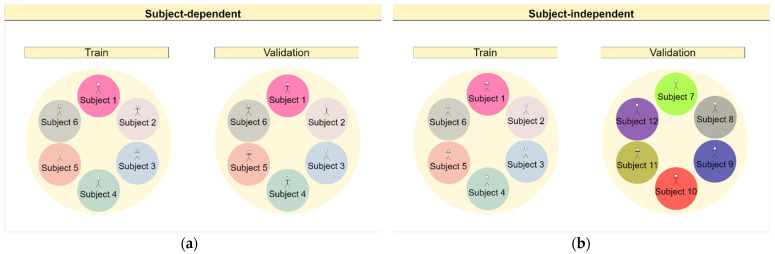
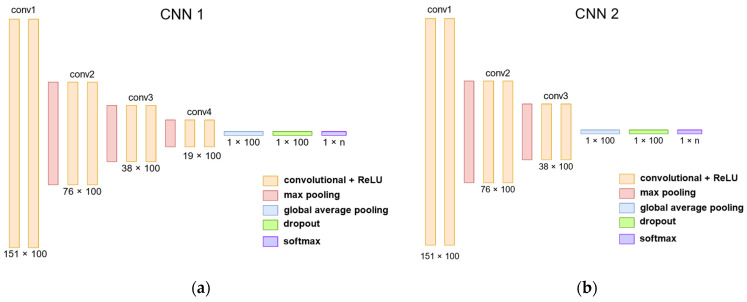
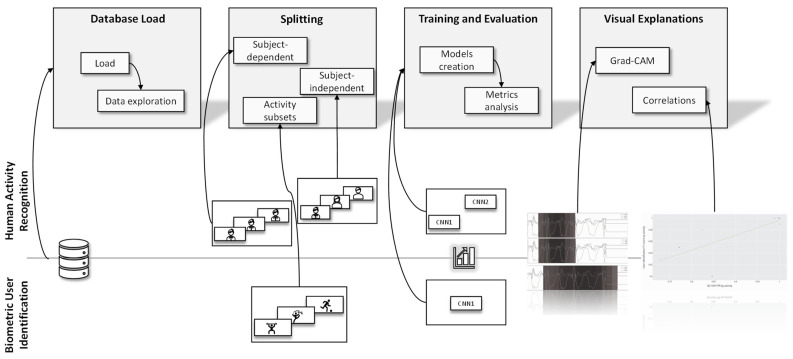
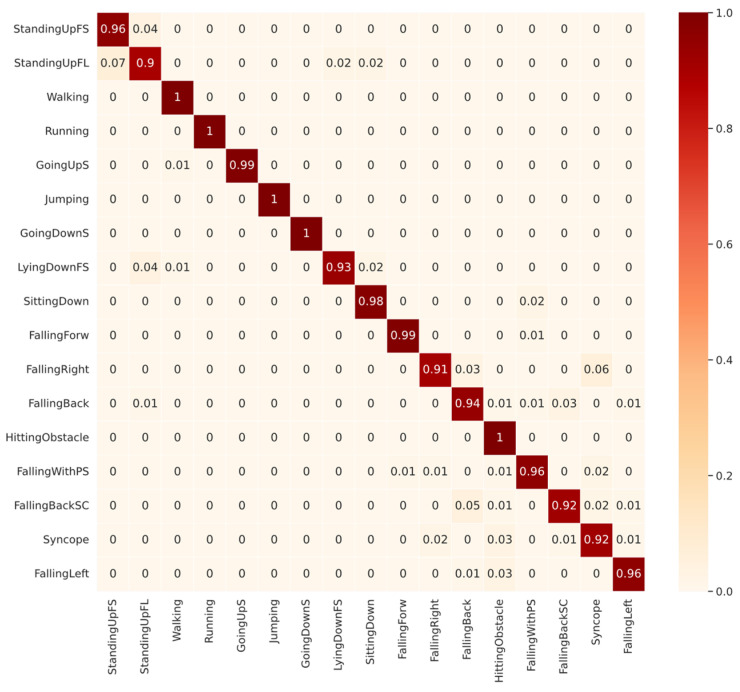
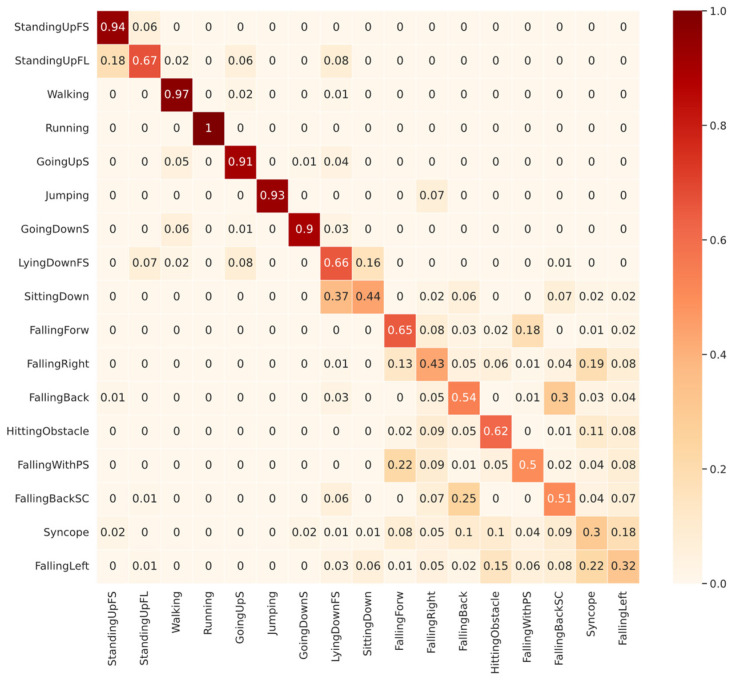
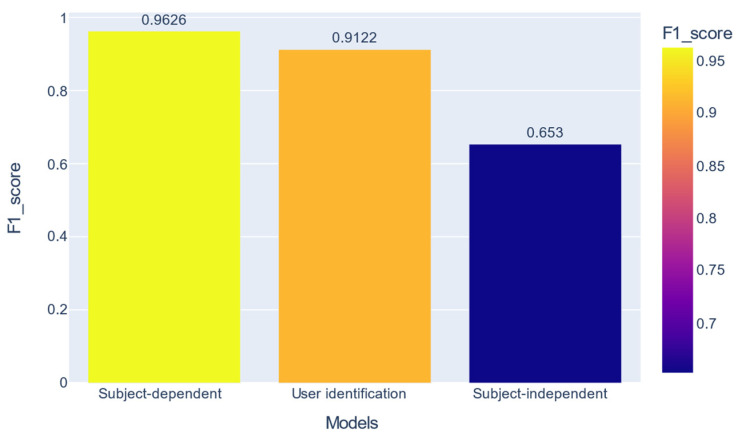
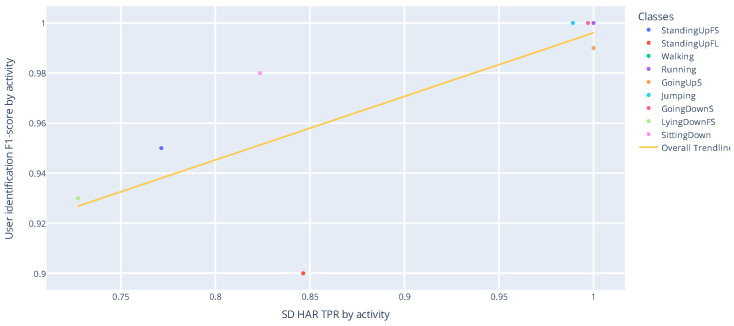
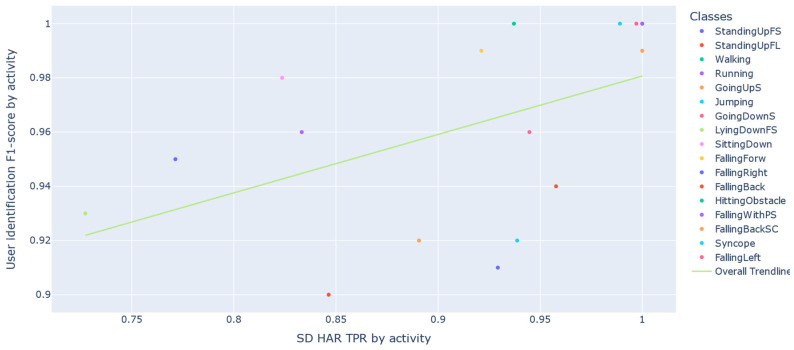
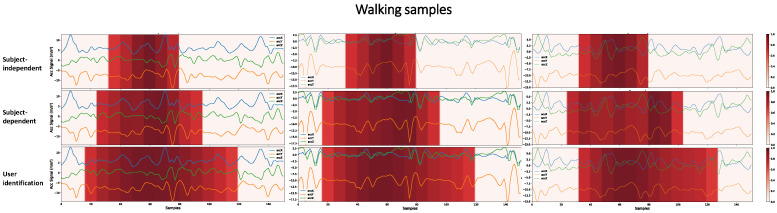
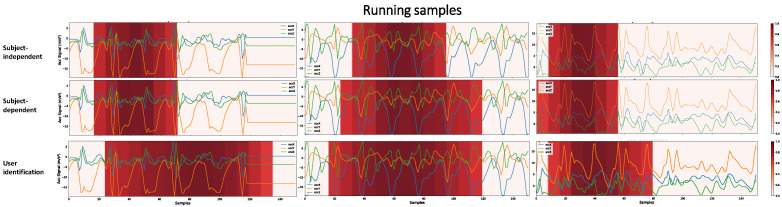
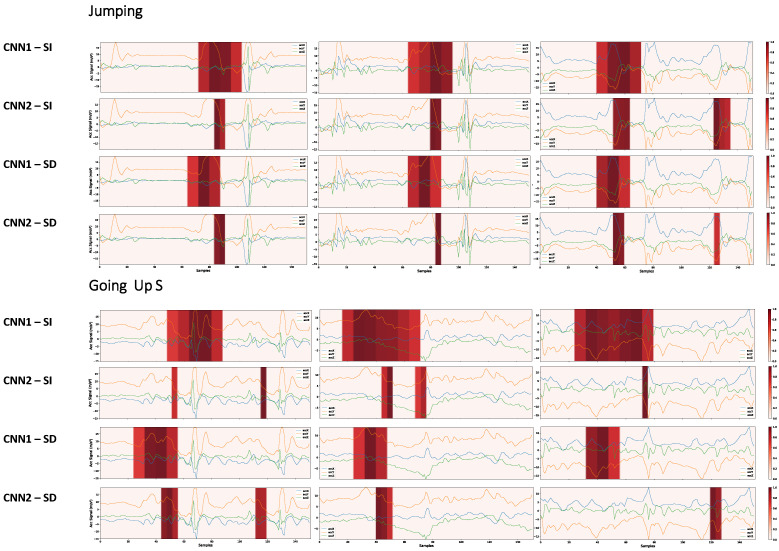
Due to wearables' popularity, human activity recognition (HAR) plays a significant role in people's routines. Many deep learning (DL) approaches have studied HAR to classify human activities. Previous studies employ two HAR validation approaches: subject-dependent (SD) and subject-independent (SI). Using accelerometer data, this paper shows how to generate visual explanations about the trained models' decision making on both HAR and biometric user identification (BUI) tasks and the correlation between them. We adapted gradient-weighted class activation mapping (grad-CAM) to one-dimensional convolutional neural networks (CNN) architectures to produce visual explanations of HAR and BUI models. Our proposed networks achieved 0.978 and 0.755 accuracy, employing both SD and SI. The proposed BUI network achieved 0.937 average accuracy. We demonstrate that HAR's high performance with SD comes not only from physical activity learning but also from learning an individual's signature, as in BUI models. Our experiments show that CNN focuses on larger signal sections in BUI, while HAR focuses on smaller signal segments. We also use the grad-CAM technique to identify database bias problems, such as signal discontinuities. Combining explainable techniques with deep learning can help models design, avoid results overestimation, find bias problems, and improve generalization capability.
由于可穿戴设备的普及,人体活动识别(HAR)在人们的日常生活中起着重要作用。许多深度学习(DL)方法已经研究了 HAR 来对人类活动进行分类。以前的研究采用了两种 HAR 验证方法:基于受试者的(SD)和独立于受试者的(SI)。本文使用加速度计数据,展示了如何在 HAR 和生物识别用户识别(BUI)任务及其相关性上生成关于训练模型决策的可视化解释。我们将梯度加权类激活映射(grad-CAM)应用于一维卷积神经网络(CNN)架构,以生成 HAR 和 BUI 模型的可视化解释。我们提出的网络在使用 SD 和 SI 的情况下,分别达到了 0.978 和 0.755 的准确率。我们提出的 BUI 网络实现了 0.937 的平均准确率。我们证明了 HAR 在 SD 下的高性能不仅来自于对体育活动的学习,也来自于对个人特征的学习,就像在 BUI 模型中一样。我们的实验表明,CNN 更关注 BUI 中较大的信号部分,而 HAR 则更关注较小的信号片段。我们还使用 grad-CAM 技术来识别数据库的偏差问题,例如信号不连续。将可解释技术与深度学习相结合,可以帮助模型设计、避免结果高估、发现偏差问题并提高泛化能力。