Global AgroMedicine Research Center (GAMRC), Obihiro University of Agriculture and Veterinary Medicine, Obihiro, Japan.
Department of Theriogenology, Faculty of Veterinary Medicine, Assiut University, Assiut, Egypt.
Front Immunol. 2023 Apr 27;14:1158090. doi: 10.3389/fimmu.2023.1158090. eCollection 2023.
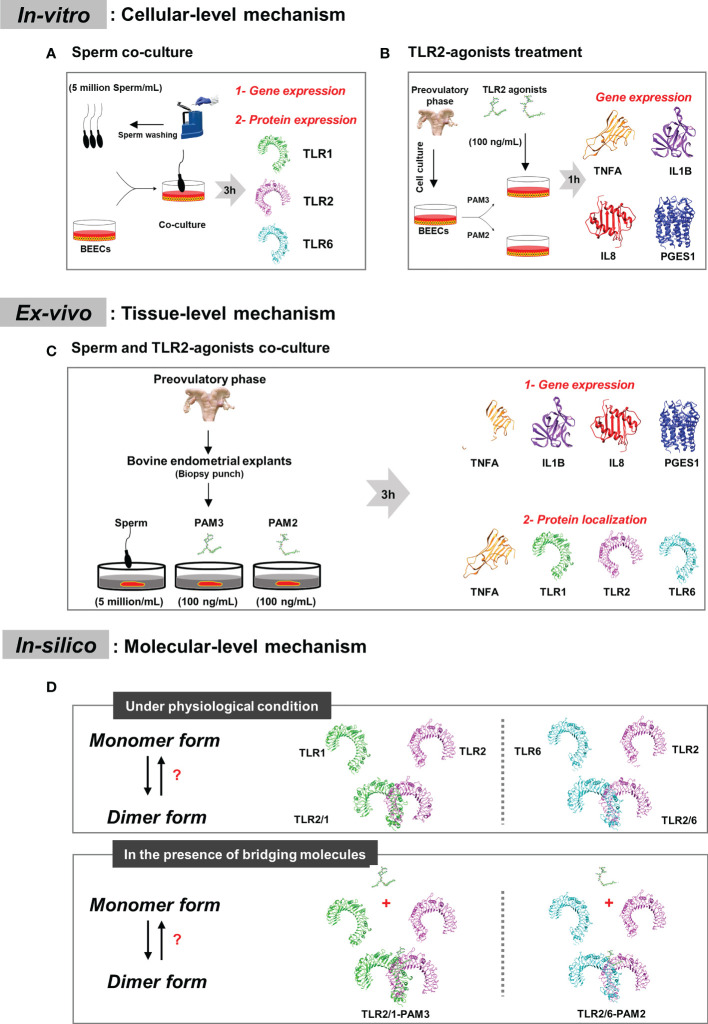
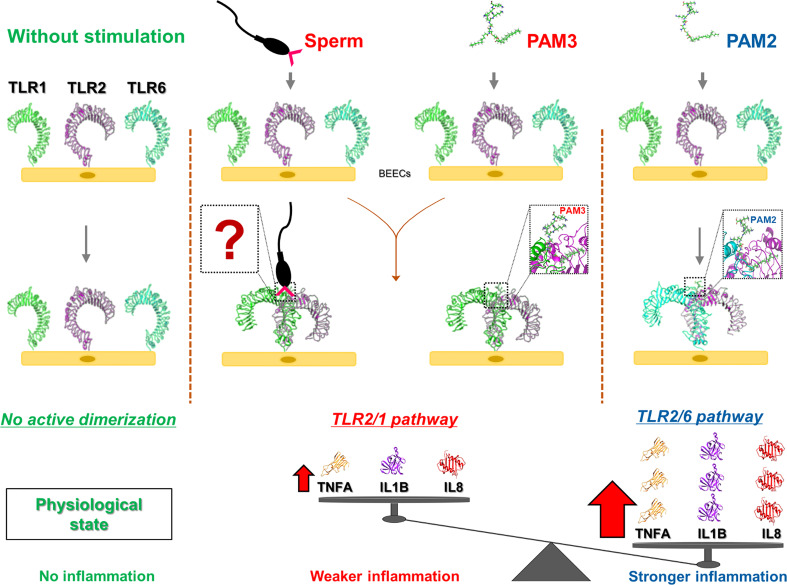
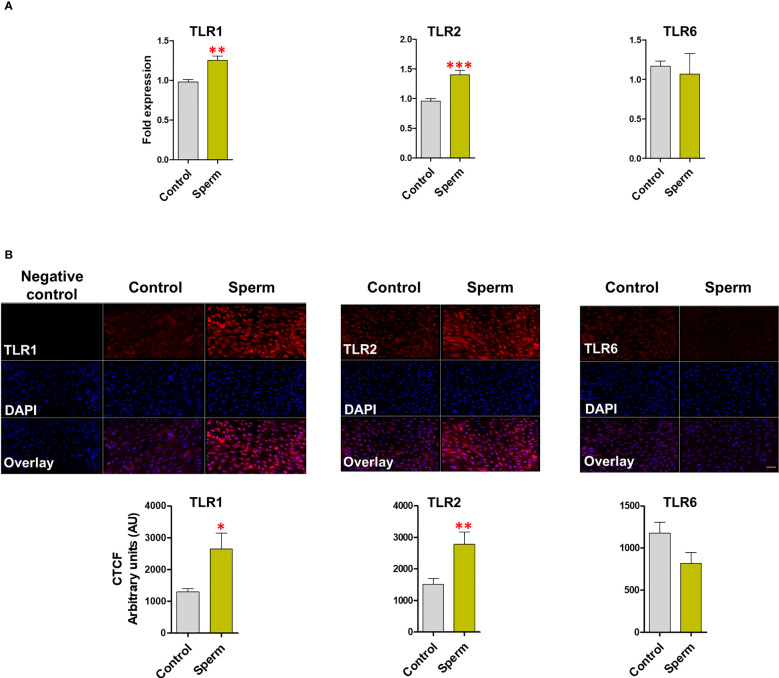
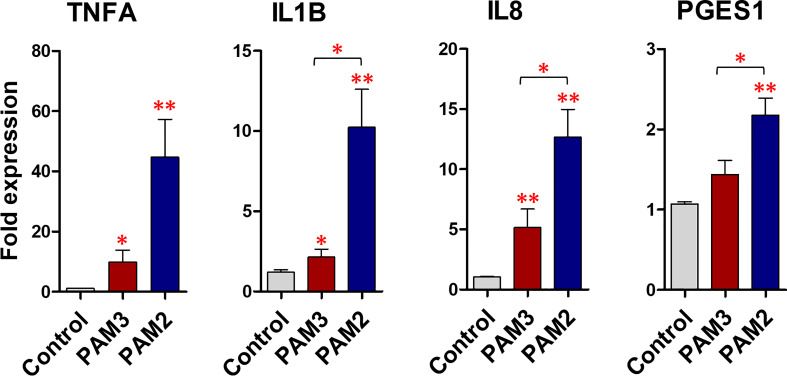
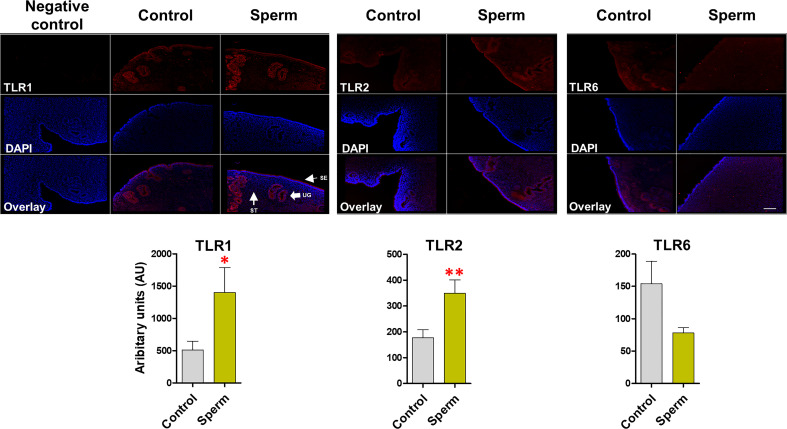
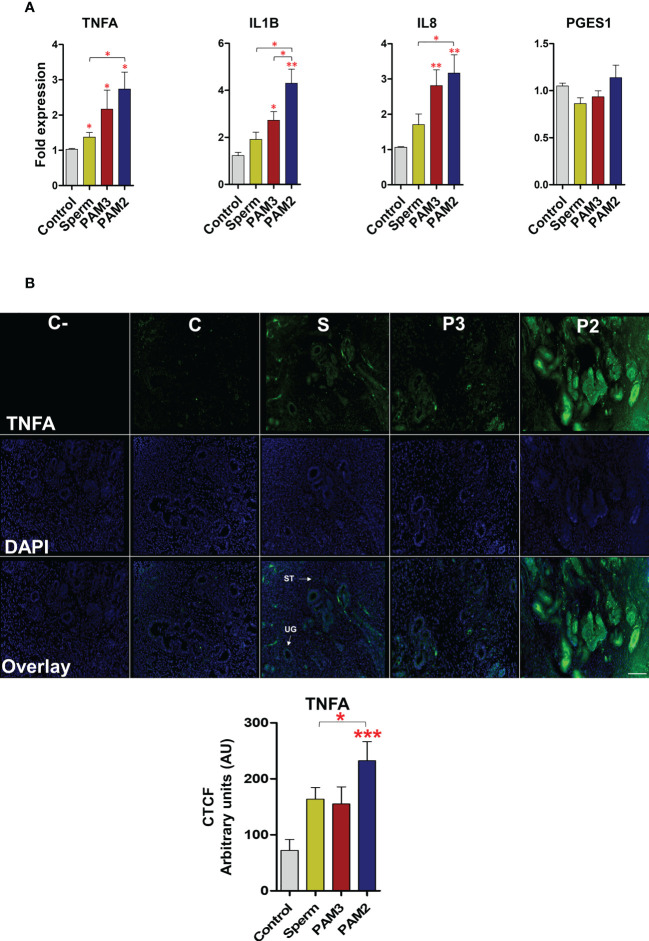
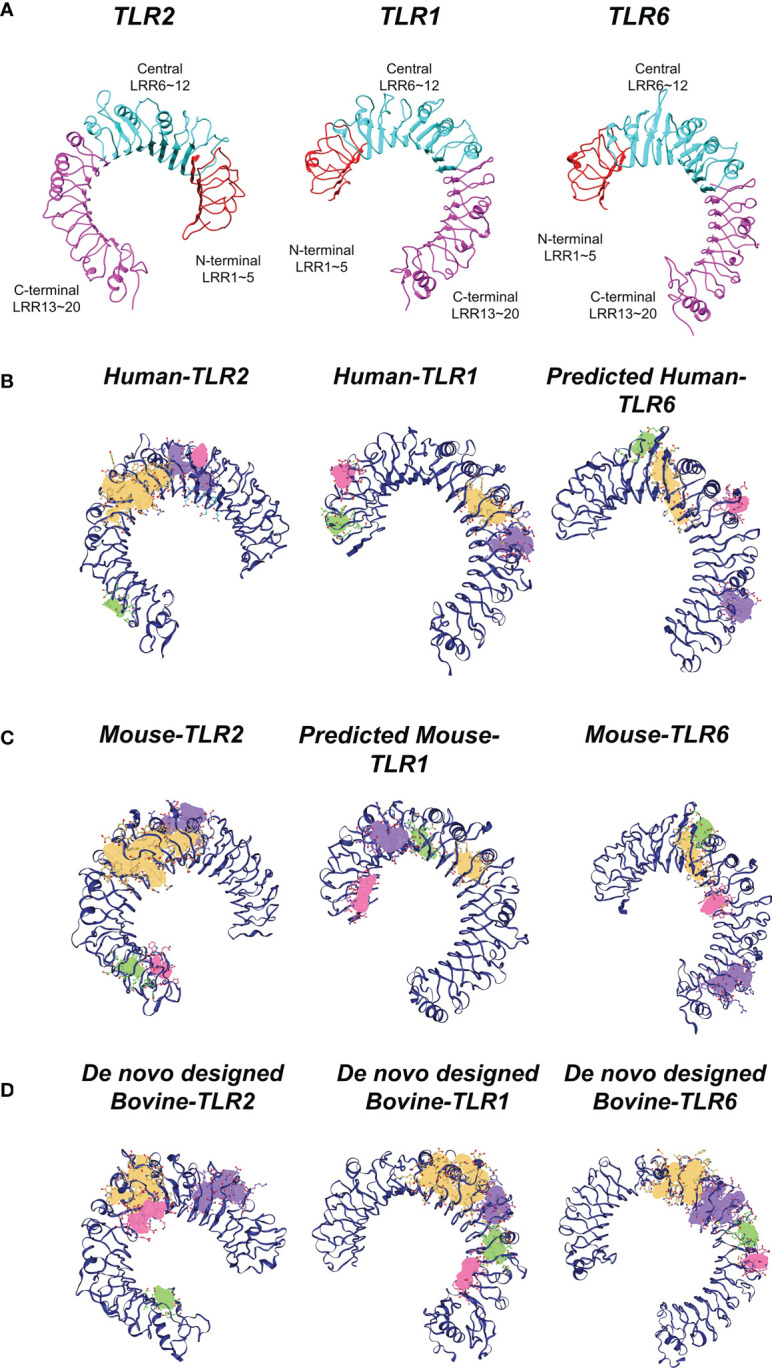
Toll-like receptor 2 (TLR2) signaling pathway is involved in the sperm-triggered uterine inflammatory response at insemination, but its precise mechanism at molecular-level remains unknown. According to the ligand specificity, TLR2 forms a heterodimer with TLR1 or TLR6 as an initial step to mediate intracellular signaling, leading to a specific type of immune response. Hence, the present study aimed to identify the active TLR2 heterodimer (TLR2/1 or TLR2/6) that is involved in sperm-uterine immune crosstalk in bovine using various models. First, (bovine endometrial epithelial cells, BEECs) and (bovine uterine explant) models were employed to test different TLR2 dimerization pathways in endometrial epithelia after exposure to sperm or TLR2 agonists; PAM3 (TLR2/1 agonist), and PAM2 (TLR2/6 agonist). Additionally, approaches were performed to confirm the dimer stability using protein structure prediction model for bovine TLRs. The approach revealed that sperm triggered the mRNA and protein expression of TLR1 and TLR2 but not TLR6 in BEECs. Moreover, this model disclosed that activation of TLR2/6 heterodimer, triggers a much stronger inflammatory response than TLR2/1 and sperm in bovine uterine epithelia. In the - model that mimics the intact uterine tissue at insemination, sperm also induced the protein expression of both TLR1 and TLR2, but not TLR6, in bovine endometrium, particularly in uterine glands. Importantly, PAM3 and sperm induced similar and low mRNA expression of pro-inflammatory cytokines and TNFA protein to a lesser extent than PAM2 in endometrial epithelia. This implied that sperm might trigger a weak inflammatory response TLR2/TLR1 activation which is similar to that of PAM3. Additionally, the analyses showed that the existence of bridging ligands is essential for heterodimer stability in bovine TLR2 with either TLR1 or TLR6. Altogether, the present findings revealed that sperm utilize TLR2/1, but not TLR2/6, heterodimerization to trigger a weak physiological inflammatory response in the bovine uterus. This might be the way to remove excess dead sperm remaining in the uterine lumen without tissue damage for providing an ideal uterine environment for early embryo reception and implantation.
Toll-like receptor 2 (TLR2) 信号通路参与了授精时精子触发的子宫炎症反应,但在分子水平上其确切机制尚不清楚。根据配体特异性,TLR2 与 TLR1 或 TLR6 形成异二聚体作为介导细胞内信号转导的初始步骤,导致特定类型的免疫反应。因此,本研究旨在使用各种模型鉴定参与牛精子-子宫免疫串扰的活性 TLR2 异二聚体(TLR2/1 或 TLR2/6)。首先,在暴露于精子或 TLR2 激动剂后,使用(牛子宫内膜上皮细胞,BEECs)和(牛子宫外植体)模型检测子宫内膜上皮中不同的 TLR2 二聚化途径;PAM3(TLR2/1 激动剂)和 PAM2(TLR2/6 激动剂)。此外,还采用蛋白质结构预测模型来确认牛 TLR 二聚体的稳定性。结果表明,精子在 BEECs 中触发 TLR1 和 TLR2 的 mRNA 和蛋白表达,但不触发 TLR6。此外,该模型揭示了 TLR2/6 异二聚体的激活,在牛子宫上皮中引发比 TLR2/1 和精子更强的炎症反应。在模拟授精时完整子宫组织的模型中,精子也诱导牛子宫内膜中 TLR1 和 TLR2 的蛋白表达,但不诱导 TLR6,尤其是在子宫腺中。重要的是,PAM3 和精子诱导子宫内膜上皮中促炎细胞因子的 mRNA 表达和 TNFA 蛋白的表达与 PAM2 相似且程度较低。这意味着精子可能触发类似于 PAM3 的弱炎症反应 TLR2/TLR1 激活。此外,结构分析表明,在牛 TLR2 与 TLR1 或 TLR6 形成异二聚体时,桥连配体的存在对于异二聚体的稳定性至关重要。总之,本研究结果表明,精子利用 TLR2/1,但不是 TLR2/6,异二聚体化在牛子宫中引发弱的生理性炎症反应。这可能是清除子宫腔中多余的死亡精子而不造成组织损伤的一种方式,为早期胚胎接收和植入提供理想的子宫环境。