Centre for Environmental Biotechnology, Helmholtz Centre for Environmental Research-UFZ, Permoserstraße 15, 04318 Leipzig, Germany.
Department of Environmental Microbiology, Helmholtz Centre for Environmental Research-UFZ, Permoserstraße 15, 04318 Leipzig, Germany.
Sci Total Environ. 2023 Aug 20;887:164143. doi: 10.1016/j.scitotenv.2023.164143. Epub 2023 May 13.
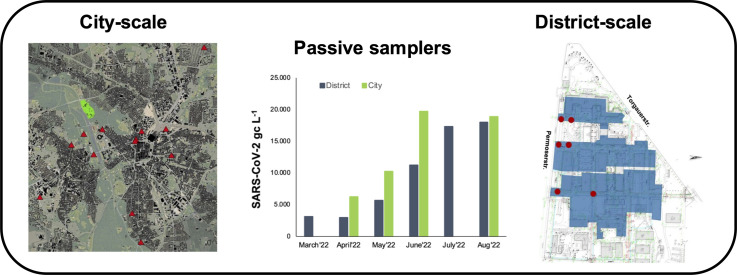
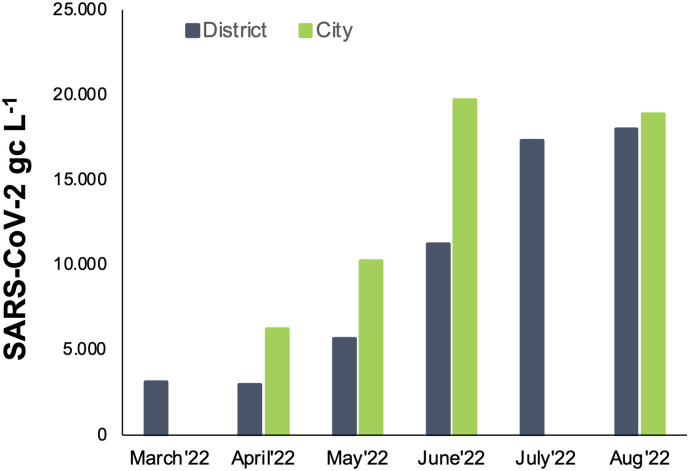
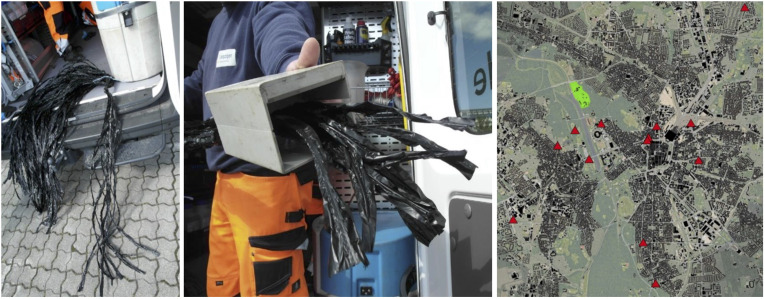
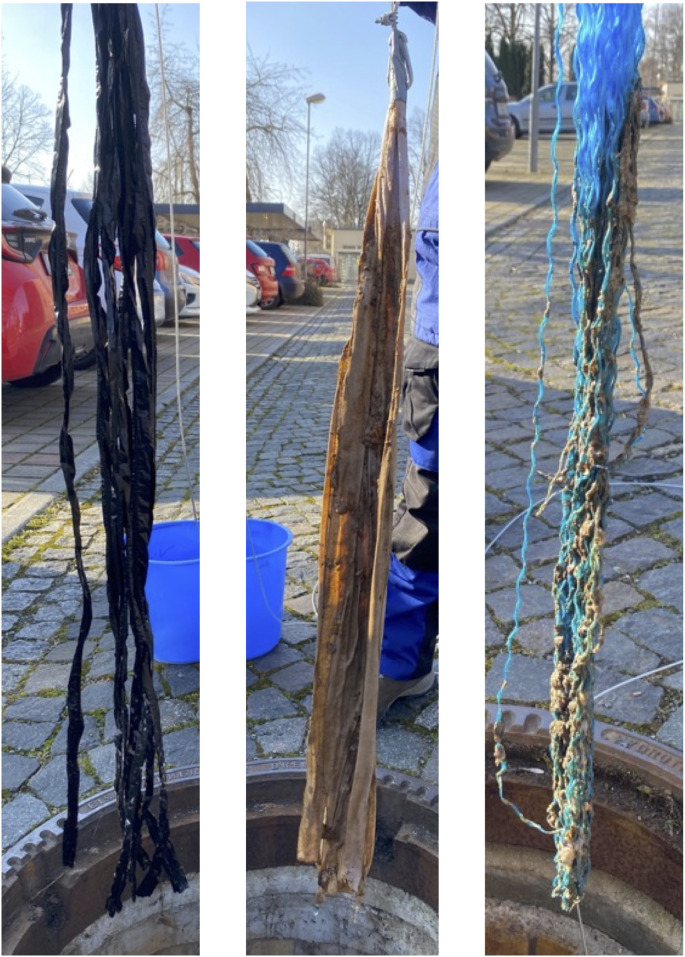
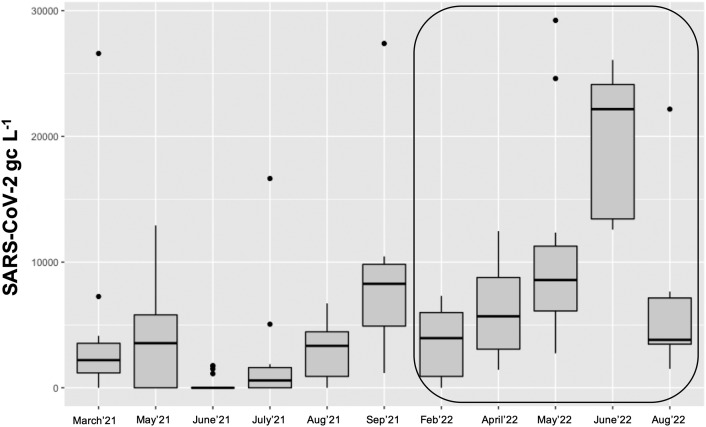
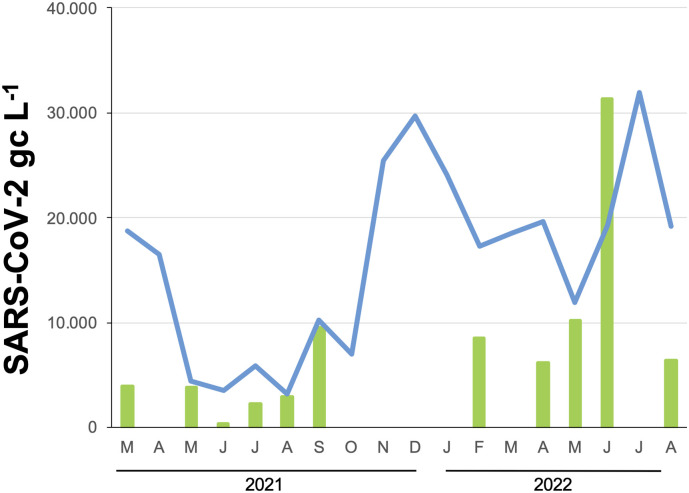
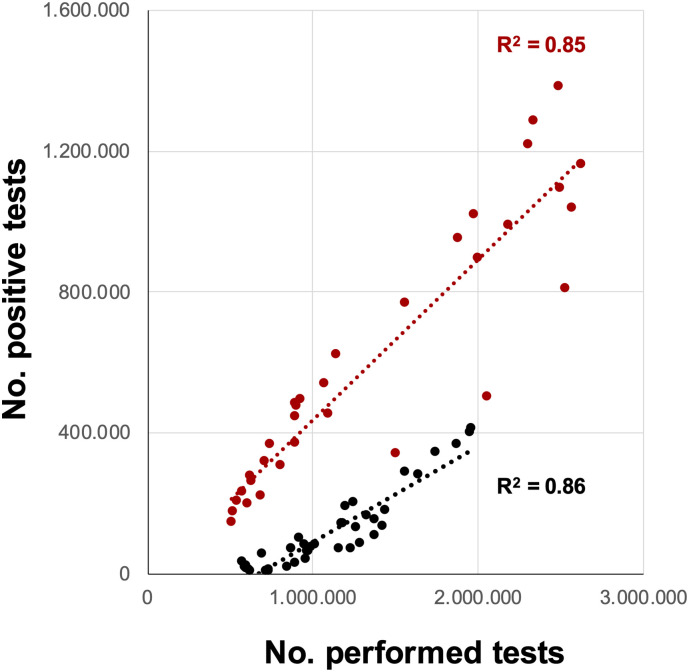
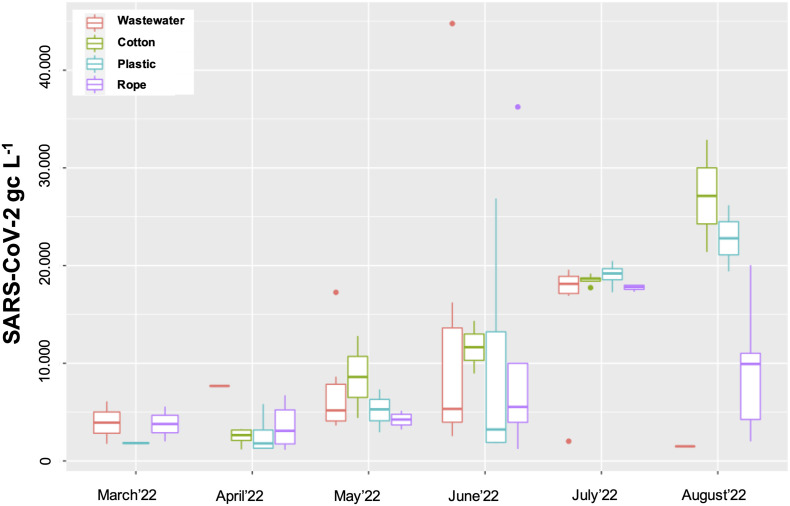
Wastewater-based monitoring of SARS-CoV-2 has become a promising and useful tool in tracking the potential spread or dynamics of the virus. Its recording can be used to predict how the potential number of infections in a population will develop. Recent studies have shown that the use of passive samplers is also suitable for the detection of SARS-CoV-2 genome copies (GC) in wastewater. They can be used at any site, provide timely data and may collect SARS-CoV-2 GC missed by traditional sampling methods. Therefore, the aim of this study was to evaluate the suitability of passive samplers for the detection of SARS-CoV-2 GC in wastewater in the long-term at two different scales. Polyethylene-based plastic passive samplers were deployed at the city-scale level of Leipzig at 13 different locations, with samples being taken from March 2021 to August 2022. At the smaller city district level, three types of passive samplers (cotton-cloth, unravelled polypropylene plastic rope and polyethylene-based plastic strips) were used and sampled on a weekly basis from March to August 2022. The results are discussed in relation to wastewater samples taken at the individual passive sampling point. Our results show that passive samplers can indicate at a city-scale level an accurate level of positive infections in the population (positive-rate: 86 %). On a small-scale level, the use of passive samplers was also feasible and effective to detect SARS-CoV-2 GC easily and cost-effectively, mirroring a similar trend to that at a city-scale level. Thus, this study demonstrated that passive samplers provide reproducible SARS-CoV-2 GC signals from wastewater and a time-integrated measurement of the sampled matrix with greater sensitivity compared to wastewater. We thus recommend the use of passive samplers as an alternative method for wastewater-based epidemiology. Passive samplers can in particular be considered for a better estimation of infections compared to incidence levels.
基于污水的 SARS-CoV-2 监测已成为追踪病毒潜在传播或动态的一种有前途且有用的工具。它的记录可用于预测人群中潜在感染人数的发展趋势。最近的研究表明,使用被动采样器也适用于检测污水中的 SARS-CoV-2 基因组拷贝数 (GC)。它们可以在任何地点使用,提供及时的数据,并可能收集传统采样方法错过的 SARS-CoV-2 GC。因此,本研究旨在评估被动采样器在两个不同规模上长期检测污水中 SARS-CoV-2 GC 的适用性。在莱比锡市一级的 13 个不同地点部署了基于聚乙烯的塑料被动采样器,从 2021 年 3 月至 2022 年 8 月采集样本。在较小的城市区一级,使用了三种类型的被动采样器(棉织物、展开的聚丙烯塑料绳和基于聚乙烯的塑料条),并从 2022 年 3 月至 8 月每周采样一次。结果与在各个被动采样点采集的污水样本进行了讨论。我们的结果表明,被动采样器可以在城市一级准确反映人群中的阳性感染水平(阳性率:86%)。在较小的规模上,被动采样器的使用也可行且有效,能够轻松、经济高效地检测 SARS-CoV-2 GC,与城市一级的趋势相似。因此,本研究表明,被动采样器可从污水中提供可重复的 SARS-CoV-2 GC 信号,并与污水相比具有更高的灵敏度对采样基质进行时间积分测量。因此,我们建议将被动采样器用作基于污水的流行病学的替代方法。与发病率水平相比,被动采样器特别可以用于更好地估计感染情况。