Ifremer, Laboratoire de Microbiologie, LSEM/SG2M, rue de l'île d'Yeu, BP 21105, 44311 NANTES cedex 03, France.
Ifremer, Laboratoire de Microbiologie, LSEM/SG2M, rue de l'île d'Yeu, BP 21105, 44311 NANTES cedex 03, France.
Sci Total Environ. 2022 Aug 10;833:155139. doi: 10.1016/j.scitotenv.2022.155139. Epub 2022 Apr 9.
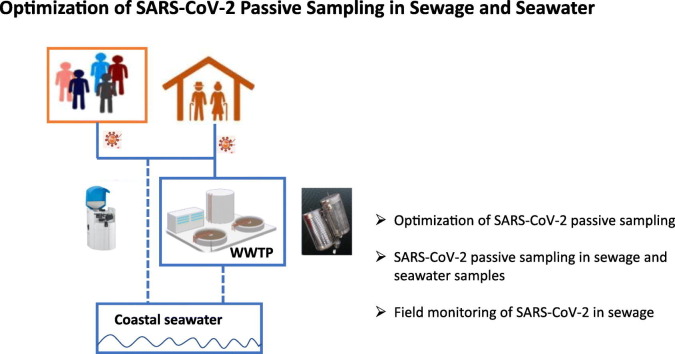
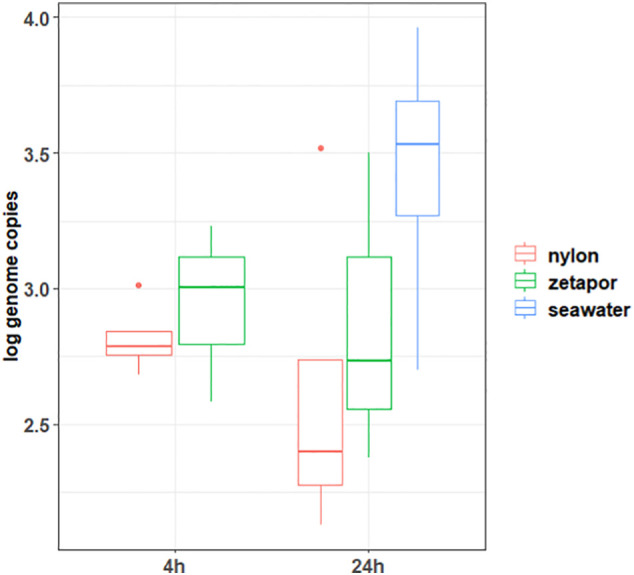
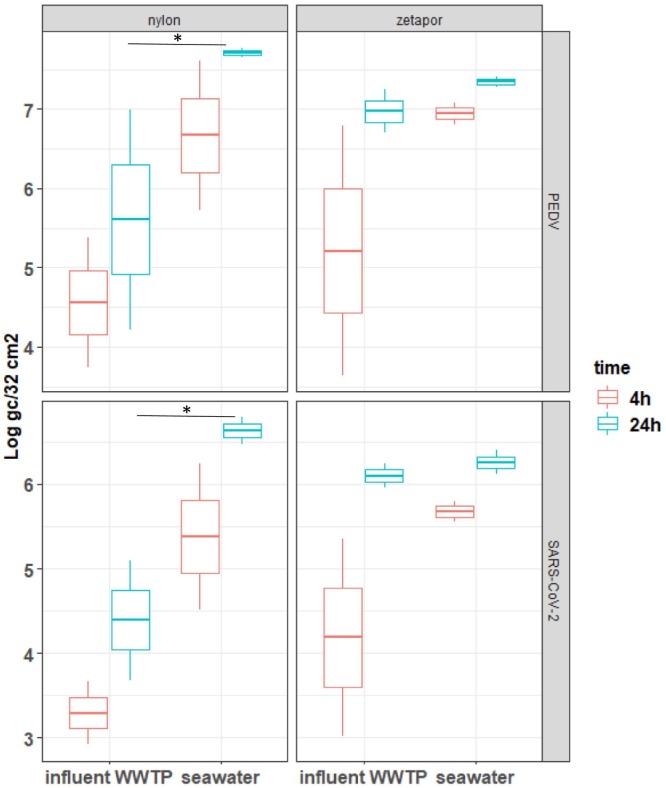
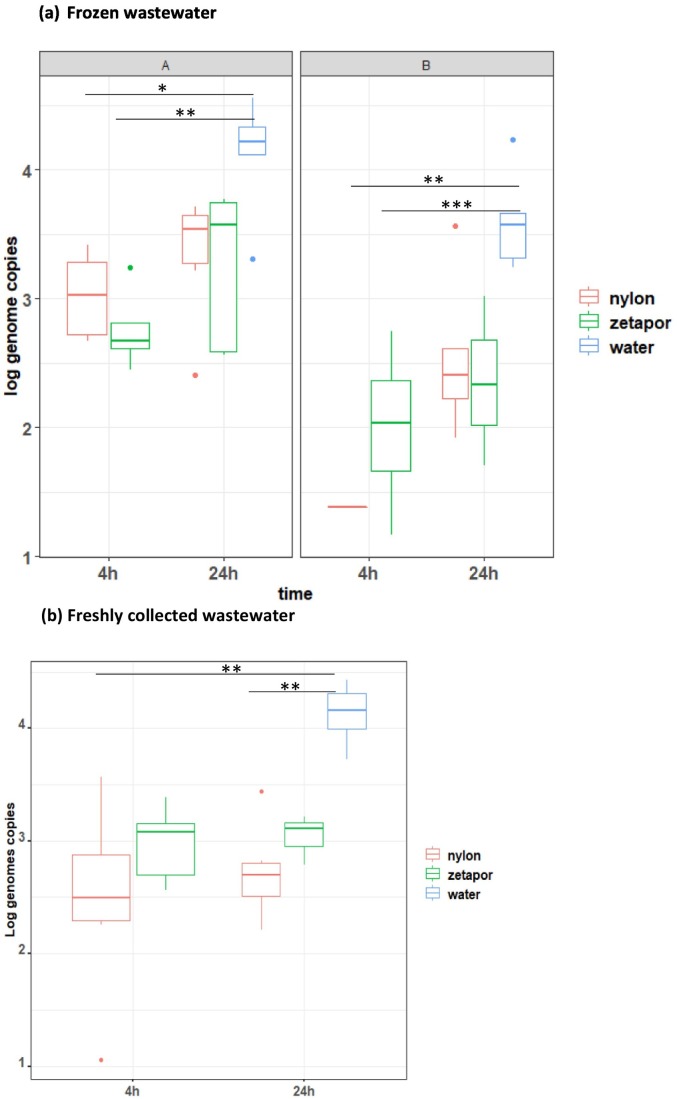
Recent studies have shown that passive sampling is a promising tool for SARS-CoV-2 detection for wastewater-based epidemiology (WBE) application. We have previously developed passive sampling of viruses using polymer membranes in seawater. Even though SARS-CoV-2 was not detected yet in seawater, passive sampling could be optimized for future application in coastal areas close to wastewater treatment plant (WWTP). The aim of this study was to optimize passive sampling of SARS-CoV-2 in sewage and seawater by selecting a suitable membrane, to determine whether the quantities of virus increase over time, and then to determine if passive sampling and traditional sampling are correlated when conducted in a wastewater treatment plant. Nylon and Zetapor allowed the detection of heat inactivated SARS-CoV-2 and of the Porcine Epidemic Diarrhea Virus (PEDV), a coronavirus surrogate, in wastewater and seawater spiked with these 2 viruses, showing an increase in detection between 4 h and 24 h of immersion and significantly higher recoveries of both viruses with nylon in seawater (15%) compared to wastewater (4%). On wastewater samples, both membranes detected the virus, the recovery rate was of about 3% for freshly collected samples, and no significant difference was found between SARS-CoV-2 genome concentration on Zetapor and that in water. In sewage spiked seawater, similar concentrations of genome were found on both membranes, with a mean recovery rate of 16% and 11% respectively for nylon and Zetapor. A 3-weeks monitoring with passive sampler allowed the detection of viruses in the influent of a WWTP with a frequency of 100% and 76% for SARS-CoV-2 and norovirus GII respectively. Passive and traditional sampling gave the same evolution of the SARS-CoV-2 concentration over time. All these results confirmed the interest of passive sampling for virus detection and its potential application for monitoring in the wastewater system for targeted public health actions.
最近的研究表明,被动采样是一种很有前途的工具,可用于基于废水的 SARS-CoV-2 检测(WBE)。我们之前已经开发了使用聚合物膜在海水中被动采样病毒的方法。尽管 SARS-CoV-2 尚未在海水中检测到,但可以对被动采样进行优化,以便将来在靠近污水处理厂(WWTP)的沿海地区应用。本研究的目的是通过选择合适的膜来优化污水和海水中 SARS-CoV-2 的被动采样,以确定病毒数量是否随时间增加,然后确定在污水处理厂进行时,被动采样和传统采样是否相关。尼龙和 Zetapor 允许检测热灭活的 SARS-CoV-2 和猪流行性腹泻病毒(PEDV),一种冠状病毒的替代物,在添加这两种病毒的污水和海水中,在浸泡 4 小时至 24 小时之间检测到病毒数量增加,并且尼龙在海水中(15%)对这两种病毒的回收率明显高于污水(4%)。在废水样本上,两种膜都检测到了病毒,新鲜采集的样本的回收率约为 3%,在 Zetapor 上检测到的 SARS-CoV-2 基因组浓度与水中的浓度没有明显差异。在污水中添加海水的样本中,两种膜上均发现了相似浓度的基因组,尼龙和 Zetapor 的平均回收率分别为 16%和 11%。使用被动采样器进行 3 周的监测,可以在 WWTP 的进水口以 100%和 76%的频率检测到 SARS-CoV-2 和诺如病毒 GII。被动和传统采样都能反映 SARS-CoV-2 浓度随时间的变化。所有这些结果都证实了被动采样在病毒检测中的优势及其在针对特定公共卫生行动的废水系统监测中的潜在应用。