Soltani Malihe, Moghimian Maryam, Abtahi-Evari Seyd-Hosein, Esmaeili Seyed-Alireza, Mahdipour Ramin, Shokoohi Majid
Department of Basic Sciences, Faculty of Medicine, Gonabad University of Medical Sciences, Gonabad, Iran.
Immunology Research Center, Mashhad University of Medical Sciences, Mashhad, Iran.
Int J Fertil Steril. 2023 Apr 1;17(3):187-194. doi: 10.22074/ijfs.2022.543640.1260.
This study aimed to determine whether syzygium aromaticum (clove) could help polycystic ovary syndrome (PCOS) rats.
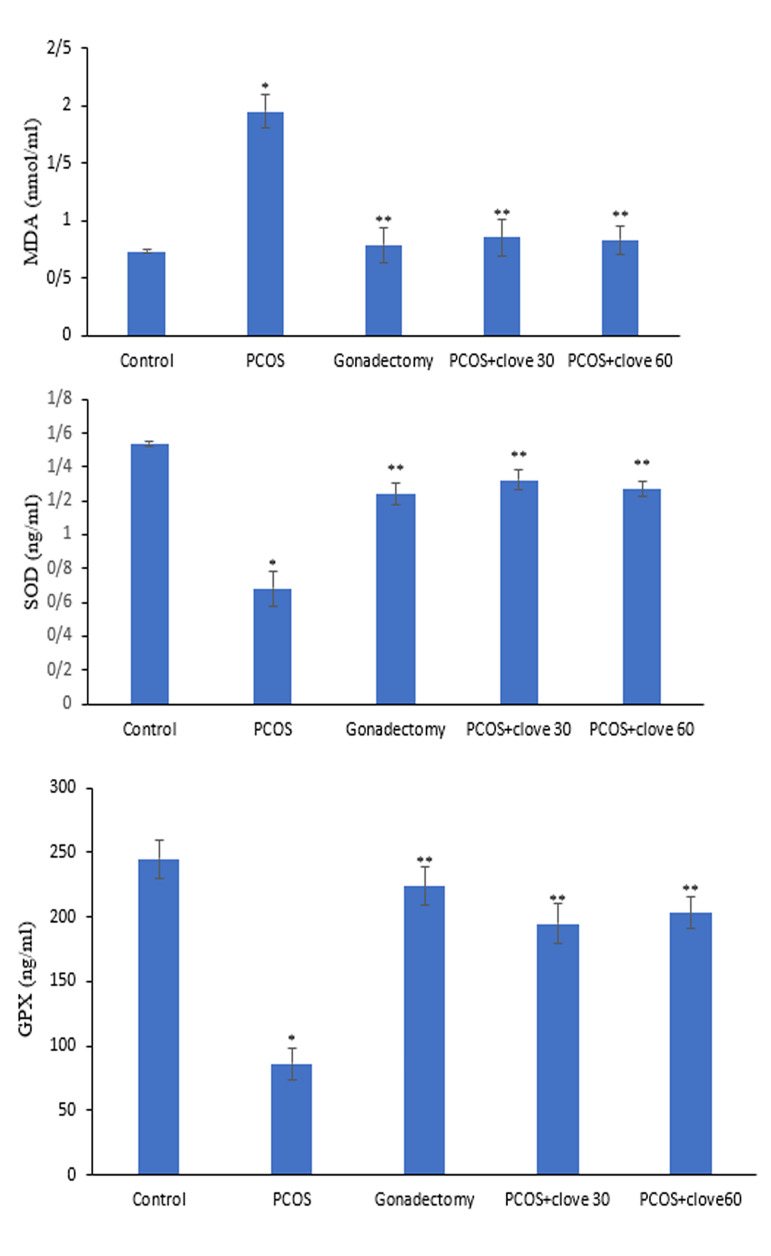
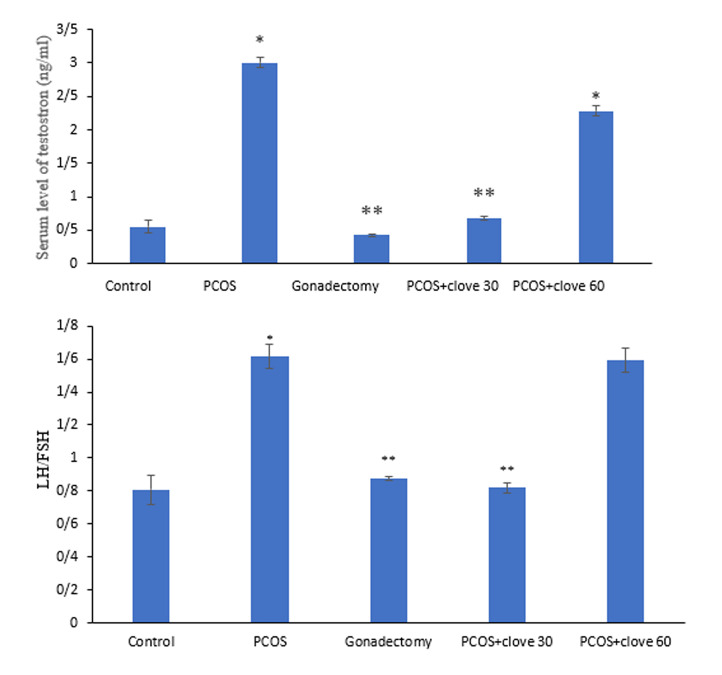
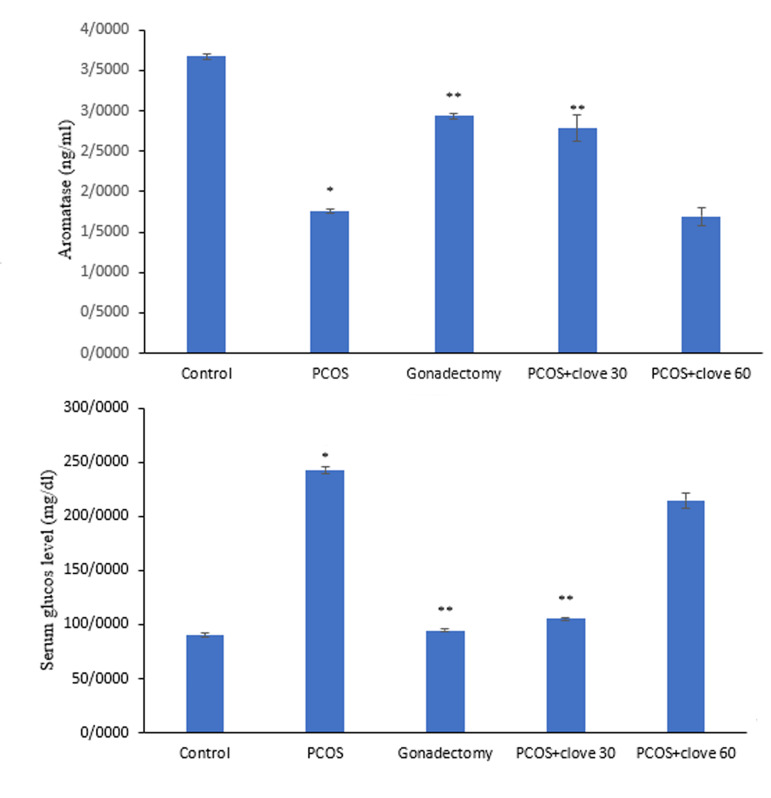
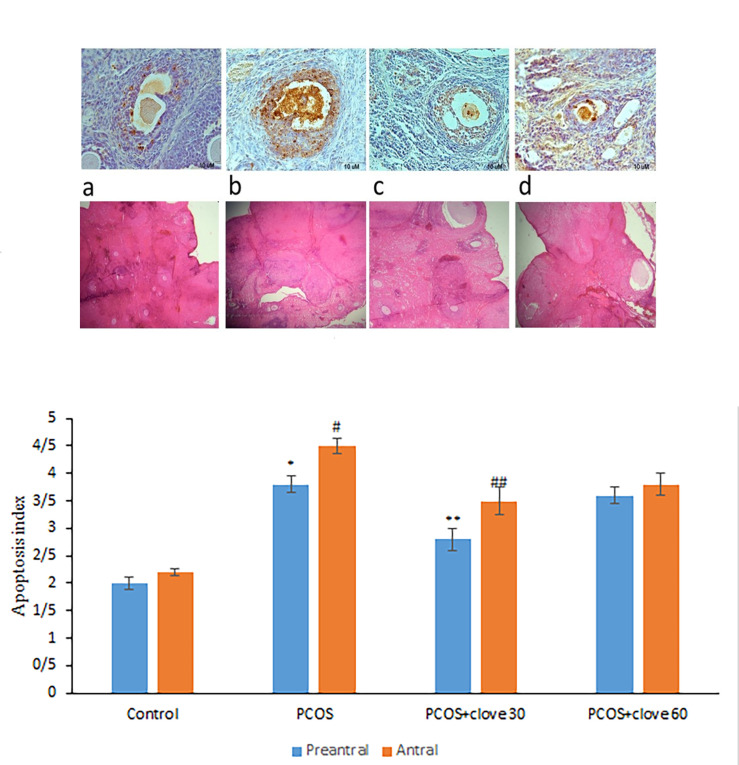
In this experimental study, forty adult female Wistar rats (weighing 250 ± 10 g) were divided randomly into five groups; G1: control, G2: PCOS group, G3: PCOS+clove (30 mg/kg/ orally/daily) group, G4: PCOS+clove (60 mg/kg/orally/daily) group, and G5: PCOS+gonadectomy group. The PCOS was induced by a single dose injection of estradiol valerate (16 mg/kg/IM). Following PCOS induction, the rats were treated for 14 days. Histological parameters, follicle apoptosis, mRNA expression of autophagy markers (), oxidative stress markers, insulin and blood glucose levels, as well as serum levels of aromatase and testosterone were evaluated in these rats. Finally, the ratio of serum luteinizing hormone (LH) to follicle-stimulating hormone (FSH) levels was also calculated.
The autophagy markers (), histological parameters, oxidative stress, insulin, and hormone levels changed significantly in the PCOS rats (G2). In G3 and G5 groups, it was observed that the levels of LH/FSH and testosterone decreased significantly in comparison to the PCOS group, and inhibition of autophagy was also observed in these groups. Treatment with cloves in the G3 group significantly improved oxidative stress, histological parameters, and insulin levels.
These findings demonstrated that oxidative stress, apoptosis, and excessive autophagy could be improved by treatment with low doses of clove and gonadectomy. Cloves may help to improve these parameters by regulating and inhibiting excessive autophagy. However, discovering the direct role of this extract in regulating the parameters such as oxidative stress, insulin, and androgens requires further investigation. In the present study, P<0.05 was considered statistically significant.
本研究旨在确定丁香是否对多囊卵巢综合征(PCOS)大鼠有帮助。
在本实验研究中,40只成年雌性Wistar大鼠(体重250±10克)被随机分为五组;G1:对照组,G2:PCOS组,G3:PCOS+丁香(30毫克/千克/口服/每日)组,G4:PCOS+丁香(60毫克/千克/口服/每日)组,以及G5:PCOS+性腺切除组。通过单次注射戊酸雌二醇(16毫克/千克/肌肉注射)诱导PCOS。PCOS诱导后,对大鼠进行14天的治疗。评估这些大鼠的组织学参数、卵泡凋亡、自噬标志物的mRNA表达、氧化应激标志物、胰岛素和血糖水平,以及芳香化酶和睾酮的血清水平。最后,还计算了血清促黄体生成素(LH)与促卵泡生成素(FSH)水平的比值。
PCOS大鼠(G2组)的自噬标志物、组织学参数、氧化应激、胰岛素和激素水平发生了显著变化。在G3组和G5组中,观察到与PCOS组相比,LH/FSH和睾酮水平显著降低,并且在这些组中也观察到自噬受到抑制。G3组用丁香治疗显著改善了氧化应激、组织学参数和胰岛素水平。
这些发现表明,低剂量丁香治疗和性腺切除可改善氧化应激、细胞凋亡和过度自噬。丁香可能通过调节和抑制过度自噬来帮助改善这些参数。然而,发现这种提取物在调节氧化应激、胰岛素和雄激素等参数方面的直接作用需要进一步研究。在本研究中,P<0.05被认为具有统计学意义。