College of Animal Science and Technology, Northwest A&F University, Yangling, Shaanxi, 712100, China.
Division of Laboratory Safety and Services, Northwest A&F University, Yangling, Shaanxi, 712100, China.
Cell Death Dis. 2023 Apr 25;14(4):292. doi: 10.1038/s41419-023-05778-0.
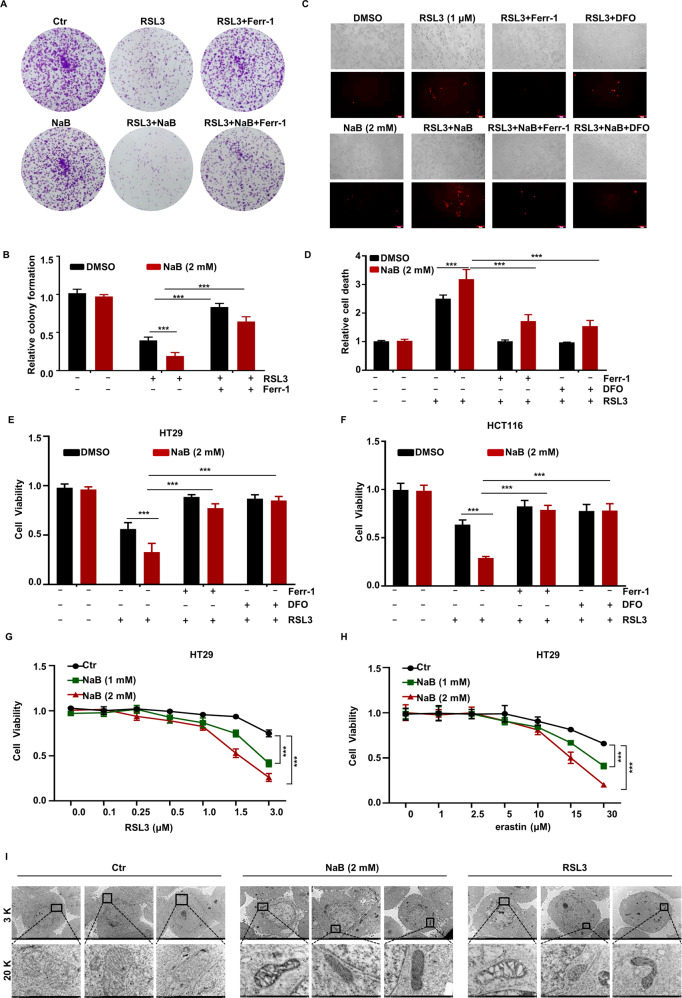
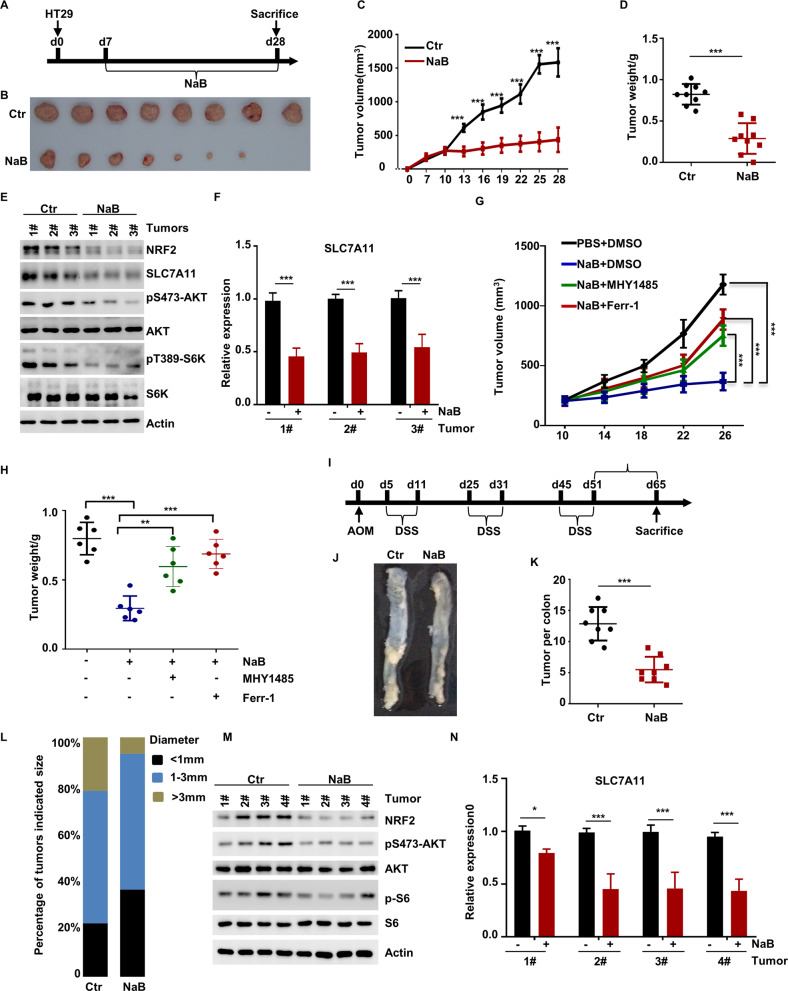
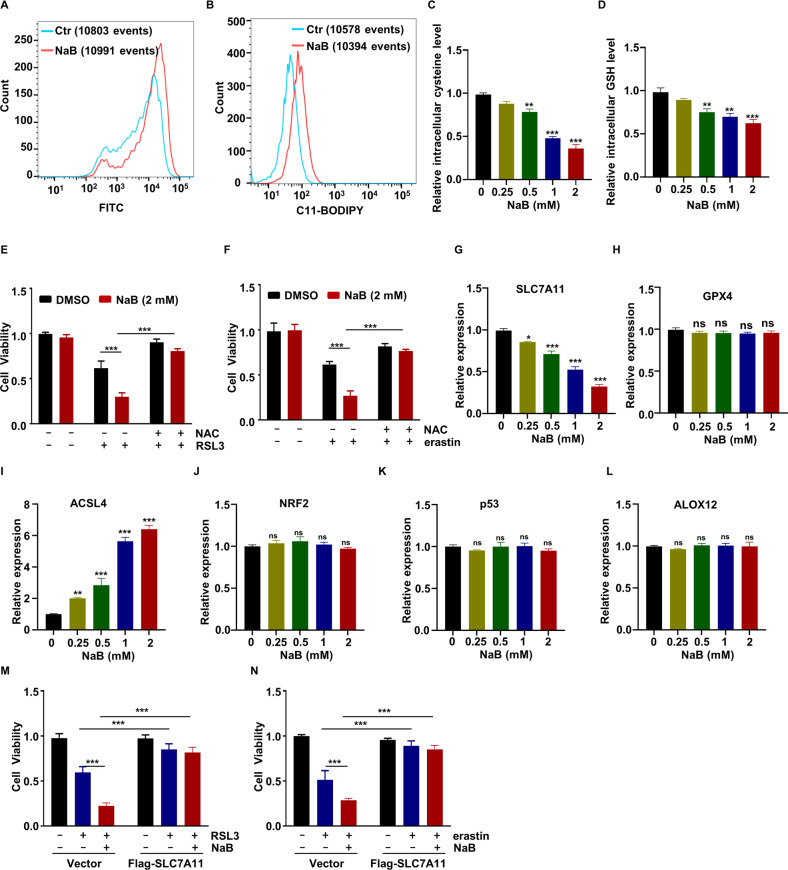
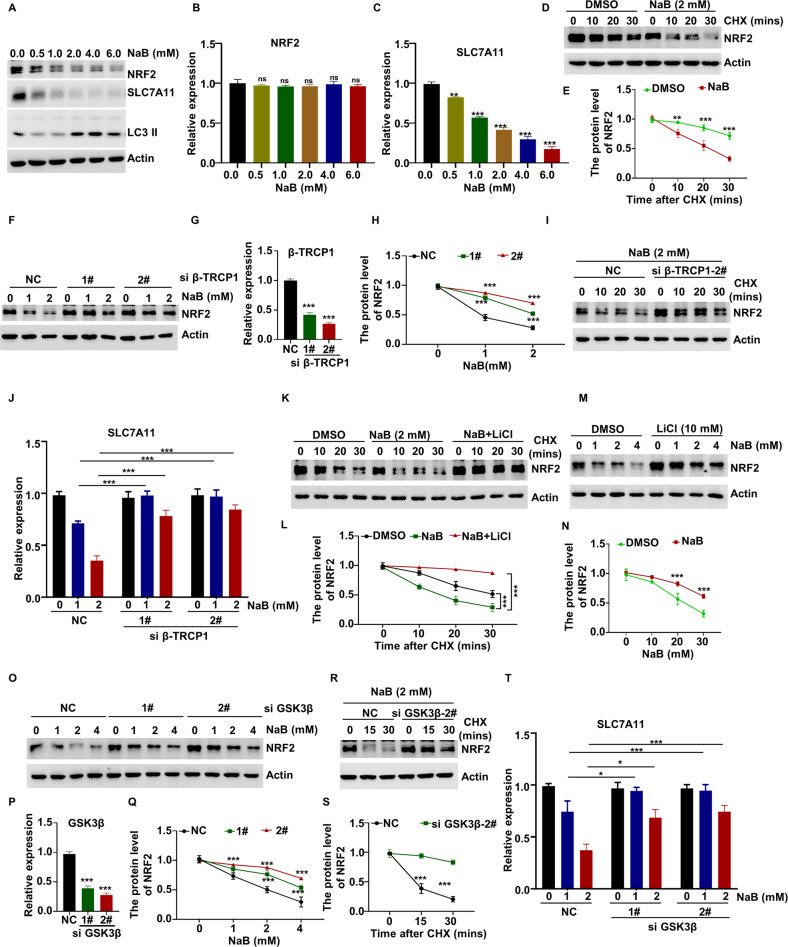
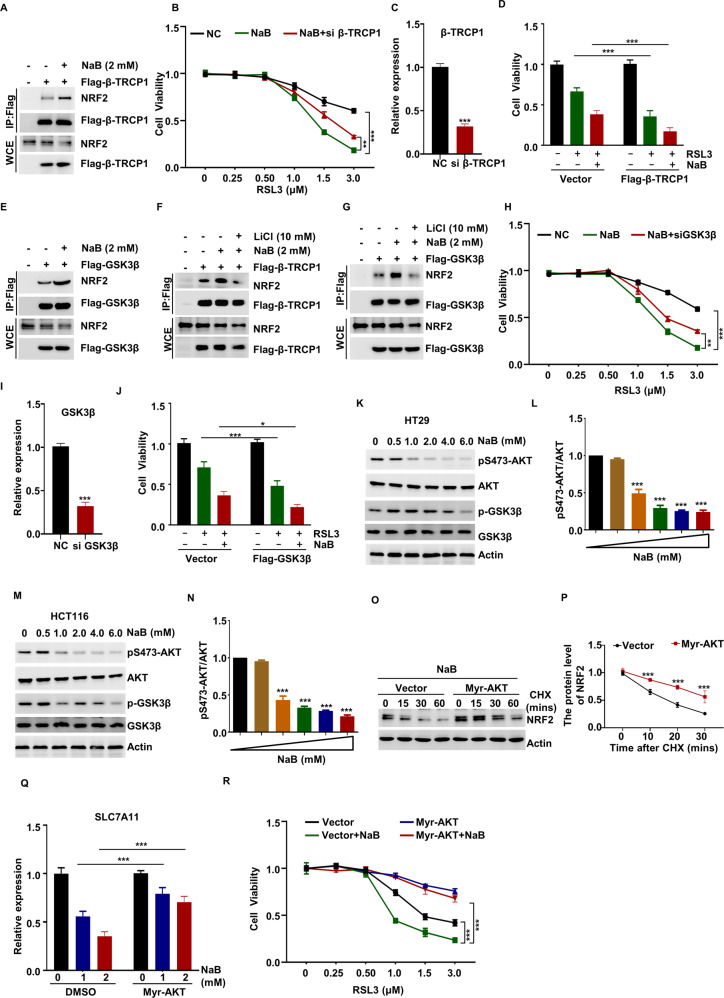
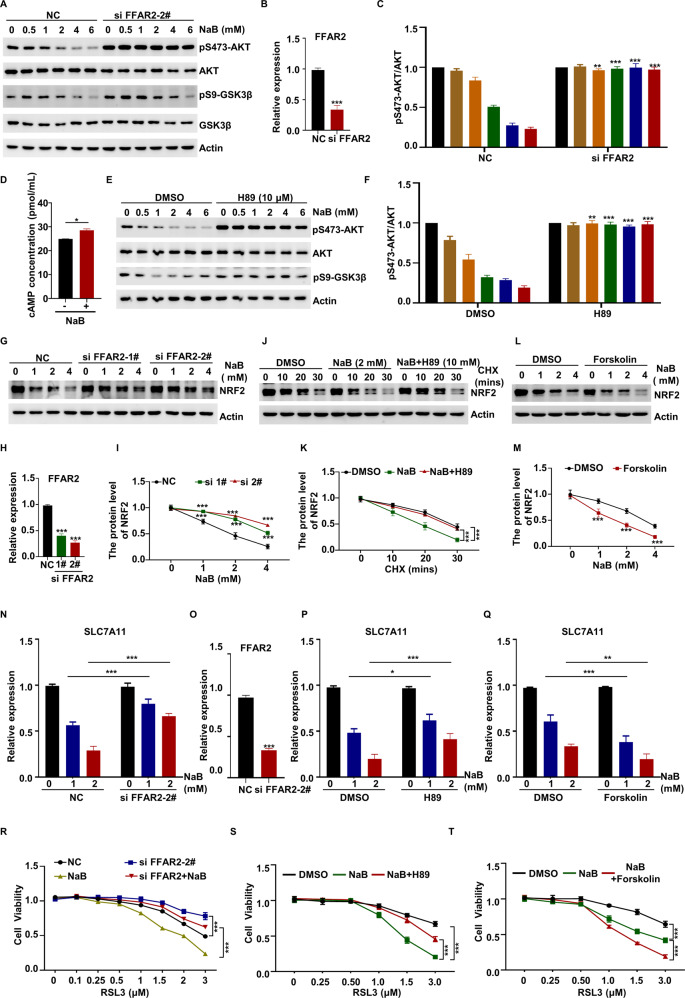
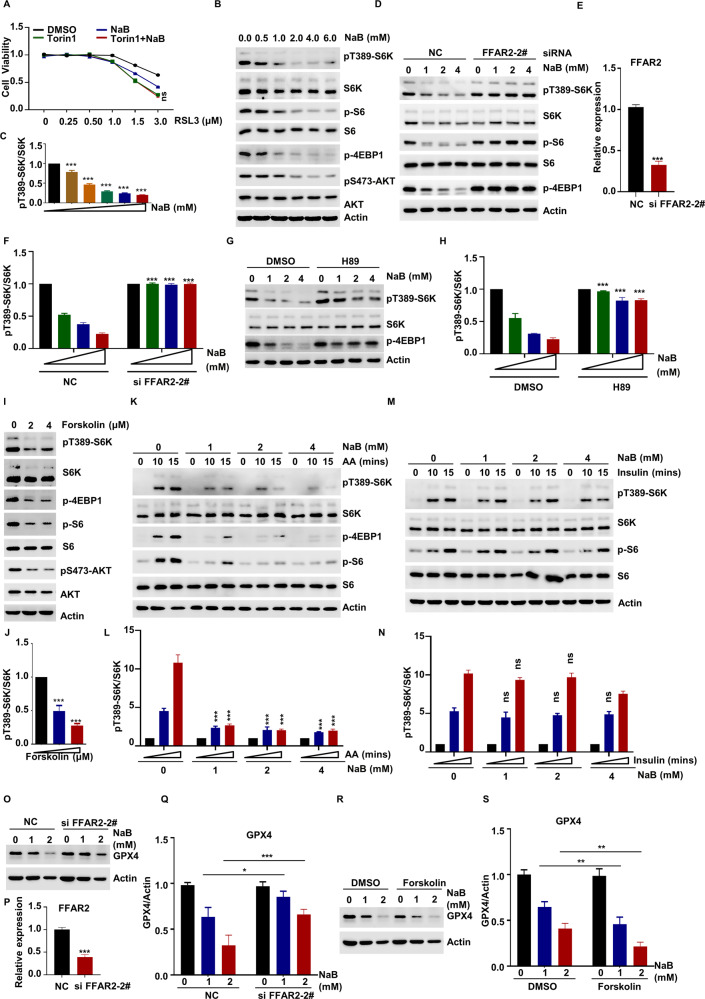
Evidence shows that short-chain fatty acids (SCFAs) play an important role in health maintenance and disease development. In particular, butyrate is known to induce apoptosis and autophagy. However, it remains largely unclear whether butyrate can regulate cell ferroptosis, and the mechanism by which has not been studied. In this study, we found that RAS-selective lethal compound 3 (RSL3)- and erastin-induced cell ferroptosis were enhanced by sodium butyrate (NaB). With regard to the underlying mechanism, our results showed that NaB promoted ferroptosis by inducing lipid ROS production via downregulating the expression of solute carrier family 7 member 11 (SLC7A11) and glutathione peroxidase 4 (GPX4). Moreover, the FFAR2-AKT-NRF2 axis and FFAR2-mTORC1 axis accounts for the NaB-mediated downregulation of SLC7A11 and GPX4, respectively, in a cAMP-PKA-dependent manner. Functionally, we found that NaB can inhibit tumor growth and the inhibitory effect could be eliminated by administrating MHY1485 (mTORC1 activator) and Ferr-1 (ferroptosis inhibitor). Altogether, in vivo results suggest that NaB treatment is correlated to the mTOR-dependent ferroptosis and consequent tumor growth through xenografts and colitis-associated colorectal tumorigenesis, implicating the potential clinical applications of NaB for future colorectal cancer treatments. Based on all these findings, we have proposed a regulatory mechanism via which butyrate inhibits the mTOR pathway to control ferroptosis and consequent tumorigenesis.
证据表明,短链脂肪酸(SCFAs)在维持健康和疾病发展中发挥着重要作用。特别是,丁酸盐已被证实可诱导细胞凋亡和自噬。然而,丁酸盐是否能调节细胞铁死亡,以及其作用机制仍在很大程度上不清楚。在本研究中,我们发现 RAS 选择性致死化合物 3(RSL3)和 erastin 诱导的细胞铁死亡可被丁酸钠(NaB)增强。就其潜在机制而言,我们的研究结果表明,NaB 通过下调溶质载体家族 7 成员 11(SLC7A11)和谷胱甘肽过氧化物酶 4(GPX4)的表达,诱导脂质 ROS 产生,从而促进铁死亡。此外,FFAR2-AKT-NRF2 轴和 FFAR2-mTORC1 轴分别通过 cAMP-PKA 依赖性方式,解释了 NaB 介导的 SLC7A11 和 GPX4 的下调。在功能上,我们发现 NaB 可以抑制肿瘤生长,而通过给予 MHY1485(mTORC1 激活剂)和 Ferr-1(铁死亡抑制剂),可以消除 NaB 的抑制作用。总之,体内结果表明,NaB 治疗与 mTOR 依赖性铁死亡和随后的肿瘤生长通过异种移植和结肠炎相关结直肠肿瘤发生有关,暗示了 NaB 用于未来结直肠癌治疗的潜在临床应用。基于这些发现,我们提出了一个调节机制,即丁酸盐通过抑制 mTOR 通路来控制铁死亡和随后的肿瘤发生。