Tsai Wan-Hua, Yeh Wen-Ling, Chou Chia-Hsuan, Wu Chia-Lin, Lai Chih-Ho, Yeh Yao-Tsung, Liao Chorng-An, Wu Chih-Chung
Research and Development Department, GenMont Biotech Incorporation, Tainan 74144, Taiwan.
Department of Biochemistry, College of Medicine, Chang Gung University, Taoyuan 33302, Taiwan.
Biomedicines. 2023 Apr 1;11(4):1068. doi: 10.3390/biomedicines11041068.
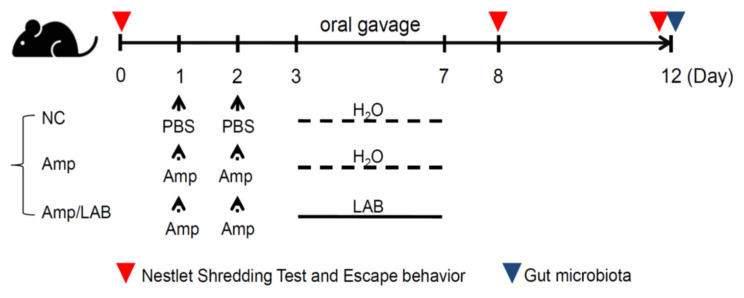
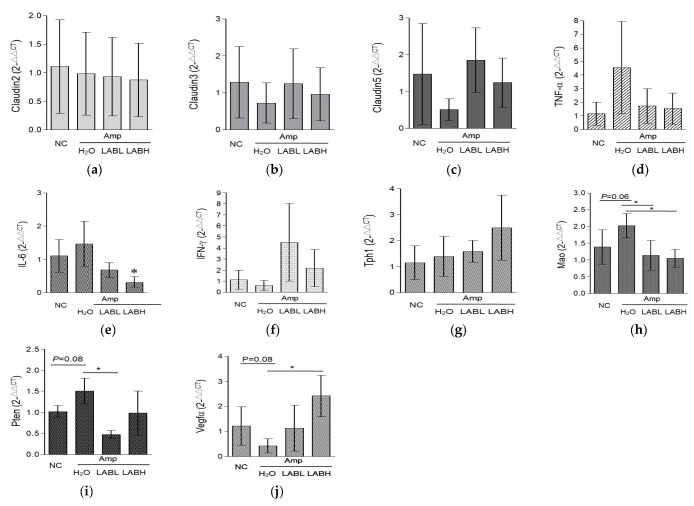
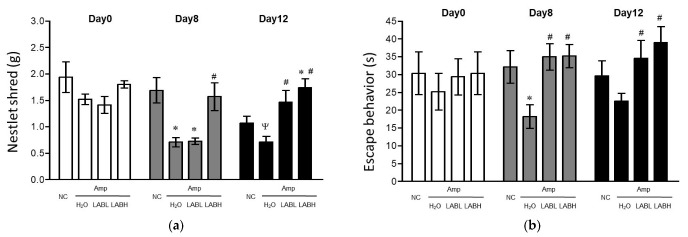
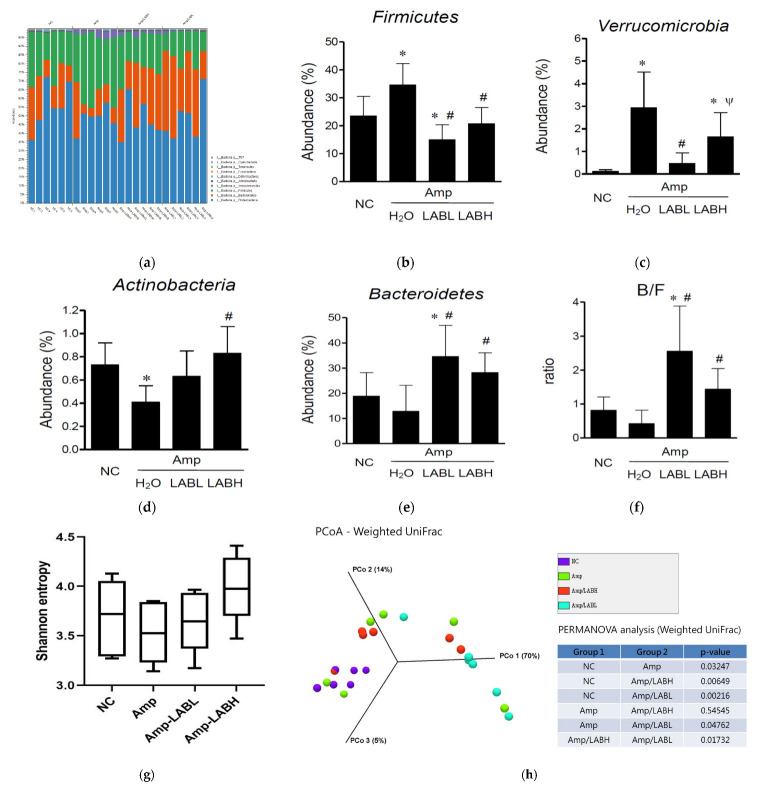
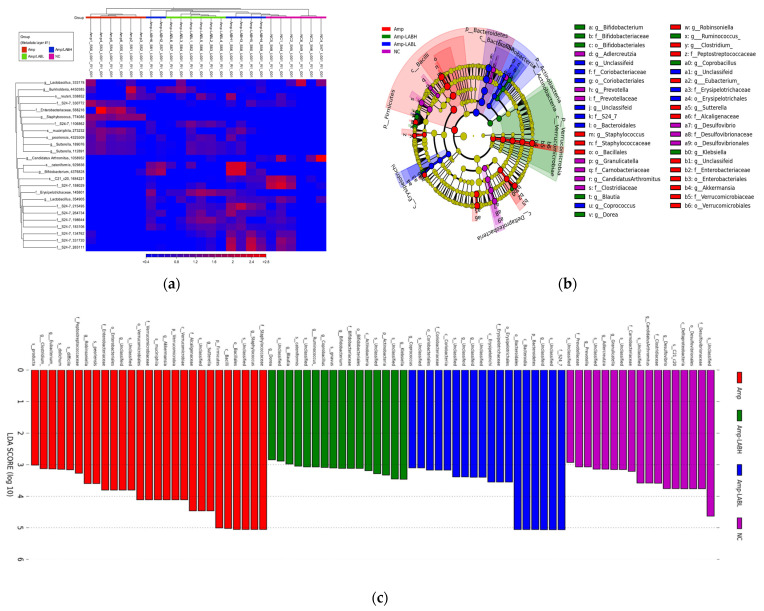
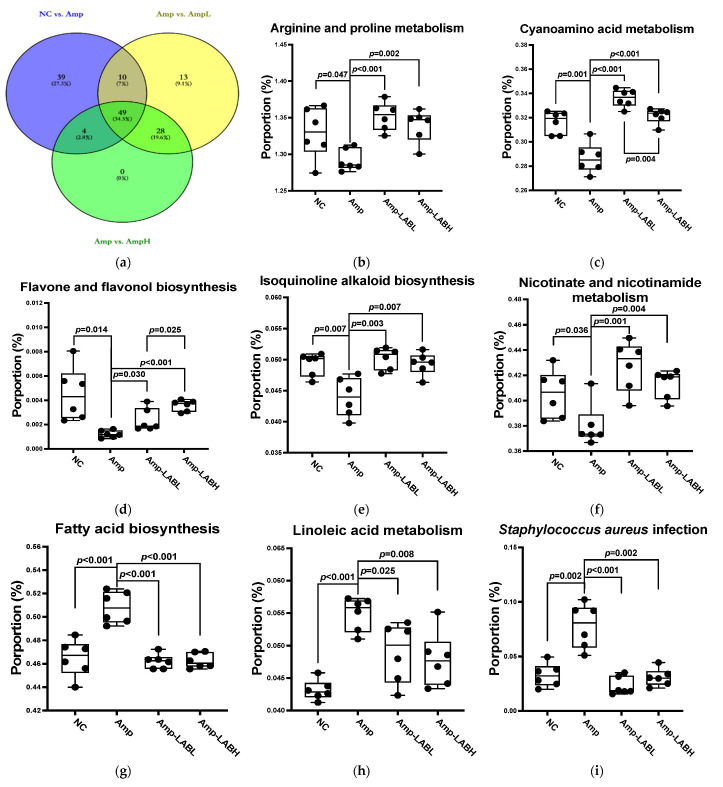
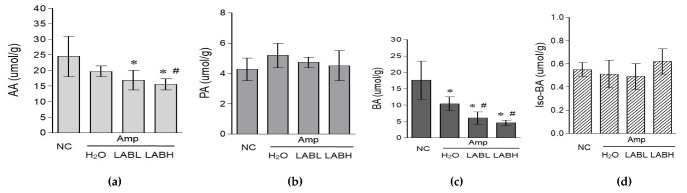
Depression is a medical and social problem. Multiple metabolites and neuroinflammation regulate it. Modifying the gut microbiota with probiotics to reduce depression through the gut-brain axis is a potential treatment strategy. In this study, three anti-depressive potentials of spp. (LAB), including GMNL-74, GMNL-185 and GMNL-141, which combined to produce low dosage LAB (1.6 × 10 CFU/mouse, LABL) and high dosage LAB (4.8 × 10 CFU/mouse, LABH), were administered to C57BL/6 mice induced depression by ampicillin (Amp). A behavioral test of depression, 16S ribosomal RNA gene amplicon sequencing, bioinformatic analysis, and short-chain fatty acid (SCFA) content measurement were executed to investigate the gut microbiota composition, activation of nutrient metabolism pathways, levels of inflammatory factors, gut-derived 5-HT biosynthesis genes, and SCFA levels in C57BL/6 mice. Results showed that after mice were induced by Amp, both LAB groups recovered from depressive behaviors, decreased the abundance of , and increased the abundance of and in the mouse ileum. The prediction of metabolism pathways of microbes revealed the activation of arginine and proline metabolism, cyanoamino acid metabolism, and nicotinate and nicotinamide metabolism were increased, and fatty acid synthesis was decreased in both LAB groups. The LABH groups showed increased levels of acetic acid, propanoic acid, and iso-butyric acid and decreased butyric acid levels in the cecum. LABH treatment increased claudin-5 and reduced IL-6 mRNA expression. Both LAB groups also reduced monoamine oxidase, and the LABH group increased vascular endothelial growth factor mRNA expression. These results showed that the composite of three LAB exerts antidepressant effects by regulating the gut microbiota and modifying the levels of depression-related metabolites in C57BL/6J Amp-treated mice.
抑郁症是一个医学和社会问题。多种代谢产物和神经炎症对其产生调节作用。通过益生菌改变肠道微生物群,经肠-脑轴减轻抑郁,是一种潜在的治疗策略。在本研究中,将三种具有抗抑郁潜力的乳酸菌(LAB),包括GMNL-74、GMNL-185和GMNL-141组合后制成低剂量乳酸菌(1.6×10 CFU/小鼠,LABL)和高剂量乳酸菌(4.8×10 CFU/小鼠,LABH),给予经氨苄青霉素(Amp)诱导抑郁的C57BL/6小鼠。进行抑郁行为测试、16S核糖体RNA基因扩增子测序、生物信息学分析和短链脂肪酸(SCFA)含量测定,以研究C57BL/6小鼠的肠道微生物群组成、营养代谢途径激活、炎症因子水平、肠道源性5-羟色胺生物合成基因以及SCFA水平。结果显示,小鼠经Amp诱导后,两个乳酸菌组的抑郁行为均有所恢复,小鼠回肠中[具体菌名1]的丰度降低,[具体菌名2]和[具体菌名3]的丰度增加。微生物代谢途径预测显示,两个乳酸菌组中精氨酸和脯氨酸代谢、氰基氨基酸代谢以及烟酸和烟酰胺代谢的激活增加,脂肪酸合成减少。高剂量乳酸菌组盲肠中乙酸、丙酸和异丁酸水平升高,丁酸水平降低。高剂量乳酸菌处理增加了claudin-5表达并降低了IL-6 mRNA表达。两个乳酸菌组还降低了单胺氧化酶水平,高剂量乳酸菌组增加了血管内皮生长因子mRNA表达。这些结果表明,三种乳酸菌的组合通过调节肠道微生物群和改变C57BL/6J Amp处理小鼠中与抑郁相关的代谢产物水平发挥抗抑郁作用。