Experimental and Clinical Research Center, Charité - Universitätsmedizin Berlin and Max Delbrück Center for Molecular Medicine in the Helmholtz Association, Berlin, Germany.
Technology Platform Pluripotent Stem Cells, Max Delbrück Center for Molecular Medicine in the Helmholtz Association, Berlin, Germany.
J Clin Invest. 2023 Jul 3;133(13):e164637. doi: 10.1172/JCI164637.
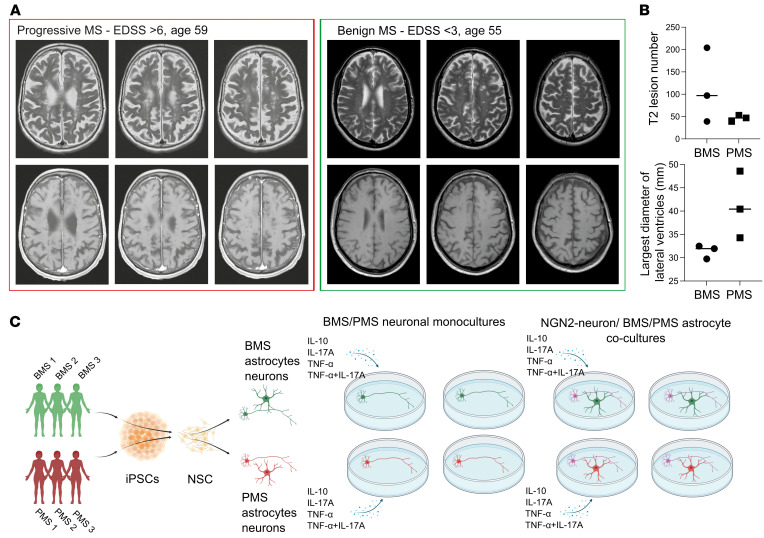
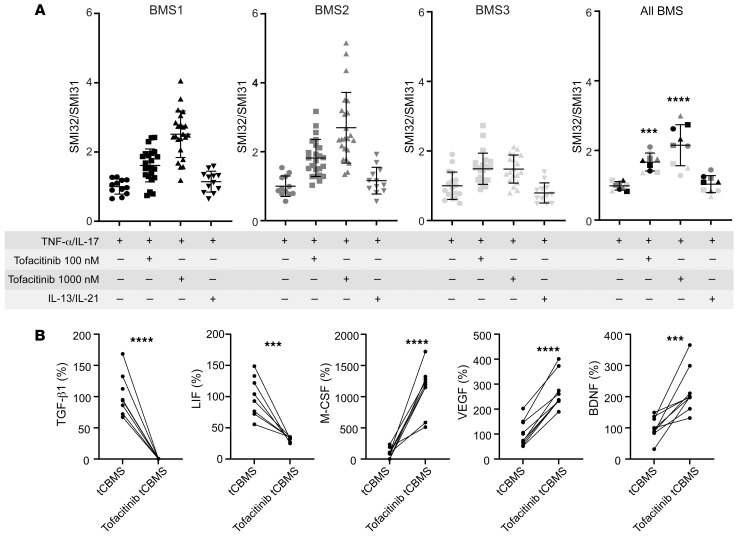
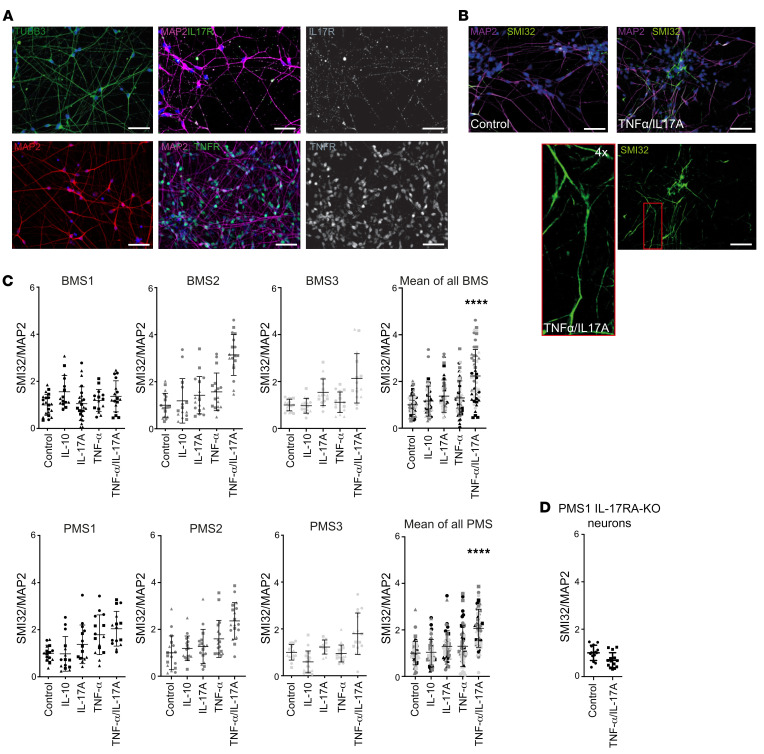
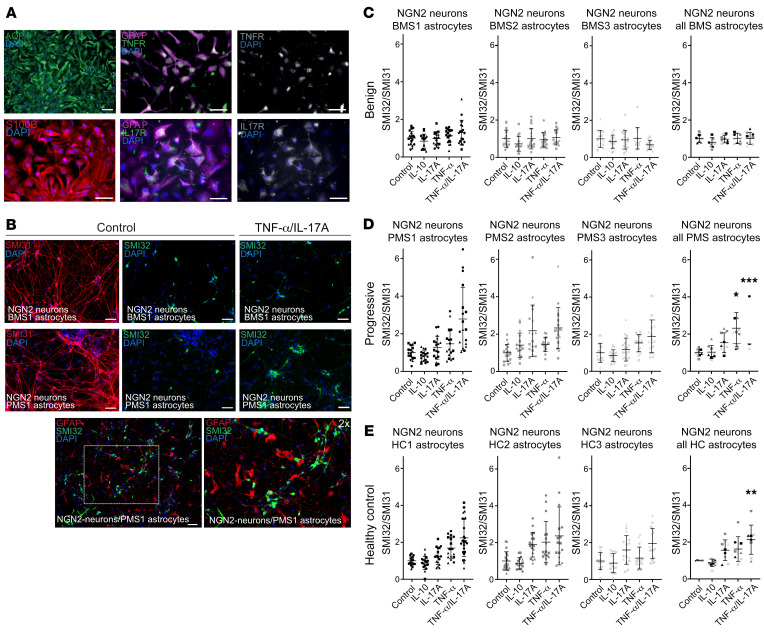
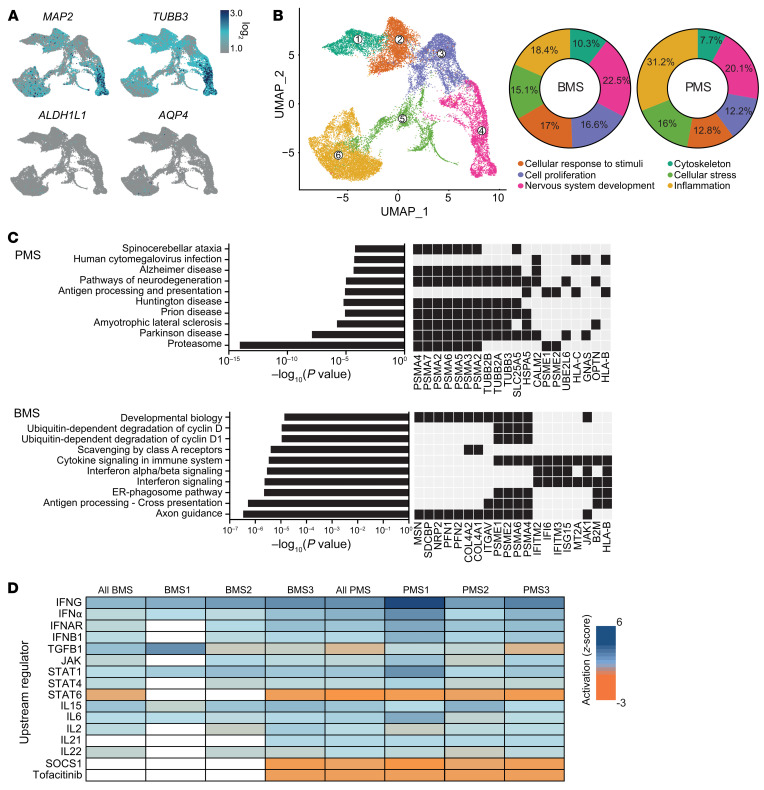
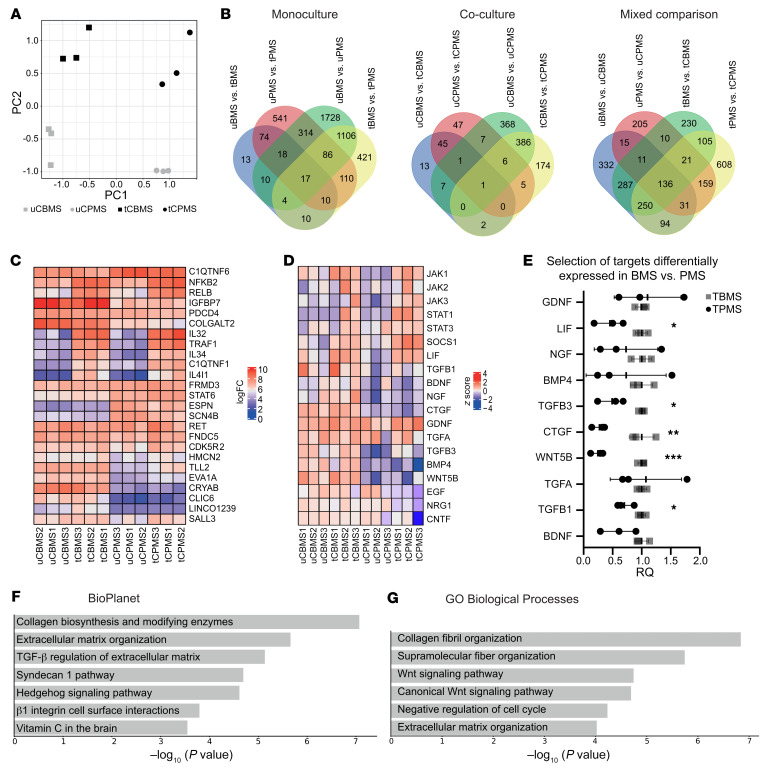
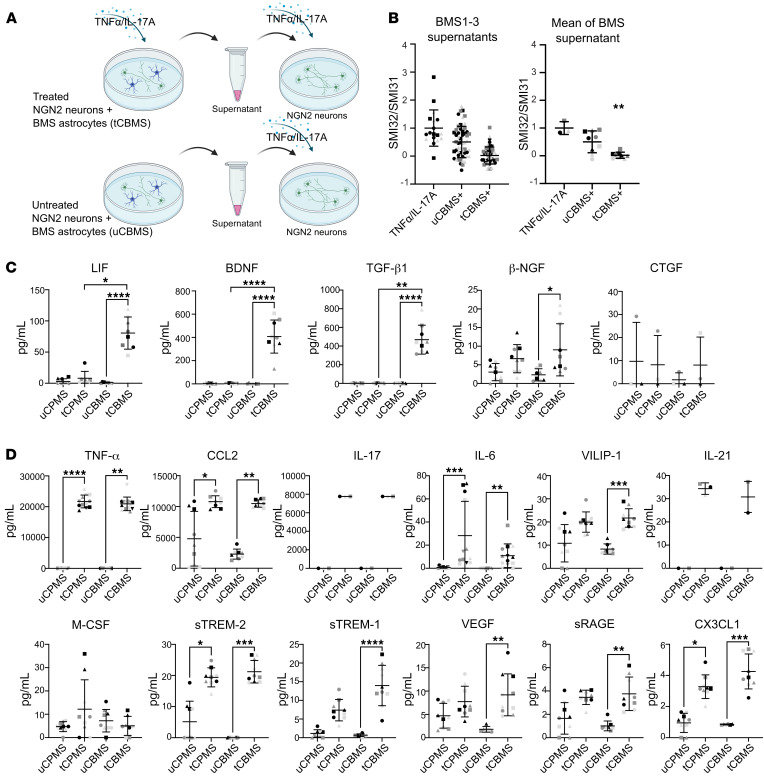
Multiple sclerosis (MS) is the most common chronic central nervous system inflammatory disease. Individual courses are highly variable, with complete remission in some patients and relentless progression in others. We generated induced pluripotent stem cells (iPSCs) to investigate possible mechanisms in benign MS (BMS), compared with progressive MS (PMS). We differentiated neurons and astrocytes that were then stressed with inflammatory cytokines typically associated with MS phenotypes. TNF-α/IL-17A treatment increased neurite damage in MS neurons from both clinical phenotypes. In contrast, TNF-α/IL-17A-reactive BMS astrocytes cultured with healthy control neurons exhibited less axonal damage compared with PMS astrocytes. Accordingly, single-cell transcriptomic BMS astrocyte analysis of cocultured neurons revealed upregulated neuronal resilience pathways; these astrocytes showed differential growth factor expression. Furthermore, supernatants from BMS astrocyte/neuronal cocultures rescued TNF-α/IL-17-induced neurite damage. This process was associated with a unique LIF and TGF-β1 growth factor expression, as induced by TNF-α/IL-17 and JAK-STAT activation. Our findings highlight a potential therapeutic role of modulation of astrocyte phenotypes, generating a neuroprotective milieu. Such effects could prevent permanent neuronal damage.
多发性硬化症(MS)是最常见的慢性中枢神经系统炎症性疾病。个体病程高度可变,一些患者完全缓解,而另一些患者则持续进展。我们生成诱导多能干细胞(iPSC),以研究良性多发性硬化症(BMS)与进行性多发性硬化症(PMS)之间的可能机制。我们将神经元和星形胶质细胞分化出来,然后用通常与 MS 表型相关的炎症细胞因子对其进行应激处理。TNF-α/IL-17A 治疗增加了来自两种临床表型的 MS 神经元的神经突损伤。相比之下,与 PMS 星形胶质细胞相比,与健康对照神经元共培养的 BMS 星形胶质细胞在 TNF-α/IL-17A 反应性下表现出较少的轴突损伤。相应地,共培养神经元的单细胞转录组学 BMS 星形胶质细胞分析显示上调的神经元弹性途径;这些星形胶质细胞表现出不同的生长因子表达。此外,BMS 星形胶质细胞/神经元共培养物的上清液可挽救 TNF-α/IL-17 诱导的神经突损伤。这一过程与独特的 LIF 和 TGF-β1 生长因子的表达有关,这是由 TNF-α/IL-17 和 JAK-STAT 激活引起的。我们的研究结果强调了调节星形胶质细胞表型的潜在治疗作用,从而产生神经保护环境。这种作用可以防止永久性神经元损伤。