Cui Yan-Fang, Zhou Peng, Xiang Kun-Li, Zhang Qiang, Yan Hua, Zhang Li-Guo, Pan Bo, Huang Yu-Song, Guo Zhi-You, Li Zhen-Yu, Xiang Xiao-Guo
Jiangxi Province Key Laboratory of Watershed Ecosystem Change and Biodiversity, Institute of Life Science and School of Life Sciences, Nanchang University, Nanchang, Jiangxi, China.
State Key Laboratory of Systematic and Evolutionary Botany, Institute of Botany, Chinese Academy of Sciences, Beijing, China.
Front Plant Sci. 2023 May 9;14:1160535. doi: 10.3389/fpls.2023.1160535. eCollection 2023.
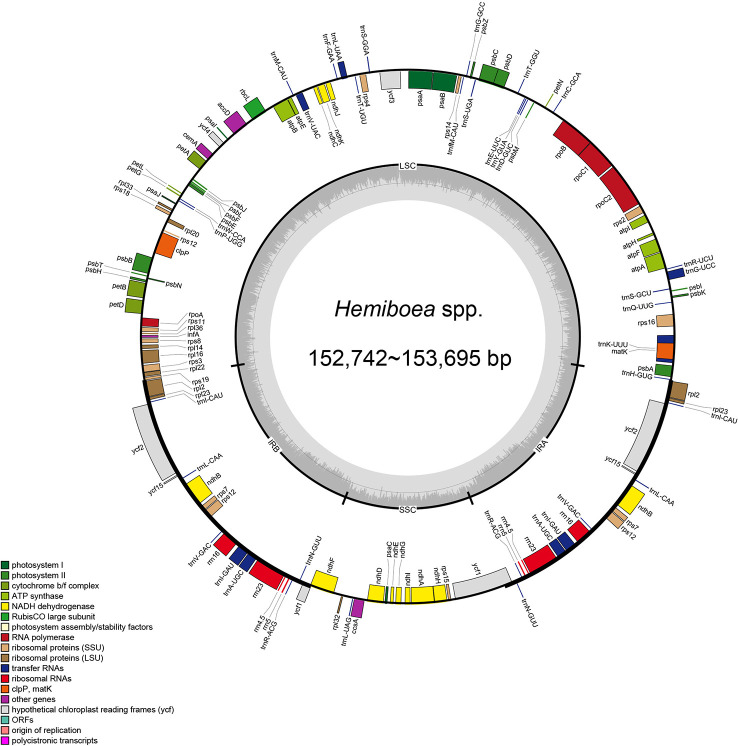
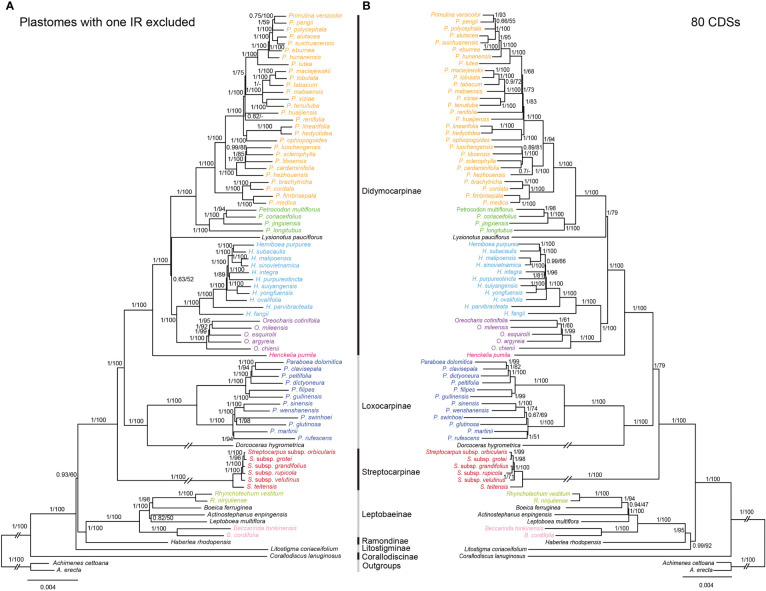
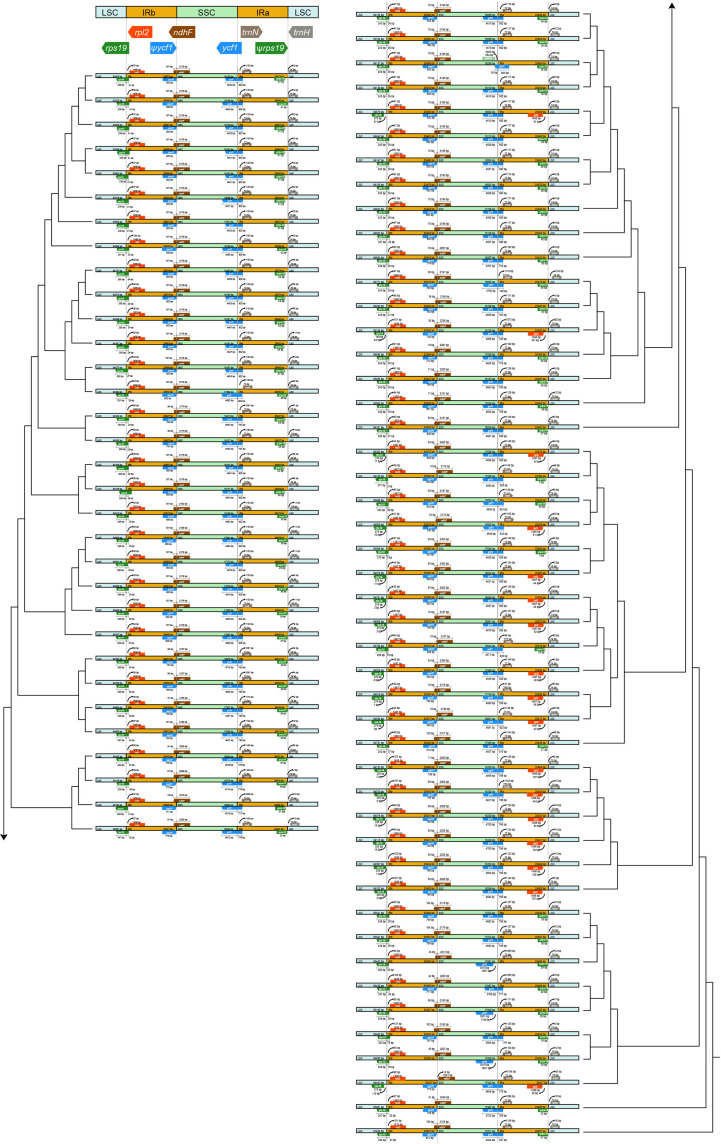
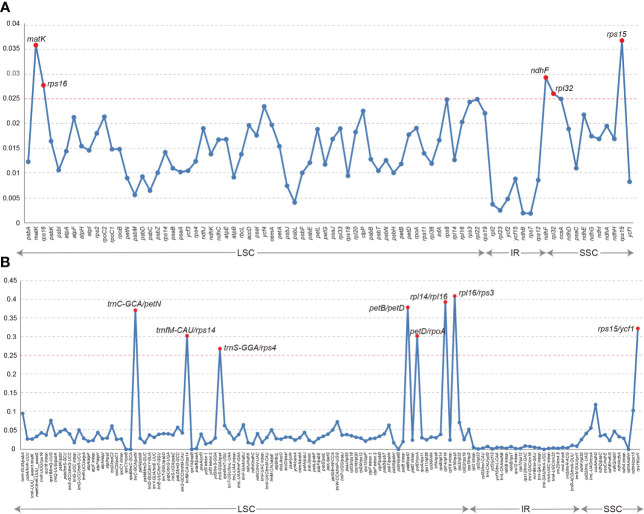
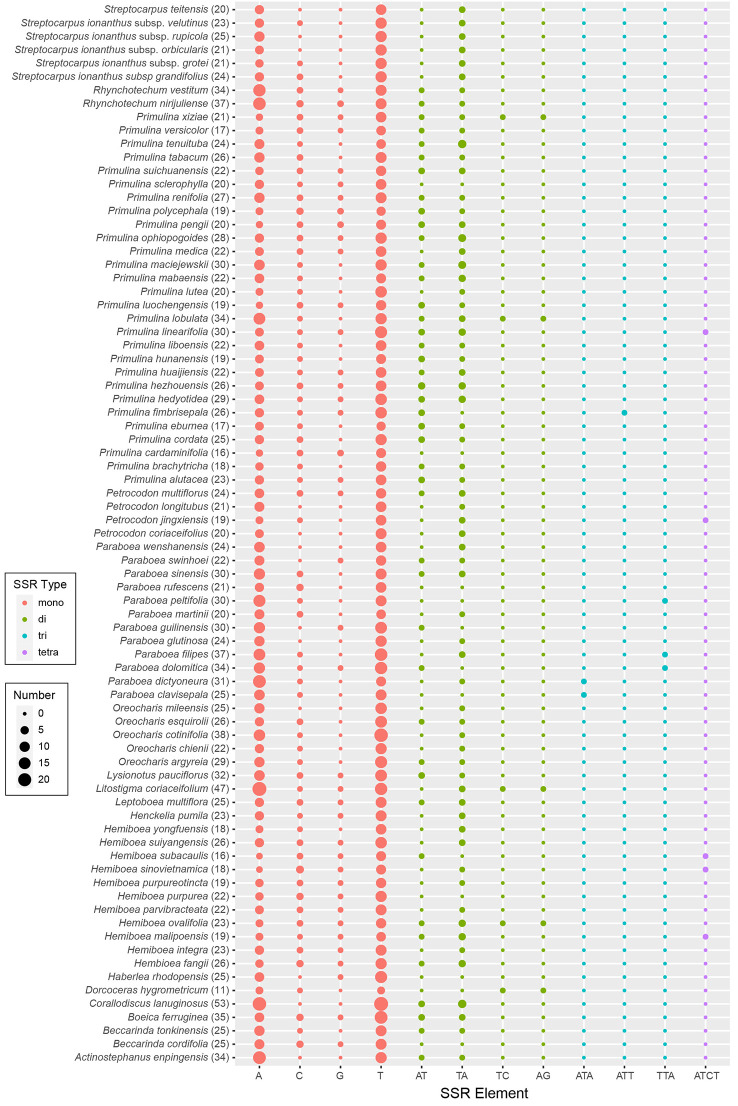
Trichosporeae is the largest and most taxonomically difficult tribe of Gesneriaceae due to its diverse morphology. Previous studies have not clarified the phylogenetic relationships within this tribe on several DNA markers, including the generic relationships within subtribes. Recently, plastid phylogenomics have been successfully employed to resolve the phylogenetic relationships at different taxonomic levels. In this study, plastid phylogenomics were used to explore the relationships within Trichosporeae. Eleven plastomes of were newly reported. Comparative analyses, phylogeny and morphological character evolution within Trichosporeae were conducted on 79 species representing seven subtribes. The plastomes range from 152,742 bp to 153,695 bp in length. Within Trichosporeae, the sampled plastomes range from 152,196 bp to 156,614 bp and GC content from 37.2% to 37.8%. A total of 121-133 genes were annotated in each species, including 80-91 protein-coding genes, 34-37 tRNA genes, and 8 rRNA genes. The contraction and expansion of IR borders were not detected, and gene rearrangements and inversions did not occur. The 13 hypervariable regions were proposed as the potential molecular markers for species identification. A total of 24,299 SNPs and 3,378 indels were inferred, and most of the SNPs were functionally missense and silent variations. There were 1968 SSRs, 2055 tandem repeats and 2802 dispersed repeats. The RSCU and ENC values indicated that the codon usage pattern was conserved in Trichosporeae. Both the phylogenetic frameworks based on the whole plastome and 80 CDSs were basically concordant. The sister relationships between Loxocarpinae and Didymocarpinae were confirmed, and was a sister group of with high support. The morphological characters showed a complex evolutionary pattern of Trichosporeae. Our findings may contribute to future research on genetic diversity, morphological evolutionary patterns, and conservation of the tribe Trichosporeae.
由于形态多样,线果苣苔族是苦苣苔科中最大且分类学上最难的一个族。以往的研究尚未通过包括亚族内属间关系在内的几个DNA标记厘清该族内的系统发育关系。最近,质体系统发育基因组学已成功用于解析不同分类水平上的系统发育关系。在本研究中,质体系统发育基因组学被用于探究线果苣苔族内的关系。新报道了11个质体基因组。对代表7个亚族的79个物种进行了线果苣苔族内的比较分析、系统发育和形态特征演化研究。这些质体基因组长度在152,742 bp至153,695 bp之间。在线果苣苔族内,所采样的质体基因组长度在152,196 bp至156,614 bp之间,GC含量在37.2%至37.8%之间。每个物种共注释了121 - 133个基因,包括80 - 91个蛋白质编码基因、34 - 37个tRNA基因和8个rRNA基因。未检测到IR边界的收缩和扩张,也未发生基因重排和倒位。提出13个高变区作为物种鉴定的潜在分子标记。共推断出24,299个单核苷酸多态性(SNP)和3,378个插入缺失,且大多数SNP为功能错义变异和沉默变异。有1968个简单序列重复(SSR)、2055个串联重复和2802个分散重复。相对同义密码子使用度(RSCU)和有效密码子数(ENC)值表明线果苣苔族的密码子使用模式是保守的。基于整个质体基因组和80个编码序列(CDS)构建的系统发育框架基本一致。确认了斜果苣苔亚族和长蒴苣苔亚族之间的姐妹关系,且[此处原文缺失相关物种名]是[此处原文缺失相关物种名]的姐妹群,支持率很高。形态特征显示出线果苣苔族复杂的演化模式。我们的研究结果可能有助于未来对该族的遗传多样性、形态演化模式和保护的研究。