College of Bioscience and Biotechnology, Hunan Agricultural University, Changsha 410128, China.
Agricultural Bioengineering Institute, Changsha 410128, China.
Int J Mol Sci. 2023 May 20;24(10):9034. doi: 10.3390/ijms24109034.
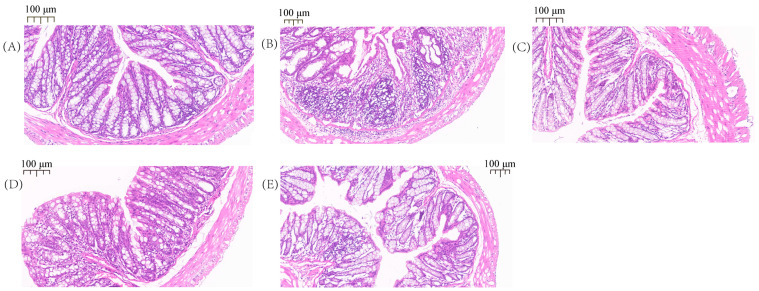
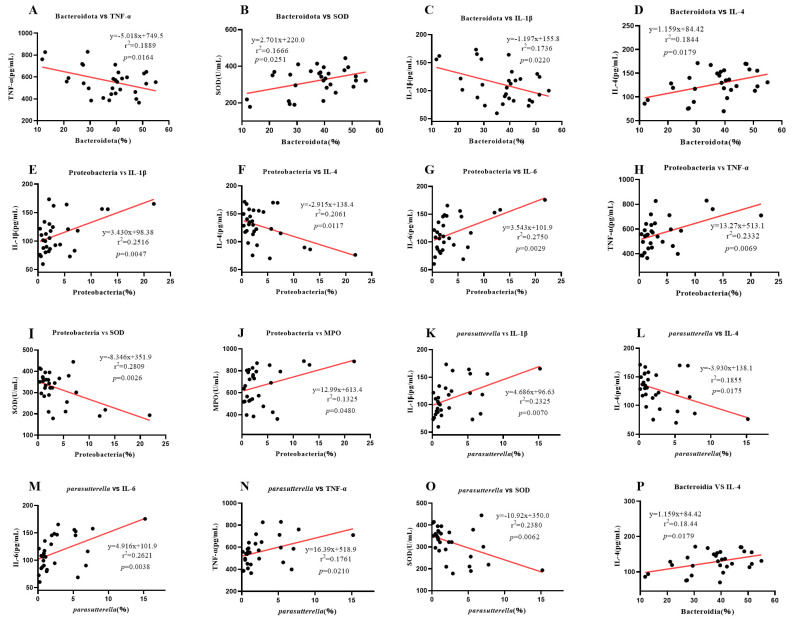
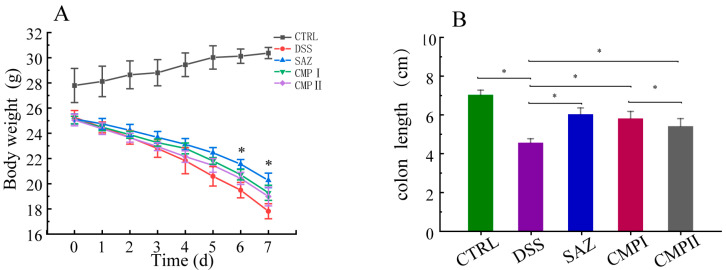
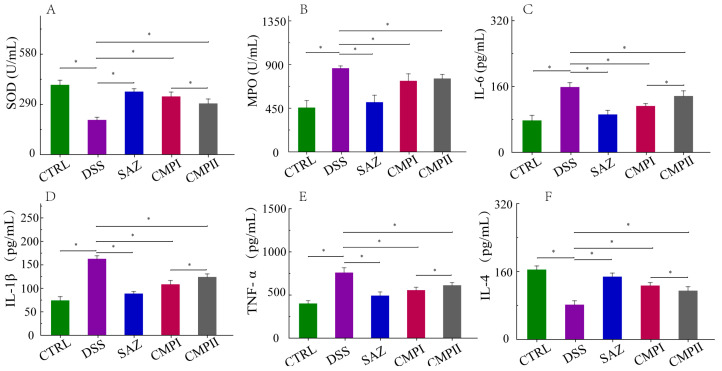
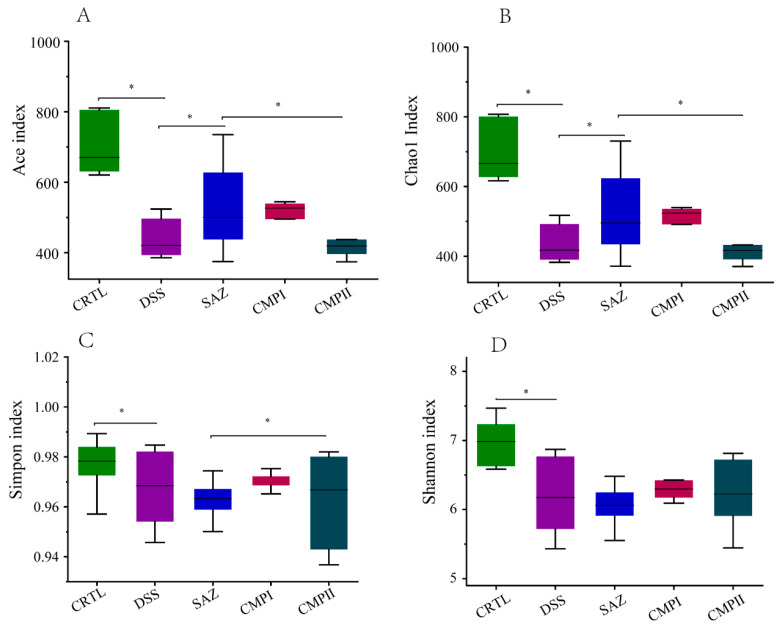
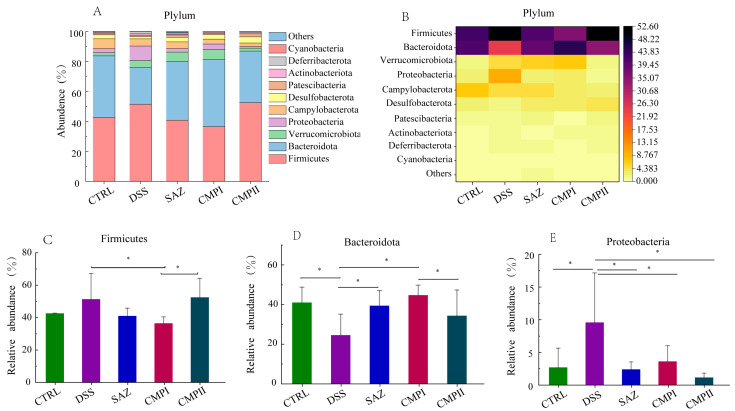
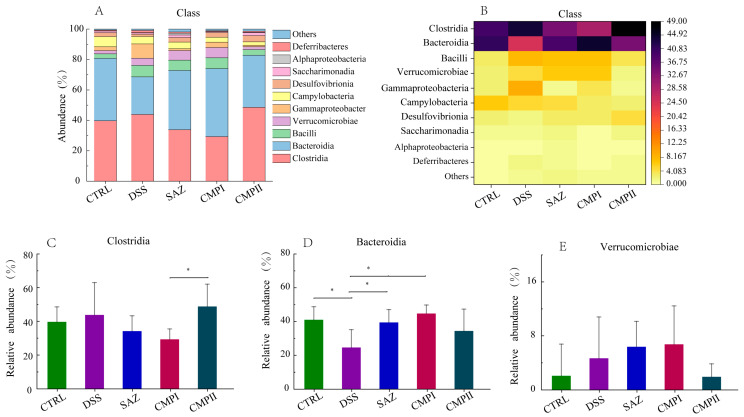
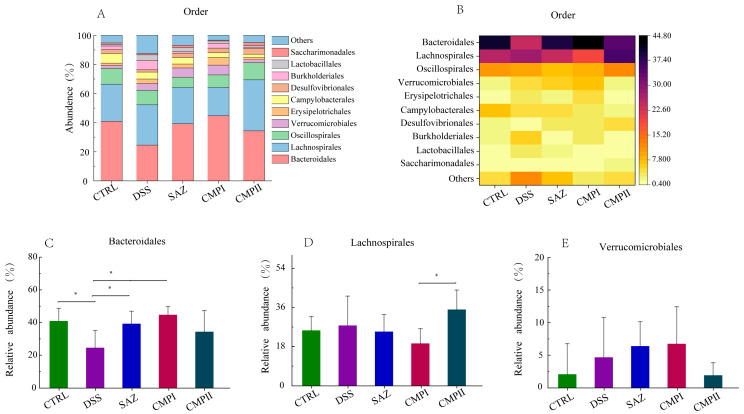
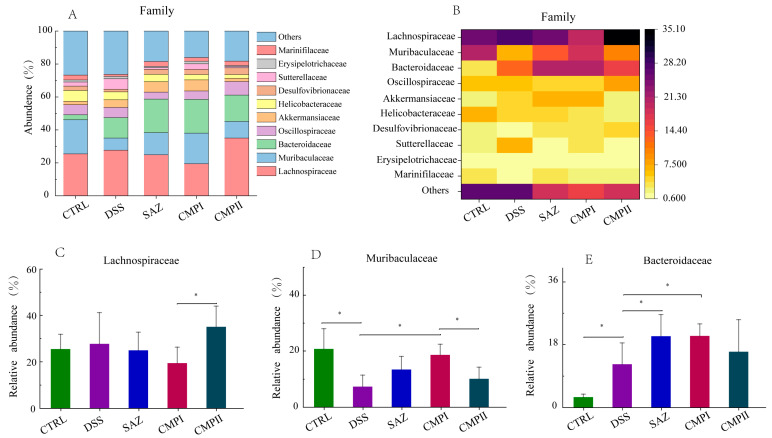
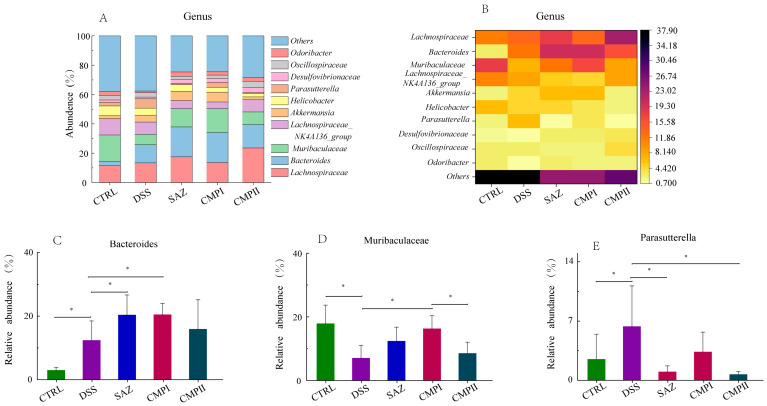
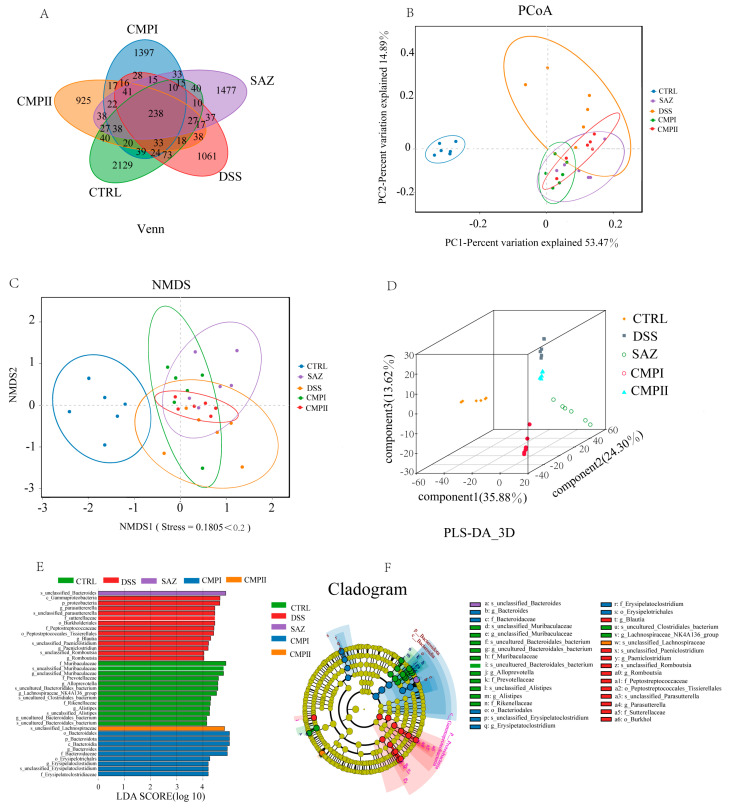
Carboxymethyl poria polysaccharide plays important anti-tumor, antioxidant, and anti-inflammatory roles. Therefore, this study aimed to compare the healing impacts of two different sources of carboxymethyl poria polysaccharides [Carboxymethylat Poria Polysaccharides I (CMP I) and Carboxymethylat Poria Polysaccharides II (CMP II)] on ulcerative colitis in mice caused by dextran sulfate sodium (DSS). All the mice were arbitrarily split into five groups ( = 6): (a) control (CTRL), (b) DSS, (c) SAZ (sulfasalazine), (d) CMP I, and (e) CMP II. The experiment lasted for 21 days, and the body weight and final colon length were monitored. A histological analysis of the mouse colon tissue was carried out using H&E staining to assess the degree of inflammatory infiltration. The levels of inflammatory cytokines [interleukin-1β (IL-1β), interleukin-6 (IL-6), tumor necrosis factor-α (TNF-α), and interleukin-4 (IL-4)] and enzymes [superoxide dismutase (SOD) and myeloperoxidase (MPO)] in the serum were examined using ELISA. Additionally, 16S ribosomal RNA sequencing was used to analyze the microorganisms in the colon. The results indicated that both CMP I and CMP II alleviated weight loss, colonic shortening, and inflammatory factor infestation in colonic tissues caused by DSS ( < 0.05). Furthermore, the ELISA results revealed that both CMP I and CMP II reduced the expression of IL-1β, IL-6, TNF-α, and MPO, and elevated the expression of IL-4 and SOD in the sera of the mice ( < 0.05). Moreover, 16S rRNA sequencing showed that CMP I and CMP II increased the plenitude of microorganisms in the mouse colon relative to that in the DSS group. The results also indicated that the therapeutic effect of CMP I on DSS-induced colitis in the mice was superior to that of CMP II. This study demonstrated that carboxymethyl poria polysaccharide from had therapeutic effects on DSS-induced colitis in mice, with CMP I being more effective than CMP II.
羧甲基茯苓多糖具有重要的抗肿瘤、抗氧化和抗炎作用。因此,本研究旨在比较两种不同来源的羧甲基茯苓多糖(羧甲基茯苓多糖 I(CMP I)和羧甲基茯苓多糖 II(CMP II))对葡聚糖硫酸钠(DSS)诱导的小鼠溃疡性结肠炎的愈合作用。所有小鼠被随机分为五组(n=6):(a)对照组(CTRL),(b)DSS 组,(c)SAZ(柳氮磺胺吡啶)组,(d)CMP I 组,和(e)CMP II 组。实验持续 21 天,监测体重和最终结肠长度。采用 H&E 染色对小鼠结肠组织进行组织学分析,评估炎症浸润程度。采用 ELISA 法检测血清中炎症细胞因子[白细胞介素-1β(IL-1β)、白细胞介素-6(IL-6)、肿瘤坏死因子-α(TNF-α)和白细胞介素-4(IL-4)]和酶[超氧化物歧化酶(SOD)和髓过氧化物酶(MPO)]水平。此外,采用 16S 核糖体 RNA 测序分析结肠中的微生物。结果表明,CMP I 和 CMP II 均能减轻 DSS 引起的体重减轻、结肠缩短和结肠组织炎症因子浸润(<0.05)。此外,ELISA 结果显示,CMP I 和 CMP II 均降低了血清中 IL-1β、IL-6、TNF-α和 MPO 的表达,同时升高了血清中 IL-4 和 SOD 的表达(<0.05)。此外,16S rRNA 测序表明,CMP I 和 CMP II 增加了与 DSS 组相比,小鼠结肠中微生物的丰度。结果还表明,CMP I 对 DSS 诱导的小鼠结肠炎的治疗效果优于 CMP II。本研究表明,来源于的羧甲基茯苓多糖对 DSS 诱导的小鼠结肠炎具有治疗作用,且 CMP I 比 CMP II 更有效。