
增溶方法的进展:迈向提高难溶性药物生物利用度的一步。
Advancement in Solubilization Approaches: A Step towards Bioavailability Enhancement of Poorly Soluble Drugs.
作者信息
Kumari Lakshmi, Choudhari Yash, Patel Preeti, Gupta Ghanshyam Das, Singh Dilpreet, Rosenholm Jessica M, Bansal Kuldeep Kumar, Kurmi Balak Das
机构信息
Department of Pharmaceutics, ISF College of Pharmacy, GT Road, Moga 142001, Punjab, India.
Department of Pharmaceutical Chemistry, ISF College of Pharmacy, GT Road, Moga 142001, Punjab, India.
出版信息
Life (Basel). 2023 Apr 27;13(5):1099. doi: 10.3390/life13051099.
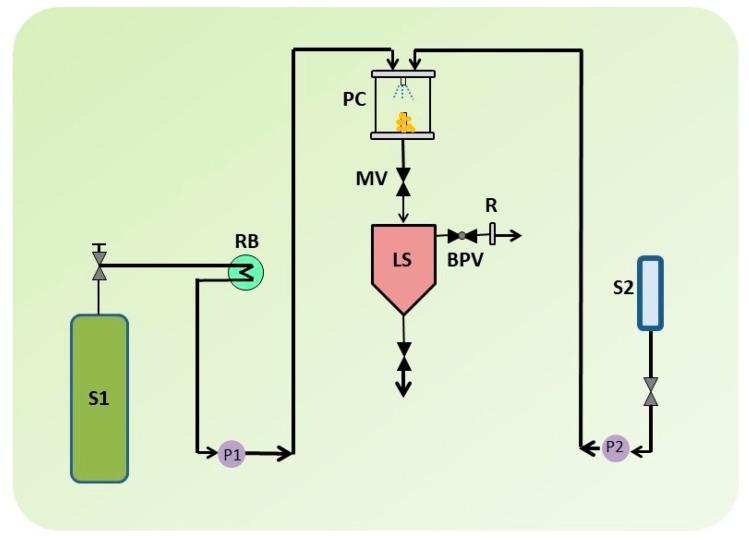
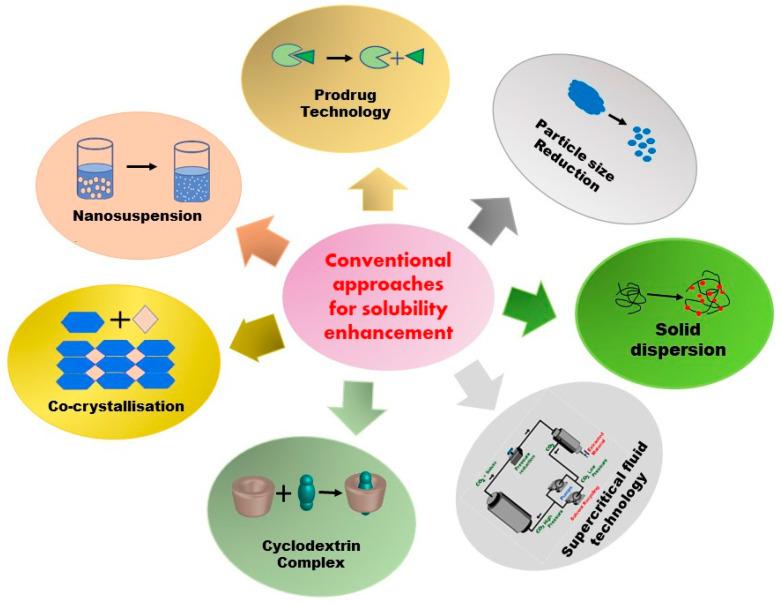
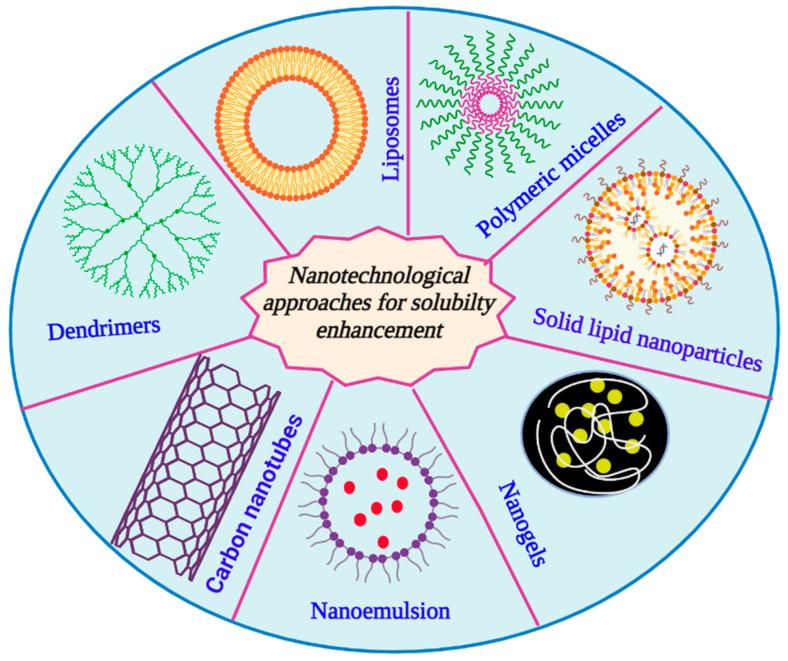
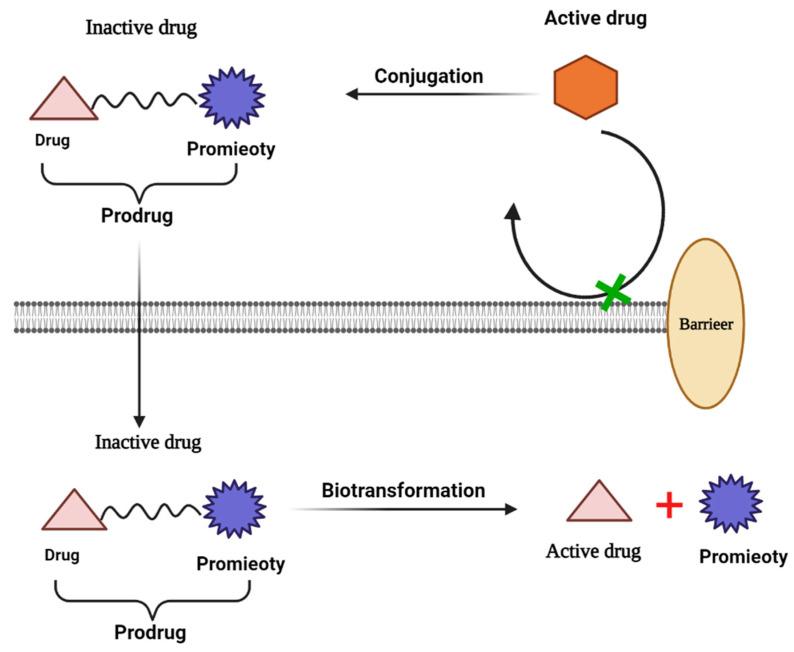
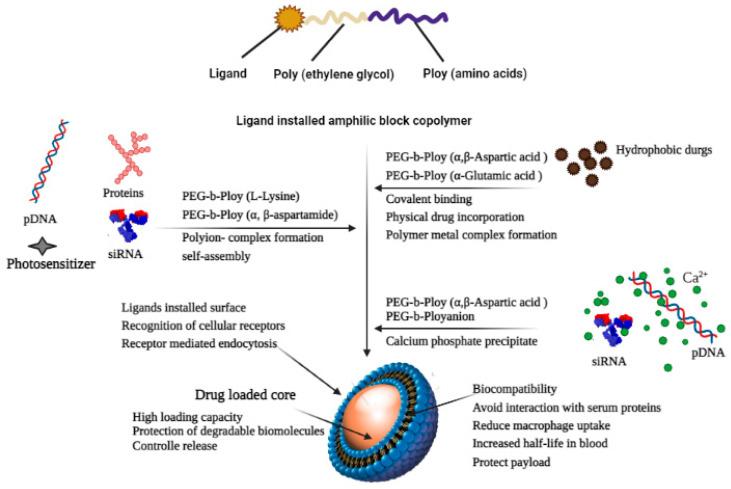
A drug's aqueous solubility is defined as the ability to dissolve in a particular solvent, and it is currently a major hurdle in bringing new drug molecules to the market. According to some estimates, up to 40% of commercialized products and 70-90% of drug candidates in the development stage are poorly soluble, which results in low bioavailability, diminished therapeutic effects, and dosage escalation. Because of this, solubility must be taken into consideration when developing and fabricating pharmaceutical products. To date, a number of approaches have been investigated to address the problem of poor solubility. This review article attempts to summarize several conventional methods utilized to increase the solubility of poorly soluble drugs. These methods include the principles of physical and chemical approaches such as particle size reduction, solid dispersion, supercritical fluid technology, cryogenic technology, inclusion complex formation techniques, and floating granules. It includes structural modification (i.e., prodrug, salt formation, co-crystallization, use of co-solvents, hydrotrophy, polymorphs, amorphous solid dispersions, and pH variation). Various nanotechnological approaches such as liposomes, nanoparticles, dendrimers, micelles, metal organic frameworks, nanogels, nanoemulsions, nanosuspension, carbon nanotubes, and so forth have also been widely investigated for solubility enhancement. All these approaches have brought forward the enhancement of the bioavailability of orally administered drugs by improving the solubility of poorly water-soluble drugs. However, the solubility issues have not been completely resolved, owing to several challenges associated with current approaches, such as reproducibility in large scale production. Considering that there is no universal approach for solving solubility issues, more research is needed to simplify the existing technologies, which could increase the number of commercially available products employing these techniques.
药物的水溶性被定义为在特定溶剂中溶解的能力,目前它是将新药分子推向市场的一个主要障碍。据一些估计,高达40%的商业化产品以及处于研发阶段的70 - 90%的候选药物溶解度较差,这导致生物利用度低、治疗效果减弱以及剂量增加。因此,在开发和制造药品时必须考虑溶解度。迄今为止,已经研究了许多方法来解决溶解度差的问题。这篇综述文章试图总结几种用于提高难溶性药物溶解度的传统方法。这些方法包括物理和化学方法的原理,如粒径减小、固体分散体、超临界流体技术、低温技术、包合物形成技术和漂浮颗粒。它还包括结构修饰(即前药、盐形成、共结晶、使用助溶剂、水增溶、多晶型、无定形固体分散体和pH值变化)。各种纳米技术方法,如脂质体、纳米颗粒、树枝状大分子、胶束、金属有机框架、纳米凝胶、纳米乳液、纳米混悬液、碳纳米管等,也已被广泛研究用于提高溶解度。所有这些方法都通过改善难溶性药物的溶解度提高了口服药物的生物利用度。然而,由于与当前方法相关的一些挑战,如大规模生产中的可重复性,溶解度问题尚未得到完全解决。鉴于没有解决溶解度问题的通用方法,需要更多研究来简化现有技术,这可能会增加采用这些技术的商业可用产品的数量。
 Zotero 插件