• 文献检索
  • 文档翻译
  • 深度研究
  • 学术资讯
  • Suppr Zotero 插件Zotero 插件
  • 邀请有礼
  • 套餐&价格
  • 历史记录
应用&插件
Suppr Zotero 插件Zotero 插件浏览器插件Mac 客户端Windows 客户端微信小程序
定价
高级版会员购买积分包购买API积分包
服务
文献检索文档翻译深度研究API 文档MCP 服务
关于我们
关于 Suppr公司介绍联系我们用户协议隐私条款
关注我们

Suppr 超能文献

核心技术专利:CN118964589B侵权必究
粤ICP备2023148730 号-1Suppr @ 2026

文献检索

告别复杂PubMed语法,用中文像聊天一样搜索,搜遍4000万医学文献。AI智能推荐,让科研检索更轻松。

立即免费搜索

文件翻译

保留排版,准确专业,支持PDF/Word/PPT等文件格式,支持 12+语言互译。

免费翻译文档

深度研究

AI帮你快速写综述,25分钟生成高质量综述,智能提取关键信息,辅助科研写作。

立即免费体验

具有增强铁生物利用度的蔬菜-德国消费者对改善饮食中铁供应的新方法的看法。

Vegetables with Enhanced Iron Bioavailability-German Consumers' Perceptions of a New Approach to Improve Dietary Iron Supply.

机构信息

Faculty of Agricultural Sciences and Landscape Architecture, Osnabrück University of Applied Sciences, Am Krümpel 31, 49090 Osnabrück, Germany.

Marketing of Agricultural and Food Products, Department of Agricultural Economics and Rural Development, University of Göttingen, Platz der Göttinger Sieben 5, 37073 Göttingen, Germany.

出版信息

Nutrients. 2023 May 12;15(10):2291. doi: 10.3390/nu15102291.

DOI:10.3390/nu15102291
PMID:37242174
原文链接:https://pmc.ncbi.nlm.nih.gov/articles/PMC10222764/
Abstract

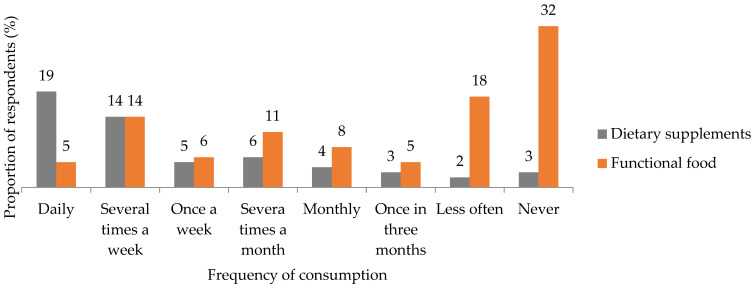
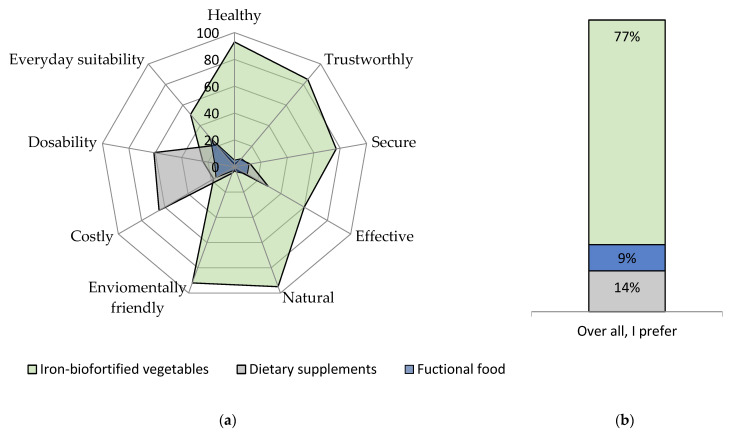
Iron deficiency is still widespread as a major health problem even in countries with adequate food supply. It mainly affects women but also vegans, vegetarians, and athletes and can lead to various clinical pictures. Biofortification of vitamin C-rich vegetables with iron may be one new approach to face this nutritional challenge. However, so far, little is known about the consumer acceptance of iron-biofortified vegetables, particularly in developed countries. To address this issue, a quantitative survey of 1000 consumers in Germany was conducted. The results showed that depending on the type of vegetable, between 54% and 79% of the respondents were interested in iron-biofortified vegetables. Regression analysis showed a relationship between product acceptance, gender, and area of residence. In addition, relationships were found between consumer preferences for enjoyment, sustainability, and naturalness. Compared to functional food and dietary supplements, 77% of respondents would prefer fresh iron-rich vegetables to improve their iron intake. For a market launch, those iron-rich vegetables appear especially promising, which can additionally be advertised with claims for being rich in vitamin C and cultivated in an environmentally friendly way. Consumers were willing to pay EUR 0.10 to EUR 0.20 more for the iron-biofortified vegetables.

摘要

缺铁仍然是一个普遍存在的主要健康问题,即使在食物供应充足的国家也是如此。它主要影响妇女,但也影响素食者、素食者和运动员,并可能导致各种临床症状。用铁对富含维生素 C 的蔬菜进行生物强化可能是应对这一营养挑战的一种新方法。然而,到目前为止,人们对消费者对铁生物强化蔬菜的接受程度知之甚少,特别是在发达国家。为了解决这个问题,对德国的 1000 名消费者进行了定量调查。结果表明,根据蔬菜的类型,有 54%至 79%的受访者对铁生物强化蔬菜感兴趣。回归分析显示,产品接受度与性别和居住地有关。此外,还发现了消费者对享受、可持续性和自然性的偏好之间的关系。与功能性食品和膳食补充剂相比,77%的受访者更愿意选择富含铁的新鲜蔬菜来增加铁的摄入量。对于市场推出,那些富含铁的蔬菜似乎特别有前途,它们可以用富含维生素 C 和环保方式种植的说法来宣传。消费者愿意为铁生物强化蔬菜多支付 0.10 至 0.20 欧元。

https://cdn.ncbi.nlm.nih.gov/pmc/blobs/7423/10222764/e4c2072c3787/nutrients-15-02291-g008.jpg
https://cdn.ncbi.nlm.nih.gov/pmc/blobs/7423/10222764/18d476019789/nutrients-15-02291-g0A1.jpg
https://cdn.ncbi.nlm.nih.gov/pmc/blobs/7423/10222764/bdb53046b7ac/nutrients-15-02291-g0A2.jpg
https://cdn.ncbi.nlm.nih.gov/pmc/blobs/7423/10222764/fc47d2bab30c/nutrients-15-02291-g0A3.jpg
https://cdn.ncbi.nlm.nih.gov/pmc/blobs/7423/10222764/0adea3473a69/nutrients-15-02291-g0A4.jpg
https://cdn.ncbi.nlm.nih.gov/pmc/blobs/7423/10222764/0ccc4aa2a32f/nutrients-15-02291-g0A5.jpg
https://cdn.ncbi.nlm.nih.gov/pmc/blobs/7423/10222764/581fcf62326d/nutrients-15-02291-g0A6.jpg
https://cdn.ncbi.nlm.nih.gov/pmc/blobs/7423/10222764/71837af6b39d/nutrients-15-02291-g0A7.jpg
https://cdn.ncbi.nlm.nih.gov/pmc/blobs/7423/10222764/116e87ea3b67/nutrients-15-02291-g0A8.jpg
https://cdn.ncbi.nlm.nih.gov/pmc/blobs/7423/10222764/2e973cde7080/nutrients-15-02291-g0A9.jpg
https://cdn.ncbi.nlm.nih.gov/pmc/blobs/7423/10222764/0829f1f91c2b/nutrients-15-02291-g0A10.jpg
https://cdn.ncbi.nlm.nih.gov/pmc/blobs/7423/10222764/98207b6d22c7/nutrients-15-02291-g0A11.jpg
https://cdn.ncbi.nlm.nih.gov/pmc/blobs/7423/10222764/a903b854ce55/nutrients-15-02291-g0A12.jpg
https://cdn.ncbi.nlm.nih.gov/pmc/blobs/7423/10222764/8a2e74d9a536/nutrients-15-02291-g001.jpg
https://cdn.ncbi.nlm.nih.gov/pmc/blobs/7423/10222764/5210f354091c/nutrients-15-02291-g002.jpg
https://cdn.ncbi.nlm.nih.gov/pmc/blobs/7423/10222764/52272f537cc6/nutrients-15-02291-g003.jpg
https://cdn.ncbi.nlm.nih.gov/pmc/blobs/7423/10222764/7665837963f2/nutrients-15-02291-g004.jpg
https://cdn.ncbi.nlm.nih.gov/pmc/blobs/7423/10222764/451056c04430/nutrients-15-02291-g005.jpg
https://cdn.ncbi.nlm.nih.gov/pmc/blobs/7423/10222764/cab584db202e/nutrients-15-02291-g006.jpg
https://cdn.ncbi.nlm.nih.gov/pmc/blobs/7423/10222764/b3905113e18f/nutrients-15-02291-g007.jpg
https://cdn.ncbi.nlm.nih.gov/pmc/blobs/7423/10222764/e4c2072c3787/nutrients-15-02291-g008.jpg
https://cdn.ncbi.nlm.nih.gov/pmc/blobs/7423/10222764/18d476019789/nutrients-15-02291-g0A1.jpg
https://cdn.ncbi.nlm.nih.gov/pmc/blobs/7423/10222764/bdb53046b7ac/nutrients-15-02291-g0A2.jpg
https://cdn.ncbi.nlm.nih.gov/pmc/blobs/7423/10222764/fc47d2bab30c/nutrients-15-02291-g0A3.jpg
https://cdn.ncbi.nlm.nih.gov/pmc/blobs/7423/10222764/0adea3473a69/nutrients-15-02291-g0A4.jpg
https://cdn.ncbi.nlm.nih.gov/pmc/blobs/7423/10222764/0ccc4aa2a32f/nutrients-15-02291-g0A5.jpg
https://cdn.ncbi.nlm.nih.gov/pmc/blobs/7423/10222764/581fcf62326d/nutrients-15-02291-g0A6.jpg
https://cdn.ncbi.nlm.nih.gov/pmc/blobs/7423/10222764/71837af6b39d/nutrients-15-02291-g0A7.jpg
https://cdn.ncbi.nlm.nih.gov/pmc/blobs/7423/10222764/116e87ea3b67/nutrients-15-02291-g0A8.jpg
https://cdn.ncbi.nlm.nih.gov/pmc/blobs/7423/10222764/2e973cde7080/nutrients-15-02291-g0A9.jpg
https://cdn.ncbi.nlm.nih.gov/pmc/blobs/7423/10222764/0829f1f91c2b/nutrients-15-02291-g0A10.jpg
https://cdn.ncbi.nlm.nih.gov/pmc/blobs/7423/10222764/98207b6d22c7/nutrients-15-02291-g0A11.jpg
https://cdn.ncbi.nlm.nih.gov/pmc/blobs/7423/10222764/a903b854ce55/nutrients-15-02291-g0A12.jpg
https://cdn.ncbi.nlm.nih.gov/pmc/blobs/7423/10222764/8a2e74d9a536/nutrients-15-02291-g001.jpg
https://cdn.ncbi.nlm.nih.gov/pmc/blobs/7423/10222764/5210f354091c/nutrients-15-02291-g002.jpg
https://cdn.ncbi.nlm.nih.gov/pmc/blobs/7423/10222764/52272f537cc6/nutrients-15-02291-g003.jpg
https://cdn.ncbi.nlm.nih.gov/pmc/blobs/7423/10222764/7665837963f2/nutrients-15-02291-g004.jpg
https://cdn.ncbi.nlm.nih.gov/pmc/blobs/7423/10222764/451056c04430/nutrients-15-02291-g005.jpg
https://cdn.ncbi.nlm.nih.gov/pmc/blobs/7423/10222764/cab584db202e/nutrients-15-02291-g006.jpg
https://cdn.ncbi.nlm.nih.gov/pmc/blobs/7423/10222764/b3905113e18f/nutrients-15-02291-g007.jpg
https://cdn.ncbi.nlm.nih.gov/pmc/blobs/7423/10222764/e4c2072c3787/nutrients-15-02291-g008.jpg

相似文献

1
Vegetables with Enhanced Iron Bioavailability-German Consumers' Perceptions of a New Approach to Improve Dietary Iron Supply.具有增强铁生物利用度的蔬菜-德国消费者对改善饮食中铁供应的新方法的看法。
Nutrients. 2023 May 12;15(10):2291. doi: 10.3390/nu15102291.
2
Consumer Acceptance and Market Potential of Iodine-Biofortified Fruit and Vegetables in Germany.消费者对德国碘生物强化果蔬的接受度和市场潜力。
Nutrients. 2021 Nov 23;13(12):4198. doi: 10.3390/nu13124198.
3
German Consumers' Attitude towards Selenium-Biofortified Apples and Acceptance of Related Nutrition and Health Claims.德国消费者对富硒苹果的态度以及对相关营养和健康声称的接受度。
Nutrients. 2018 Feb 9;10(2):190. doi: 10.3390/nu10020190.
4
Towards Sustainable Diets: Understanding the Cognitive Mechanism of Consumer Acceptance of Biofortified Foods and the Role of Nutrition Information.迈向可持续饮食:理解消费者对生物强化食品接受度的认知机制以及营养信息的作用。
Int J Environ Res Public Health. 2021 Jan 28;18(3):1175. doi: 10.3390/ijerph18031175.
5
Pre-Launch Exploration of Consumer Willingness to Purchase Selenium- and Iodine-Biofortified Apples-A Discrete Choice Analysis of Possible Market Settings.上市前探索消费者购买富硒碘苹果的意愿——对潜在市场环境的离散选择分析。
Nutrients. 2021 May 12;13(5):1625. doi: 10.3390/nu13051625.
6
Novel application of biofortified crops: consumer acceptance of pasta from yellow cassava and leafy vegetables.生物强化作物的新应用:消费者对黄薯面条和叶菜类蔬菜的接受程度。
J Sci Food Agric. 2021 Nov;101(14):6027-6035. doi: 10.1002/jsfa.11259. Epub 2021 May 6.
7
Integrated in vitro approaches to assess the bioaccessibility and bioavailability of silicon-biofortified leafy vegetables and preliminary effects on bone.评估硅生物强化叶菜类蔬菜的生物可及性和生物利用度以及对骨骼的初步影响的体外综合方法。
In Vitro Cell Dev Biol Anim. 2017 Mar;53(3):217-224. doi: 10.1007/s11626-016-0100-7. Epub 2016 Oct 3.
8
Reducing Mineral and Vitamin Deficiencies through Biofortification: Progress Under HarvestPlus.通过生物强化减少矿物质和维生素缺乏:“收获计划”下的进展
World Rev Nutr Diet. 2018;118:112-122. doi: 10.1159/000484342. Epub 2018 Apr 13.
9
Availability, production, and consumption of crops biofortified by plant breeding: current evidence and future potential.通过植物育种进行生物强化的作物的可获得性、生产及消费:当前证据与未来潜力
Ann N Y Acad Sci. 2017 Feb;1390(1):104-114. doi: 10.1111/nyas.13314.
10
Influencing Factors and Group Differences of Urban Consumers' Willingness to Pay for Low-Carbon Agricultural Products in China.中国城市消费者对低碳农产品支付意愿的影响因素及群体差异。
Int J Environ Res Public Health. 2022 Dec 26;20(1):358. doi: 10.3390/ijerph20010358.

引用本文的文献

1
Boosting nutritional value: the role of iron fortification in meat and meat products.提高营养价值:铁强化在肉类及肉制品中的作用。
Biometals. 2025 Apr;38(2):337-355. doi: 10.1007/s10534-024-00659-1. Epub 2025 Jan 21.
2
Exploring Eating Habits, Healthy Food Awareness, and Inclination toward Functional Foods of Italian Elderly People through Computer-Assisted Telephone Interviews (CATIs).通过计算机辅助电话访谈(CATIs)探索意大利老年人的饮食习惯、健康食品意识和对功能食品的倾向。
Nutrients. 2024 Mar 7;16(6):762. doi: 10.3390/nu16060762.

本文引用的文献

1
Regreening properties of the soil slow-mobile Hbpcd/Fe complex: Steps forward to the development of a new environmentally friendly Fe fertilizer.土壤中移动性缓慢的Hbpcd/Fe络合物的再绿化特性:新型环保铁肥开发的进展
Front Plant Sci. 2022 Aug 4;13:964088. doi: 10.3389/fpls.2022.964088. eCollection 2022.
2
Increasing vitamin C through agronomic biofortification of arugula microgreens.通过农艺生物强化羽衣甘蓝芽菜增加维生素 C。
Sci Rep. 2022 Jul 30;12(1):13093. doi: 10.1038/s41598-022-17030-4.
3
Temporal Change in Iron Content of Vegetables and Legumes in Australia: A Scoping Review.
澳大利亚蔬菜和豆类铁含量的时间变化:一项范围综述
Foods. 2021 Dec 27;11(1):56. doi: 10.3390/foods11010056.
4
Consumer Acceptance and Market Potential of Iodine-Biofortified Fruit and Vegetables in Germany.消费者对德国碘生物强化果蔬的接受度和市场潜力。
Nutrients. 2021 Nov 23;13(12):4198. doi: 10.3390/nu13124198.
5
The Nutrition-COVID-19 Interplay: a Review.营养与 COVID-19 的相互作用:综述
Curr Nutr Rep. 2021 Dec;10(4):364-374. doi: 10.1007/s13668-021-00380-2. Epub 2021 Nov 27.
6
Functional Food-Consumer Motivations and Expectations.功能性食品消费者的动机和期望。
Int J Environ Res Public Health. 2021 May 17;18(10):5327. doi: 10.3390/ijerph18105327.
7
Pre-Launch Exploration of Consumer Willingness to Purchase Selenium- and Iodine-Biofortified Apples-A Discrete Choice Analysis of Possible Market Settings.上市前探索消费者购买富硒碘苹果的意愿——对潜在市场环境的离散选择分析。
Nutrients. 2021 May 12;13(5):1625. doi: 10.3390/nu13051625.
8
Iron supplementation and iron-fortified foods: a review.铁补充剂和铁强化食品:综述。
Crit Rev Food Sci Nutr. 2022;62(16):4504-4525. doi: 10.1080/10408398.2021.1876623. Epub 2021 Jan 28.
9
Mineral Biofortification of Vegetables as a Tool to Improve Human Diet.蔬菜的矿物质生物强化作为改善人类饮食的一种手段
Foods. 2021 Jan 21;10(2):223. doi: 10.3390/foods10020223.
10
Iron deficiency.缺铁。
Lancet. 2021 Jan 16;397(10270):233-248. doi: 10.1016/S0140-6736(20)32594-0. Epub 2020 Dec 4.