Neurosciences Graduate Program, Stanford University, Stanford, CA, USA.
Department of Neurosurgery, Stanford University, Stanford, CA, USA.
Nat Neurosci. 2023 Jun;26(6):997-1007. doi: 10.1038/s41593-023-01345-0. Epub 2023 May 29.
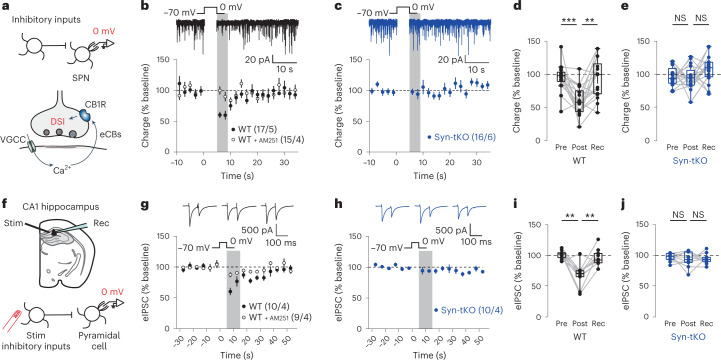
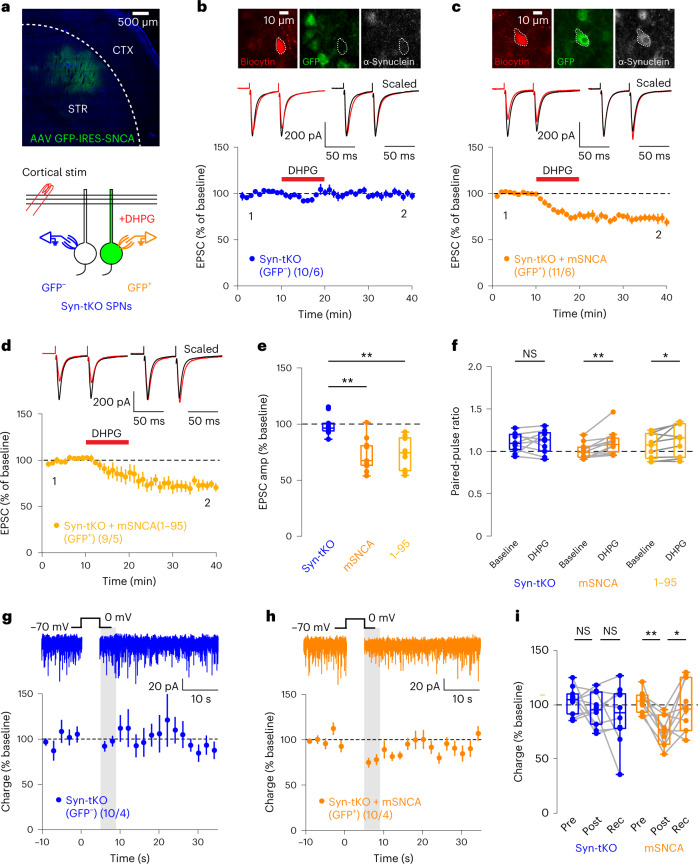
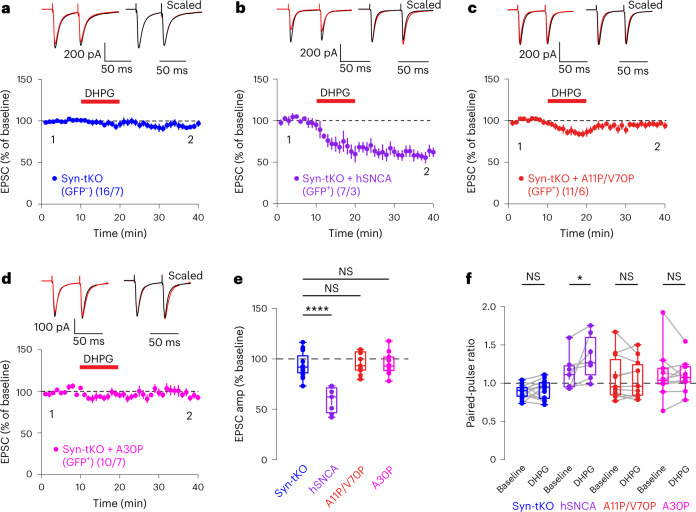
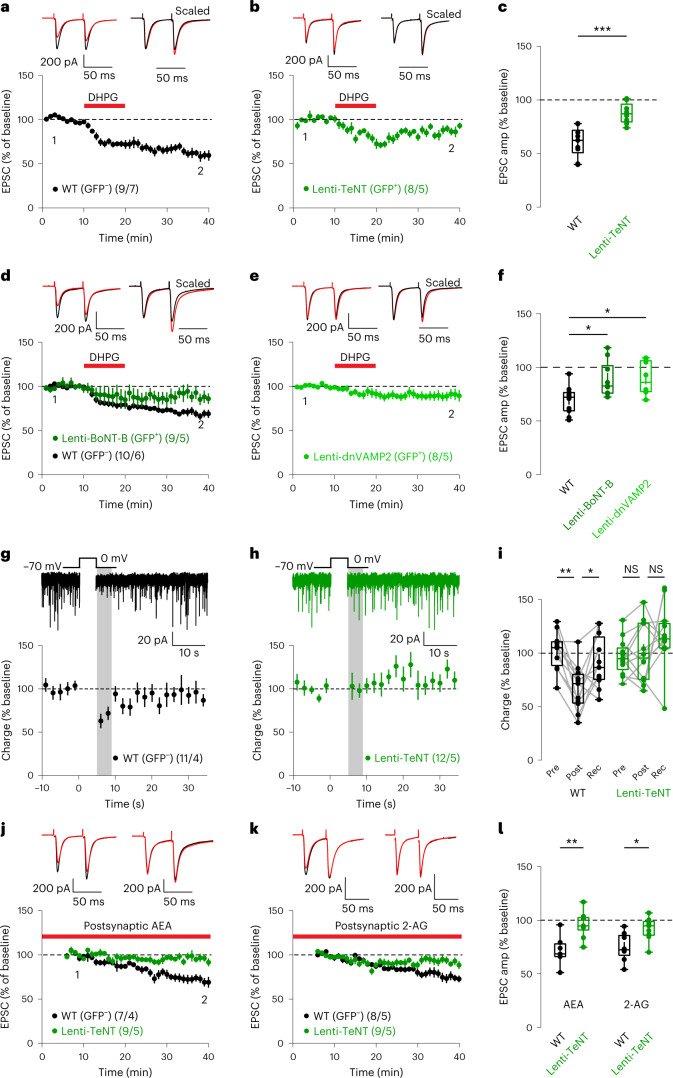
Endocannabinoids are among the most powerful modulators of synaptic transmission throughout the nervous system, and yet little is understood about the release of endocannabinoids from postsynaptic compartments. Here we report an unexpected finding that endocannabinoid release requires synucleins, key contributors to Parkinson's disease. We show that endocannabinoids are released postsynaptically by a synuclein-dependent and SNARE-dependent mechanism. Specifically, we found that synuclein deletion blocks endocannabinoid-dependent synaptic plasticity; this block is reversed by postsynaptic expression of wild-type but not of mutant α-synuclein. Whole-cell recordings and direct optical monitoring of endocannabinoid signaling suggest that the synuclein deletion specifically blocks endocannabinoid release. Given the presynaptic role of synucleins in regulating vesicle lifecycle, we hypothesize that endocannabinoids are released via a membrane interaction mechanism. Consistent with this hypothesis, postsynaptic expression of tetanus toxin light chain, which cleaves synaptobrevin SNAREs, also blocks endocannabinoid-dependent signaling. The unexpected finding that endocannabinoids are released via a synuclein-dependent mechanism is consistent with a general function of synucleins in membrane trafficking and adds a piece to the longstanding puzzle of how neurons release endocannabinoids to induce synaptic plasticity.
内源性大麻素是神经系统中突触传递最强的调节剂之一,但人们对其从突触后隔室释放的了解甚少。在这里,我们报告了一个意想不到的发现,即内源性大麻素的释放需要突触核蛋白的参与,而突触核蛋白是帕金森病的关键贡献者。我们表明,内源性大麻素通过一种依赖突触核蛋白和 SNARE 的机制从突触后释放。具体来说,我们发现突触核蛋白缺失会阻止内源性大麻素依赖性突触可塑性;这种阻断可以通过突触后表达野生型但不是突变型α-突触核蛋白来逆转。全细胞记录和内源性大麻素信号的直接光学监测表明,突触核蛋白缺失特异性地阻断了内源性大麻素的释放。鉴于突触核蛋白在调节囊泡生命周期中的突触前作用,我们假设内源性大麻素是通过膜相互作用机制释放的。与这一假设一致的是,突触后表达破伤风毒素轻链(可切割突触融合蛋白 SNARE)也阻断了内源性大麻素依赖性信号转导。内源性大麻素通过突触核蛋白依赖性机制释放的这一意外发现与突触核蛋白在膜运输中的一般功能一致,并为神经元如何释放内源性大麻素来诱导突触可塑性这一长期存在的难题增添了一个环节。