Lee Minjae, Kim Gwansik, Jung Yeongju, Pyun Kyung Rok, Lee Jinwoo, Kim Byung-Wook, Ko Seung Hwan
Applied Nano and Thermal Science Lab, Department of Mechanical Engineering, Seoul National University, 1 Gwanak-ro, Gwanak-gu, Seoul, 08826, South Korea.
Electronic Device Research Team, Hyundai Motor Group, 37, Cheoldobangmulgwan-ro, Uiwang-si, Gyeonggi-do, 16082, South Korea.
Light Sci Appl. 2023 Jun 1;12(1):134. doi: 10.1038/s41377-023-01119-0.
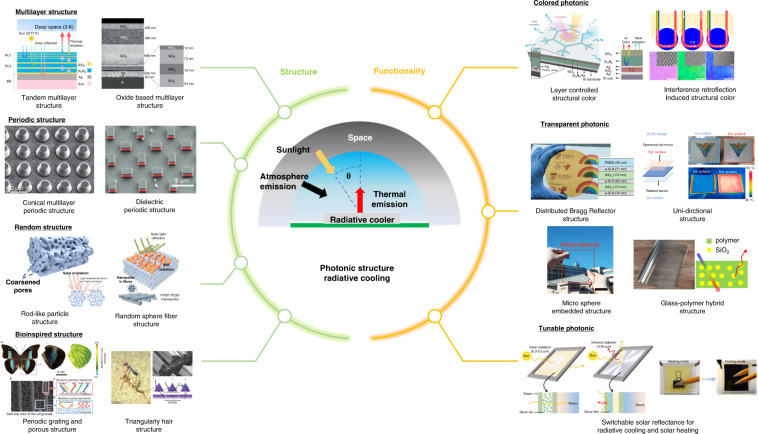
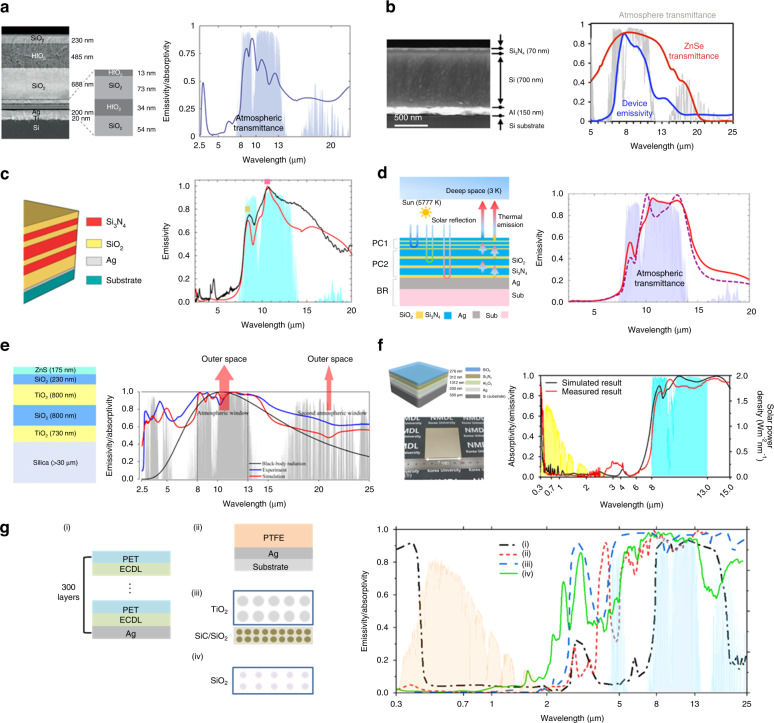
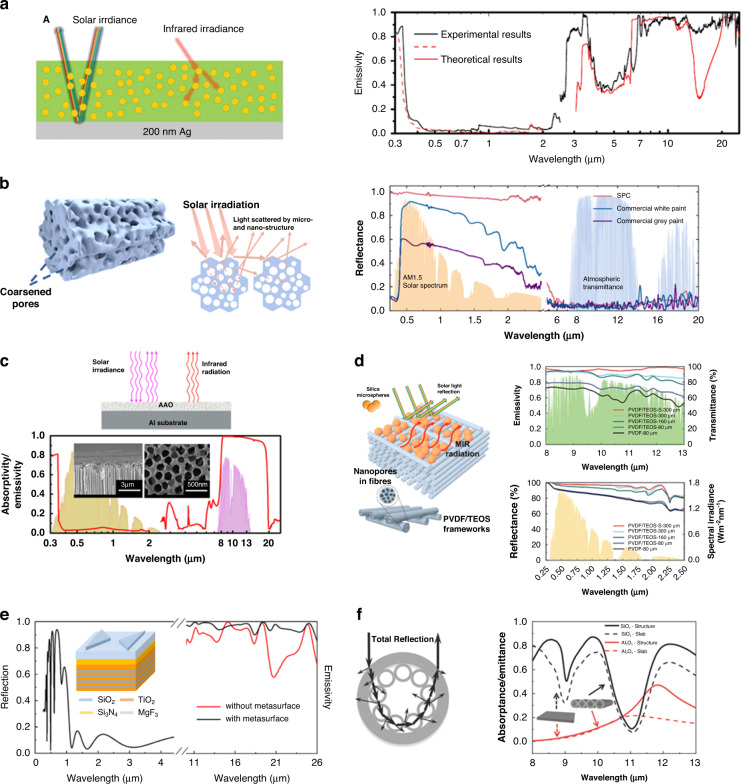
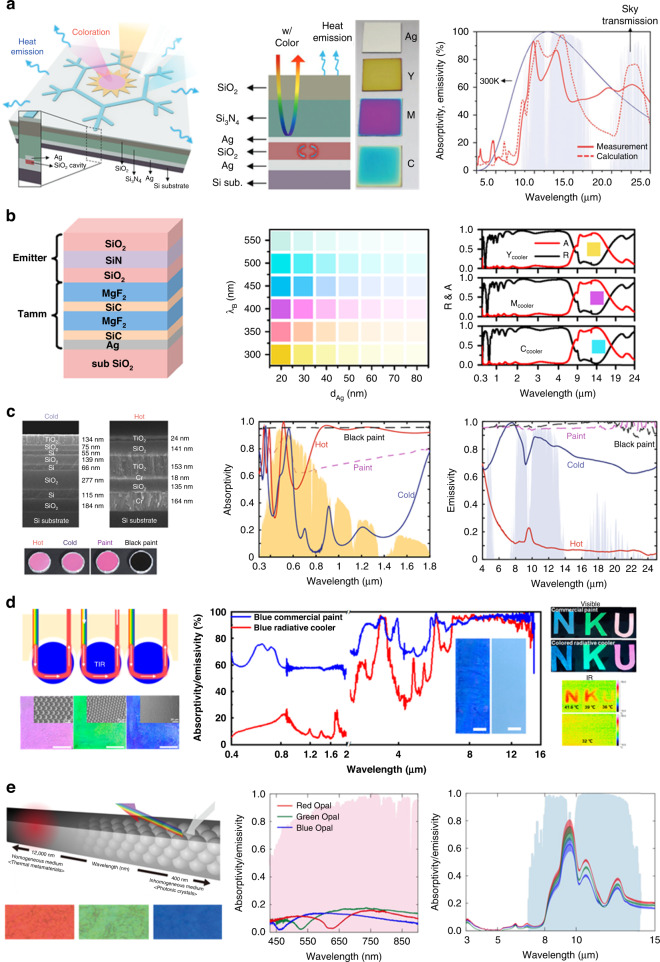
Radiative cooling is a passive cooling technology without any energy consumption, compared to conventional cooling technologies that require power sources and dump waste heat into the surroundings. For decades, many radiative cooling studies have been introduced but its applications are mostly restricted to nighttime use only. Recently, the emergence of photonic technologies to achieves daytime radiative cooling overcome the performance limitations. For example, broadband and selective emissions in mid-IR and high reflectance in the solar spectral range have already been demonstrated. This review article discusses the fundamentals of thermodynamic heat transfer that motivates radiative cooling. Several photonic structures such as multilayer, periodical, random; derived from nature, and associated design procedures were thoroughly discussed. Photonic integration with new functionality significantly enhances the efficiency of radiative cooling technologies such as colored, transparent, and switchable radiative cooling applications has been developed. The commercial applications such as reducing cooling loads in vehicles, increasing the power generation of solar cells, generating electricity, saving water, and personal thermal regulation are also summarized. Lastly, perspectives on radiative cooling and emerging issues with potential solution strategies are discussed.
与需要电源并将废热排放到周围环境中的传统冷却技术相比,辐射冷却是一种无能耗的被动冷却技术。几十年来,已经开展了许多辐射冷却研究,但其应用大多仅限于夜间使用。最近,实现白天辐射冷却的光子技术的出现克服了性能限制。例如,已经证明了在中红外波段的宽带和选择性发射以及在太阳光谱范围内的高反射率。这篇综述文章讨论了推动辐射冷却的热力学传热基本原理。对几种光子结构,如多层、周期性、随机结构;源自自然界的结构,以及相关的设计程序进行了深入讨论。具有新功能的光子集成显著提高了辐射冷却技术的效率,例如已经开发出了彩色辐射冷却、透明辐射冷却和可切换辐射冷却应用。还总结了其商业应用,如降低车辆冷却负荷、增加太阳能电池发电量、发电、节水和个人热调节。最后,讨论了辐射冷却的前景以及具有潜在解决方案的新出现问题。