First Department of Internal Medicine, Shinshu University School of Medicine, Nagano, Japan.
Department of Hematology and Oncology, Shinshu University School of Medicine, Nagano, Japan.
Jpn J Clin Oncol. 2023 Jun 29;53(7):547-561. doi: 10.1093/jjco/hyad052.
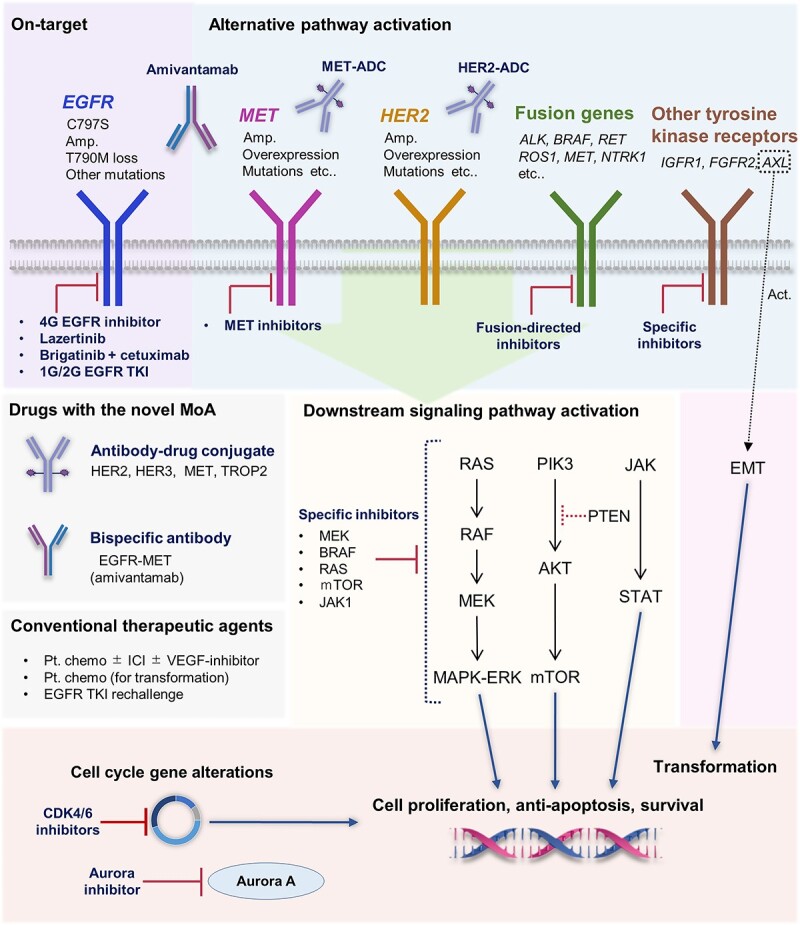
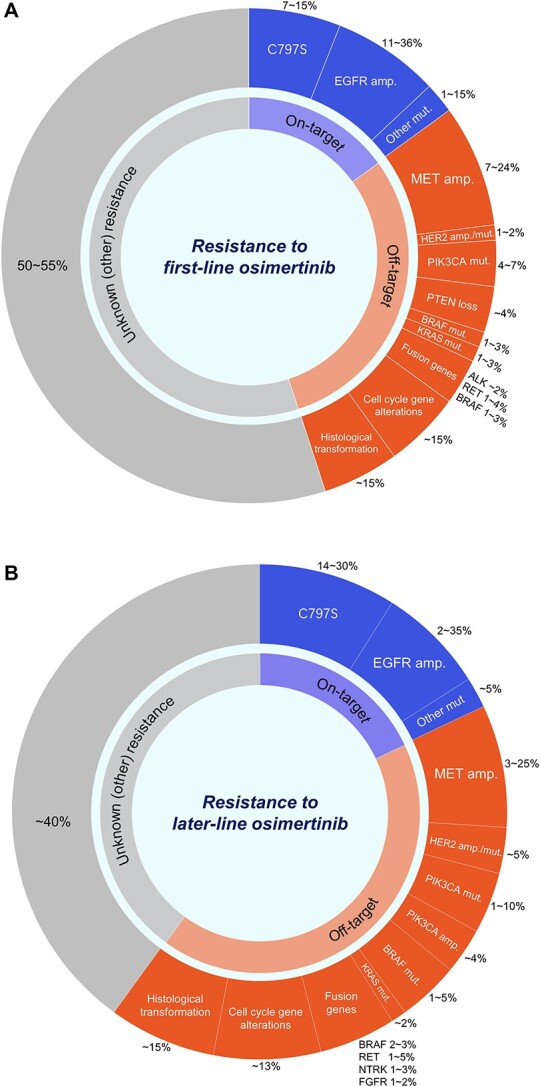
Osimertinib, a third-generation EGFR TKI, is the standard therapy for previously untreated EGFR-mutated non-small cell lung cancer patients following the landmark FLAURA study. However, resistance inevitably hinders patient prognosis, increasing the need for new therapeutic strategies beyond osimertinib. Frontline osimertinib-based combination strategies (platinum-based chemotherapy and angiogenesis inhibitors) are currently being tested primarily to prevent initial resistance. In the later-line setting after osimertinib, many next-line therapeutic candidates have been actively examined in clinical trials. Notably, several drugs with novel mechanisms of action, such as antibody-drug conjugates and EGFR -MET bispecific antibodies, have shown promising efficacy despite the resistance mechanisms and are close to clinical application. In addition, genotype-based target strategies have been investigated for a better understanding of osimertinib resistance mechanisms based on molecular profiling tests at relapse. The C797S mutation and MET gene alterations are commonly identified following osimertinib resistance, for which targeting strategies are actively tested. This review describes current pharmacotherapeutic strategies for EGFR-mutated non-small cell lung cancer based on the results of clinical trials and the latest published data, broadly grouped into two sections: 1) EGFR TKIs-based combination therapy in the front-line setting and 2) novel therapeutic strategies after osimertinib resistance.
奥希替尼是第三代 EGFR TKI,是 FLAURA 研究之后未经治疗的 EGFR 突变型非小细胞肺癌患者的标准治疗方法。然而,耐药性不可避免地阻碍了患者的预后,因此需要超越奥希替尼的新治疗策略。目前主要测试一线奥希替尼为基础的联合治疗策略(铂类化疗和血管生成抑制剂),以预防初始耐药。在奥希替尼的后线治疗中,许多后续治疗候选药物已在临床试验中得到积极研究。值得注意的是,尽管存在耐药机制,但几种具有新型作用机制的药物,如抗体药物偶联物和 EGFR-MET 双特异性抗体,已显示出令人鼓舞的疗效,并接近临床应用。此外,基于基因型的靶向策略也已被研究,以通过复发时的分子谱测试更好地了解奥希替尼耐药机制。在奥希替尼耐药后,通常会发现 C797S 突变和 MET 基因改变,针对这些靶点的治疗策略正在积极测试中。本综述描述了基于临床试验和最新发表数据的 EGFR 突变型非小细胞肺癌的当前药物治疗策略,广泛分为两个部分:1)一线治疗中的 EGFR TKI 联合治疗;2)奥希替尼耐药后的新型治疗策略。