Non-Communicable Diseases Research Center, Rafsanjan University of Medical Sciences, Rafsanjan, Iran.
Neuro-immunology Research Scholar, Jefferson Hospital for Neuroscience, Thomas Jefferson University, Philadelphia, PA, US.
BMC Endocr Disord. 2023 Jun 6;23(1):131. doi: 10.1186/s12902-023-01383-6.
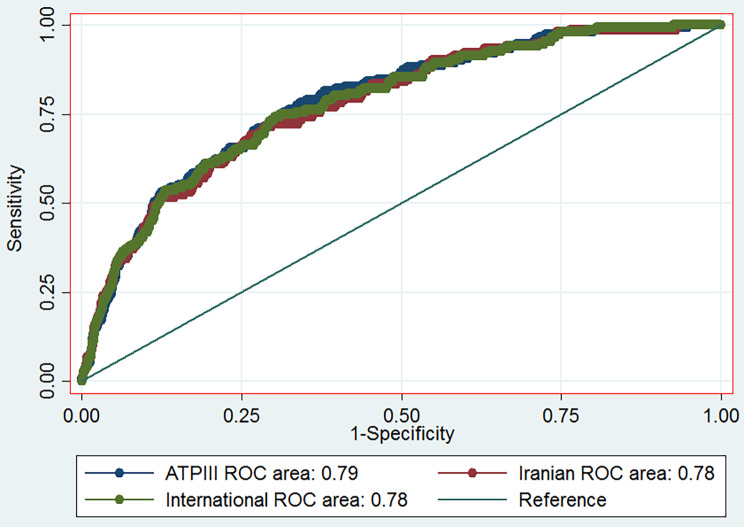
Both metabolic syndrome (MetS) and stroke are associated with increased risk of mortality. Here, we aimed to assess the prevalence of MetS among adults using three definitions (Adult Treatment Panel III (ATP-III), International Diabetes Federation (IDF) and IDF ethnic specific cut-off for Iranian criteria) and its association with stroke. We performed a cross-sectional study of a total of 9991 adult participants of Rafsanjan Cohort Study (RCS), as part of the Prospective epidemiological research studies in Iran (PERSIAN cohort study). The MetS prevalence was evaluated in participants according to the different criteria. Multivariate logistic regression analyses were conducted to assess the association between three definitions of MetS with stroke. We found that MetS was significantly associated with higher odds of stroke according to NCEP-ATP III (odds ratio (OR): 1.89, 95% confidence interval (CI) 1.30-2.74), international IDF (OR:1.66, 95% CI: 1.15-2.40) and Iranian IDF (OR:1.48, 95% CI: 1.04-2.09) after adjusted for variables confounders. Furthermore, after adjustment, in receiver operating characteristic (ROC) curve, the AUROC was 0.79 (95% CI = 0.75-0.82), 0.78(95% CI = 0.74-0.82) and 0.78(95% CI = 0.74-0.81) for presence of MetS according to NCEP-ATP III, international IDF and Iranian IDF, respectively. ROC analyses revealed that all of these three criteria for MetS are "moderately accurate" for the identification of increased stroke risk.In conclusion, our results showed that MetS was associated with increased odds of stroke. Our findings implicate the importance of early identification, treatment, and ultimately prevention of the metabolic syndrome.
代谢综合征(MetS)和中风都与死亡率增加有关。在这里,我们旨在使用三种定义(成人治疗小组 III(ATP-III)、国际糖尿病联合会(IDF)和 IDF 特定于伊朗标准的种族界限)评估成年人中 MetS 的患病率,并评估其与中风的关系。我们对作为伊朗前瞻性流行病学研究(波斯尼亚队列研究)一部分的拉夫桑詹队列研究(RCS)的总共 9991 名成年参与者进行了横断面研究。根据不同的标准评估参与者的 MetS 患病率。进行多变量逻辑回归分析以评估三种 MetS 定义与中风之间的关联。我们发现,根据 NCEP-ATP III(比值比(OR):1.89,95%置信区间(CI):1.30-2.74)、国际 IDF(OR:1.66,95% CI:1.15-2.40)和伊朗 IDF(OR:1.48,95% CI:1.04-2.09),MetS 与中风的几率显著相关,在调整了混杂变量后。此外,在接受者操作特征(ROC)曲线中,调整后 AUROC 分别为 0.79(95% CI=0.75-0.82)、0.78(95% CI=0.74-0.82)和 0.78(95% CI=0.74-0.81),分别为根据 NCEP-ATP III、国际 IDF 和伊朗 IDF 存在 MetS。ROC 分析表明,MetS 的所有这三个标准对于识别增加的中风风险都是“中度准确”。
总之,我们的结果表明 MetS 与中风几率增加有关。我们的研究结果表明早期识别、治疗和最终预防代谢综合征的重要性。