Department of Epidemiology, Madras Diabetes Research Foundation, Chennai, Tamil Nadu, India.
Department of Research Operations & Diabetes Complications, Madras Diabetes Research Foundation, Chennai, Tamil Nadu, India.
Indian J Med Res. 2023 Apr;157(4):239-249. doi: 10.4103/ijmr.ijmr_2615_21.
BACKGROUND & OBJECTIVES: Screening of individuals for early detection and identification of undiagnosed diabetes can help in reducing the burden of diabetic complications. This study aimed to evaluate the performance of Madras Diabetes Research Foundation (MDRF)-Indian Diabetes Risk Score (IDRS) to screen for undiagnosed type 2 diabetes in a large representative population in India.
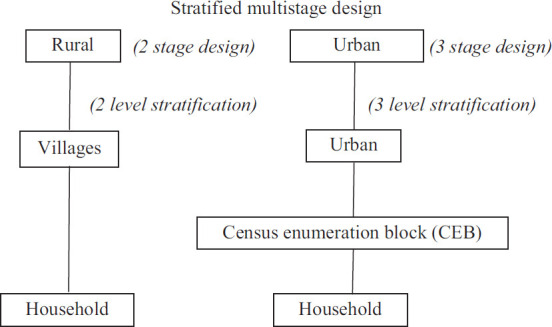
Data were acquired from the Indian Council of Medical Research-INdia DIABetes (ICMR-INDIAB) study, a large national survey that included both urban and rural populations from 30 states/union territories in India. Stratified multistage design was followed to obtain a sample of 113,043 individuals (94.2% response rate). MDRF-IDRS used four simple parameters, viz. age, waist circumference, family history of diabetes and physical activity to detect undiagnosed diabetes. Receiver operating characteristic (ROC) with area under the curve (AUC) was used to assess the performance of MDRF-IDRS.
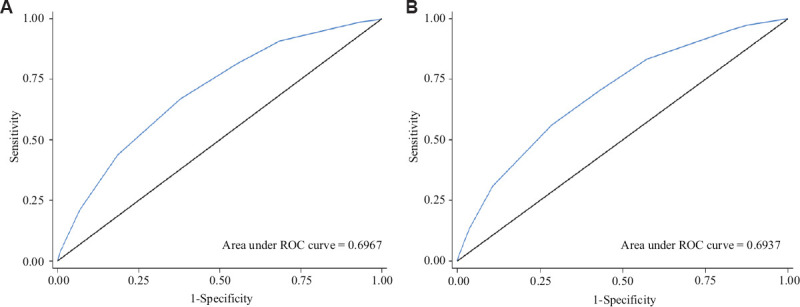
We identified that 32.4, 52.7 and 14.9 per cent of the general population were under high-, moderate- and low-risk category of diabetes. Among the newly diagnosed individuals with diabetes [diagnosed by oral glucose tolerance test (OGTT)], 60.2, 35.9 and 3.9 per cent were identified under high-, moderate- and low-risk categories of IDRS. The ROC-AUC for the identification of diabetes was 0.697 (95% confidence interval: 0.684-0.709) for urban population and 0.694 (0.684-0.704) for rural, as well as 0.693 (0.682-0.705) for males and 0.707 (0.697-0.718) for females. MDRF-IDRS performed well when the population were sub-categorized by state or by regions.
INTERPRETATION & CONCLUSIONS: Performance of MDRF-IDRS is evaluated across the nation and is found to be suitable for easy and effective screening of diabetes in Asian Indians.
对个体进行早期检测和诊断,有助于降低糖尿病并发症的负担。本研究旨在评估 Madras Diabetes Research Foundation (MDRF)-Indian Diabetes Risk Score (IDRS) 在印度大型代表性人群中筛查未确诊 2 型糖尿病的性能。
数据来自印度医学研究理事会-印度糖尿病(ICMR-INDIAB)研究,这是一项大型全国性调查,涵盖了印度 30 个邦/联邦属地的城市和农村人口。采用分层多阶段设计,获得了 113043 人的样本(应答率为 94.2%)。MDRF-IDRS 使用年龄、腰围、糖尿病家族史和体力活动四个简单参数来检测未确诊的糖尿病。采用受试者工作特征(ROC)曲线下面积(AUC)评估 MDRF-IDRS 的性能。
我们发现,32.4%、52.7%和 14.9%的普通人群处于糖尿病高、中、低危人群。在新诊断的糖尿病患者(通过口服葡萄糖耐量试验(OGTT)诊断)中,60.2%、35.9%和 3.9%分别处于 IDRS 的高、中、低危人群。ROC-AUC 用于识别糖尿病的结果显示,城市人口为 0.697(95%置信区间:0.684-0.709),农村人口为 0.694(0.684-0.704),男性为 0.693(0.682-0.705),女性为 0.707(0.697-0.718)。当按邦或地区对人群进行细分时,MDRF-IDRS 的性能表现良好。
本研究在全国范围内评估了 MDRF-IDRS 的性能,发现其适用于亚洲印度人进行简单有效的糖尿病筛查。