Innovation Team for Major Livestock and Poultry Disease Prevention and Control, Shandong Academy of Agricultural Sciences, Jinan, Shandong, China.
College of Animal Science and Veterinary Medicine, Shandong Agricultural University, Tai'an, Shandong, China.
Front Cell Infect Microbiol. 2023 May 22;13:1171622. doi: 10.3389/fcimb.2023.1171622. eCollection 2023.
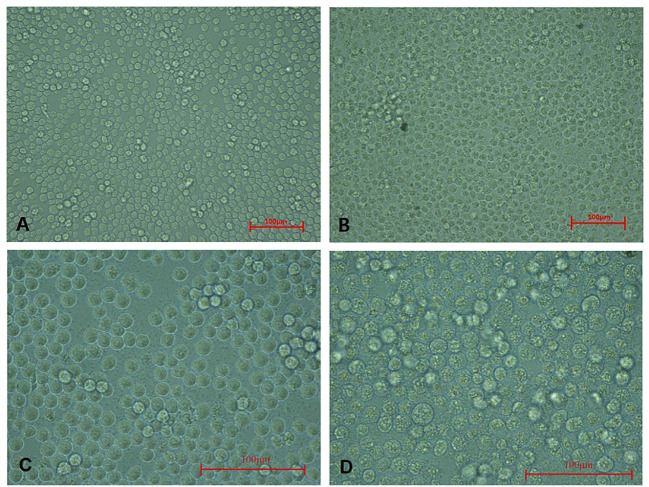
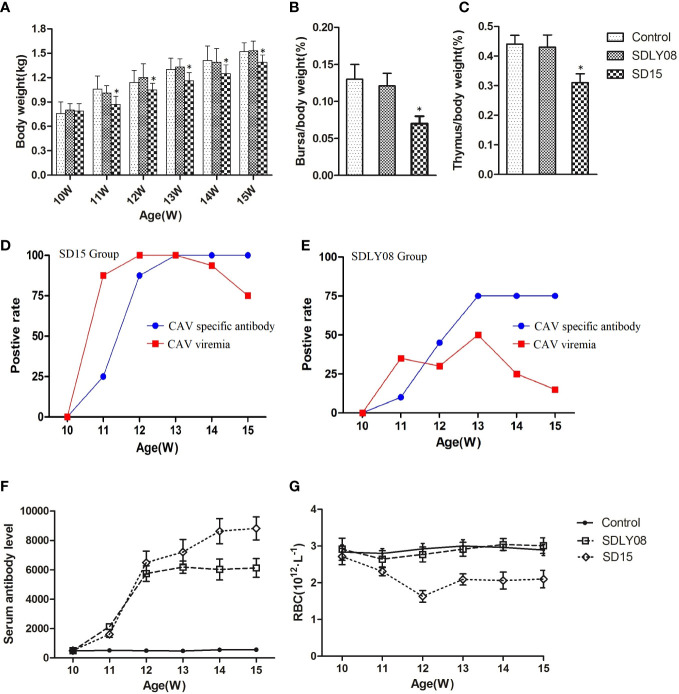
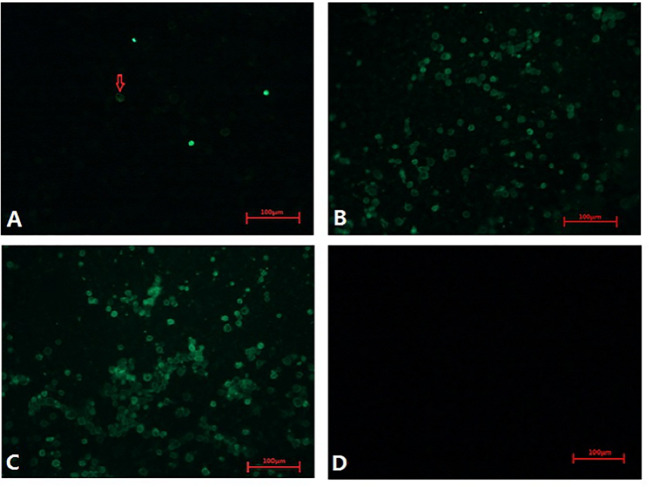
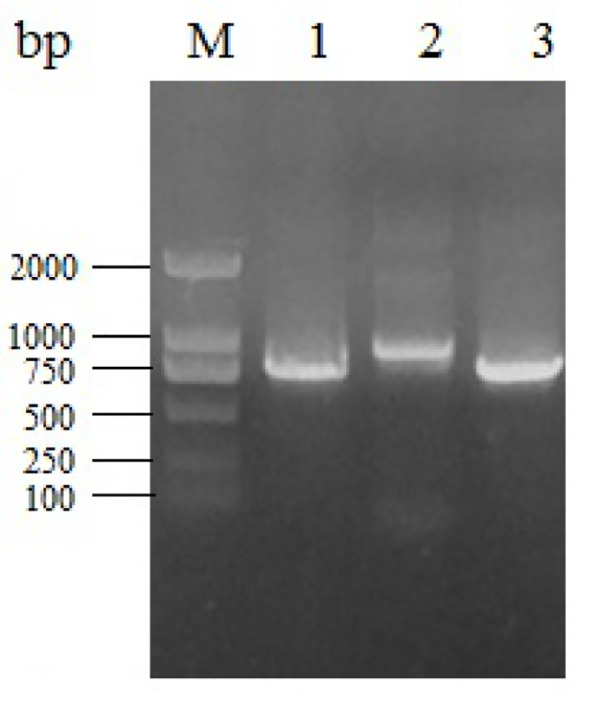
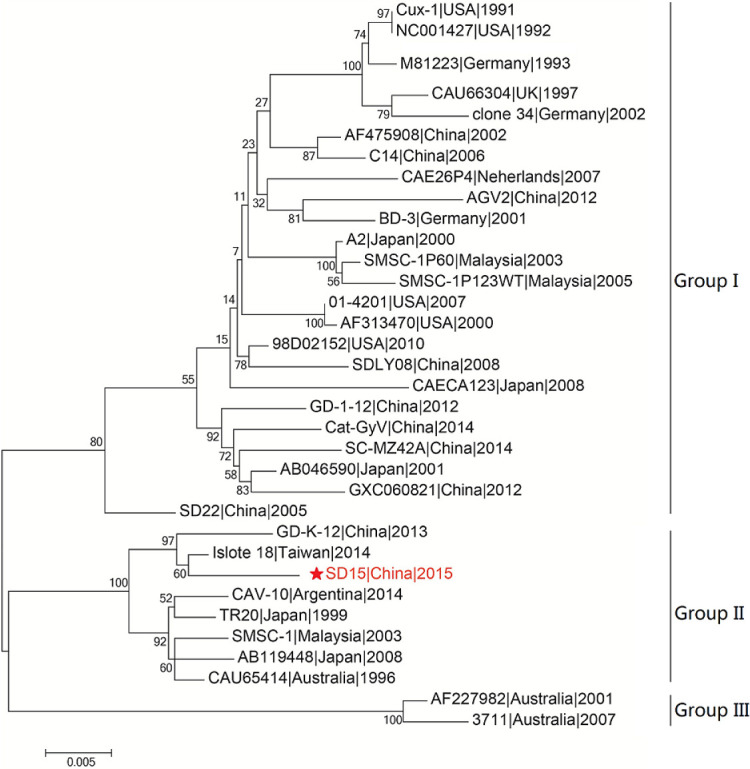
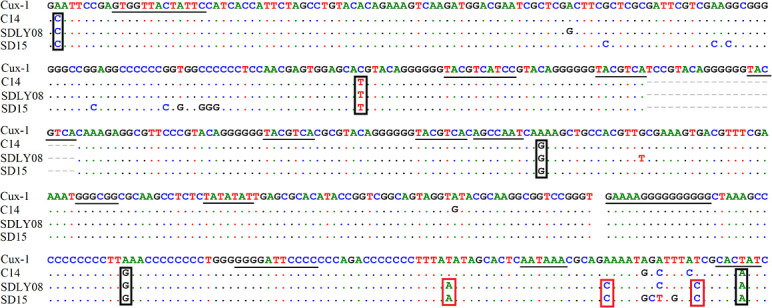
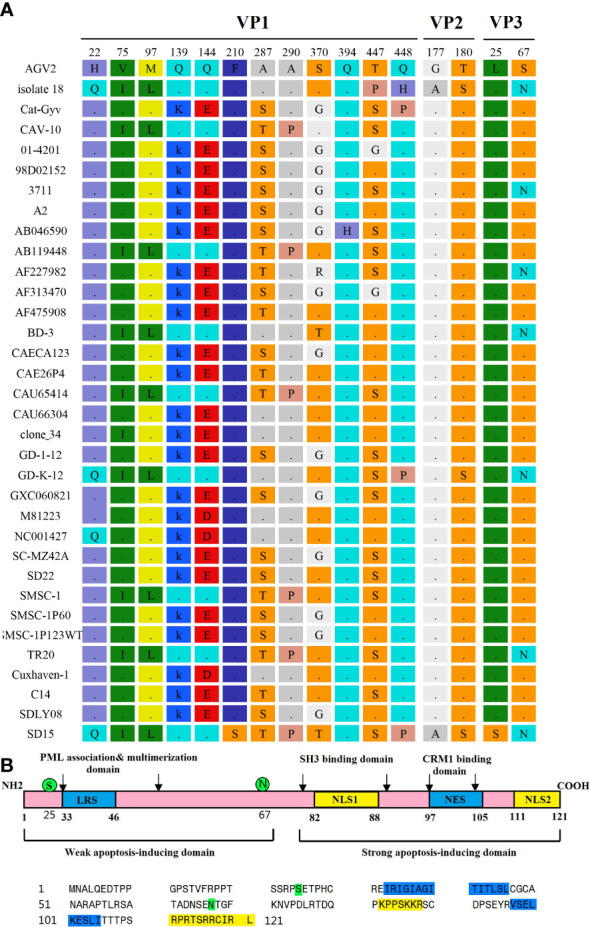
Chicken infectious anemia (CIA) is caused by chicken anemia virus (CAV). Recently, severe anemia has emerged in layer chickens (8 to 10-week-old) on poultry farms in China. However, the etiological characteristics and pathogenic potential of CAV in chickens at 6 weeks or older are not well understood. In this study, we isolated a CAV strain, termed SD15, from two-month-old chicken with severe anemia and analyzed the genetic evolution relationship. We found that strain SD15 had the highest homology (98.9%) with CAV18 strain. Comparison with 33 reference strains revealed 16 amino acid mutations in strain SD15, two of which were previously unknown (F210S in VP1 and L25S in Vp3). Compared with low pathogenic strains (Cux-1 and C14), highly pathogenic strains (SDLY08 and SD15) had three base mutations in their noncoding region. To further understand its pathogenicity, 10-week-old specific-pathogen-free (SPF) chickens were challenged with the novel strain and SDLY08. No obvious clinical symptoms were observed in the SDLY08 group. However, SD15-infected chickens showed significant growth retardation and immunosuppression. The main manifestations of immunosuppression were the significantly reduced thymus and bursa indices and AIV-H9 vaccine-induced antibody levels (P < 0.05). The lowest number of red blood cells in the SD15 group was just 60% of that in the control group. Taken together, the novel strain SD15 not only showed higher pathogenicity but also exhibited the potential ability to break the age resistance of older chickens to CAV. Our study enhanced the understanding of the epidemiological characteristics of chickens infected with severe anemia and can facilitate the development of improved control strategies of CIA in China.
鸡传染性贫血(CIA)由鸡贫血病毒(CAV)引起。最近,中国禽场的产蛋鸡(8-10 周龄)出现了严重贫血。然而,6 周龄以上鸡感染 CAV 的病因特征和致病潜力尚不清楚。在本研究中,我们从两只患有严重贫血的两个月大的鸡中分离出一株 CAV 株,命名为 SD15,并对其遗传进化关系进行了分析。我们发现,株 SD15 与 CAV18 株的同源性最高(98.9%)。与 33 株参考株比较,发现株 SD15 有 16 个氨基酸突变,其中 2 个是以前未知的(VP1 中的 F210S 和 Vp3 中的 L25S)。与低致病性株(Cux-1 和 C14)相比,高致病性株(SDLY08 和 SD15)在非编码区有 3 个碱基突变。为了进一步了解其致病性,我们用新型株和 SDLY08 感染 10 周龄无特定病原体(SPF)鸡。SDLY08 组未观察到明显的临床症状。然而,感染 SD15 的鸡表现出明显的生长迟缓和免疫抑制。免疫抑制的主要表现是胸腺和法氏囊指数显著降低,以及 AIV-H9 疫苗诱导的抗体水平降低(P<0.05)。SD15 组的红细胞数最低仅为对照组的 60%。总之,新型株 SD15 不仅表现出更高的致病性,而且还表现出打破大龄鸡对 CAV 年龄抗性的潜在能力。本研究增强了对严重贫血感染鸡的流行病学特征的认识,有助于制定中国 CIA 的改进控制策略。