Dutch Health and Youth Care Inspectorate (IGJ), Stadsplateau 1, 3521 AZ, Utrecht, The Netherlands.
Health Care Governance, Erasmus School of Health Policy & Management, Erasmus University, Burgemeester Oudlaan 50, Rotterdam, The Netherlands.
BMC Health Serv Res. 2023 Jun 7;23(1):585. doi: 10.1186/s12913-023-09562-w.
This study aims to explore and identify the organizational attributes that contribute to learning and improvement capabilities (L&IC) in healthcare organizations. The authors define learning as a structured update of system properties based on new information, and improvement as a closer correspondence between actual and desired standards. They highlight the importance of learning and improvement capabilities in maintaining high-quality care, and emphasize the need for empirical research on organizational attributes that contribute to these capabilities. The study has implications for healthcare organizations, professionals, and regulators in understanding how to assess and enhance learning and improvement capabilities.
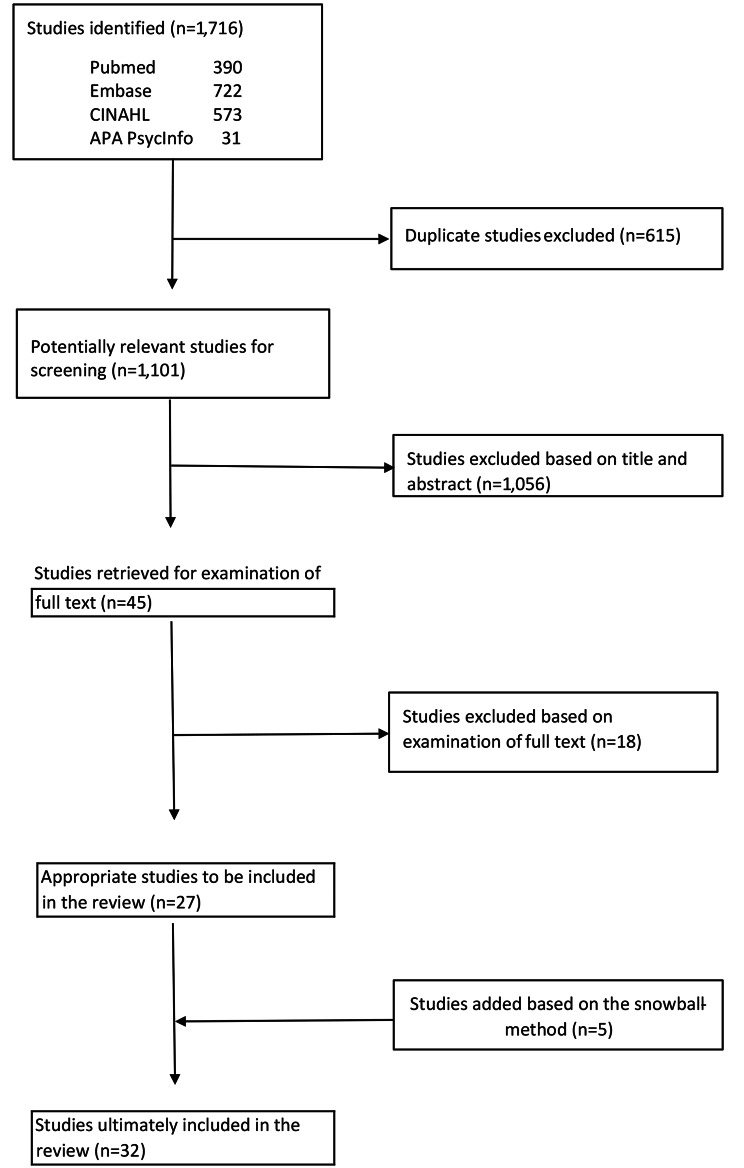
A systematic search of peer-reviewed articles published between January 2010 and April 2020 was carried out in the PubMed, Embase, CINAHL, and APA PsycINFO databases. Two reviewers independently screened the titles and abstracts and conducted a full-text review of potentially relevant articles, eventually adding five more studies identified through reference scanning. Finally, a total of 32 articles were included in this review. We extracted the data about organizational attributes that contribute to learning and improvement, categorized them and grouped the findings step-by-step into higher, more general-level categories using an interpretive approach until categories emerged that were sufficiently different from each other while also being internally consistent. This synthesis has been discussed by the authors.
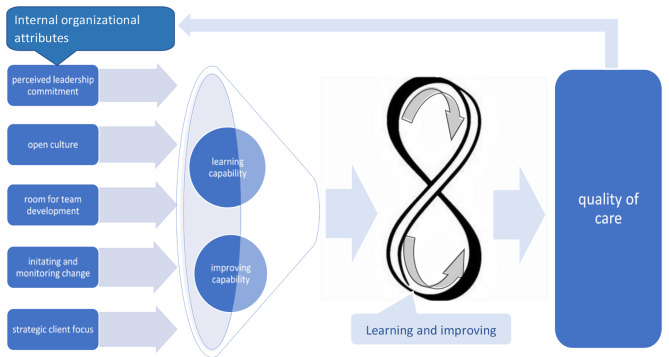
We identified five attributes that contribute to the L&IC of healthcare organizations: perceived leadership commitment, open culture, room for team development, initiating and monitoring change, and strategic client focus, each consisting of multiple facilitating aspects. We also found some hindering aspects.
We have identified five attributes that contribute to L&IC, mainly related to organizational software elements. Only a few are identified as organizational hardware elements. The use of qualitative methods seems most appropriate to understand or assess these organizational attributes. We feel it is also important for healthcare organisations to look more closely at how clients can be involved in L&IC.
Not applicable.
本研究旨在探讨和识别有助于医疗保健组织学习和改进能力(L&IC)的组织属性。作者将学习定义为基于新信息对系统属性进行的结构化更新,将改进定义为实际标准与期望标准之间的更紧密对应。他们强调了学习和改进能力在维持高质量护理方面的重要性,并强调了需要对有助于这些能力的组织属性进行实证研究。该研究对医疗保健组织、专业人员和监管机构具有重要意义,有助于他们了解如何评估和增强学习和改进能力。
在 PubMed、Embase、CINAHL 和 APA PsycINFO 数据库中,对 2010 年 1 月至 2020 年 4 月期间发表的同行评议文章进行了系统搜索。两名评审员独立筛选标题和摘要,并对潜在相关文章进行全文审查,最终通过参考文献扫描又确定了 5 项研究。最终,本综述共纳入 32 篇文章。我们提取了有助于学习和改进的组织属性的数据,对其进行分类,并使用解释性方法逐步将发现归入更高、更一般的类别,直到出现彼此之间足够不同且内部一致的类别。作者对这一综合结果进行了讨论。
我们确定了有助于医疗保健组织 L&IC 的五个属性:感知领导力承诺、开放文化、团队发展空间、发起和监控变革以及战略性客户关注,每个属性都包含多个促进方面。我们还发现了一些阻碍因素。
我们已经确定了有助于 L&IC 的五个属性,主要与组织软件元素有关。只有少数被确定为组织硬件元素。使用定性方法似乎最适合理解或评估这些组织属性。我们还认为,医疗保健组织也应该更仔细地研究如何让客户参与 L&IC。
不适用。