Department of Cell & Molecular Biology, Faculty of Life Sciences & Biotechnology, Shahid Beheshti University, Tehran, Iran.
Department of Plant Biotechnology, Faculty of Agriculture, University of Guilan, Rasht, Iran.
PLoS One. 2023 Jun 8;18(6):e0286324. doi: 10.1371/journal.pone.0286324. eCollection 2023.
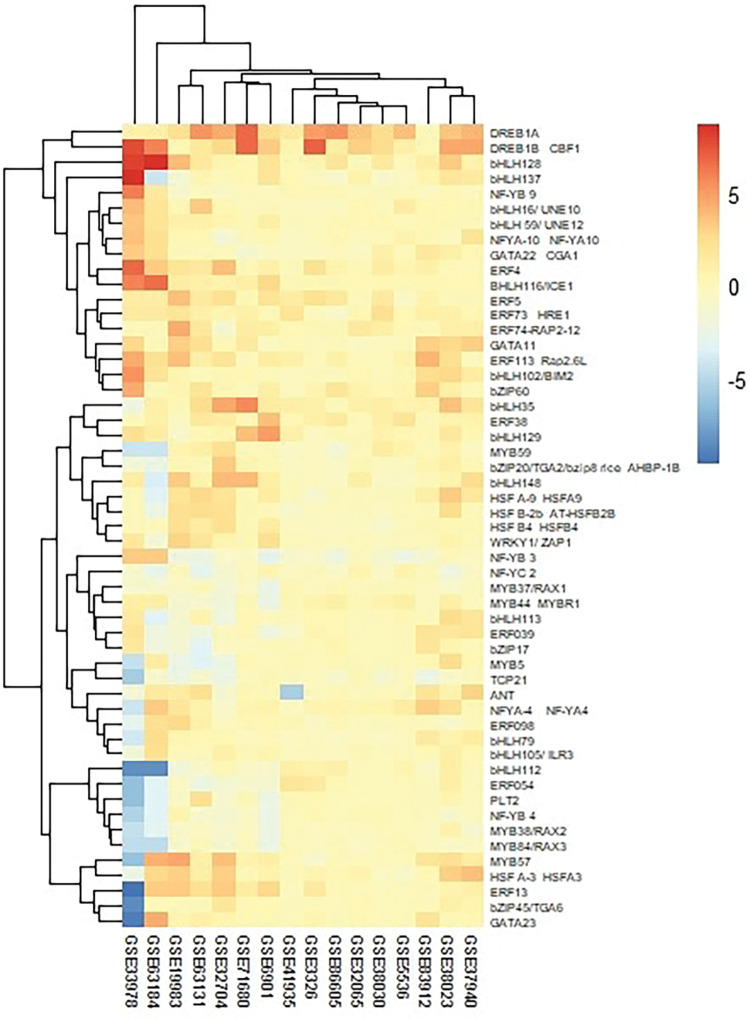
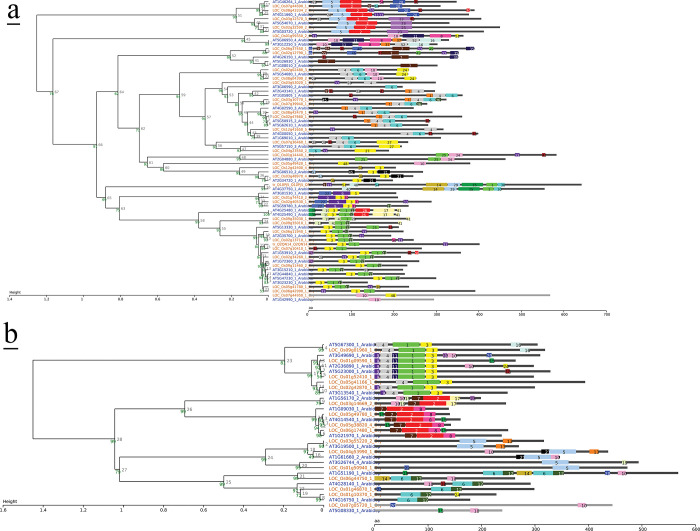
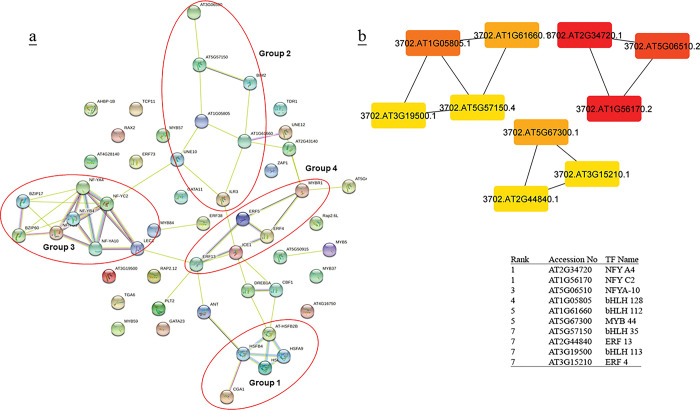
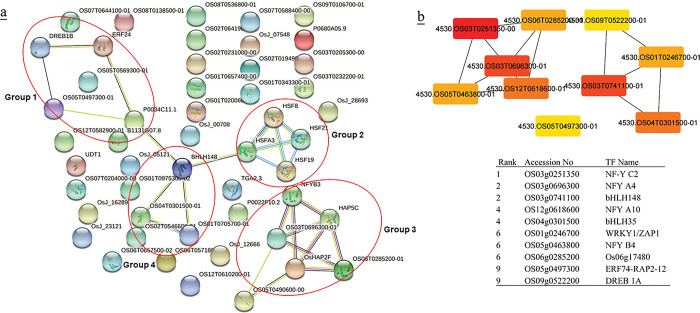
Plant growth and development can be influenced by cold stress. Responses of plants to cold are regulated in part by transcription factors (TFs) and microRNAs, which their determination would be necessary in comprehension of the corresponding molecular cues. Here, transcriptomes of Arabidopsis and rice were analyzed to computationally determine TFs and microRNAs that are differentially responsive to cold treatment, and their co-expression networks were established. Among 181 Arabidopsis and 168 rice differentially expressed TF genes, 37 (26 novel) were up- and 16 (8 novel) were downregulated. Common TF encoding genes were from ERF, MYB, bHLH, NFY, bZIP, GATA, HSF and WRKY families. NFY A4/C2/A10 were the significant hub TFs in both plants. Phytohormone responsive cis-elements such as ABRE, TGA, TCA and LTR were the common cis-elements in TF promoters. Arabidopsis had more responsive TFs compared to rice possibly due to its greater adaptation to ranges geographical latitudes. Rice had more relevant miRNAs probably because of its bigger genome size. The interacting partners and co-expressed genes were different for the common TFs so that of the downstream regulatory networks and the corresponding metabolic pathways. Identified cold-responsive TFs in (A + R) seemed to be more engaged in energy metabolism esp. photosynthesis, and signal transduction, respectively. At post-transcriptional level, miR5075 showed to target many identified TFs in rice. In comparison, the predictions showed that identified TFs are being targeted by diverse groups of miRNAs in Arabidopsis. Novel TFs, miRNAs and co-expressed genes were introduced as cold-responsive markers that can be harnessed in future studies and development of crop tolerant varieties.
植物的生长和发育会受到冷胁迫的影响。植物对冷胁迫的反应部分受转录因子(TFs)和 microRNAs 的调控,因此,了解这些分子线索,确定它们的表达是必要的。在这里,我们对拟南芥和水稻的转录组进行了分析,以计算出对冷处理有差异反应的 TFs 和 microRNAs,并建立了它们的共表达网络。在 181 个拟南芥和 168 个水稻差异表达的 TF 基因中,有 37 个(26 个是新的)上调,16 个(8 个是新的)下调。常见的 TF 编码基因来自 ERF、MYB、bHLH、NFY、bZIP、GATA、HSF 和 WRKY 家族。NFY A4/C2/A10 是这两种植物中重要的 hub TF。在 TF 启动子中,常见的顺式作用元件有 ABRE、TGA、TCA 和 LTR 等。拟南芥比水稻有更多的响应 TF,可能是因为它对更大的地理纬度范围有更好的适应能力。水稻有更多相关的 miRNA,可能是因为它的基因组更大。常见的 TF 的相互作用伙伴和共表达基因是不同的,因此,下游调控网络和相应的代谢途径也是不同的。在(A + R)中鉴定出的冷响应 TF 似乎更多地参与了能量代谢,特别是光合作用和信号转导。在转录后水平,miR5075 被发现在水稻中靶向许多鉴定出的 TF。相比之下,预测结果表明,在拟南芥中,不同组的 miRNA 靶向鉴定出的 TFs。新的 TF、miRNA 和共表达基因被引入作为冷响应标记,可以在未来的研究和作物耐品种的开发中加以利用。