School of Biomedical Sciences, Faculty of Biological Sciences, University of Leeds, Leeds, LS2 9JT, UK.
Astbury Centre for Structural and Molecular Biology, University of Leeds, Leeds, LS2 9JT, UK.
Nat Commun. 2023 Jun 9;14(1):3416. doi: 10.1038/s41467-023-39140-x.
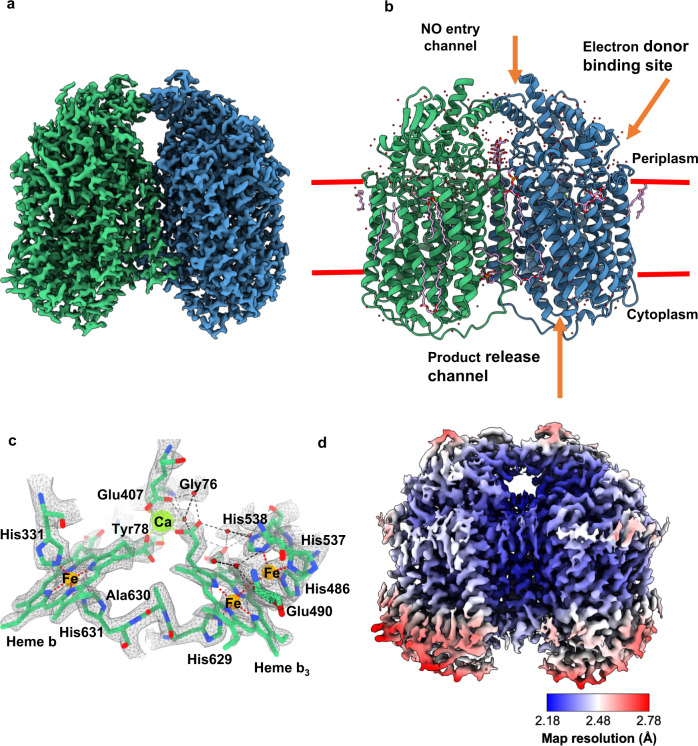
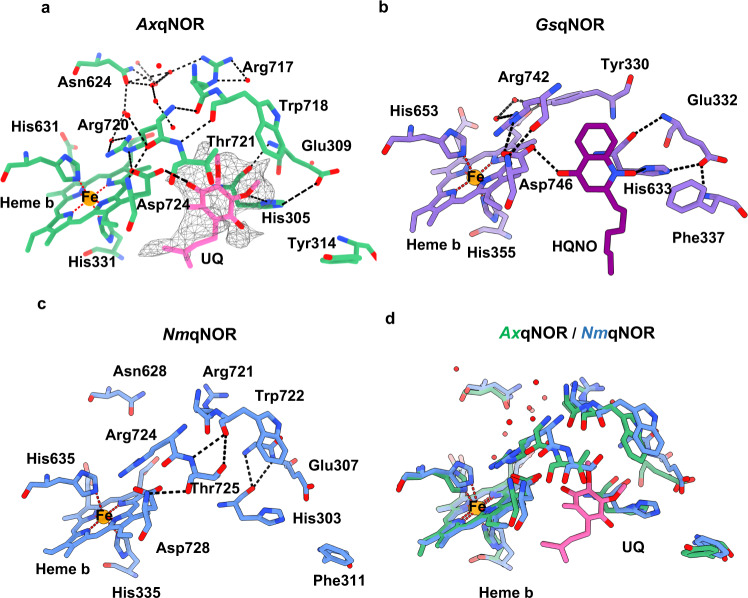
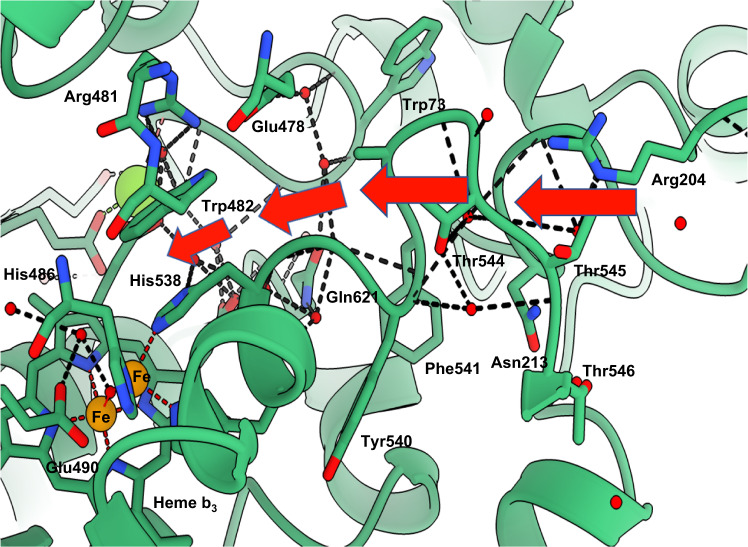
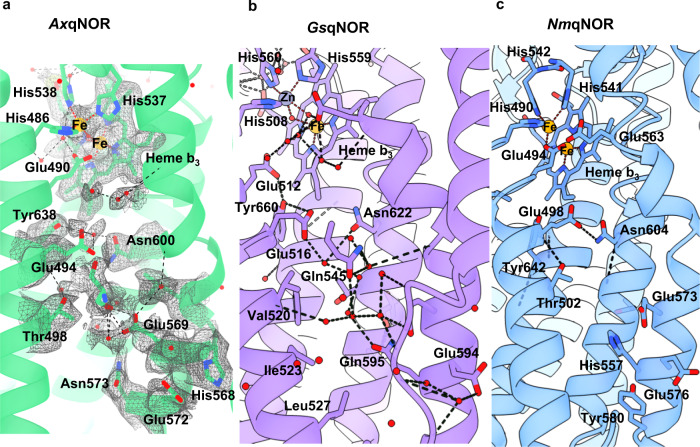
Quinol-dependent nitric oxide reductases (qNORs) are considered members of the respiratory heme-copper oxidase superfamily, are unique to bacteria, and are commonly found in pathogenic bacteria where they play a role in combating the host immune response. qNORs are also essential enzymes in the denitrification pathway, catalysing the reduction of nitric oxide to nitrous oxide. Here, we determine a 2.2 Å cryoEM structure of qNOR from Alcaligenes xylosoxidans, an opportunistic pathogen and a denitrifying bacterium of importance in the nitrogen cycle. This high-resolution structure provides insight into electron, substrate, and proton pathways, and provides evidence that the quinol binding site not only contains the conserved His and Asp residues but also possesses a critical Arg (Arg720) observed in cytochrome bo, a respiratory quinol oxidase.
依赖于喹诺酮的一氧化氮还原酶(qNORs)被认为是呼吸血红素铜氧化酶超家族的成员,它们是细菌所特有的,并且通常存在于致病性细菌中,在这些细菌中,它们在对抗宿主免疫反应中发挥作用。qNORs 也是反硝化途径中的必需酶,催化将一氧化氮还原为一氧化二氮。在这里,我们确定了来自木糖氧化产碱杆菌的 qNOR 的 2.2Å 冷冻电镜结构,木糖氧化产碱杆菌是一种机会性病原体,也是氮循环中重要的反硝化细菌。这个高分辨率的结构提供了对电子、底物和质子途径的深入了解,并提供了证据表明,喹诺酮结合位点不仅包含保守的 His 和 Asp 残基,还包含在呼吸喹诺酮氧化酶细胞色素 bo 中观察到的关键 Arg(Arg720)。