
准备好进入黄金时代了吗?高级别胶质瘤中的树突状细胞。
Ready for Prime Time? Dendritic Cells in High-Grade Gliomas.
作者信息
Conarroe Claire A, Bullock Timothy N J
机构信息
Department of Pathology, School of Medicine, University of Virginia, Charlottesville, VA 22903, USA.
出版信息
Cancers (Basel). 2023 May 25;15(11):2902. doi: 10.3390/cancers15112902.
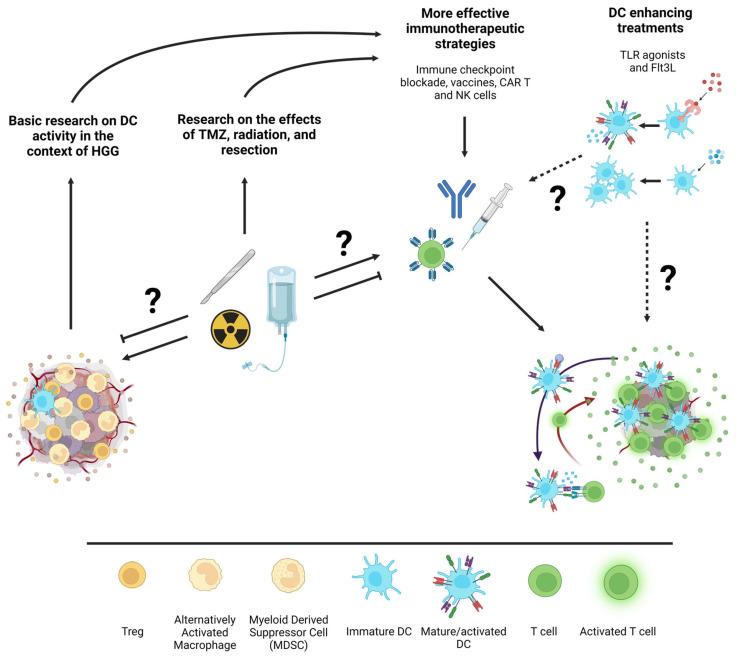
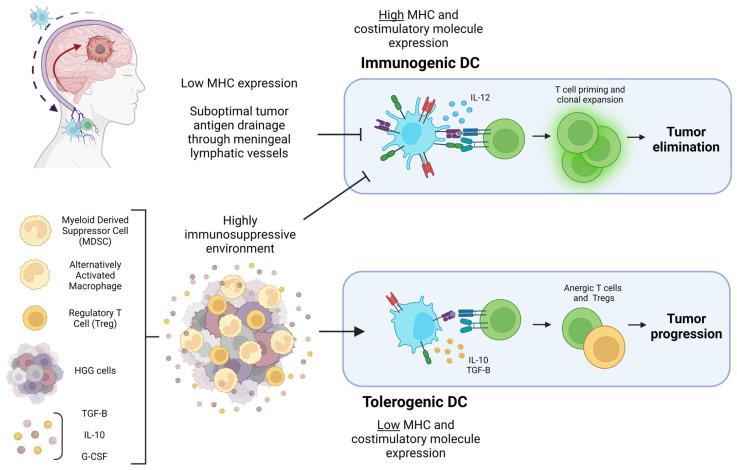
High-grade gliomas are malignant brain tumors, and patient outcomes remain dismal despite the emergence of immunotherapies aimed at promoting tumor elimination by the immune system. A robust antitumor immune response requires the presentation of tumor antigens by dendritic cells (DC) to prime cytolytic T cells. However, there is a paucity of research on dendritic cell activity in the context of high-grade gliomas. As such, this review covers what is known about the role of DC in the CNS, DC infiltration of high-grade gliomas, tumor antigen drainage, the immunogenicity of DC activity, and DC subsets involved in the antitumor immune response. Finally, we consider the implications of suboptimal DC function in the context of immunotherapies and identify opportunities to optimize immunotherapies to treat high-grade gliomas.
高级别胶质瘤是恶性脑肿瘤,尽管出现了旨在促进免疫系统消除肿瘤的免疫疗法,但患者的预后仍然很差。强大的抗肿瘤免疫反应需要树突状细胞(DC)呈递肿瘤抗原以启动细胞溶解性T细胞。然而,在高级别胶质瘤的背景下,关于树突状细胞活性的研究很少。因此,本综述涵盖了已知的DC在中枢神经系统中的作用、高级别胶质瘤中的DC浸润、肿瘤抗原引流、DC活性的免疫原性以及参与抗肿瘤免疫反应的DC亚群。最后,我们考虑了免疫疗法背景下DC功能欠佳的影响,并确定了优化免疫疗法以治疗高级别胶质瘤的机会。
 Zotero 插件