College of Landscape Architecture and Arts, Northwest A&F University, Yangling 712100, China.
National Engineering Research Center for Oil Peony, Yangling 712100, China.
Int J Mol Sci. 2023 May 28;24(11):9410. doi: 10.3390/ijms24119410.
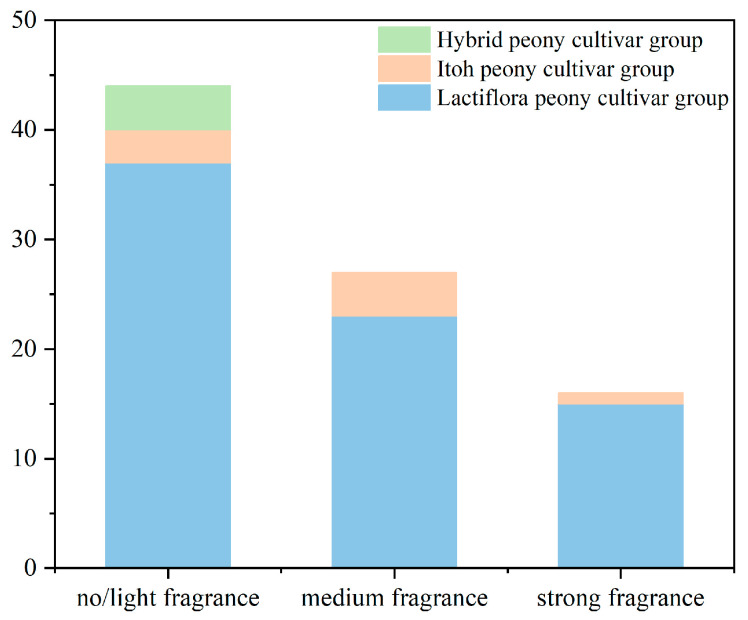
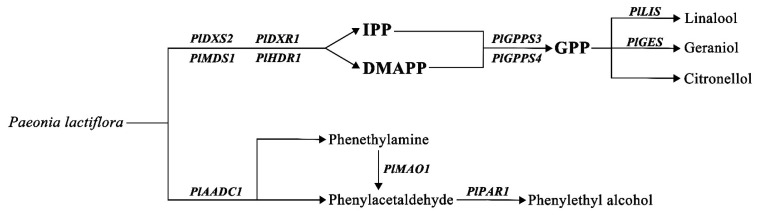
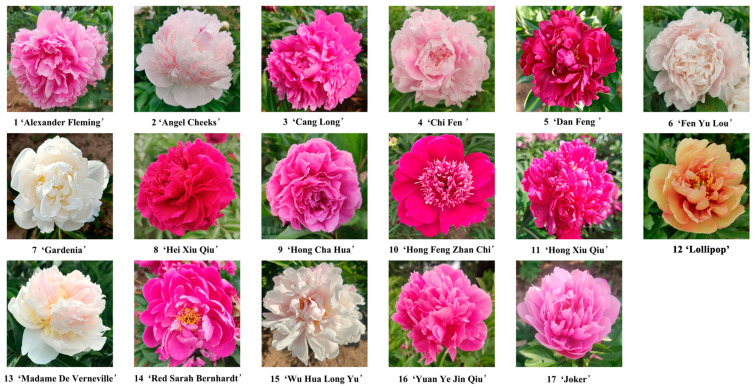
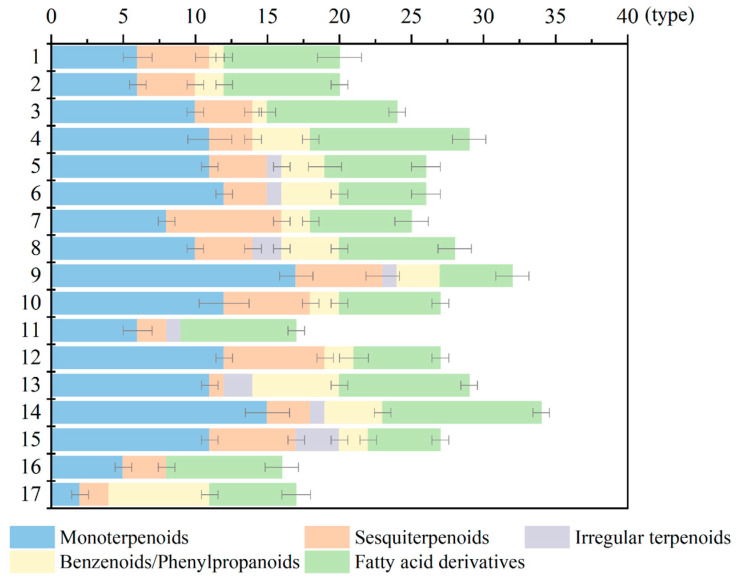
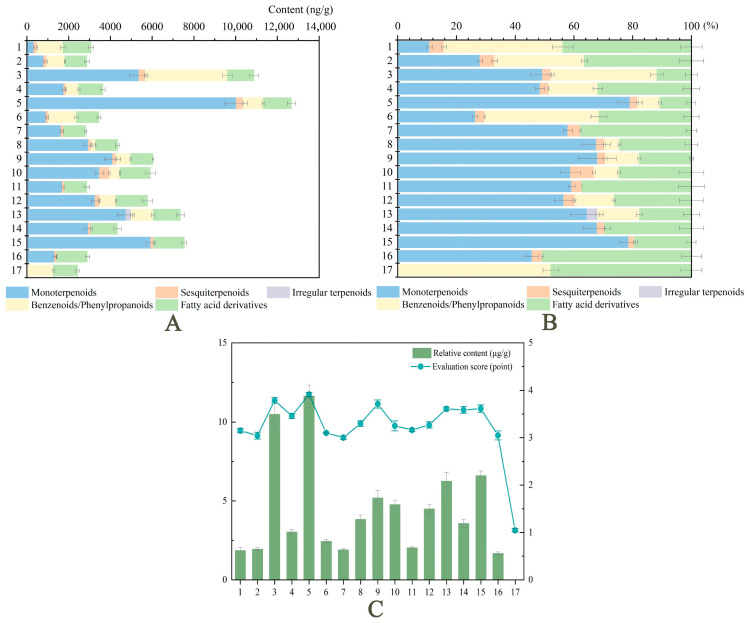
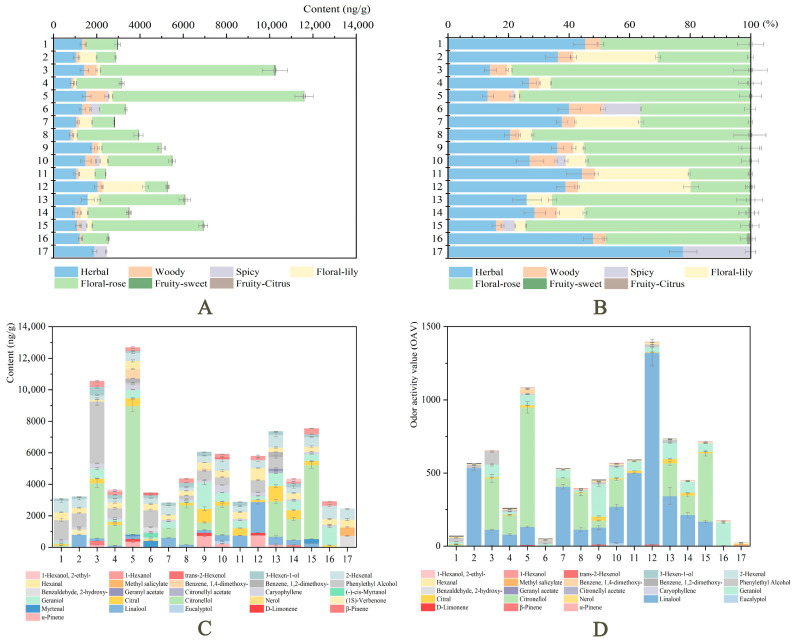
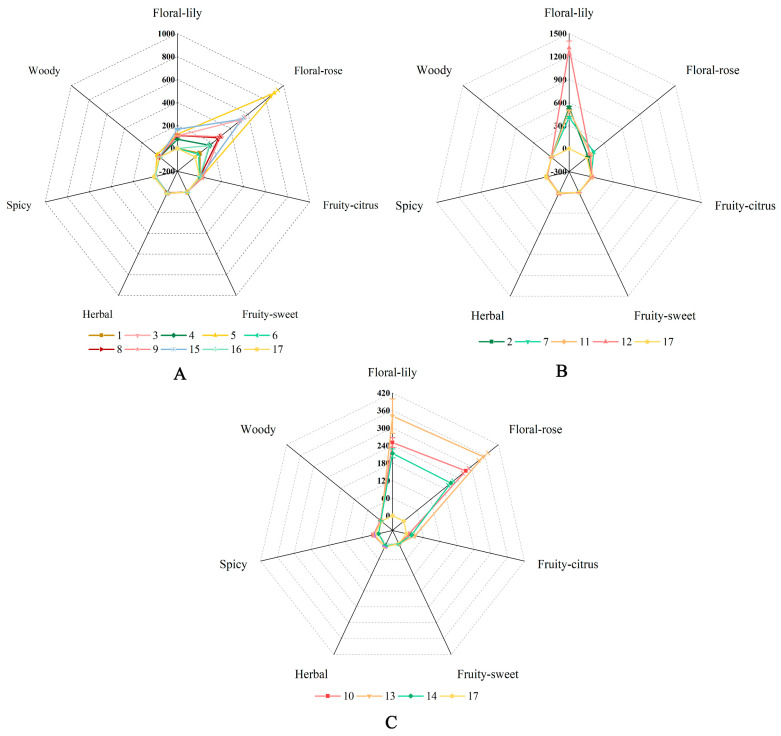
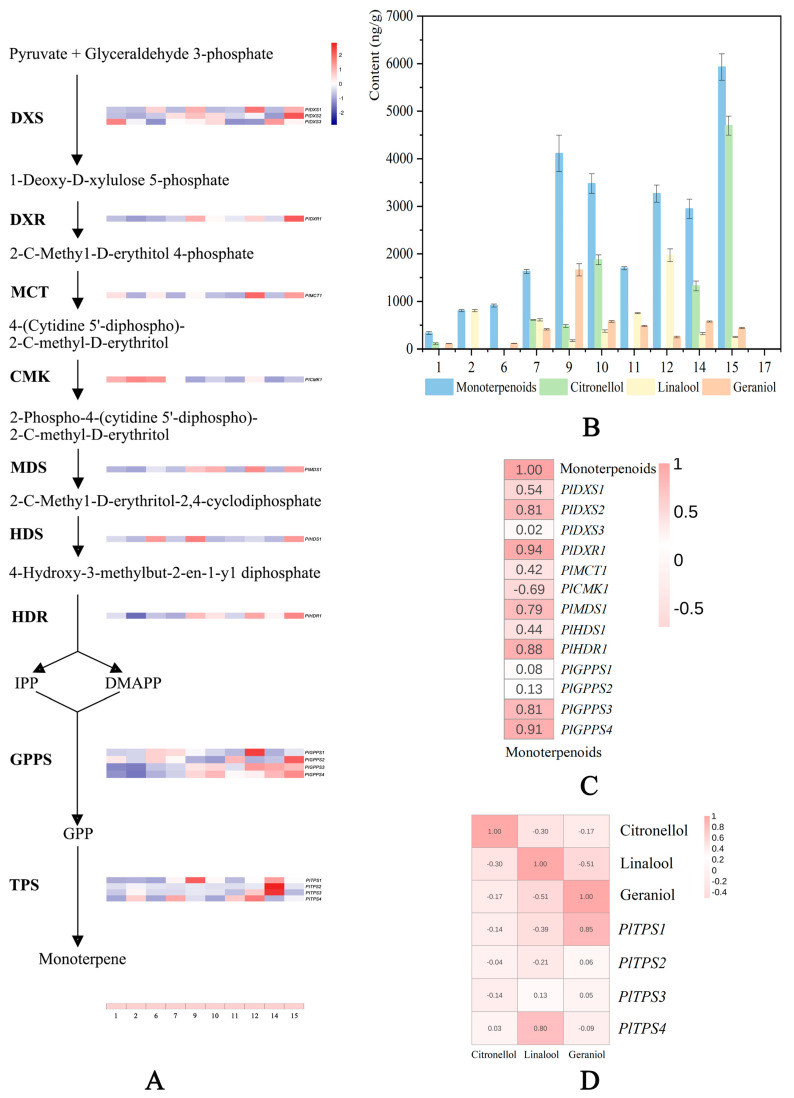
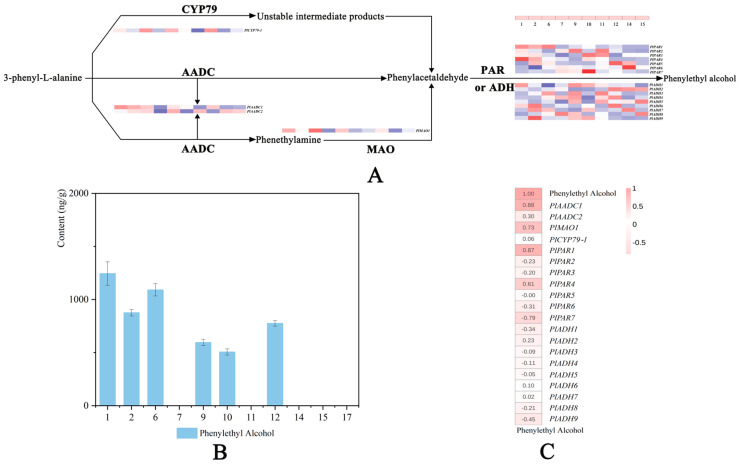
Flower scent is one of the main ornamental characteristics of herbaceous peony, and the improvement of flower fragrance is a vital objective of herbaceous peony breeding. In this study, 87 herbaceous peony cultivars were divided into three groups (no/light fragrance, medium fragrance, and strong fragrance) based on their sensory evaluation scores, and 16 strong fragrance cultivars and one no fragrance cultivar were selected for subsequent analysis. Sixty-eight volatile components were detected in these 17 cultivars based on solid-phase microextraction (SPME) and gas chromatography/mass spectrometry (GC/MS), and 26 types were identified as important scent components. They were composed of terpenoids, benzenoids/phenylpropanoids, and fatty acid derivatives. According to the content and odor threshold of these main aroma components, the characteristic aroma substances of herbaceous peony were identified, including linalool, geraniol, citronellol, and phenylethyl alcohol (2-PE). The cultivars of strong scented herbaceous peony were divided into three types: rose scent, lily scent, and mixed scent. We explored the possible key genes of characteristic aroma substances in herbaceous peony petals with different odors through the qRT-PCR. The key genes encoding monoterpene biosynthesis were found to be , , , , and . In addition, the linalool synthase (LIS) gene and the geraniol synthase (GES) gene were also found. , and related to the biosynthesis of 2-PE were detected, and the synthetic pathway of 2-PE was speculated. In conclusion, these findings revealed that the difference in gene expression of monoterpene and 2-PE synthesis pathway was related to the difference in the fragrance of herbaceous peony. This study explored the releasing pathway of herbaceous peony characteristic aroma substances and provided key genetic resources for fragrance improvement.
花香是芍药属植物主要的观赏特性之一,提高花香是芍药属植物品种改良的重要目标。本研究以感官评价分数为基础,将 87 个芍药属品种分为无/淡香、中香和浓香 3 组,选择其中 16 个浓香品种和 1 个无香品种进行后续分析。采用固相微萃取(SPME)和气相色谱/质谱联用(GC/MS)检测这 17 个品种中的 68 种挥发性成分,鉴定出 26 种重要的香气成分,它们由萜类化合物、苯丙烷/苯丙醇类化合物和脂肪酸衍生物组成。根据这些主要香气成分的含量和气味阈值,鉴定出芍药属的特征香气物质,包括芳樟醇、香叶醇、香茅醇和苯乙醇(2-PE)。浓香芍药属品种可分为玫瑰香、百合香和混合香 3 种类型。本研究通过 qRT-PCR 探索了不同气味芍药属花瓣中特征香气物质的可能关键基因。发现编码单萜生物合成的关键基因有 、 、 、 、 。此外,还检测到了芳樟醇合酶(LIS)基因和香叶醇合酶(GES)基因。检测到与 2-PE 合成相关的 、 和 ,并推测了 2-PE 的合成途径。综上所述,这些结果表明,单萜和 2-PE 合成途径基因表达的差异与芍药属花香的差异有关。本研究探索了芍药属特征香气物质的释放途径,为香气改良提供了关键的遗传资源。