Department of Gastrointestinal Surgery, First Affiliated Hospital of Bengbu Medical College, Bengbu, China.
Department of Inflammatory Bowel Disease Research Center, First Affiliated Hospital of Bengbu Medical College, Bengbu, China.
Front Immunol. 2023 May 29;14:1126217. doi: 10.3389/fimmu.2023.1126217. eCollection 2023.
To explore fecal immune-related proteins that can be used for colorectal cancer (CRC) diagnosis.
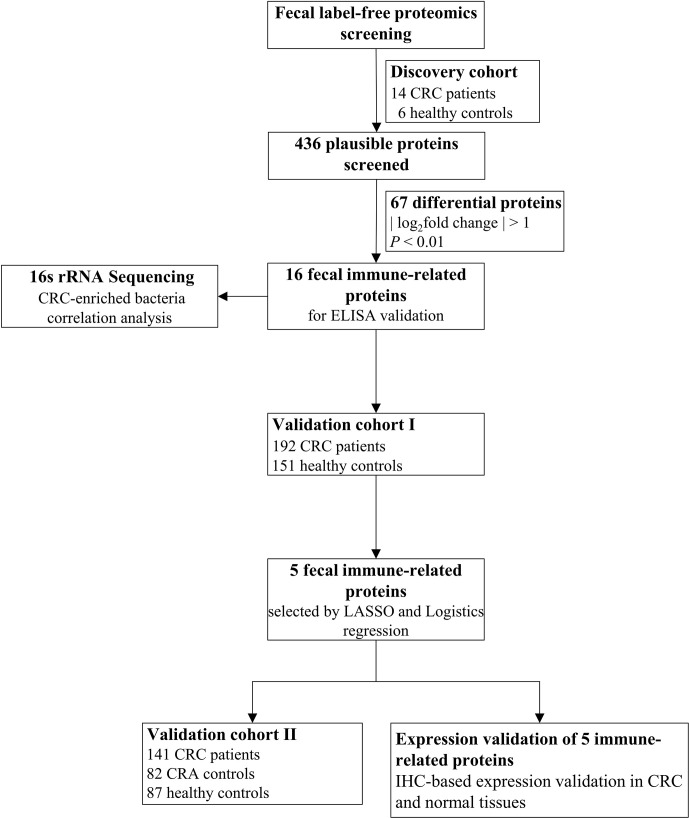
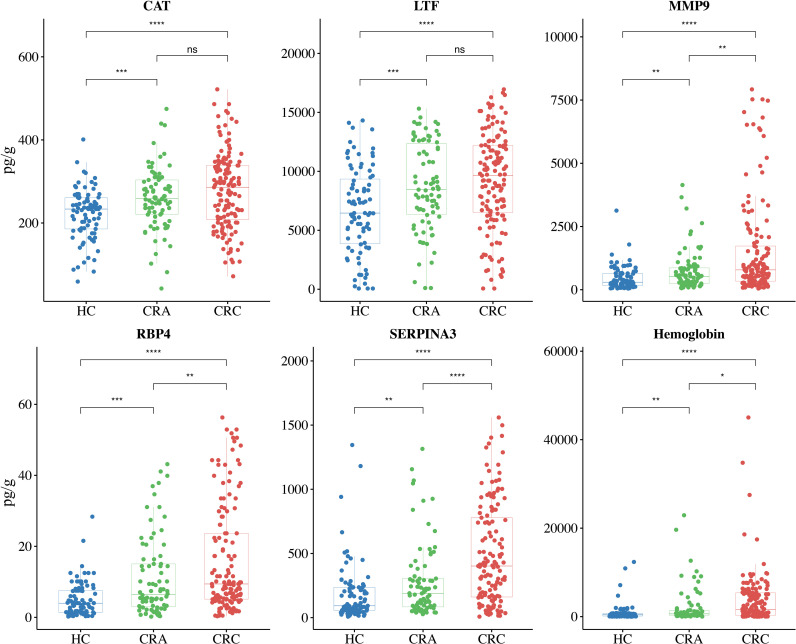
Three independent cohorts were used in present study. In the discovery cohort, which included 14 CRC patients and 6 healthy controls (HCs), label-free proteomics was applied to identify immune-related proteins in stool that could be used for CRC diagnosis. Exploring potential links between gut microbes and immune-related proteins by 16S rRNA sequencing. The abundance of fecal immune-associated proteins was verified by ELISA in two independent validation cohorts and a biomarker panel was constructed that could be used for CRC diagnosis. The validation cohort I included 192 CRC patients and 151 HCs from 6 different hospitals. The validation cohort II included 141 CRC patients, 82 colorectal adenoma (CRA) patients, and 87 HCs from another hospital. Finally, the expression of biomarkers in cancer tissues was verified by immunohistochemistry (IHC).
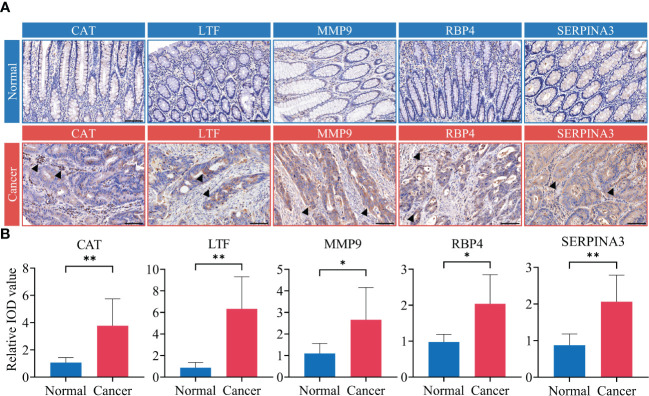
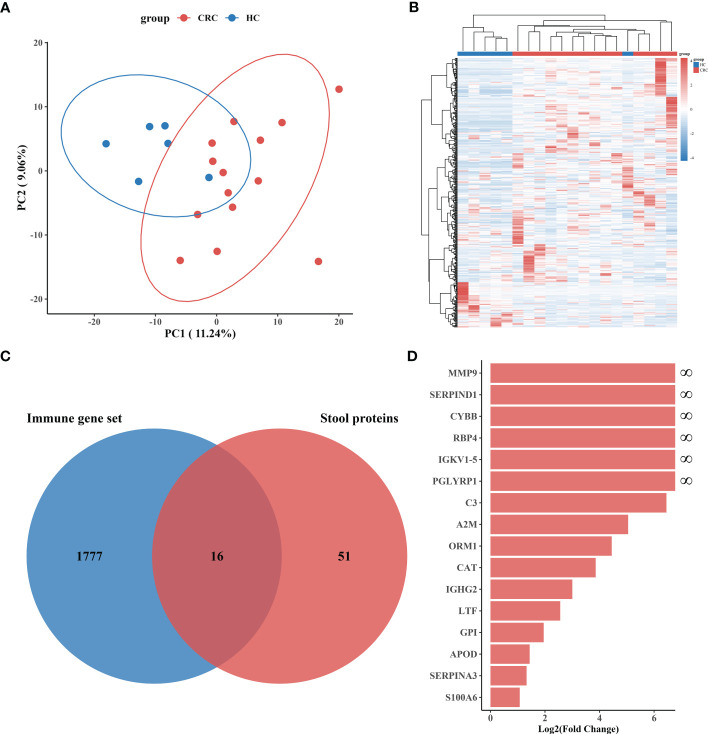
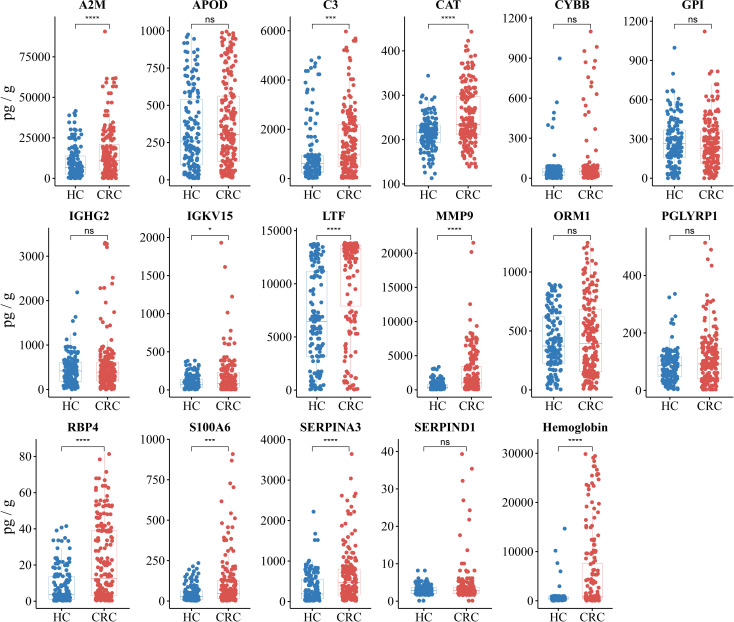
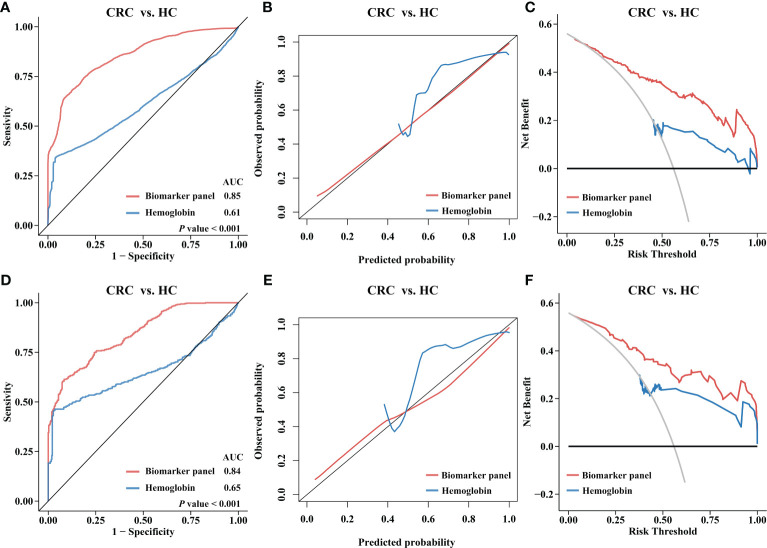
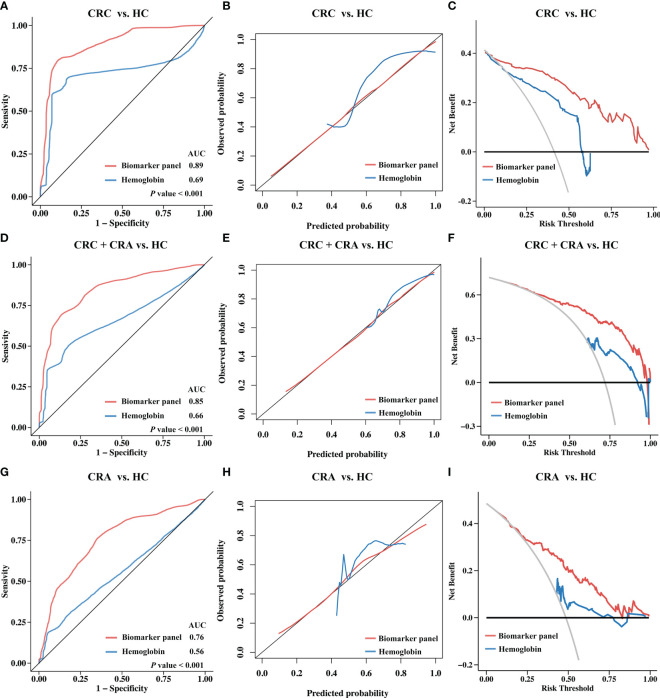
In the discovery study, 436 plausible fecal proteins were identified. And among 67 differential fecal proteins (|log2 fold change| > 1, P< 0.01) that could be used for CRC diagnosis, 16 immune-related proteins with diagnostic value were identified. The 16S rRNA sequencing results showed a positive correlation between immune-related proteins and the abundance of oncogenic bacteria. In the validation cohort I, a biomarker panel consisting of five fecal immune-related proteins (CAT, LTF, MMP9, RBP4, and SERPINA3) was constructed based on the least absolute shrinkage and selection operator (LASSO) and multivariate logistic regression. The biomarker panel was found to be superior to hemoglobin in the diagnosis of CRC in both validation cohort I and validation cohort II. The IHC result showed that protein expression levels of these five immune-related proteins were significantly higher in CRC tissue than in normal colorectal tissue.
A novel biomarker panel consisting of fecal immune-related proteins can be used for the diagnosis of CRC.
探索可用于结直肠癌(CRC)诊断的粪便免疫相关蛋白。
本研究使用了三个独立的队列。在发现队列中,纳入了 14 例 CRC 患者和 6 例健康对照者(HCs),采用无标记蛋白质组学方法鉴定粪便中可用于 CRC 诊断的免疫相关蛋白,并通过 16S rRNA 测序探索肠道微生物与免疫相关蛋白之间的潜在联系。通过 ELISA 在两个独立验证队列中验证粪便免疫相关蛋白的丰度,并构建一个可用于 CRC 诊断的生物标志物组合。验证队列 I 纳入了来自 6 家不同医院的 192 例 CRC 患者和 151 例 HCs;验证队列 II 纳入了来自另一家医院的 141 例 CRC 患者、82 例结直肠腺瘤(CRA)患者和 87 例 HCs。最后,通过免疫组织化学(IHC)验证了生物标志物在癌组织中的表达。
在发现研究中,鉴定出了 436 种可能的粪便蛋白。在可用于 CRC 诊断的 67 种差异表达粪便蛋白(|log2 倍变化|>1,P<0.01)中,鉴定出了 16 种具有诊断价值的免疫相关蛋白。16S rRNA 测序结果显示,免疫相关蛋白与致癌细菌的丰度呈正相关。在验证队列 I 中,基于最小绝对收缩和选择算子(LASSO)和多变量逻辑回归构建了一个由 5 种粪便免疫相关蛋白(CAT、LTF、MMP9、RBP4 和 SERPINA3)组成的生物标志物组合。该标志物组合在验证队列 I 和验证队列 II 中均优于血红蛋白在 CRC 诊断中的应用。IHC 结果显示,这 5 种免疫相关蛋白在 CRC 组织中的蛋白表达水平明显高于正常结直肠组织。
由粪便免疫相关蛋白组成的新型生物标志物组合可用于 CRC 的诊断。