Department of Technical Physics, University of Eastern Finland, 70211, Kuopio, Finland.
Department of Medical Physics, Medical Imaging Center, Pirkanmaa Hospital District, Tampere, Finland.
Ann Biomed Eng. 2023 Oct;51(10):2245-2257. doi: 10.1007/s10439-023-03261-7. Epub 2023 Jun 18.
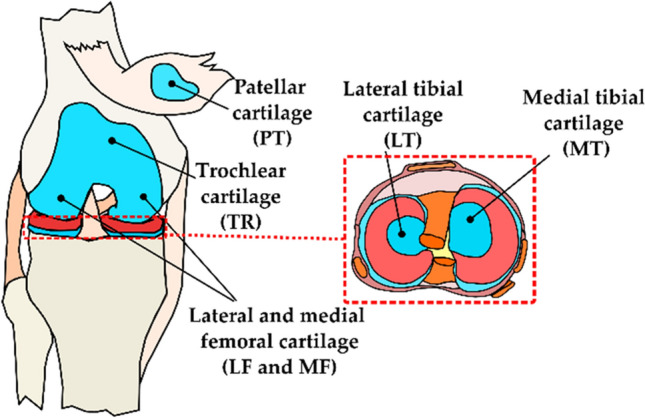
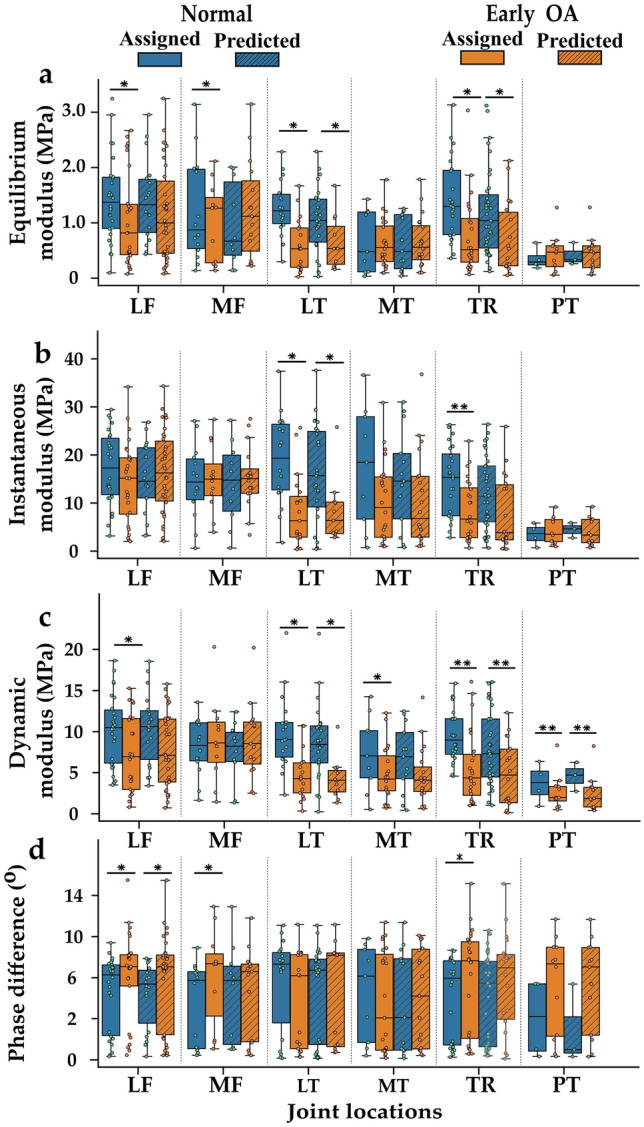
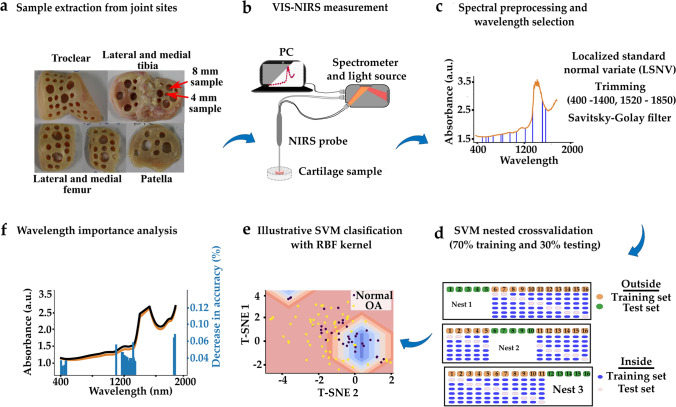
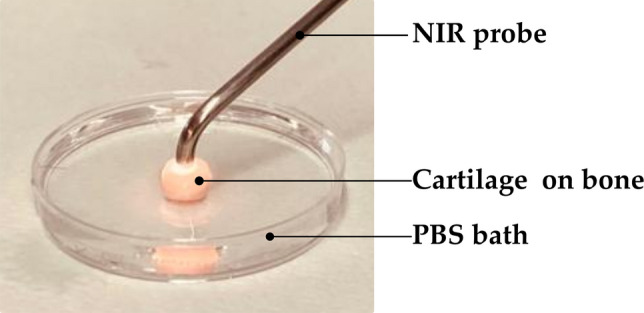
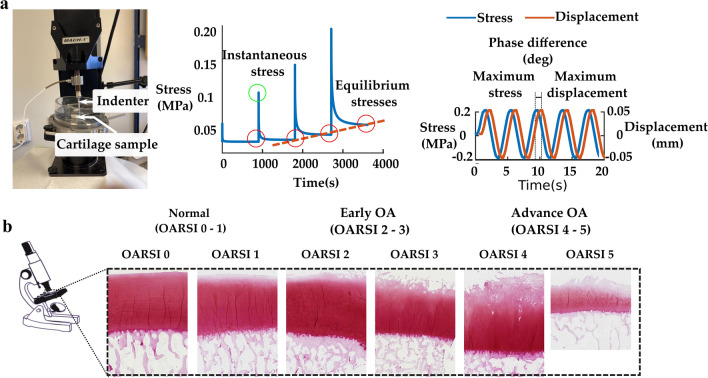
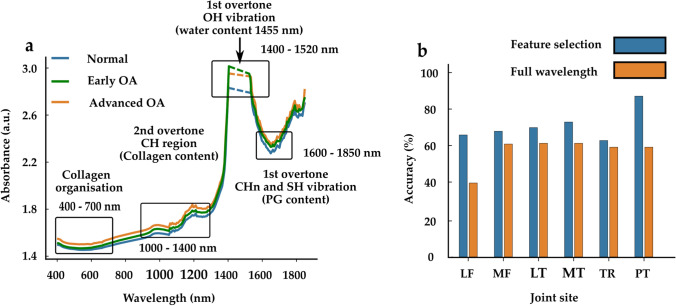
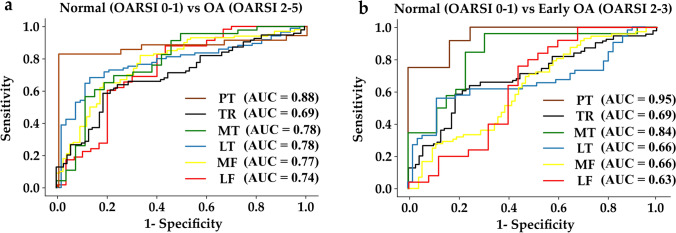
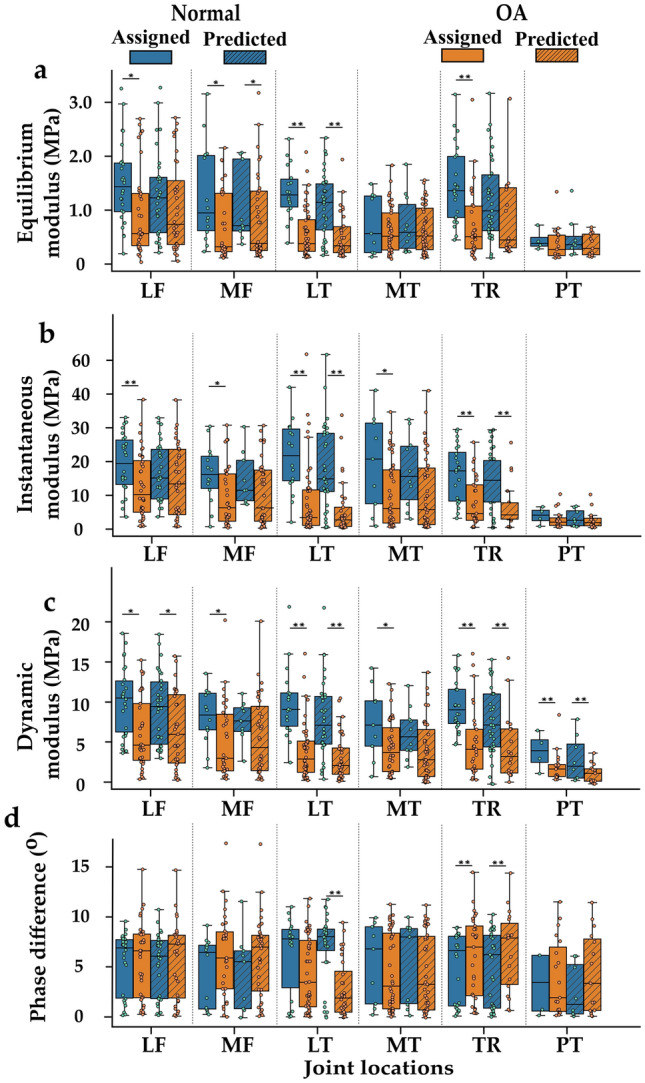
Osteoarthritis degenerates cartilage and impairs joint function. Early intervention opportunities are missed as current diagnostic methods are insensitive to early tissue degeneration. We investigated the capability of visible light-near-infrared spectroscopy (Vis-NIRS) to differentiate normal human cartilage from early osteoarthritic one. Vis-NIRS spectra, biomechanical properties and the state of osteoarthritis (OARSI grade) were quantified from osteochondral samples harvested from different anatomical sites of human cadaver knees. Two support vector machines (SVM) classifiers were developed based on the Vis-NIRS spectra and OARSI scores. The first classifier was designed to distinguish normal (OARSI: 0-1) from general osteoarthritic cartilage (OARSI: 2-5) to check the general suitability of the approach yielding an average accuracy of 75% (AUC = 0.77). Then, the second classifier was designed to distinguish normal from early osteoarthritic cartilage (OARSI: 2-3) yielding an average accuracy of 71% (AUC = 0.73). Important wavelength regions for differentiating normal from early osteoarthritic cartilage were related to collagen organization (wavelength region: 400-600 nm), collagen content (1000-1300 nm) and proteoglycan content (1600-1850 nm). The findings suggest that Vis-NIRS allows objective differentiation of normal and early osteoarthritic tissue, e.g., during arthroscopic repair surgeries.
骨关节炎会使软骨退化并损害关节功能。由于当前的诊断方法对早期组织退化不敏感,因此错过了早期干预的机会。我们研究了可见光-近红外光谱(Vis-NIRS)区分正常人类软骨和早期骨关节炎软骨的能力。从人尸体膝关节不同解剖部位采集的骨软骨样本中定量测量了 Vis-NIRS 光谱、生物力学特性和骨关节炎状态(OARSI 分级)。基于 Vis-NIRS 光谱和 OARSI 评分开发了两个支持向量机(SVM)分类器。第一个分类器用于区分正常(OARSI:0-1)和一般骨关节炎软骨(OARSI:2-5),以检查该方法的一般适用性,平均准确率为 75%(AUC=0.77)。然后,第二个分类器用于区分正常和早期骨关节炎软骨(OARSI:2-3),平均准确率为 71%(AUC=0.73)。区分正常和早期骨关节炎软骨的重要波长区域与胶原组织(波长区域:400-600nm)、胶原含量(1000-1300nm)和蛋白聚糖含量(1600-1850nm)有关。研究结果表明,Vis-NIRS 允许客观地区分正常和早期骨关节炎组织,例如在关节镜修复手术期间。