Bestepe Furkan, Fritsche Colette, Lakhotiya Kartik, Niosi Carolyn E, Ghanem George F, Martin Gregory L, Pal-Ghosh Ruma, Becker-Greene Dakota, Weston James, Hollan Ivana, Risnes Ivar, Rynning Stein Erik, Solheim Liv Heidi, Feinberg Mark W, Blanton Robert M, Icli Basak
Molecular Cardiology Research Institute, Department of Medicine, Tufts Medical Center, Boston, MA 02111, USA.
Cardiovascular Division, Department of Medicine, Brigham & Women's Hospital, Harvard Medical School, Boston, MA 02115, USA.
Mol Ther Nucleic Acids. 2023 May 20;32:995-1009. doi: 10.1016/j.omtn.2023.05.021. eCollection 2023 Jun 13.
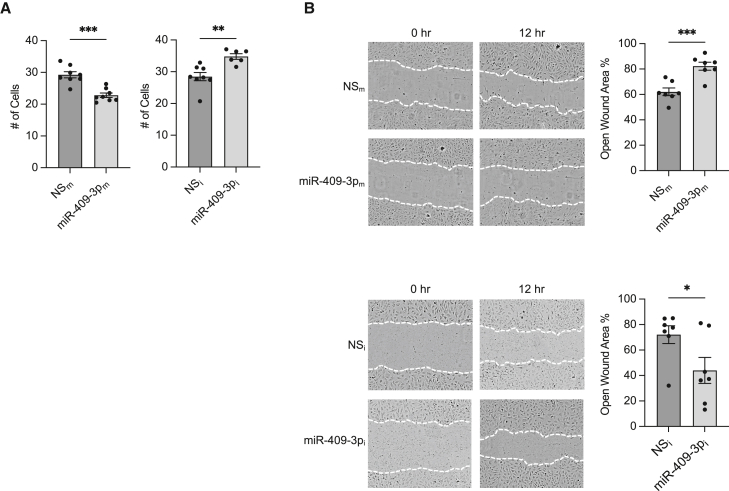
Angiogenesis is critical for tissue repair following myocardial infarction (MI), which is exacerbated under insulin resistance or diabetes. MicroRNAs are regulators of angiogenesis. We examined the metabolic regulation of miR-409-3p in post-infarct angiogenesis. miR-409-3p was increased in patients with acute coronary syndrome (ACS) and in a mouse model of acute MI. In endothelial cells (ECs), miR-409-3p was induced by palmitate, while vascular endothelial growth factor (VEGF) and fibroblast growth factor (FGF) decreased its expression. Overexpression of miR-409-3p decreased EC proliferation and migration in the presence of palmitate, whereas inhibition had the opposite effects. RNA sequencing (RNA-seq) profiling in ECs identified DNAJ homolog subfamily B member 9 (DNAJB9) as a target of miR-409-3p. Overexpression of miR-409-3p decreased DNAJB9 mRNA and protein expression by 47% and 31% respectively, while enriching DNAJB9 mRNA by 1.9-fold after Argonaute2 microribonucleoprotein immunoprecipitation. These effects were mediated through p38 mitogen-activated protein kinase (MAPK). Ischemia-reperfusion (I/R) injury in EC-specific knockout (KO) mice (miR-409) fed a high-fat, high-sucrose diet increased isolectin B4 (53.3%), CD31 (56%), and DNAJB9 (41.5%). The left ventricular ejection fraction (EF) was improved by 28%, and the infarct area was decreased by 33.8% in miR-409 compared with control mice. These findings support an important role of in the angiogenic EC response to myocardial ischemia.
血管生成对于心肌梗死(MI)后的组织修复至关重要,在胰岛素抵抗或糖尿病情况下会加剧。微小RNA是血管生成的调节因子。我们研究了miR - 409 - 3p在梗死后期血管生成中的代谢调控。急性冠状动脉综合征(ACS)患者和急性心肌梗死小鼠模型中miR - 409 - 3p水平升高。在内皮细胞(ECs)中,棕榈酸可诱导miR - 409 - 3p表达,而血管内皮生长因子(VEGF)和成纤维细胞生长因子(FGF)则降低其表达。miR - 409 - 3p过表达会降低棕榈酸存在时ECs的增殖和迁移,而抑制miR - 409 - 3p则有相反作用。对ECs进行RNA测序(RNA - seq)分析确定DNAJ同源亚家族B成员9(DNAJB9)为miR - 409 - 3p的靶标。miR - 409 - 3p过表达分别使DNAJB9 mRNA和蛋白表达降低47%和31%,而在AGO2微核糖核蛋白免疫沉淀后,DNAJB9 mRNA富集1.9倍。这些作用是通过p38丝裂原活化蛋白激酶(MAPK)介导的。喂食高脂高糖饮食的EC特异性基因敲除(KO)小鼠(miR - 409)的缺血再灌注(I/R)损伤使异凝集素B4增加(53.3%)、CD31增加(56%)以及DNAJB9增加(41.5%)。与对照小鼠相比,miR - 409使左心室射血分数(EF)提高28%,梗死面积减少33.8%。这些发现支持了miR - 409 - 3p在血管生成性EC对心肌缺血反应中的重要作用。