Parks David F, Schneider Aidan M, Xu Yifan, Brunwasser Samuel J, Funderburk Samuel, Thurber Danilo, Blanche Tim, Dyer Eva L, Haussler David, Hengen Keith B
Department of Biomolecular Engineering, University of California, Santa Cruz.
Department of Biology, Washington University in Saint Louis.
bioRxiv. 2023 Jun 27:2023.06.09.544399. doi: 10.1101/2023.06.09.544399.
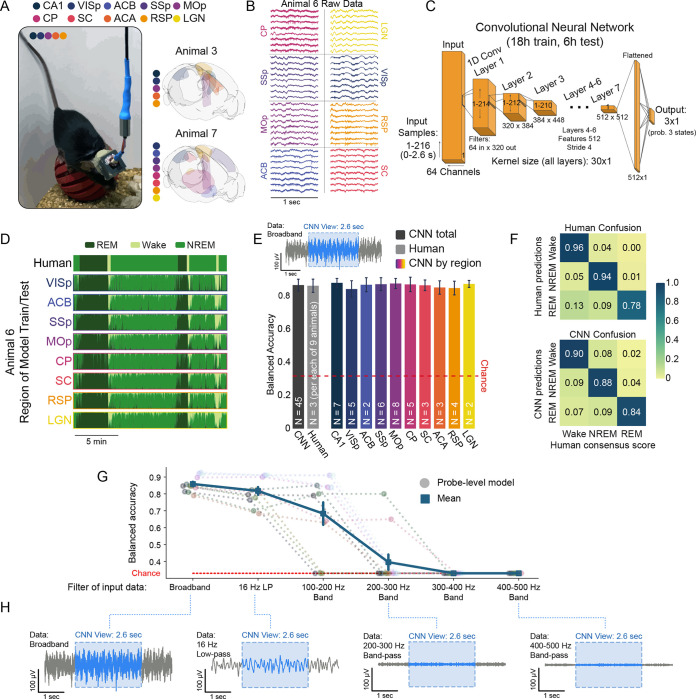
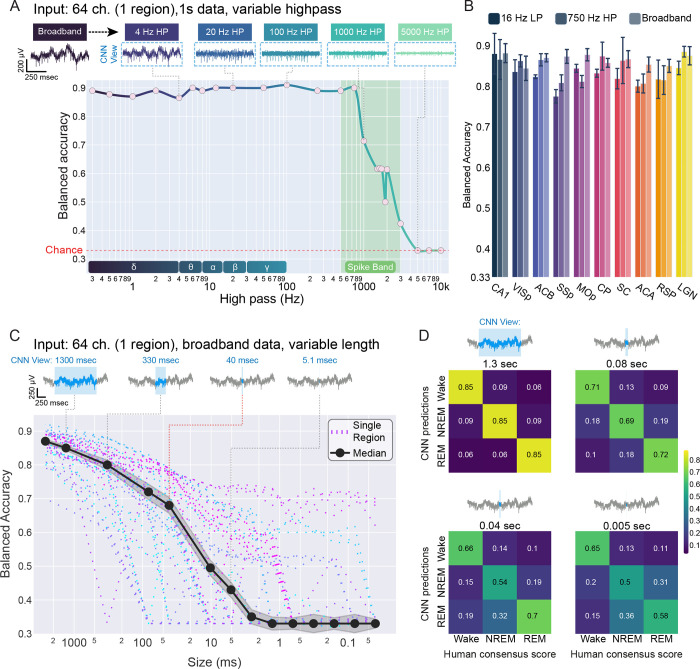
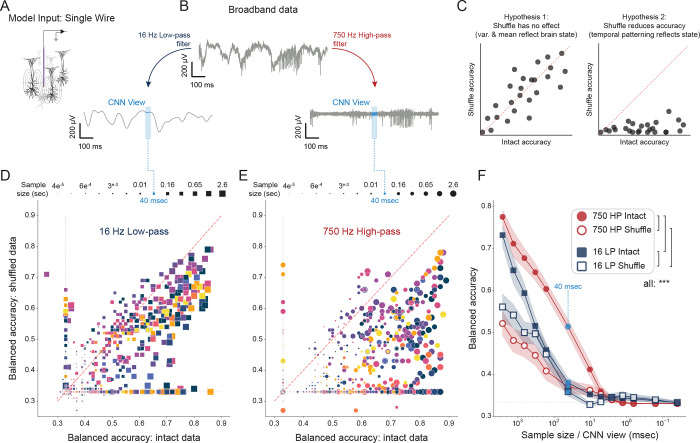
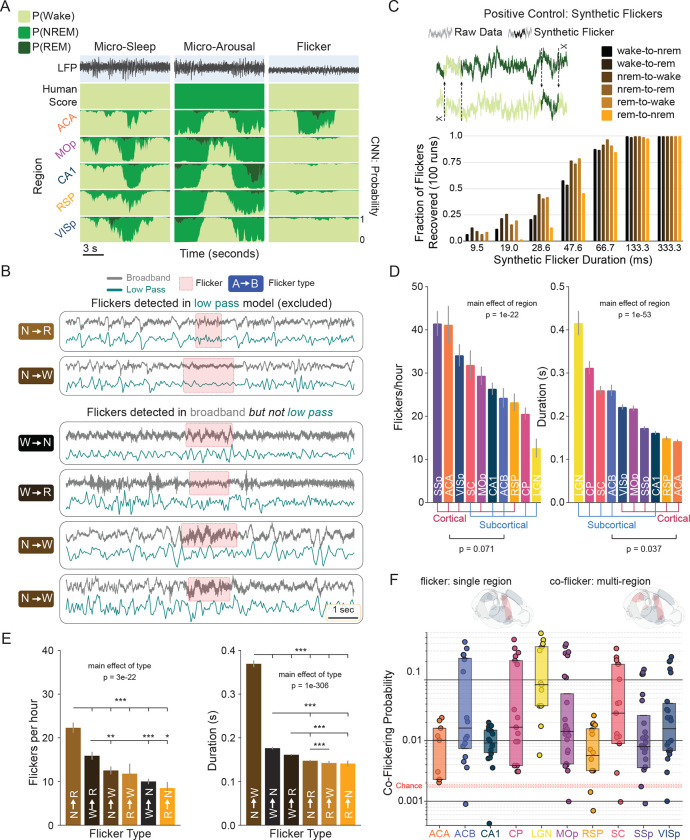
Sleep and wake are understood to be slow, long-lasting processes that span the entire brain. Brain states correlate with many neurophysiological changes, yet the most robust and reliable signature of state is enriched in rhythms between 0.1 and 20 Hz. The possibility that the fundamental unit of brain state could be a reliable structure at the scale of milliseconds and microns has not been addressed due to the physical limits associated with oscillation-based definitions. Here, by analyzing high resolution neural activity recorded in 10 anatomically and functionally diverse regions of the murine brain over 24 h, we reveal a mechanistically distinct embedding of state in the brain. Sleep and wake states can be accurately classified from on the order of 10 to 10 ms of neuronal activity sampled from 100 μm of brain tissue. In contrast to canonical rhythms, this embedding persists above 1,000 Hz. This high frequency embedding is robust to substates and rapid events such as sharp wave ripples and cortical ON/OFF states. To ascertain whether such fast and local structure is meaningful, we leveraged our observation that individual circuits intermittently switch states independently of the rest of the brain. Brief state discontinuities in subsets of circuits correspond with brief behavioral discontinuities during both sleep and wake. Our results suggest that the fundamental unit of state in the brain is consistent with the spatial and temporal scale of neuronal computation, and that this resolution can contribute to an understanding of cognition and behavior.
睡眠和觉醒被认为是贯穿整个大脑的缓慢、持久的过程。脑状态与许多神经生理变化相关,但最强烈和可靠的状态特征集中在0.1至20赫兹的节律中。由于基于振荡定义的物理限制,脑状态的基本单位可能是毫秒和微米尺度上的可靠结构这一可能性尚未得到探讨。在这里,通过分析在24小时内记录的小鼠大脑10个解剖和功能不同区域的高分辨率神经活动,我们揭示了大脑中状态在机制上的独特嵌入。睡眠和觉醒状态可以从从100微米脑组织中采样的10到10毫秒量级的神经元活动中准确分类。与典型节律不同,这种嵌入在1000赫兹以上仍然存在。这种高频嵌入对亚状态和快速事件(如尖波涟漪和皮层开/关状态)具有鲁棒性。为了确定这种快速和局部的结构是否有意义,我们利用了我们的观察结果,即单个回路会间歇性地独立于大脑其他部分切换状态。回路子集中短暂的状态不连续与睡眠和觉醒期间短暂的行为不连续相对应。我们的结果表明,大脑中状态的基本单位与神经元计算的时空尺度一致,并且这种分辨率有助于理解认知和行为。