Department of Chemical and Structural Biology, Weizmann Institute of Science, Rehovot 7610001, Israel.
Acc Chem Res. 2023 Jul 4;56(13):1803-1814. doi: 10.1021/acs.accounts.3c00162. Epub 2023 Jun 19.
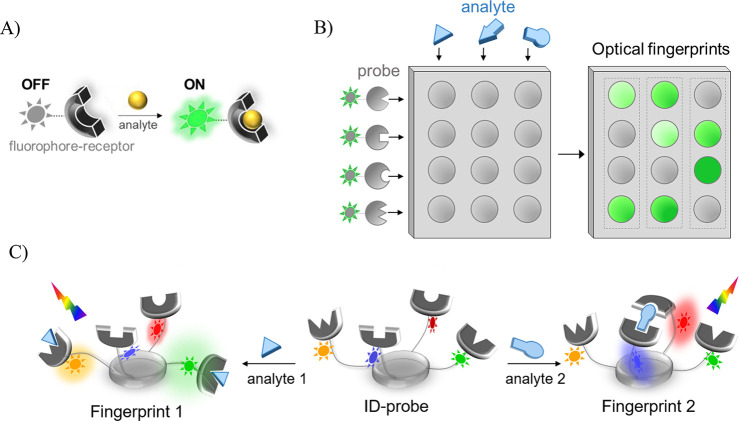
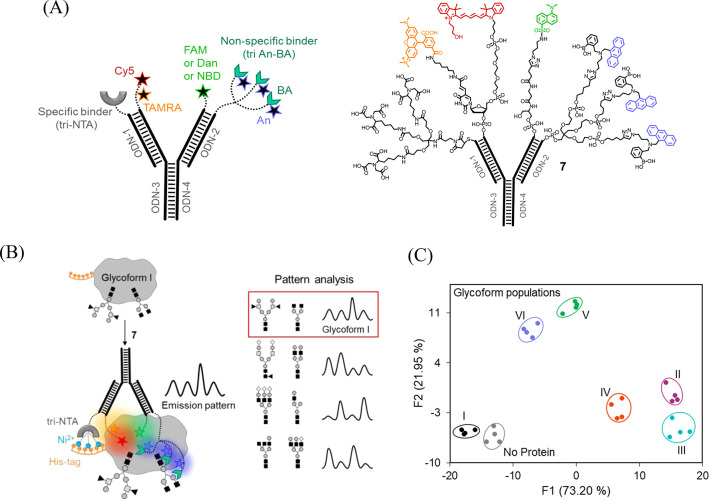
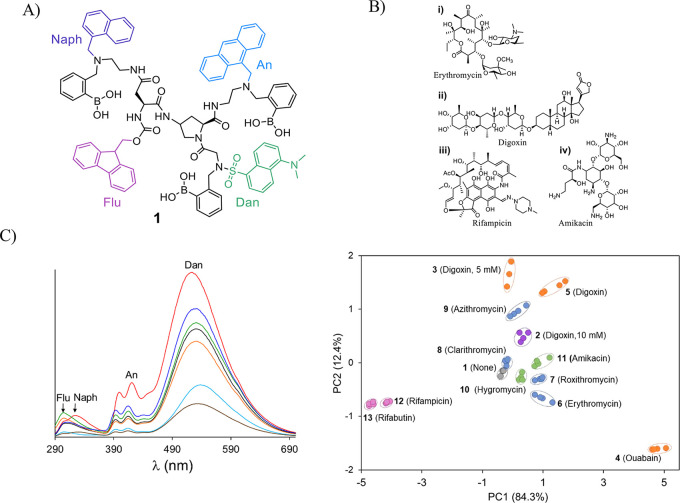
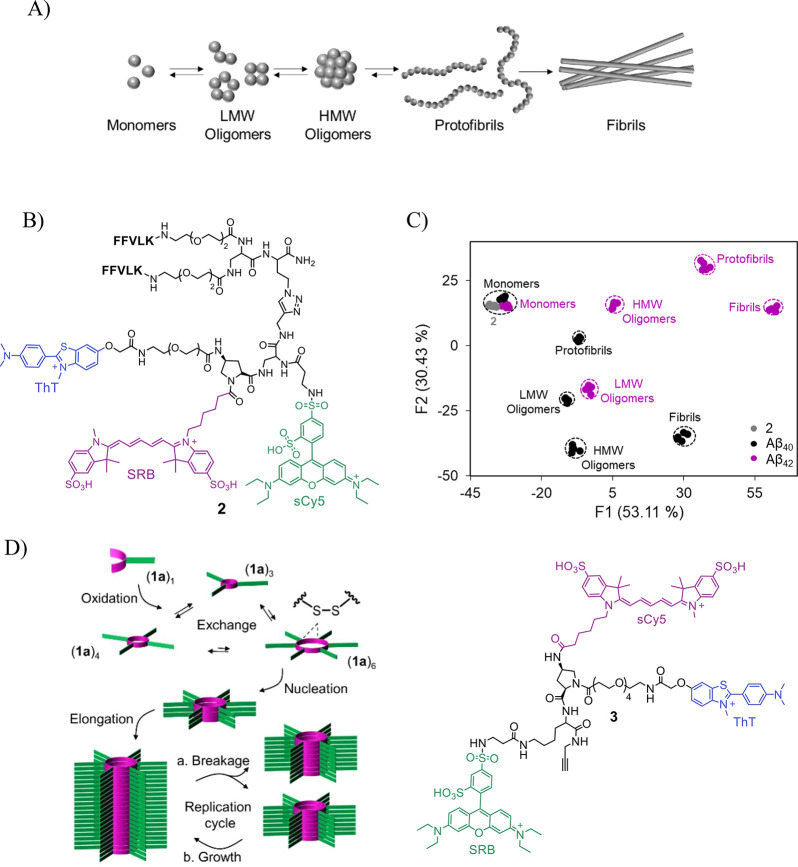
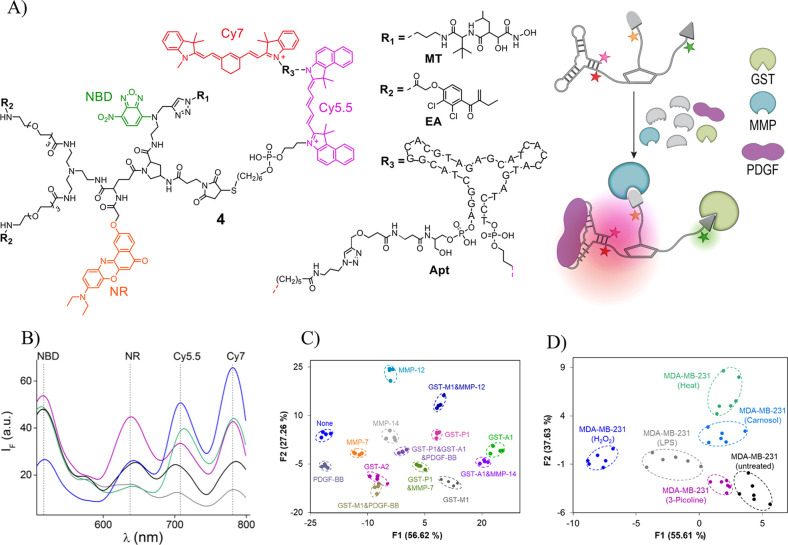
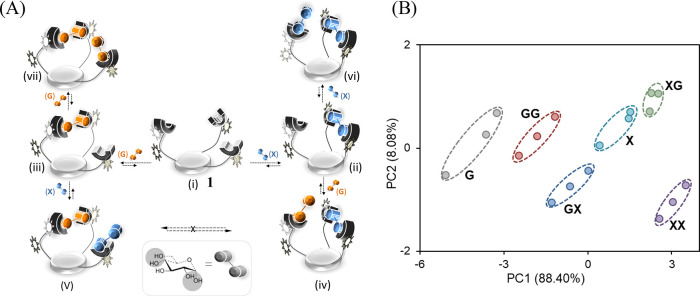
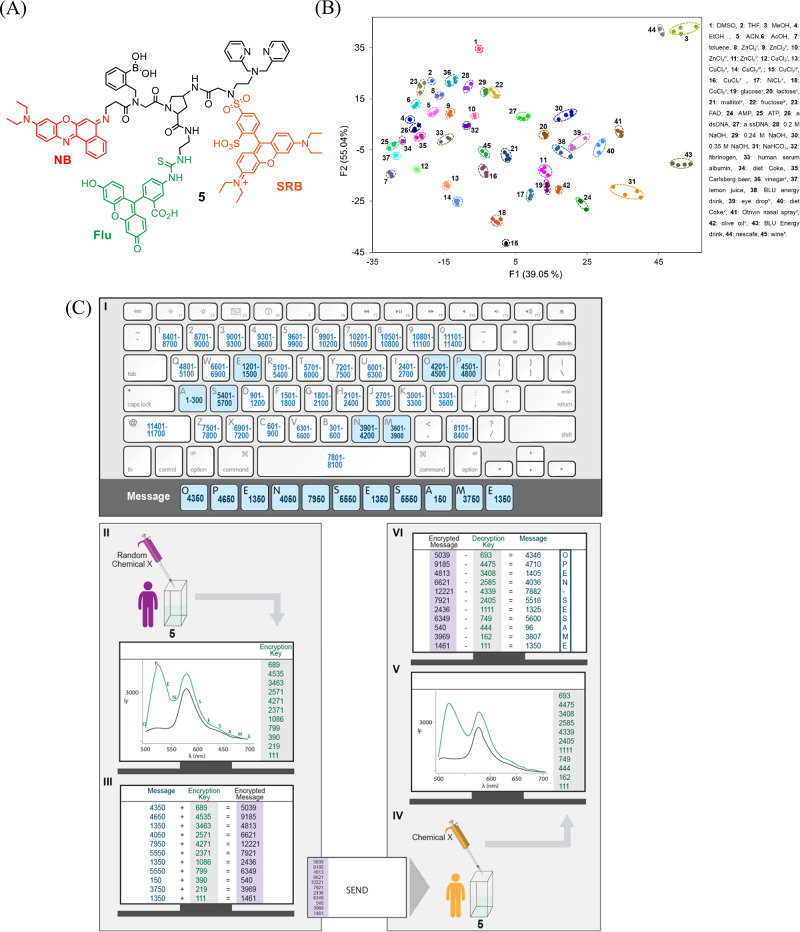
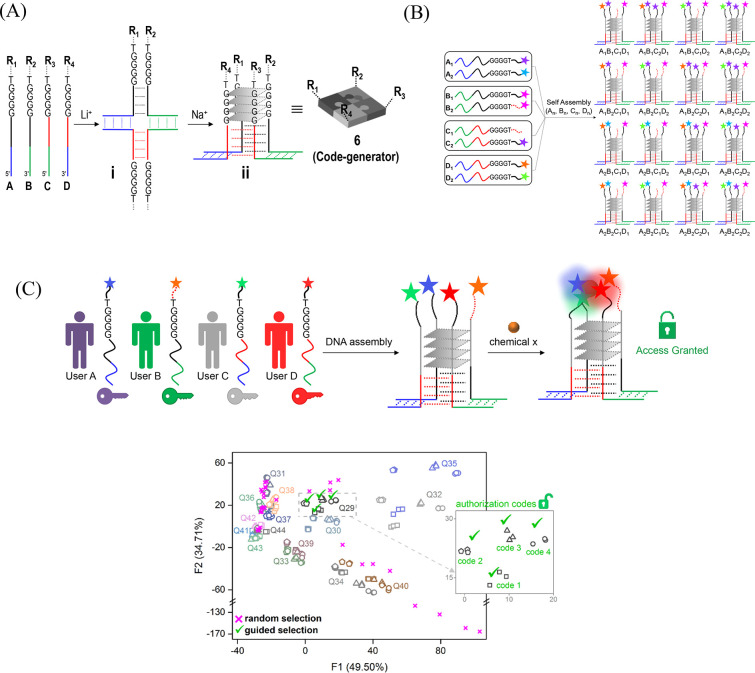
Fluorescent molecular sensors, often referred to as "turn-on" or "turn-off" fluorescent probes, are synthetic agents that change their fluorescence signal in response to analyte binding. Although these sensors have become powerful analytical tools in a wide range of research fields, they are generally limited to detecting only one or a few analytes. Pattern-generating fluorescent probes, which can generate unique identification (ID) fingerprints for different analytes, have recently emerged as a new class of luminescent sensors that can address this limitation. A unique characteristic of these probes, termed ID-probes, is that they integrate the qualities of conventional small-molecule-based fluorescent sensors and cross-reactive sensor arrays (often referred to as chemical, optical, or electronic noses/tongues). On the one hand, ID-probes can discriminate between various analytes and their combinations, akin to array-based analytical devices. On the other hand, their minute size enables them to analyze small-volume samples, track dynamic changes in a single solution, and operate in the microscopic world, which the macroscopic arrays cannot access.Here, we describe the principles underlying the ID-probe technology, as well as provide an overview of different ID-probes that have been developed to date and the ways they can be applied to a wide range of research fields. We describe, for example, ID-probes that can identify combinations of protein biomarkers in biofluids and in living cells, screen for several protein inhibitors simultaneously, analyze the content of Aβ aggregates, as well as ensure the quality of small-molecule and biological drugs. These examples highlight the relevance of this technology to medical diagnosis, bioassay development, cell and chemical biology, and pharmaceutical quality assurance, among others. ID-probes that can authorize users and protect secret data are also presented and the mechanisms that enable them to hide (steganography), encrypt (cryptography), and prevent access to (password protection) information are discussed.The versatility of this technology is further demonstrated by describing two types of probes: unimolecular ID-probes and self-assembled ID-probes. Probes from the first type can operate inside living cells, be recycled, and their initial patterns can be more easily obtained in a reproducible manner. The second type of probes can be readily modified and optimized, allowing one to prepare various different probes from a much wider range of fluorescent reporters and supramolecular recognition elements. Taken together, these developments indicate that the ID-probe sensing methodology is generally applicable, and that such probes can better characterize analyte mixtures or process chemically encoded information than can the conventional fluorescent molecular sensors. We therefore hope that this review will inspire the development of new types of pattern-generating probes, which would extend the fluorescence molecular toolbox currently used in the analytical sciences.
荧光分子传感器,通常被称为“开启”或“关闭”荧光探针,是一种合成试剂,可根据分析物结合而改变其荧光信号。尽管这些传感器已成为广泛研究领域中强大的分析工具,但它们通常仅限于检测一种或几种分析物。最近出现了一类新的发光传感器,即生成图案的荧光探针,它可以为不同的分析物生成独特的识别(ID)指纹,从而解决了这一局限性。这些探针的一个独特特征,称为 ID 探针,是它们集成了传统小分子荧光传感器和交叉反应传感器阵列(通常称为化学、光学或电子鼻/舌)的特性。一方面,ID 探针可以区分各种分析物及其组合,类似于基于阵列的分析设备。另一方面,它们的微小尺寸使其能够分析小体积样本、跟踪单个溶液中的动态变化以及在宏观阵列无法进入的微观世界中运行。在这里,我们描述了 ID 探针技术的原理,并概述了迄今为止开发的不同 ID 探针及其在广泛的研究领域中的应用方式。例如,我们描述了可以识别生物流体和活细胞中蛋白质生物标志物组合的 ID 探针、可以同时筛选几种蛋白质抑制剂的 ID 探针、分析 Aβ 聚集体含量的 ID 探针,以及确保小分子和生物药物质量的 ID 探针。这些例子突出了该技术在医学诊断、生物测定开发、细胞和化学生物学以及药物质量保证等领域的相关性。此外,还介绍了可以授权用户和保护秘密数据的 ID 探针,以及它们隐藏(隐写术)、加密(密码术)和防止访问(密码保护)信息的机制。通过描述两种类型的探针进一步展示了该技术的多功能性:单分子 ID 探针和自组装 ID 探针。第一类探针可以在活细胞内工作、可回收,并且可以以可重复的方式更轻松地获得其初始模式。第二类探针可以很容易地进行修改和优化,允许从更广泛的荧光报告器和超分子识别元件中制备各种不同的探针。总之,这些发展表明 ID 探针传感方法具有普遍适用性,并且与传统的荧光分子传感器相比,此类探针可以更好地表征分析物混合物或处理化学编码信息。因此,我们希望本综述能够激发新型图案生成探针的开发,从而扩展当前用于分析科学的荧光分子工具包。