Valente Maria Teresa, Orzali Laura, Manetti Giuliano, Magnanimi Francesco, Matere Antonio, Bergamaschi Valentino, Grottoli Alessandro, Bechini Sara, Riccioni Luca, Aragona Maria
Council for Agricultural Research and Economics (CREA), Research Centre for Plant Protection and Certification (CREA-DC), Rome, Italy.
Department of Environmental Biology, Sapienza University of Rome, Rome, Italy.
Front Plant Sci. 2023 Jun 5;14:1130793. doi: 10.3389/fpls.2023.1130793. eCollection 2023.
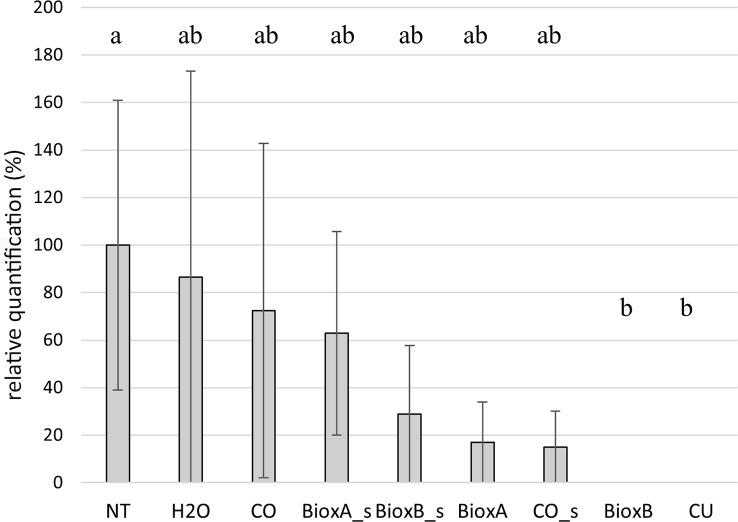
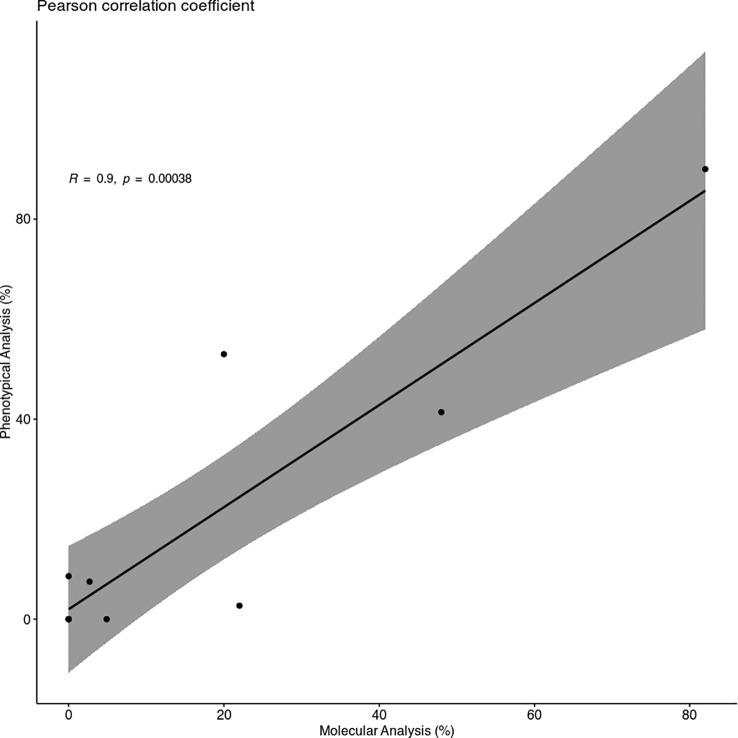
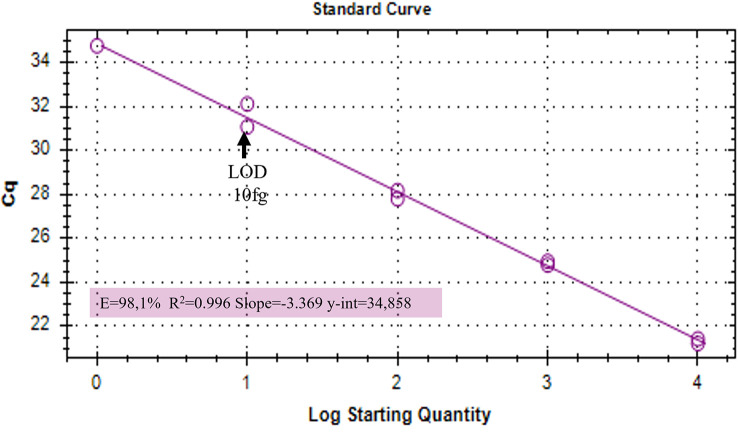
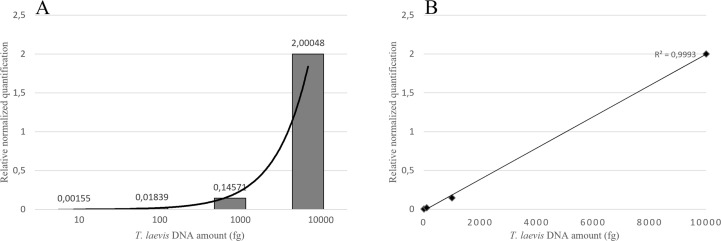
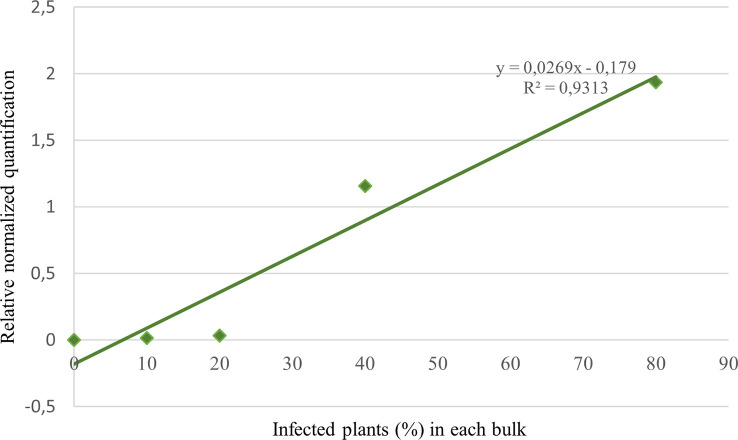
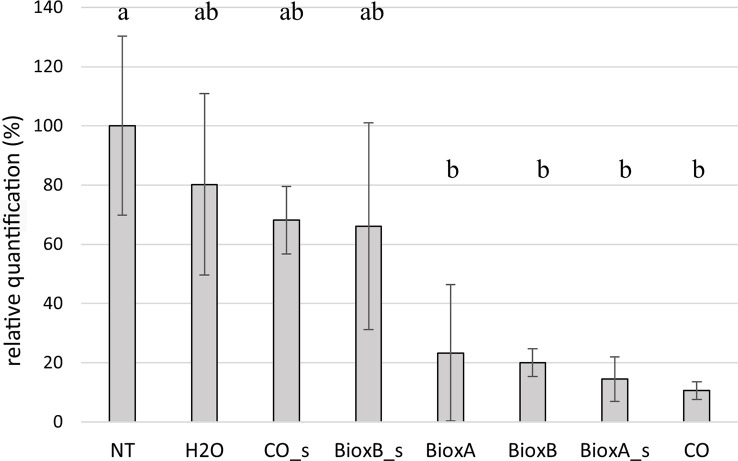
Common bunt of durum wheat (DW), Triticum turgidum L. ssp. durum (Desf.) Husn., is caused by the two closely related fungal species belonging to Tilletia genus (Tilletiales, Exobasidiomycetes, Ustilaginomycotina): Tilletia laevis Kühn (syn. T. foetida (Wallr.) Liro.) and T. caries (DC) Tul. (syn. T. tritici (Bjerk.) G. Winter). This is one of the most devastating diseases in wheat growing areas worldwide, causing considerable yield loss and reduction of wheat grains and flour quality. For these reasons, a fast, specific, sensitive, and cost-effective method for an early diagnosis of common bunt in wheat seedlings is urgent. Several molecular and serological methods were developed for diagnosis of common bunt in wheat seedlings but at late phenological stages (inflorescence) or based on conventional PCR amplification, with low sensitivity. In this study, a TaqMan Real Time PCR-based assay was developed for rapid diagnosis and quantification of T. laevis in young wheat seedlings, before tillering stage. This method, along with phenotypic analysis, was used to study conditions favoring pathogen infection and to evaluate the effectiveness of clove oil-based seed dressing in controlling the disease. The overall results showed that: i) the Real Time PCR assay was able to quantify T. laevis in young wheat seedlings after seed dressing by clove oil in different formulations, greatly reducing times of analysis. It showed high sensitivity, detecting up to 10 fg of pathogen DNA, specificity and robustness, allowing to directly analyze crude plant extracts and representing a useful tool to speed up the tests of genetic breeding for disease resistance; ii) temperature was a critical point for disease development when using wheat seeds contaminated by T. laevis spores; iii) at least one of the clove oil-based formulations tested was able to efficiently control wheat common bunt, suggesting that clove oil dressing could represent a promising tool for managing the disease, especially in sustainable farming.
硬粒小麦(DW)腥黑穗病,由小麦属(小麦目,外担子菌纲,黑粉菌亚门)的两种密切相关的真菌引起:光腥黑粉菌(Tilletia laevis Kühn,同义词T. foetida (Wallr.) Liro.)和网腥黑粉菌(T. caries (DC) Tul.,同义词T. tritici (Bjerk.) G. Winter)。这是全球小麦种植区最具毁灭性的病害之一,会导致产量大幅损失,小麦籽粒和面粉质量下降。因此,迫切需要一种快速、特异、灵敏且经济高效的方法来早期诊断小麦幼苗的腥黑穗病。已开发了多种分子和血清学方法用于诊断小麦幼苗的腥黑穗病,但这些方法是在物候期较晚阶段(花序期)或基于常规PCR扩增,灵敏度较低。在本研究中,开发了一种基于TaqMan实时荧光定量PCR的检测方法,用于在小麦幼苗分蘖期之前快速诊断和定量光腥黑粉菌。该方法与表型分析一起,用于研究有利于病原菌感染的条件,并评估基于丁香油的拌种剂对病害的防治效果。总体结果表明:i)实时荧光定量PCR检测方法能够对用不同配方丁香油拌种后的小麦幼苗中的光腥黑粉菌进行定量,大大缩短了分析时间。它具有高灵敏度,可检测低至10 fg的病原菌DNA,特异性和稳健性良好,能够直接分析粗植物提取物,是加速抗病遗传育种测试的有用工具;ii)当使用被光腥黑粉菌孢子污染的小麦种子时,温度是病害发生的关键点;iii)所测试的至少一种基于丁香油的配方能够有效防治小麦腥黑穗病,这表明丁香油拌种可能是一种有前景的病害管理工具,特别是在可持续农业中。