He Shengnan, Chen Huchen, Wei Yi, An Tai, Liu Shouan
Laboratory of Molecular Plant Pathology, College of Plant Science, Jilin University, Changchun, Jilin People's Republic of China.
Plant Methods. 2020 Feb 17;16:17. doi: 10.1186/s13007-020-00564-x. eCollection 2020.
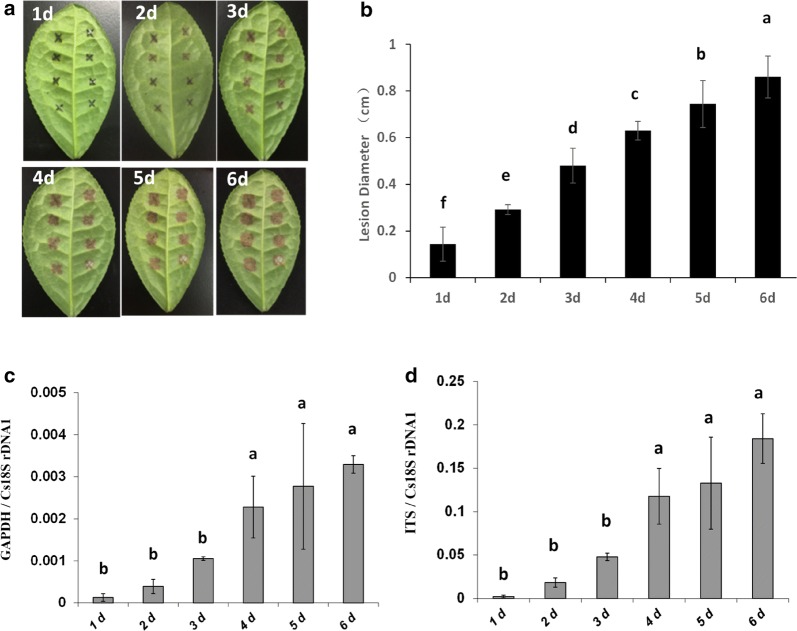
Tea, which is produced from new shoots of existing tea plants (), is one of the most popular, non-alcoholic, healthy beverages worldwide. is one of the dominant fungal pathogens of tea. The interaction of with tea could be a useful pathosystem to elucidate various aspects of woody, medicinal plant-fungal interactions. Currently, many studies characterizing resistance or virulence and aggressiveness use lesion size at the infection sites on the leaves to quantify the growth of the pathogen. However, this method does not offer the sensitivity needed for the robust quantification of small changes in aggressiveness or the accurate quantification of pathogen growth at the early stages of infection.
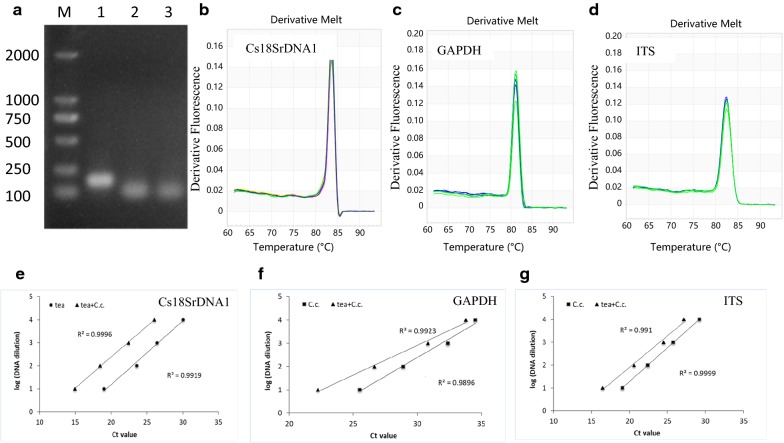
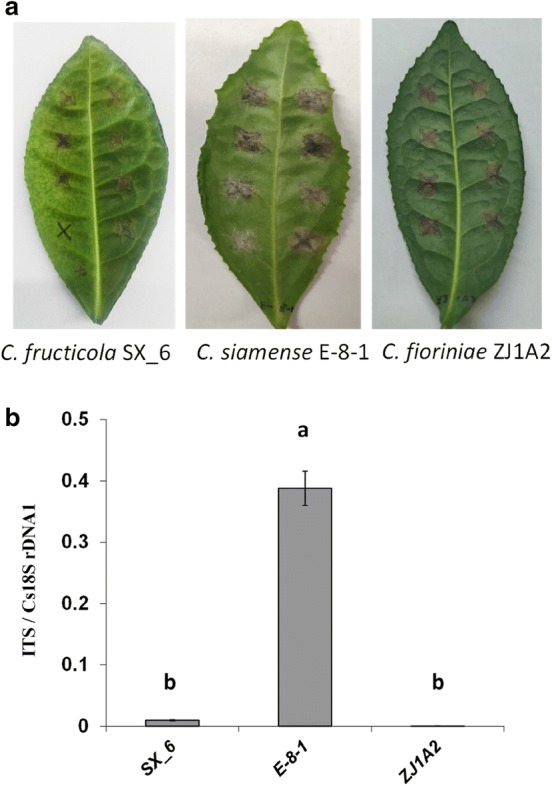
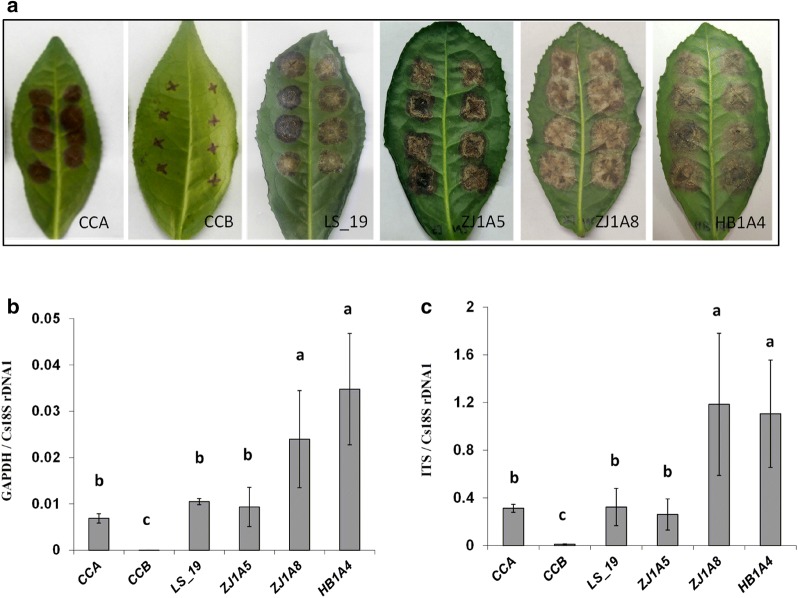
A quantitative real-time polymerase chain reaction (qRT-PCR) assay was developed for the quantification of growth on tea plant. This method was based on the comparison of fungal DNA in relation to plant biomass. This assay was used to investigate the phenotypes of tea plant cultivars in response to infection. Two cultivars, Zhongcha 108 (ZC108) and Longjing 43 (LJ43), were tested with this method. ZC108 was previously reported as an anthracnose-resistant cultivar against , while LJ43 was susceptible. The traditional lesion measurement method showed that both cultivars were susceptible to a virulent strain of , while the qRT-PCR approach indicated that very little fungal growth occurred in the anthracnose-resistant cultivar ZC108. The observed results in this study were consistent with previously published research. In addition, the DNA-based real-time PCR method was applied for analysis of pathogenic differences in general isolates and among several spp that infect tea.
This study showed that the DNA-based qRT-PCR technique is rapid, highly sensitive and easily applicable for routine experiments and could be used in screening for resistant tea plant cultivars or to identify differences in pathogen aggressiveness within and among species.
茶叶由现有茶树的新芽制成,是全球最受欢迎的非酒精健康饮品之一。炭疽菌是茶树的主要真菌病原体之一。炭疽菌与茶树的相互作用可能是一个有用的病理系统,可用于阐明木本药用植物与真菌相互作用的各个方面。目前,许多表征抗性或毒力及侵袭性的研究使用叶片感染部位的病斑大小来量化病原体的生长。然而,这种方法对于稳健量化侵袭性的微小变化或在感染早期准确量化病原体生长所需的灵敏度不足。
开发了一种定量实时聚合酶链反应(qRT-PCR)测定法,用于量化炭疽菌在茶树上的生长。该方法基于真菌DNA与植物生物量的比较。此测定法用于研究茶树品种对炭疽菌感染的表型。用该方法测试了两个品种,即中茶108(ZC108)和龙井43(LJ43)。ZC108先前被报道为对炭疽菌具有抗炭疽病的品种,而LJ43易感。传统的病斑测量方法表明,两个品种对炭疽菌的强毒株均易感,而qRT-PCR方法表明,抗炭疽病品种ZC108中真菌生长极少。本研究观察到的结果与先前发表的研究一致。此外,基于DNA的实时PCR方法用于分析一般炭疽菌分离株以及感染茶树的几种炭疽菌物种之间的致病性差异。
本研究表明,基于DNA的qRT-PCR技术快速、高度灵敏且易于应用于常规实验,可用于筛选抗性茶树品种或识别炭疽菌物种内和物种间病原体侵袭性的差异。