Zhang Hailong, Zhou Jingwen, Kou Xiaoyue, Liu Yuqi, Zhao Xiaonan, Qin Guochen, Wang Mingyu, Qian Guangtao, Li Wen, Huang Yongshun, Wang Xiaoting, Zhao Zhenjie, Li Shuang, Wu Xiaoqian, Jiang Lixi, Feng Xianzhong, Zhu Jian-Kang, Li Lixin
Key Laboratory of Saline-Alkali Vegetation Ecology Restoration, Ministry of Education, College of Life Sciences, Northeast Forestry University, Harbin, China.
Institute of Crop Science, College of Agriculture and Biotechnology, Zhejiang University, Hangzhou, China.
Front Plant Sci. 2023 Jun 5;14:1198353. doi: 10.3389/fpls.2023.1198353. eCollection 2023.
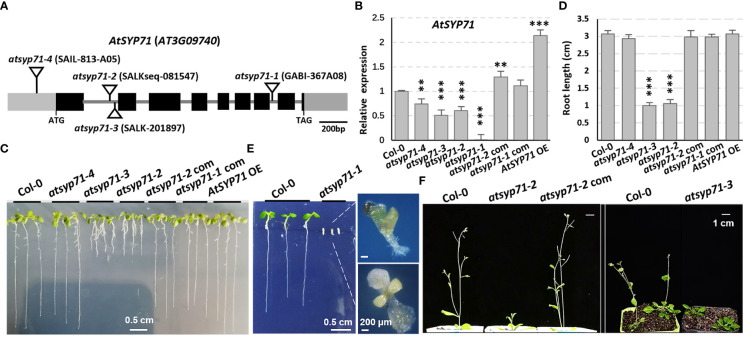
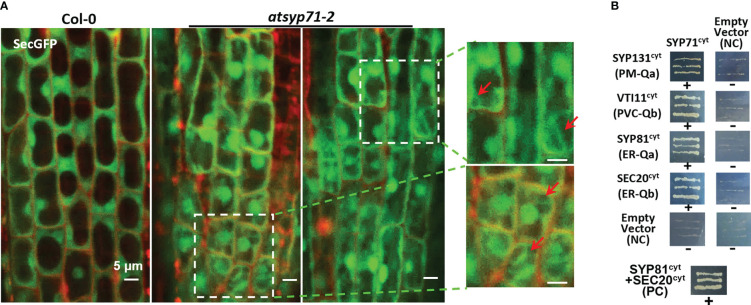
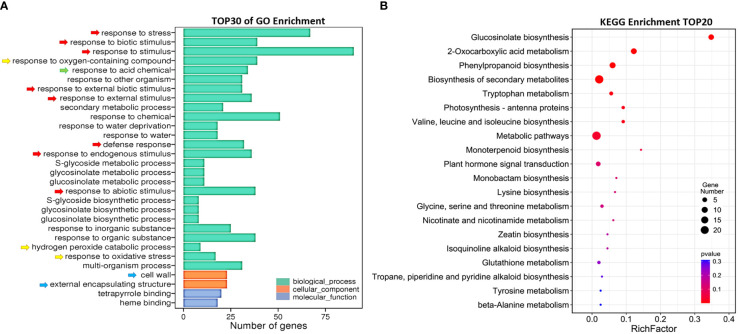
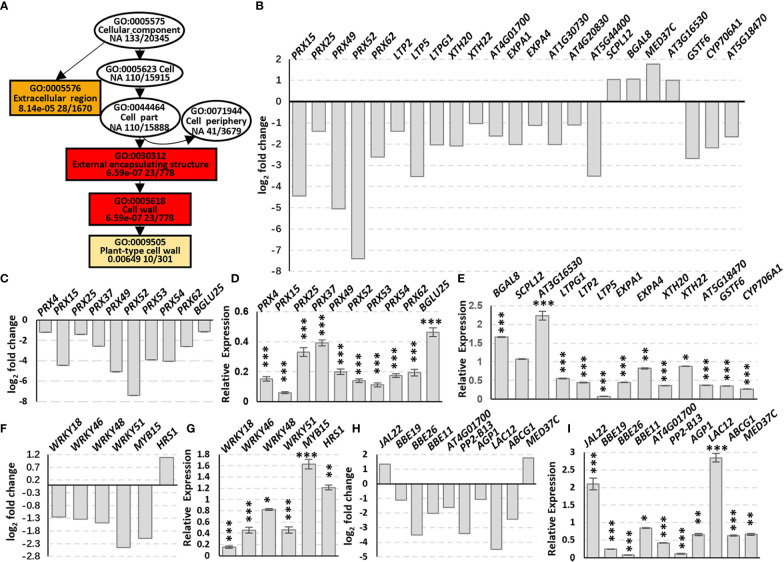
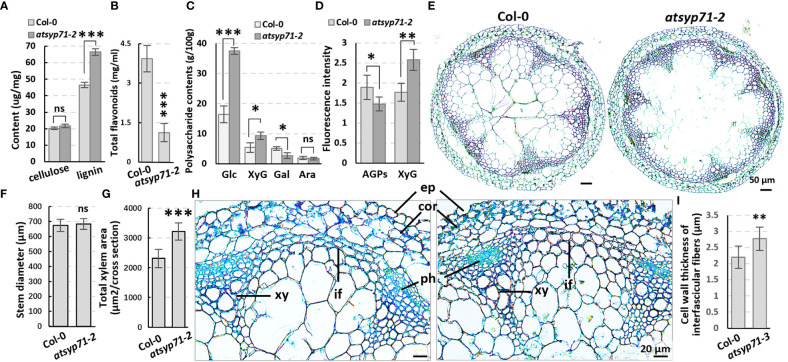
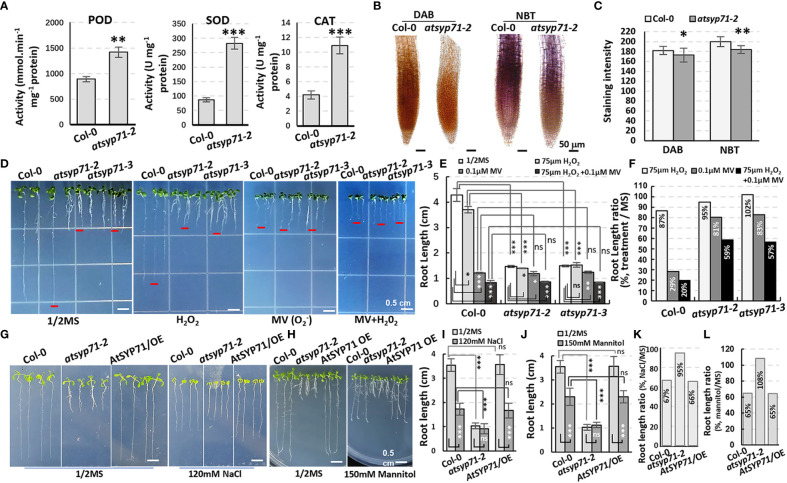
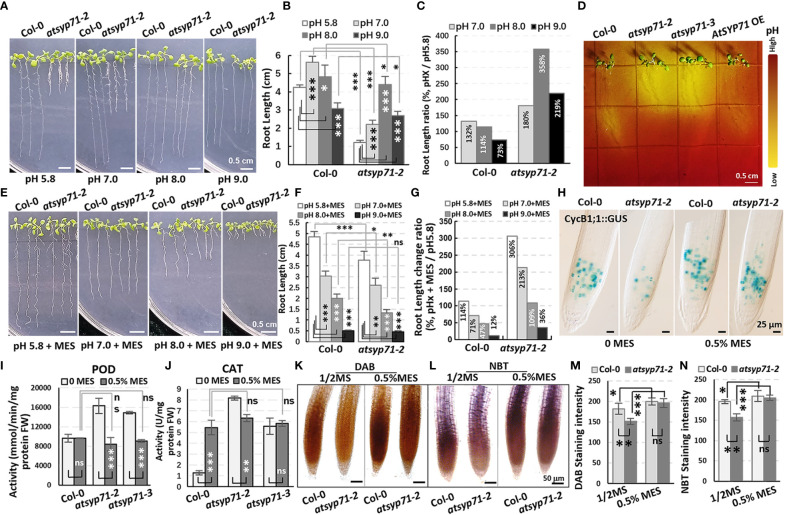
SYP71, a plant-specific Qc-SNARE with multiple subcellular localization, is essential for symbiotic nitrogen fixation in nodules in , and is implicated in plant resistance to pathogenesis in rice, wheat and soybean. SYP71 is proposed to participate in multiple membrane fusion steps during secretion. To date, the molecular mechanism underlying SYP71 regulation on plant development remains elusive. In this study, we clarified that AtSYP71 is essential for plant development and stress response, using techniques of cell biology, molecular biology, biochemistry, genetics, and transcriptomics. -knockout mutant was lethal at early development stage due to the failure of root elongation and albinism of the leaves. -knockdown mutants, and , had short roots, delayed early development, and altered stress response. The cell wall structure and components changed significantly in due to disrupted cell wall biosynthesis and dynamics. Reactive oxygen species homeostasis and pH homeostasis were also collapsed in . All these defects were likely resulted from blocked secretion pathway in the mutants. Strikingly, change of pH value significantly affected ROS homeostasis in , suggesting interconnection between ROS and pH homeostasis. Furthermore, we identified AtSYP71 partners and propose that AtSYP71 forms distinct SNARE complexes to mediate multiple membrane fusion steps in secretory pathway. Our findings suggest that AtSYP71 plays an essential role in plant development and stress response regulating pH homeostasis through secretory pathway.
SYP71是一种具有多种亚细胞定位的植物特异性Qc-SNARE蛋白,对豆科植物根瘤中的共生固氮至关重要,并且与水稻、小麦和大豆对病原体的抗性有关。有人提出SYP71参与分泌过程中的多个膜融合步骤。迄今为止,SYP71调控植物发育的分子机制仍不清楚。在本研究中,我们运用细胞生物学、分子生物学、生物化学、遗传学和转录组学技术,阐明了拟南芥SYP71对植物发育和胁迫反应至关重要。AtSYP71基因敲除突变体在早期发育阶段致死,原因是根伸长失败和叶片白化。AtSYP71基因敲低突变体syp71-1和syp71-2根系短,早期发育延迟,胁迫反应改变。由于细胞壁生物合成和动态变化受到破坏,syp71-1突变体的细胞壁结构和成分发生了显著变化。活性氧稳态和pH稳态在syp71-1中也被破坏。所有这些缺陷可能是由于突变体中分泌途径受阻所致。引人注目的是,pH值的变化显著影响了syp71-1中的活性氧稳态,表明活性氧和pH稳态之间存在相互联系。此外,我们鉴定了AtSYP71的相互作用蛋白,并提出AtSYP71形成不同的SNARE复合体来介导分泌途径中的多个膜融合步骤。我们的研究结果表明,AtSYP71通过分泌途径调节pH稳态,在植物发育和胁迫反应中起重要作用。