Wang Zhi, Feng Cheng, Liu Hao, Meng Tian, Huang Wei-Qing, Song Ke-Xin, Wang You-Bin
Department of Plastic and Cosmetic Surgery, Peking Union Medical College Hospital, Beijing 100730, China.
World J Stem Cells. 2023 May 26;15(5):476-489. doi: 10.4252/wjsc.v15.i5.476.
Wound healing impairment is a dysfunction induced by hyperglycemia and its effect on endothelial precursor cells (EPCs) in type 2 diabetes mellitus. There is increasing evidence showing that exosomes (Exos) derived from adipose-derived mesenchymal stem cells (ADSCs) exhibit the potential to improve endothelial cell function along with wound healing. However, the potential therapeutic mechanism by which ADSC Exos contribute to wound healing in diabetic mice remains unclear.
To reveal the potential therapeutic mechanism of ADSC Exos in wound healing in diabetic mice.
Exos from ADSCs and fibroblasts were used for high-throughput RNA sequencing (RNA-Seq). ADSC-Exo-mediated healing of full-thickness skin wounds in a diabetic mouse model was investigated. We employed EPCs to investigate the therapeutic function of Exos in cell damage and dysfunction caused by high glucose (HG). We utilized a luciferase reporter (LR) assay to analyze interactions among circular RNA astrotactin 1 (circ-Astn1), sirtuin (SIRT) and miR-138-5p. A diabetic mouse model was used to verify the therapeutic effect of circ-Astn1 on Exo-mediated wound healing.
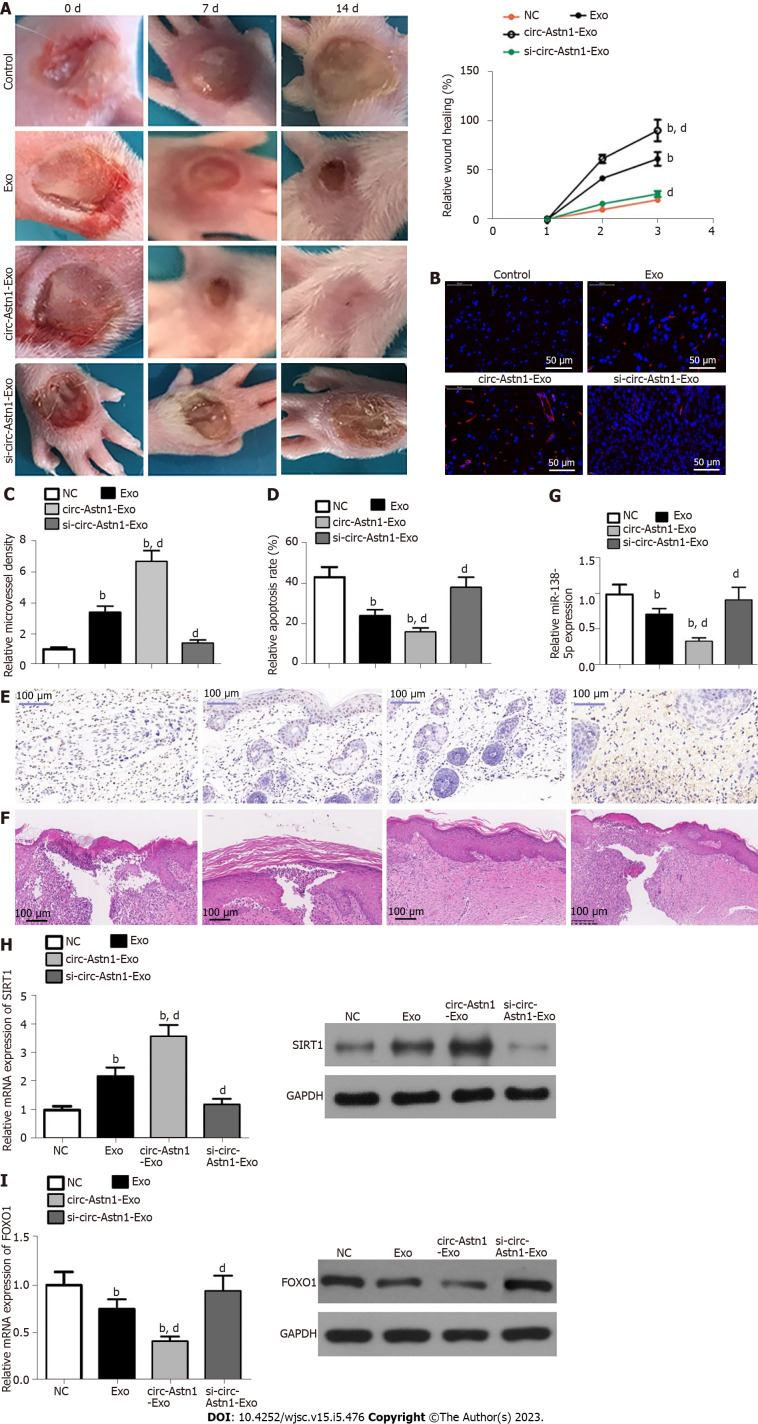
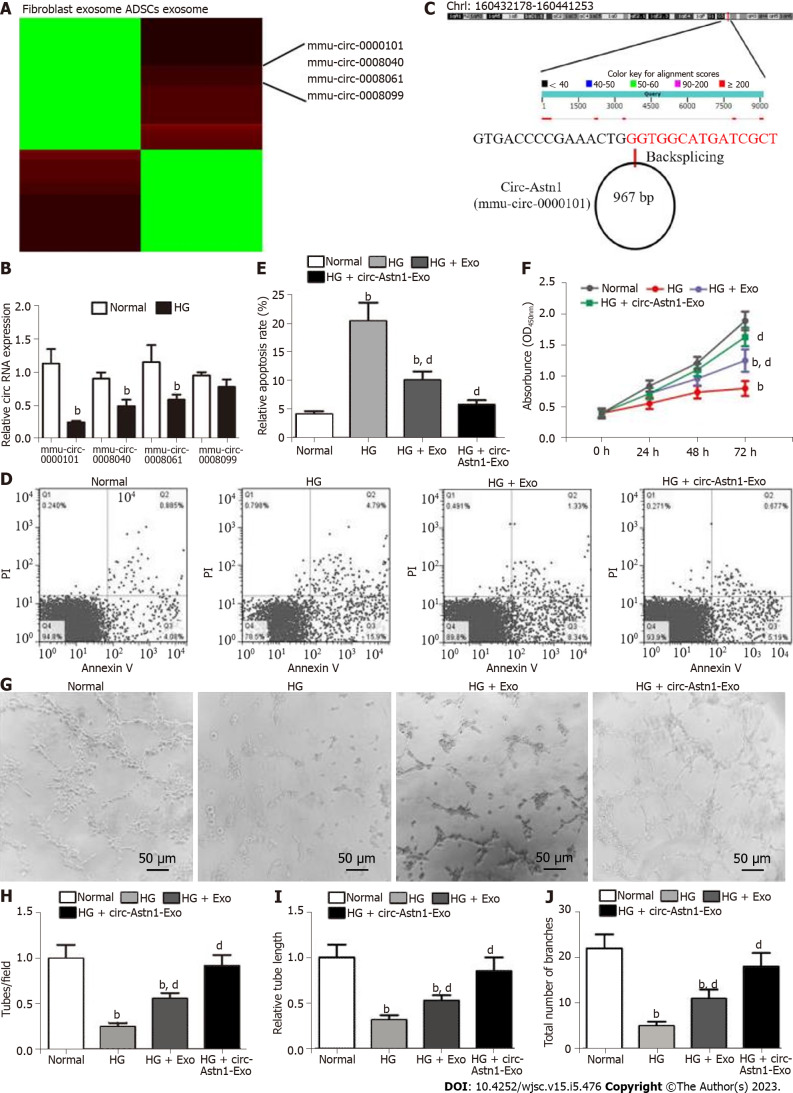
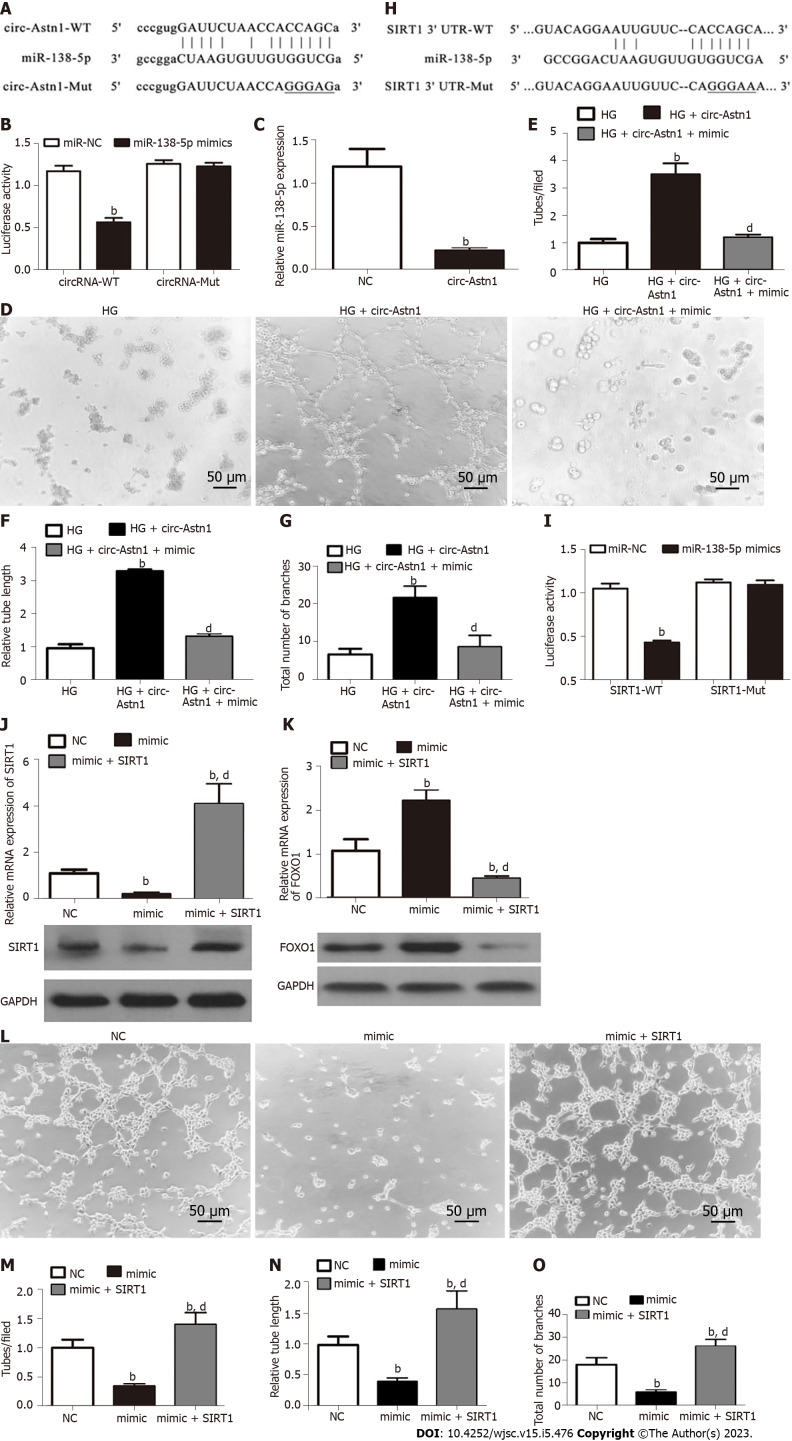
High-throughput RNA-Seq analysis showed that circ-Astn1 expression was increased in ADSC Exos compared with Exos from fibroblasts. Exos containing high concentrations of circ-Astn1 had enhanced therapeutic effects in restoring EPC function under HG conditions by promoting SIRT1 expression. Circ-Astn1 expression enhanced SIRT1 expression through miR-138-5p adsorption, which was validated by the LR assay along with bioinformatics analyses. Exos containing high concentrations of circ-Astn1 had better therapeutic effects on wound healing compared to wild-type ADSC Exos. Immunofluorescence and immunohistochemical investigations suggested that circ-Astn1 enhanced angiopoiesis through Exo treatment of wounded skin as well as by suppressing apoptosis through promotion of SIRT1 and decreased forkhead box O1 expression.
Circ-Astn1 promotes the therapeutic effect of ADSC-Exos and thus improves wound healing in diabetes miR-138-5p absorption and SIRT1 upregulation. Based on our data, we advocate targeting the circ-Astn1/miR-138-5p/SIRT1 axis as a potential therapeutic option for the treatment of diabetic ulcers.
伤口愈合受损是一种由高血糖引起的功能障碍,及其对2型糖尿病患者内皮祖细胞(EPCs)的影响。越来越多的证据表明,源自脂肪间充质干细胞(ADSCs)的外泌体(Exos)具有改善内皮细胞功能以及促进伤口愈合的潜力。然而,ADSC外泌体促进糖尿病小鼠伤口愈合的潜在治疗机制仍不清楚。
揭示ADSC外泌体促进糖尿病小鼠伤口愈合的潜在治疗机制。
将ADSCs和成纤维细胞来源的外泌体用于高通量RNA测序(RNA-Seq)。研究了ADSC-Exo对糖尿病小鼠模型全层皮肤伤口愈合的作用。我们使用EPCs来研究外泌体对高糖(HG)引起的细胞损伤和功能障碍的治疗作用。我们利用荧光素酶报告基因(LR)分析来分析环状RNA astrotactin 1(circ-Astn1)、沉默调节蛋白(SIRT)和miR-138-5p之间的相互作用。使用糖尿病小鼠模型验证circ-Astn1对Exo介导的伤口愈合的治疗效果。
高通量RNA-Seq分析显示,与成纤维细胞来源的外泌体相比,ADSC外泌体中circ-Astn1的表达增加。含有高浓度circ-Astn1的外泌体通过促进SIRT1表达,在HG条件下恢复EPC功能方面具有增强的治疗效果。Circ-Astn1表达通过miR-138-5p吸附增强SIRT1表达,这通过LR分析以及生物信息学分析得到验证。与野生型ADSC外泌体相比,含有高浓度circ-Astn1的外泌体对伤口愈合具有更好的治疗效果。免疫荧光和免疫组织化学研究表明,circ-Astn1通过Exo处理伤口皮肤促进血管生成,并通过促进SIRT1和降低叉头框O1表达来抑制细胞凋亡。
Circ-Astn1促进ADSC-Exos的治疗效果,从而通过miR-138-5p吸附和SIRT1上调改善糖尿病伤口愈合。基于我们的数据,我们主张将circ-Astn1/miR-