Department of Neurology Yale University New Haven CT USA.
Center for Brain and Mind Health Yale University New Haven CT USA.
J Am Heart Assoc. 2023 Jul 4;12(13):e029374. doi: 10.1161/JAHA.123.029374. Epub 2023 Jun 22.
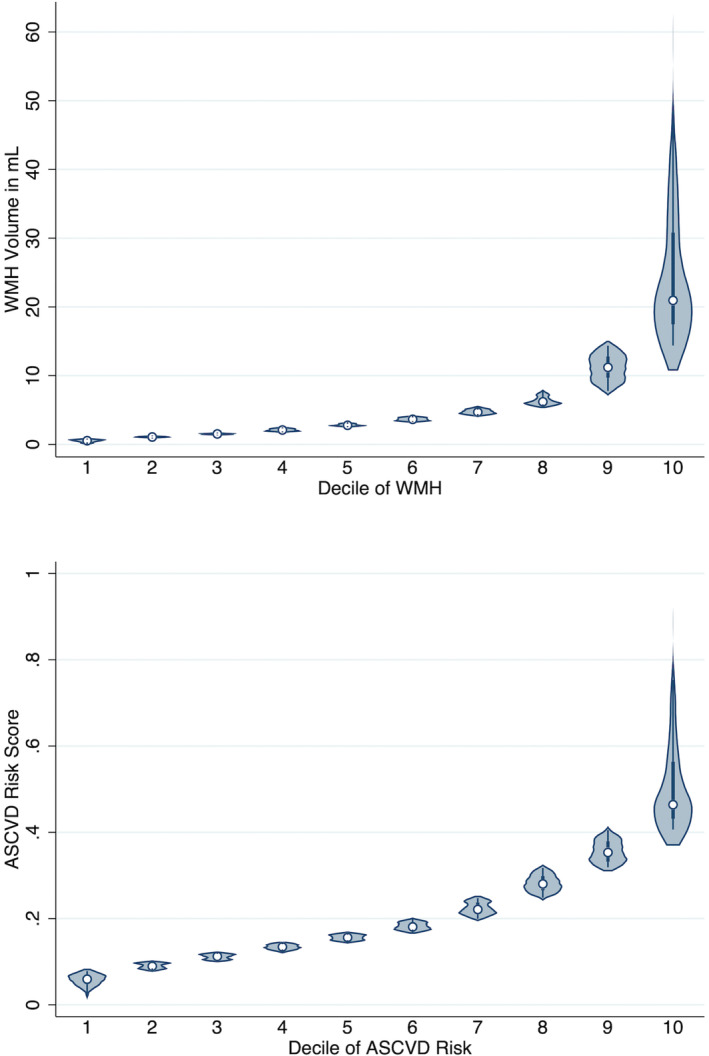
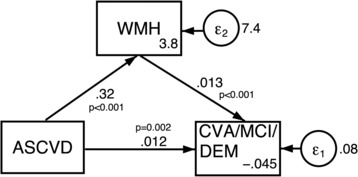
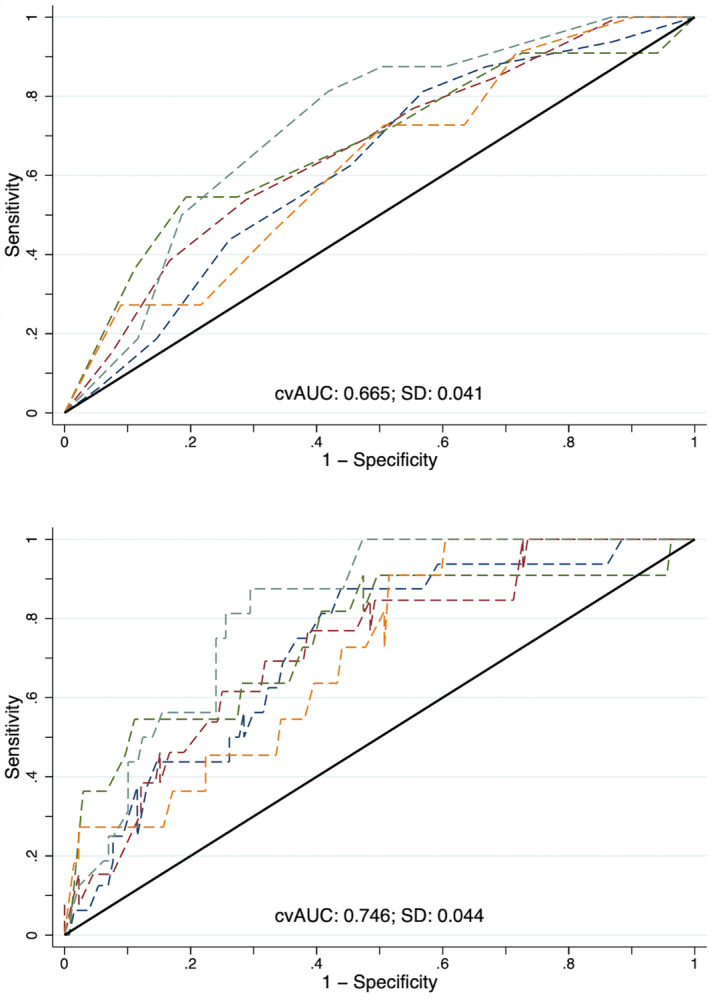
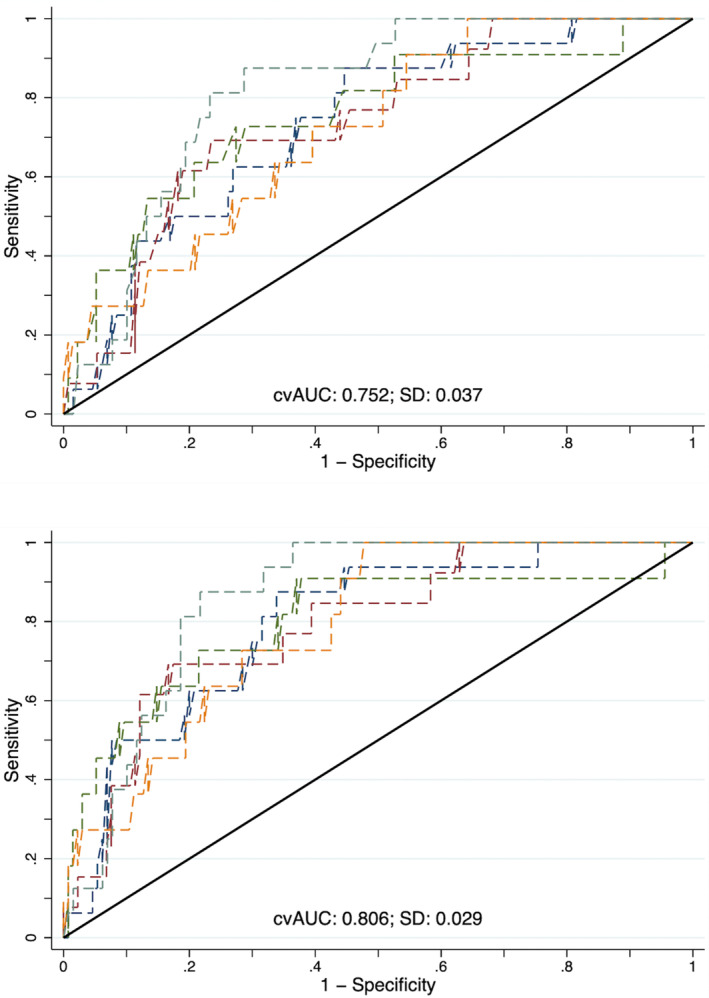
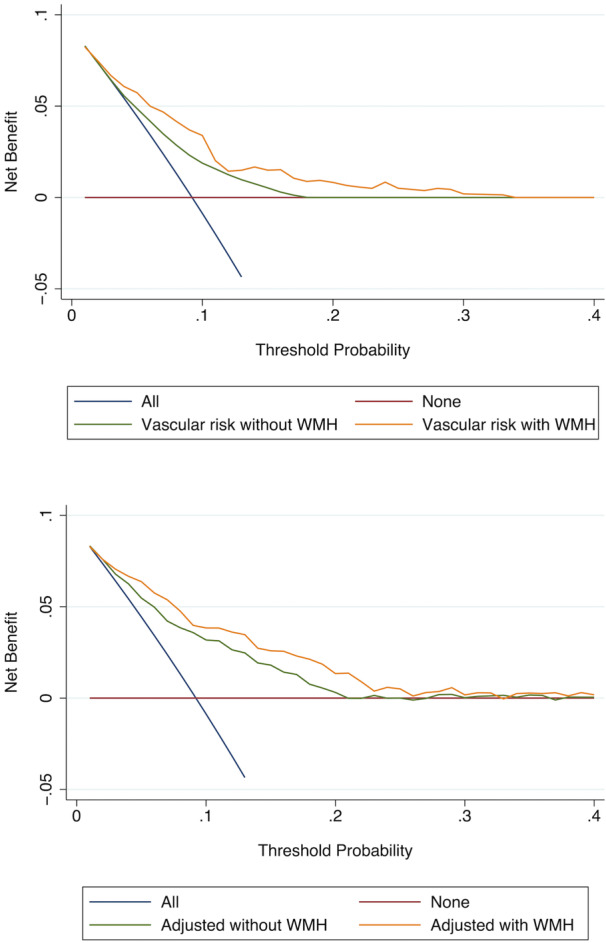
Background It remains unclear if white matter hyperintensity (WMH) on magnetic resonance imaging adds relevant cerebrovascular prognostic information beyond vascular risk factors and demographics alone. Methods and Results We performed a post hoc analysis of hypertensive individuals in SPRINT-MIND (Systolic Blood Pressure Intervention Trial-Memory and Cognition in Decreased Hypertension). The primary outcome was incident stroke or cognitive impairment (mild cognitive impairment or dementia). We fit logistic regression models with the predictors of Atherosclerotic Cardiovascular Disease Risk Score, age, sex, race, education, current cigarette smoking, and the SPRINT-MIND randomization arm. WMH was subsequently included in the model to determine if it improved area under the receiver operating curve using the DeLong test. We used a structural equation model to determine the indirect effect on the primary outcome mediated through WMH. We included 727 individuals (mean age at baseline 67.7±8.4 years, 61.1% were men, 62.6% were non-Hispanic White, and mean years of follow-up was 3.6±0.9). Of the 727 individuals, 67 (9.2%) developed incident stroke or cognitive decline. The area under the receiver operating curve of the baseline model (without WMH) was 0.75 (95% CI, 0.70-0.81), and after the addition of WMH it increased to 0.81 (95% CI, 0.76-0.86) (=0.004 for difference). The mediation analysis showed that 26.3% of the vascular risk's effect on the primary outcome is indirectly mediated through WMH. Conclusions In adult hypertensive individuals, we found that the addition of WMH to models predicting incident stroke or cognitive impairment improved the prognostic ability above vascular risk and demographics alone to a level consistent with excellent prediction. Registration Information URL: https://www.clinicaltrials.gov; Unique identifier: NCT01206062.
背景 磁共振成像上的脑白质高信号(WMH)是否除了血管危险因素和人口统计学因素之外还能提供相关的脑血管预后信息尚不清楚。
方法和结果 我们对 SPRINT-MIND(收缩压干预试验-降低高血压的记忆力和认知)中的高血压个体进行了事后分析。主要结局是卒中或认知障碍(轻度认知障碍或痴呆)的发生。我们使用逻辑回归模型,预测指标为动脉粥样硬化性心血管疾病风险评分、年龄、性别、种族、教育程度、当前吸烟状况以及 SPRINT-MIND 随机分组。随后将 WMH 纳入模型,通过 DeLong 检验确定其是否改善了接受者操作特征曲线下面积。我们使用结构方程模型来确定通过 WMH 介导对主要结局的间接影响。我们纳入了 727 名参与者(基线时的平均年龄为 67.7±8.4 岁,61.1%为男性,62.6%为非西班牙裔白人,平均随访时间为 3.6±0.9 年)。在 727 名参与者中,有 67 名(9.2%)发生了卒中或认知能力下降事件。基线模型(无 WMH)的接受者操作特征曲线下面积为 0.75(95%CI,0.70-0.81),加入 WMH 后增加至 0.81(95%CI,0.76-0.86)(差异的=0.004)。中介分析表明,血管风险对主要结局的影响有 26.3%是通过 WMH 间接介导的。
结论 在成年高血压个体中,我们发现将 WMH 加入预测卒中或认知障碍事件的模型中,提高了预测能力,超过了血管风险和人口统计学因素的单独预测能力,达到了与优秀预测相一致的水平。