Department of Cell Biology and Anatomy, School of Medicine, University of South Carolina, Columbia, SC, 29209, USA.
Department of Surgery, Division of Otolaryngology-Head and Neck Surgery, UC San Diego School of Medicine, San Diego, CA, 92093, USA.
Mol Metab. 2023 Aug;74:101756. doi: 10.1016/j.molmet.2023.101756. Epub 2023 Jun 20.
As the pandemic evolves, post-acute sequelae of CoV-2 (PASC) including cardiovascular manifestations have emerged as a new health threat. This study aims to study whether the Spike protein plus obesity can exacerbate PASC-related cardiomyopathy.
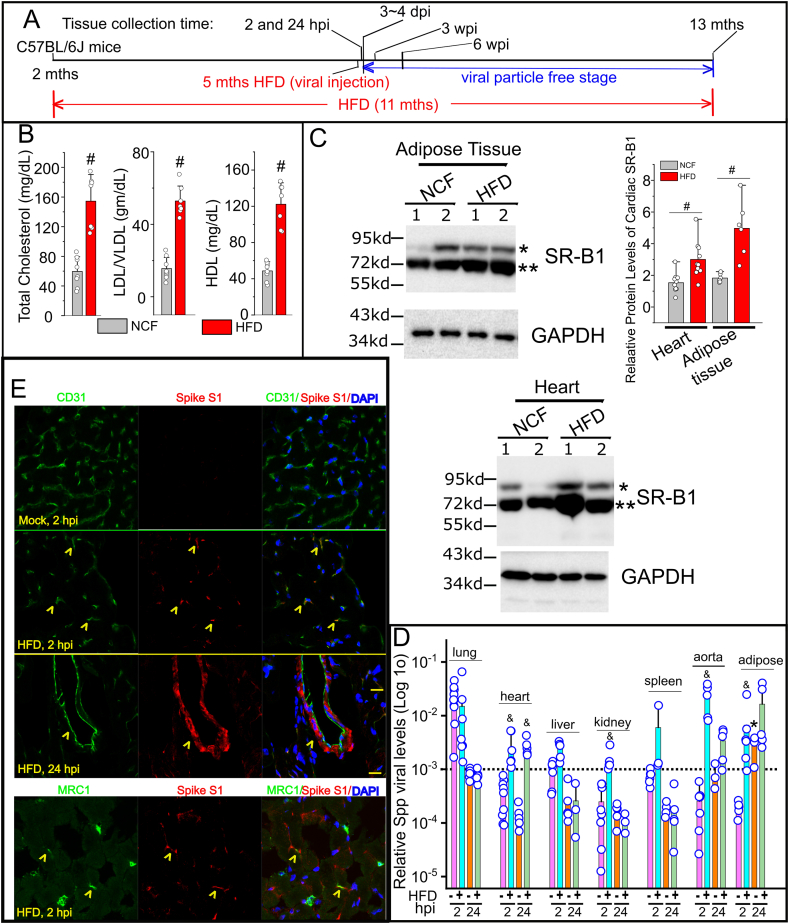
A Spike protein-pseudotyped (Spp) virus with the proper surface tropism of SARS-CoV-2 was developed for viral entry assay in vitro and administration into high fat diet (HFD)-fed mice. The systemic viral loads and cardiac transcriptomes were analyzed at 2 and 24 h, 3, 6, and 24 weeks post introducing (wpi) Spp using RNA-seq or real time RT-PCR. Echocardiography was used to monitor cardiac functions.
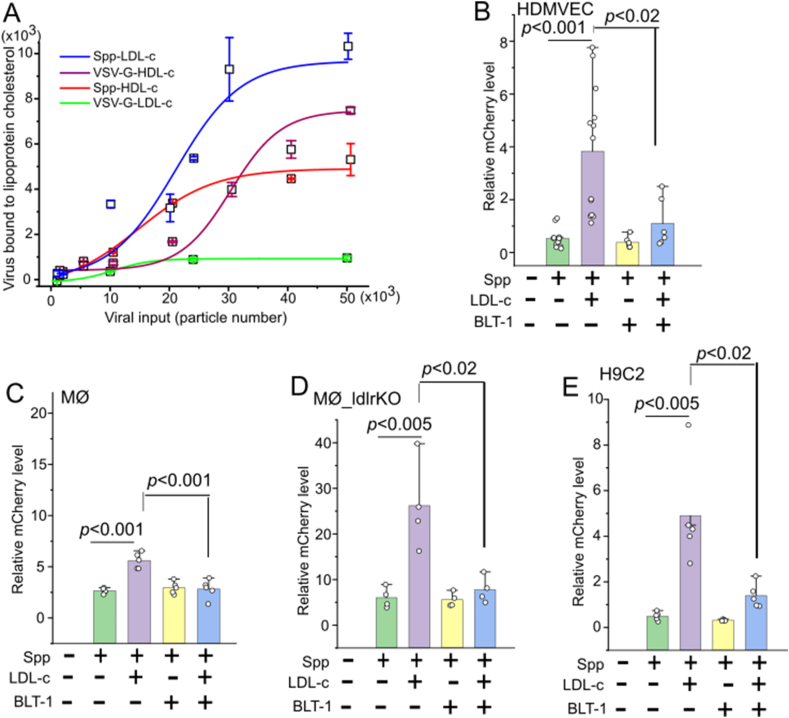
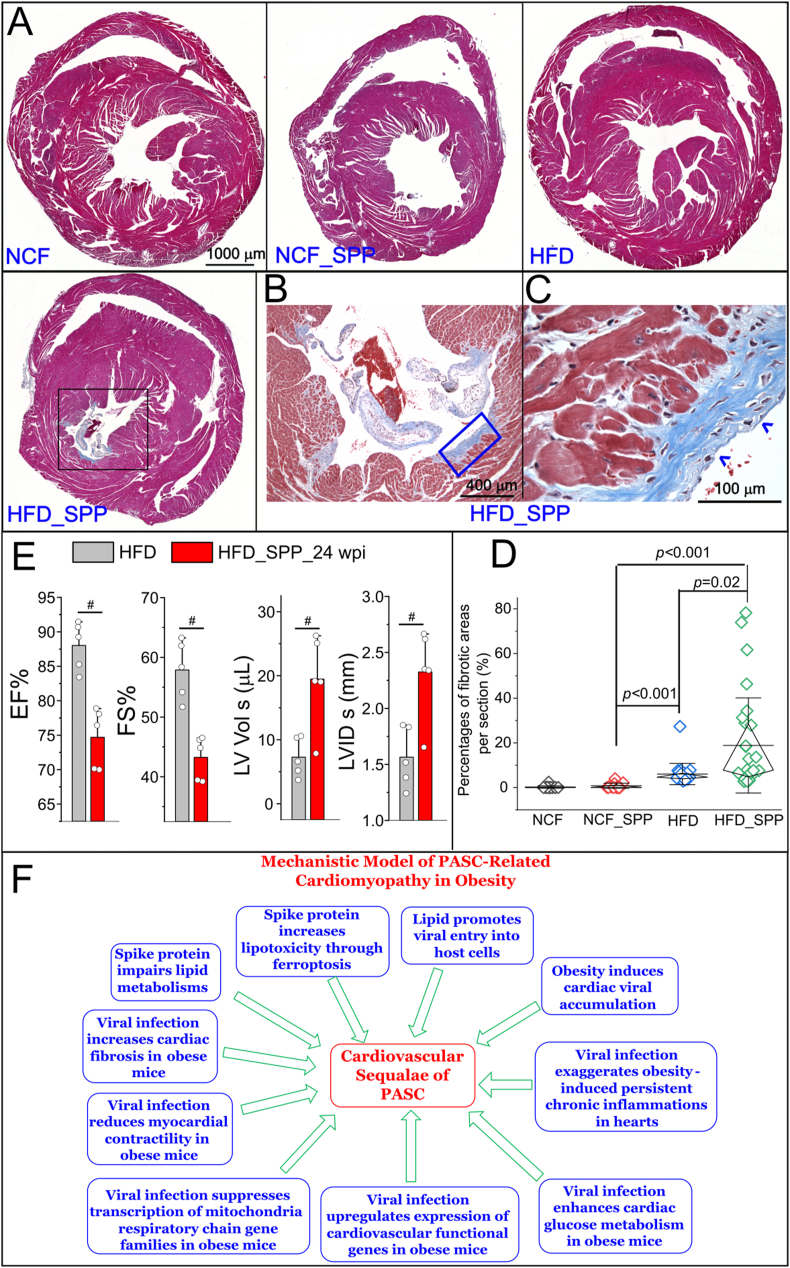
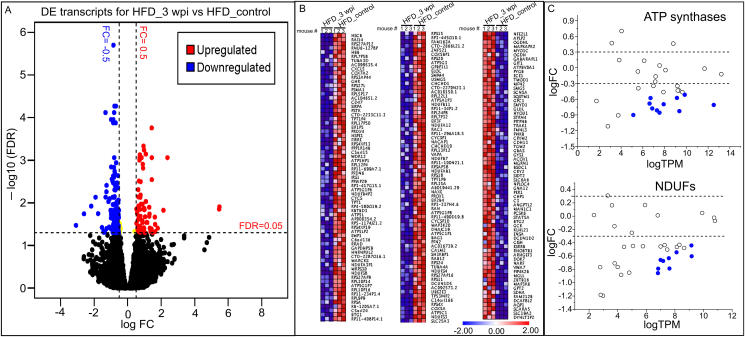
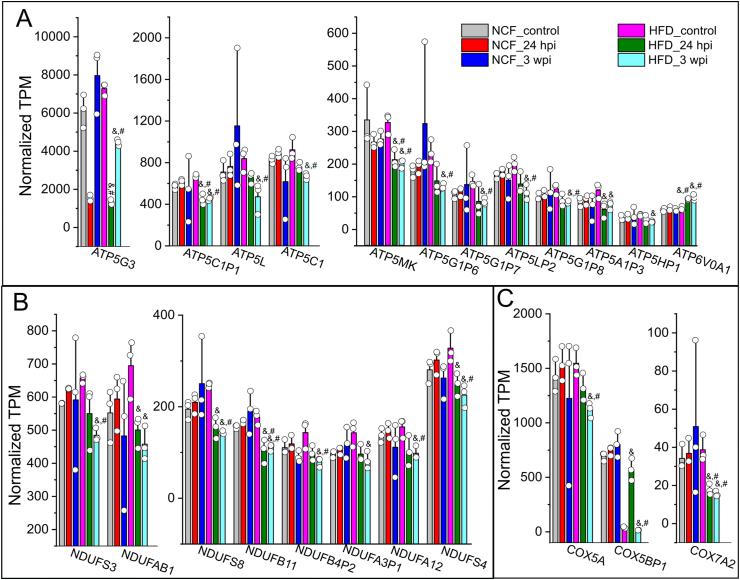
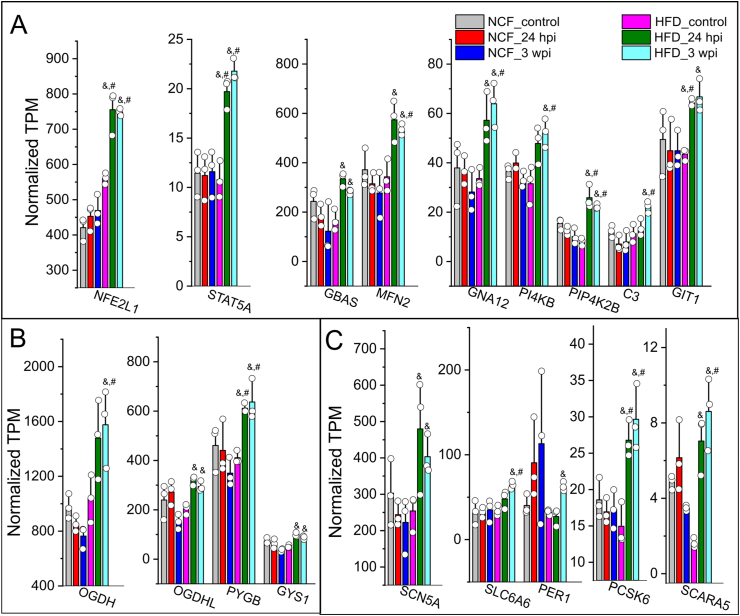
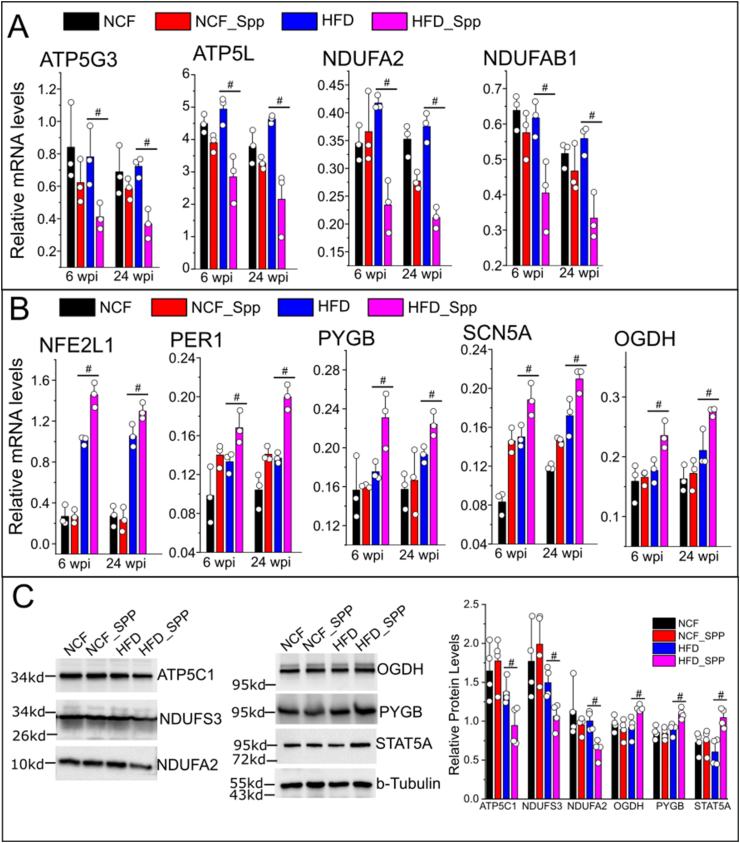
Low-density lipoprotein cholesterol enhanced viral uptake in endothelial cells, macrophages, and cardiomyocyte-like H9C2 cells. Selective cardiac and adipose viral depositions were observed in HFD mice but not in normal-chow-fed mice. The cardiac transcriptional signatures in HFD mice at 3, 6, and 24 wpi showed systemic suppression of mitochondria respiratory chain genes including ATP synthases and nicotinamide adenine dinucleotide:ubiquinone oxidoreductase gene members, upregulation of stress pathway-related crucial factors such as nuclear factor-erythroid 2-related factor 1 and signal transducer and activator of transcription 5A, and increases in expression of glucose metabolism-associated genes. As compared with the age-matched HFD control mice, cardiac ejection fraction and fractional shortening were significantly decreased, while left ventricular end-systolic diameter and volume were significantly elevated, and cardiac fibrosis was increased in HFD mice at 24 wpi.
Our data demonstrated that the Spike protein could induce long-term transcriptional suppression of mitochondria metabolic genes and cause cardiac fibrosis and myocardial contractile impairment in obese mice, providing mechanistic insights to PASC-related cardiomyopathy.
随着疫情的发展,新冠病毒(CoV-2)的急性后期后遗症(PASC),包括心血管表现,已成为新的健康威胁。本研究旨在研究 Spike 蛋白加肥胖是否会加剧与 PASC 相关的心肌病。
开发了一种具有 SARS-CoV-2 适当表面嗜性的 Spike 蛋白假型(Spp)病毒,用于体外病毒进入测定和高脂肪饮食(HFD)喂养的小鼠给药。使用 RNA-seq 或实时 RT-PCR 在引入 Spp 后 2 和 24 小时、3、6 和 24 周时分析系统病毒载量和心脏转录组。使用超声心动图监测心脏功能。
低密度脂蛋白胆固醇增强了内皮细胞、巨噬细胞和心肌细胞样 H9C2 细胞中的病毒摄取。在 HFD 小鼠中观察到选择性的心脏和脂肪病毒沉积,但在正常饮食喂养的小鼠中未观察到。在 3、6 和 24 wpi 的 HFD 小鼠中,心脏转录组谱显示系统抑制线粒体呼吸链基因,包括 ATP 合酶和烟酰胺腺嘌呤二核苷酸:泛醌氧化还原酶基因成员,上调应激途径相关关键因子,如核因子-红细胞 2 相关因子 1 和信号转导和转录激活因子 5A,以及葡萄糖代谢相关基因的表达增加。与年龄匹配的 HFD 对照组小鼠相比,HFD 小鼠的心脏射血分数和缩短分数明显降低,而左心室收缩末期直径和容量明显升高,24 wpi 时心脏纤维化增加。
我们的数据表明,Spike 蛋白可诱导线粒体代谢基因的长期转录抑制,并导致肥胖小鼠的心脏纤维化和心肌收缩功能障碍,为与 PASC 相关的心肌病提供了机制见解。