Institute of Botany, Czech Academy of Sciences, 252 43, Průhonice, Czech Republic.
Institute for Environmental Studies, Faculty of Science, Charles University, Praha 2, Czech Republic.
Nat Commun. 2023 Jun 22;14(1):3736. doi: 10.1038/s41467-023-39464-8.
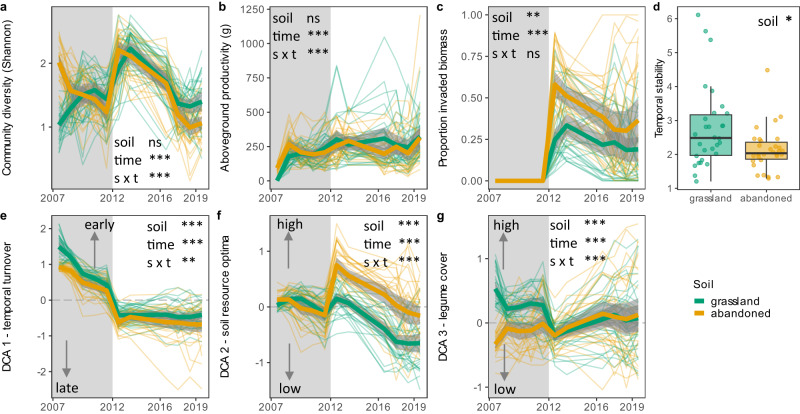
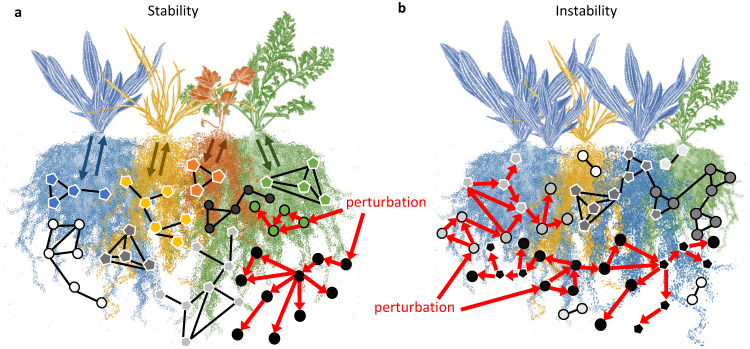
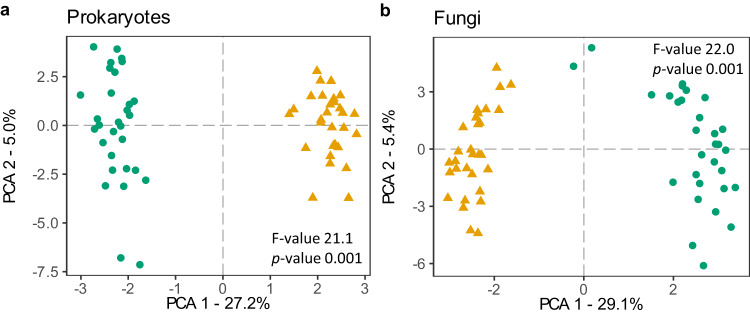
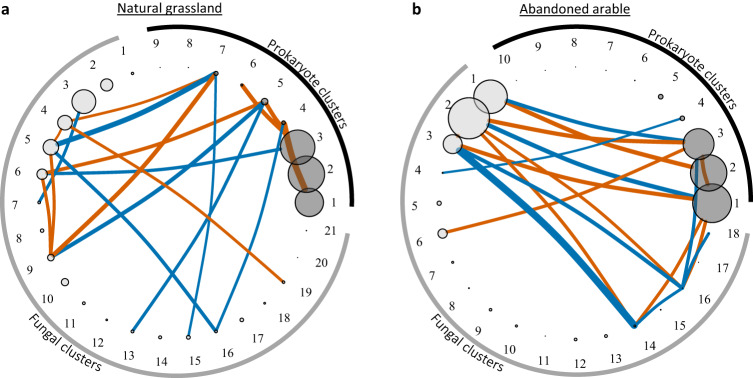
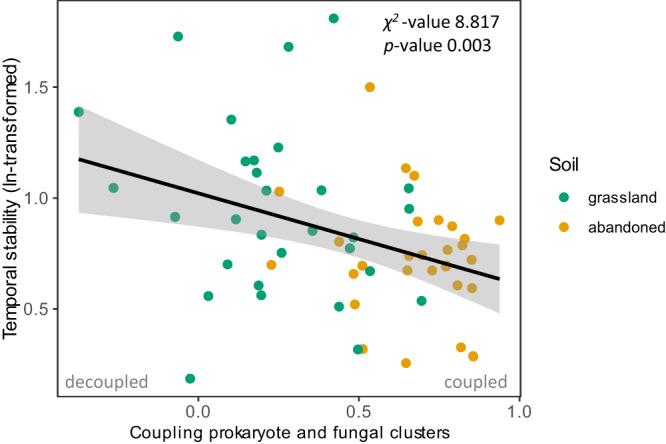
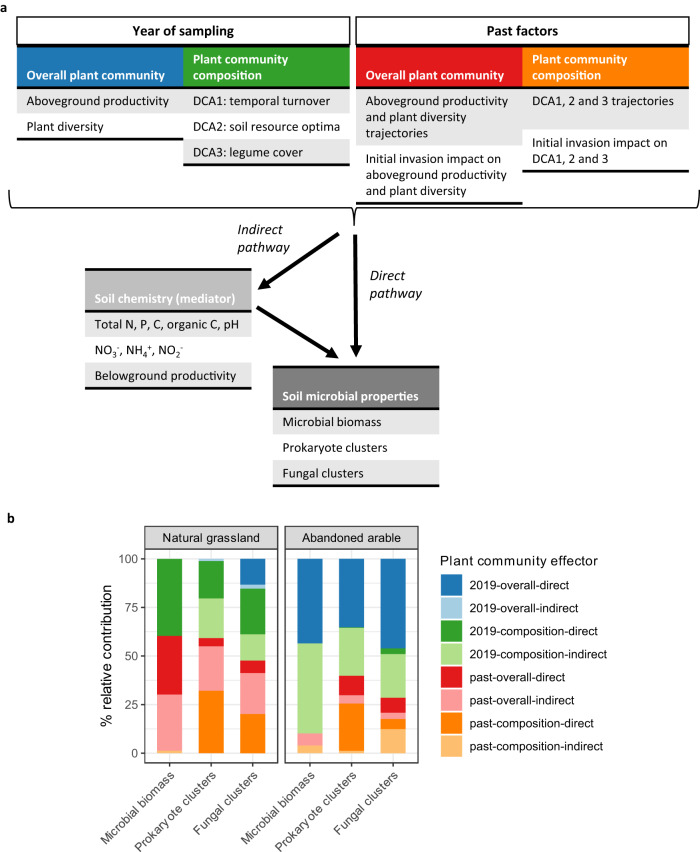
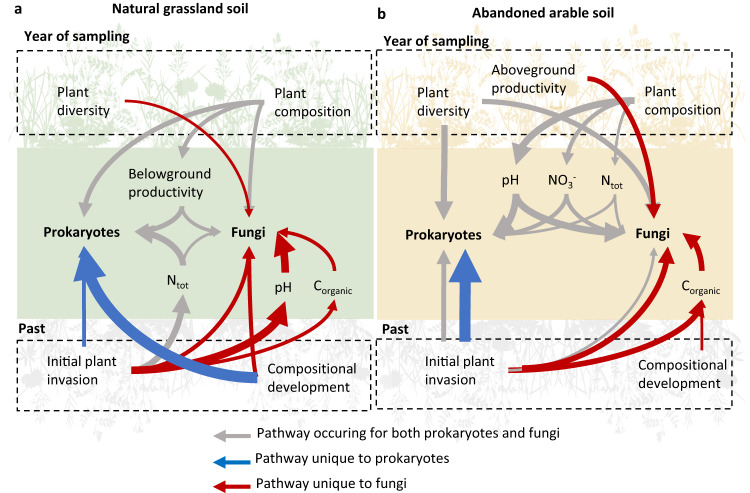
Soil microbial networks play a crucial role in plant community stability. However, we lack knowledge on the network topologies associated with stability and the pathways shaping these networks. In a 13-year mesocosm experiment, we determined links between plant community stability and soil microbial networks. We found that plant communities on soil abandoned from agricultural practices 60 years prior to the experiment promoted destabilising properties and were associated with coupled prokaryote and fungal soil networks. This coupling was mediated by strong interactions of plants and microbiota with soil resource cycling. Conversely, plant communities on natural grassland soil exhibited a high stability, which was associated with decoupled prokaryote and fungal soil networks. This decoupling was mediated by a large variety of past plant community pathways shaping especially fungal networks. We conclude that plant community stability is associated with a decoupling of prokaryote and fungal soil networks and mediated by plant-soil interactions.
土壤微生物网络在植物群落稳定性中起着至关重要的作用。然而,我们对于与稳定性相关的网络拓扑结构以及塑造这些网络的途径知之甚少。在一项为期 13 年的中观实验中,我们确定了植物群落稳定性与土壤微生物网络之间的联系。我们发现,实验前 60 年从农业实践中废弃的土壤上的植物群落促进了不稳定的特性,并与耦合的原核生物和真菌土壤网络相关联。这种耦合是由植物和微生物与土壤资源循环的强烈相互作用介导的。相反,天然草原土壤上的植物群落表现出高度的稳定性,与原核生物和真菌土壤网络解耦相关。这种解耦是由大量过去的植物群落途径塑造的,特别是真菌网络。我们得出结论,植物群落稳定性与原核生物和真菌土壤网络的解耦有关,并受植物-土壤相互作用的影响。